US at a crossroads: Iran's firm positions leave Trump no option but to capitulate
By Press TV Strategic Analysis Desk
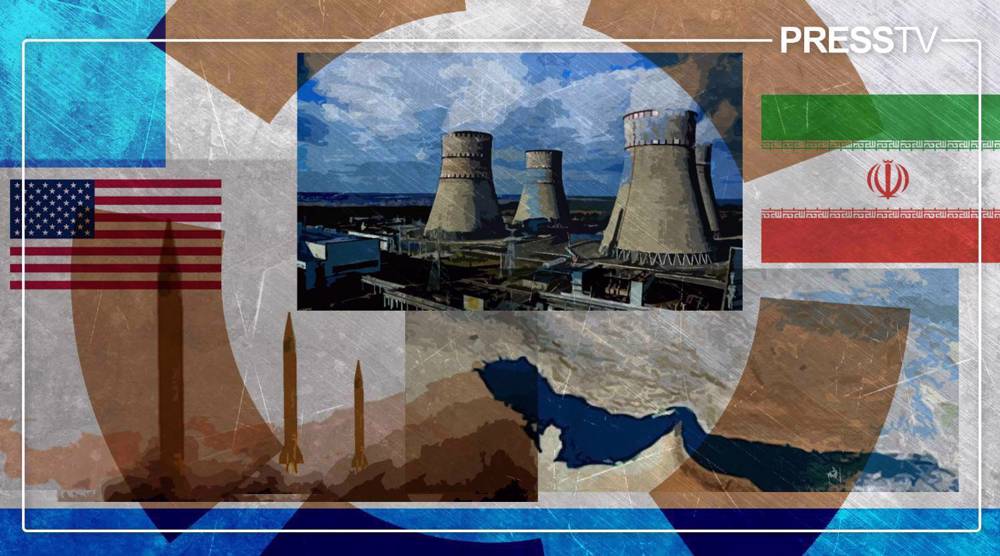
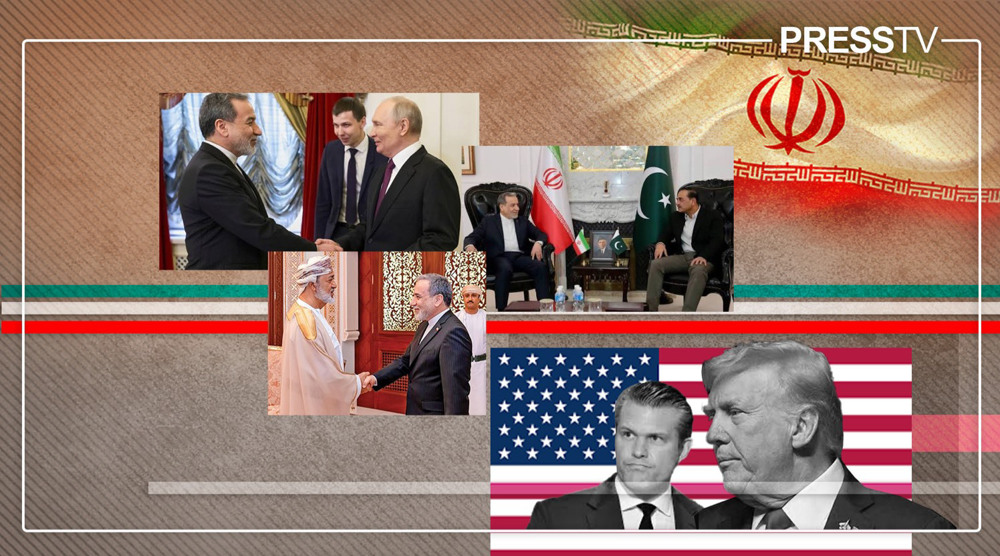
A close look at the initial American reactions to Iran's firm positions – laid out by Foreign Minister Abbas Araghchi during his recent tour of Pakistan, Oman, and Russia – reveals one thing immediately: severe confusion and disarray in Washington.
Iran has drawn its red lines with clarity and precision. According to credible sources, Tehran has communicated its positions to all parties on at least two highly important fronts.
First, the exclusion of any nuclear-related issues from end-of-war negotiations. Second, Iran's decisive and irreversible determination to exercise full control over the Strait of Hormuz.
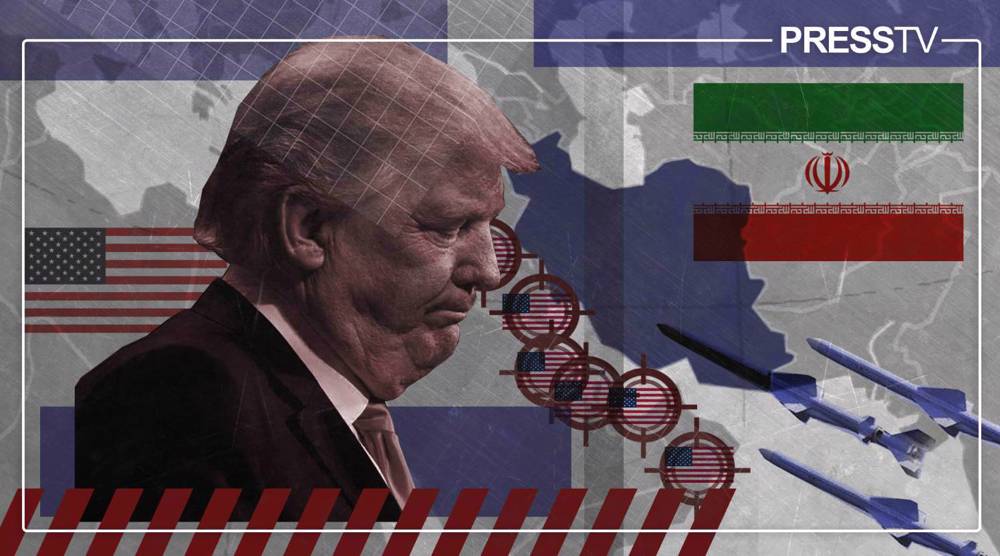
These are not negotiating tweaks. They represent fundamental demands that reshape the entire strategic landscape. And these uncompromising demands have placed the United States at a crossroads where both paths lead to definitive losses for President Donald Trump.
The first path: Acceptance
If Trump accepts these Iranian positions, the conclusion is devastatingly simple. It would confirm that the United States has achieved nothing whatsoever – neither on the battlefield nor on the diplomatic front. Not a single victory. Not a single concession.
Far worse, Iran would walk away from the war that was imposed on it with major strategic gains. These include the preservation and consolidation of its nuclear rights and provisions, a direct blow to decades of American policy aimed at rolling back Iran's nuclear program.
And, perhaps even more significantly, the highly sensitive and strategic Strait of Hormuz would be placed firmly under Iranian control and sovereignty forever.
In other words, acceptance would mean formal, public acknowledgment that America has not only failed to defeat Iran but has actually watched Tehran emerge stronger, more sovereign, and more dominant in one of the world's most critical maritime chokepoints.
✍️ Analysis - Iran's principled red lines and Trump's desperation to exit the quagmire show who holds the cards
— Press TV 🔻 (@PressTV) April 26, 2026
By Press TV Strategic Analysis Deskhttps://t.co/lxdFw4ObLy
The second path: Resumption of war
If Trump refuses to accept Iran's conditions, he is left with no choice but to resume the war. And here, the risks are extraordinarily high for him and his war machine.
Iran has already proven its capabilities on the battlefield. The imposed war has shown that American firepower cannot break Iranian resolve. But more worryingly for Washington, Iran still holds unrevealed cards – military and strategic assets that have not yet been deployed.
Given these proven capabilities and the unknown arsenal still in reserve, the likelihood of Iran inflicting an even greater defeat and humiliation on the United States than in the first 40 days is extremely high. This is not hollow bravado. It is a calculation based on evidence.
What does this mean for Trump? A major and terrifying nightmare. If he is not cautious and re-enters a futile war against Iran, he may well be forced in the future to grant Iran far greater and more significant concessions just to extract himself from it.
In other words, resuming the war could lead to an even worse outcome than acceptance.
The third path: The illusion of inaction
Recognizing the impossibility of both options, Washington is now searching for a third way. And the only remaining option – in America's view, the least risky – is to neither accept Iran's conditions for permanently ending the war nor restart the new one.
What does this look like in practice? Maintain the current naval blockade in the form of maritime banditry and piracy. Continue harassing Iranian vessels in international waters. Tighten the economic noose around Tehran. Wait for results. And, as the saying goes, hope for a way out by shifting from one failing approach to another.
For the United States, this may be the only possible option. It is a strategy of procrastination – an attempt to freeze the war while seeking to squeeze Iran economically.
✍️ Analysis - Iran holds all the cards: Victorious on the battlefield, united at home, and armed with strategic assets
— Press TV 🔻 (@PressTV) April 20, 2026
By Press TV Strategic Analysis Deskhttps://t.co/AiKDeAt4CO
The hidden danger
But here lies the great danger that White House strategists may be underestimating. If this option too proves useless and ineffective for Trump, if the economic squeeze fails to break Iran, if the blockade is neutralized, if Iran's resilience holds, then he would effectively be forced back to the previous two options.
And both of those, from the perspective of any sober strategist, are certainly riskier than the naval blockade. Acceptance brings humiliation and strategic defeat. War brings the terrifying prospect of an even greater humiliation.
What we are witnessing is a president trapped. Iran has structured its demands not as opening bids but as final positions. The nuclear issue is off the table. Hormuz is non-negotiable. Trump can accept, fight, or freeze. None of these leads to victory.
The confusion and disarray in Washington's initial reactions are not temporary. They are symptoms of a deeper strategic reality: for the first time in decades, the American side faces an adversary that has closed off every good option.
If Trump accepts Iran's terms, he loses. If he resumes the war, he risks losing even bigger. If he does nothing and hopes the blockade works, he is merely delaying the inevitable return to the first two options – both of which are nightmares.
This is the crossroads. And whichever path Trump ultimately chooses, the writing is on the wall: Iran has turned the ceasefire into a strategic reset, and the US is running out of road.
US maritime banditry
The United States has run out of time. According to a high-ranking security source speaking to Press TV, America's ongoing "naval blockade," essentially a maritime piracy and banditry, will soon be met with "practical and unprecedented action."
Iran's armed forces have made their position clear: patience has limits. A punishing response is now necessary if Washington maintains its illegal grip on the Strait of Hormuz, he said.
The strategic calculation behind Tehran's restraint is often misunderstood. According to the source, the pause was never a weakness. It was a deliberate window for diplomacy – a final chance for Americans to learn of and accept Iran's conditions for ending the war.
Continued US maritime piracy and banditry will be met with ‘practical, unprecedented’ response: Sourcehttps://t.co/6VIaIU1VbJ
— Press TV 🔻 (@PressTV) April 29, 2026
It was also meant to give President Trump an off-ramp, an opportunity to pull America out of the quagmire it now finds itself in. That’s precisely what he had been looking for.
If American obstinacy and delusions continue, the source warned, the enemy should expect a very different kind of response. Notably, Iran is fully aware of the economic consequences.
Closing the Strait of Hormuz and maintaining a blockade would affect all countries, including Iran. But Tehran's decades of experience in circumventing sanctions, its thousands of kilometers of land borders, and its pre-existing measures to counter maritime sieges have made Iran far more resilient to economic pressure than the United States.
Nearly 60 days into the war imposed on Iran, Trump is searching for an exit – having already lost on both the battlefield and at the negotiating table.
But if the illegal and foolhardy blockade continues, even this last option will be discredited like other options. That will be the last nail in the coffin of the dying American Empire.
Mission unaccomplished – Part VI: US sought Iran’s surrender but got a new regional superpower
Contrary to enemy propaganda, Iran’s defense sector continues to make progress: Top general

Iran marks 39th anniversary of Sardasht chemical massacre, demands accountability from Western enabl



'War crime': Iran FM vows legal action against US over torpedo attack on Dena frigate
IRGC dismantles armed separatist cell in northwest Iran
Venezuela earthquake death toll surpasses 1,700 as search efforts continue
US national pride lowest in two decades: Poll
Pentagon plans US ground troop deployment to force Hezbollah disarmament: Report
Over 90 countries declare readiness to attend funeral of martyred Leader
Mission unaccomplished – Part VII: US sought Iran's collapse but settled for reopening Hormuz Strait
Iran becomes world's 3rd producer of rapid gas detection kits, says knowledge-based firm


 PressTV NEWSLETTER
now
PressTV NEWSLETTER
now
 This makes it easy to access the Press TV website
