Iran leverages fragile ceasefire to regroup, replenish, and ready itself for new battles
By Mohammad Molaei
The current extended ceasefire – since the 40-day war – has proven to be more than a momentary halt to the unprovoked US-Israeli aggression against the Islamic Republic.
This period has served as an important re-evaluation and reset phase for Iran, enabling a swift assessment of the war's impact, operational recovery, and the consolidation of several key components of the country’s growing military profile.
A closer look at recent developments, alongside statements from Iranian authorities, suggests that Tehran has used this time not only to sustain its recovery momentum from the "Ramadan War" but also to strengthen its capacity for a potential return to war.
The clearest sign of this accelerated recovery has been the marked uptick in logistical operations in the days immediately following the ceasefire earlier this month.
Increased military airlifts – including heavy-lift cargo planes arriving at key airbases – point to an intensified effort to replenish vital components, reinforce supply lines, and sustain weapons production even amidst the ceasefire that the American side extended unilaterally.
While these military transfers remain officially unconfirmed, the trend suggests that Iran is now executing its long-held strategies of logistical decentralization, allowing it to recover rapidly when put to the test, like in the recent unprovoked and illegal war.
Multiple supply channels, combined with domestic manufacturing capabilities, have enabled Iran to absorb losses far more readily than its adversaries might have anticipated.
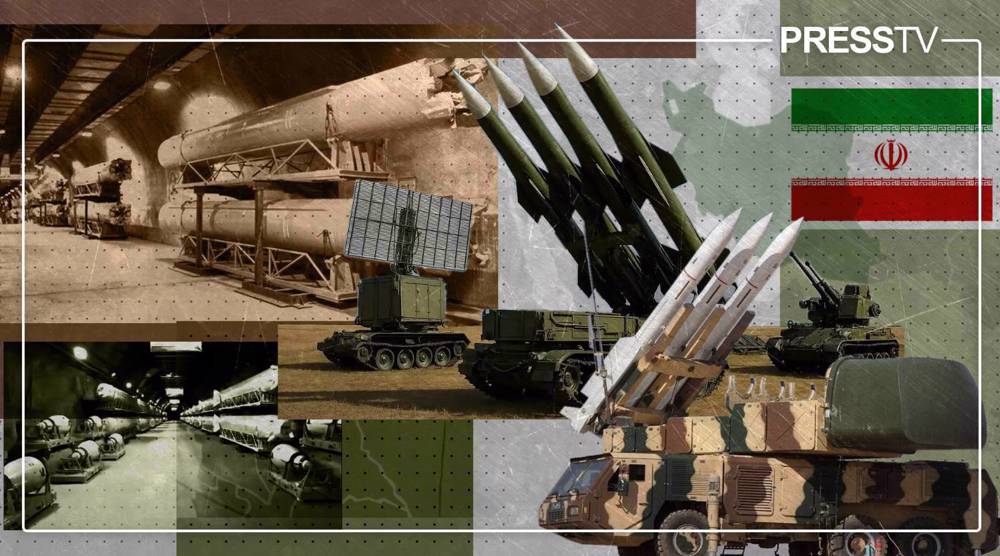
Missile arsenal intact and growing
Perhaps the most significant aspect of this recovery concerns Iran's missile arsenal, the cornerstone of its deterrence strategy. Insights from the 12-day war in June last year underscored the critical role of missile technology in creating operational opportunities.
According to local analyses and military sources, missile production increased tenfold between the end of that war and the start of the Ramadan War.
Crucially, this growth did not stop; in fact, based on available evidence, production has continued to accelerate rapidly since the ceasefire was first announced in early April. Such momentum contradicts assertions by the United States and Israel regarding a supposedly crippled Iranian missile program.
These statements ignore an essential architectural feature: much of Iran's missile production lines, storage sites, and supply chains are incorporated in heavily fortified underground facilities, often referred to as "missile cities".
These facilities, built in mountainous regions and fortified with multiple layers of protective measures, are capable of withstanding the effects of the most powerful bunker-busting explosives.
Interestingly, some are thought to be positioned at depths and geological settings that are beyond the penetration capacity of certain bunker-busting weapons (such as the GBU-57 Massive Ordnance Penetrator).
As such, while surface targets may be prioritized, the bulk of Iran's missile manufacturing infrastructure remains unaffected and ready to continue production, even in the face of constant bombardment.
✍️ Analysis - Trump’s unilateral ceasefire extension not a sign of goodwill, but fear of re-entering an unwinnable war
— Press TV 🔻 (@PressTV) April 22, 2026
By Press TV Strategic Analysis Deskhttps://t.co/qrhcDPbT21
Prudent spending
The second key variable has been its demonstrated policy of prudent spending in the two recent imposed wars. There are indicators that Iran deliberately eschewed operating some of its more capable systems and configurations, instead opting to deploy its older missile stockpiles in large quantities.
This strategy was multifaceted, used for both operational and potentially strategic purposes: first, it allowed the depletion of older stocks that had built up over decades; and second, it provided the option to reserve some of the newer, more advanced assets for purposeful escalation in the event of future war.
In this vein, reports suggesting minimal or no operational use of some of these platforms (such as double-launcher systems for the Kheibar Shekan missile) form a key point of attention. These systems, which can double the missile firing rate, remain largely undeployed, suggesting that Iran has the potential to escalate the intensity of missile launches if it resumes operations in the event of any act of aggression in the future.
One critical aspect of this smart launch strategy relates to inventory and storage considerations in Iran's underground missile silos. Bulkier, liquid-based missiles – like older versions of the Qadr missile series – require considerably more storage space than newer models such as the solid-fuelled Kheibar Shekan.
In prioritizing the deployment of space-consuming systems during the early stages of war, it would appear Iran has been slowly but surely clearing the way in storage facilities for more compact, next-generation systems.
This upgrade not only aids in the system's survival capability but also maximizes the number of systems that can be deployed in protected areas. In turn, the sheer number of missiles used in previous wars may only be a small fraction of the available missiles in alternative scenarios.
Maritime power
In parallel, another aspect of Iran's deterrence strategy is the maritime sector. Observations of US naval deployments during the Ramadan war indicated a notable degree of caution.
Despite the superior numbers and capabilities of US naval assets on the scene, US aircraft carrier strike groups and accompanying maritime forces reportedly maintained a posture of standoff at a distance of roughly 300 kilometers from Iran.
This offshore distance is understood to be correlated with the possibilities afforded by Iran's anti-ship capabilities, including next-generation cruise systems and ballistic anti-ship missiles from the Khalij Fars and Hormuz families. Such systems, incidentally, have not been widely used in past engagements, implying that they are part of Iran's "contingency arsenal".
The consequences of this restraint are great. The use of such capabilities in possible new aggression may bring about a fundamental change in the maritime balance, which has posed significant threats to high-value naval assets like Arleigh Burke-class destroyers in the Persian Gulf and the Gulf of Oman.
The synergistic integration of warheads with high speed and manoeuvrability, terminal guidance systems, and saturation attack tactics may make defense difficult and put even modern naval platforms at greater risk. In such a way, even the mere fact that these capabilities exist – and have not been used to such an extent – is a potent deterrent, capable of influencing adversarial behavior without necessarily having to be deployed.
✍️ Analysis - Iran holds all the cards: Victorious on the battlefield, united at home, and armed with strategic assets
— Press TV 🔻 (@PressTV) April 20, 2026
By Press TV Strategic Analysis Deskhttps://t.co/AiKDeAt4CO
Statements from officials
The evaluation that the ceasefire period has been actively used to make strategic preparations is further supported by statements from senior Iranian officials.
A recent comment by Parliament Speaker and lead negotiator Mohammad Bager Qalibaf signals that Iran is ready to roll out new cards in the event of any future war, and this has been well understood as an indication that there are new capabilities that Iran is ready to unveil – ones it has hitherto not discussed or perhaps not used.
The exact workings of these systems are still the subject of speculation, although the bigger picture appears to comprise increased missile capabilities, perfected launch principles, and perhaps novel operational concepts aimed at exploiting gaps noted in past interactions.
Collectively, the events that have transpired during the ceasefire period are leading toward one obvious conclusion: instead of shrinking Iran's military capacities, the declarations of war and the following resting period have spurred a process of change and solidification.
The combination of larger manufacturing capacity, safeguarded infrastructure, discriminating use of resources, and conservative higher-end capabilities has placed Iran in an enhanced strategic position as compared to prior to the beginning of the imposed war.
In that regard, the balance of power has not been a frozen affair but redefined around the ceasefire – extended recently by the US president unilaterally.
Should the aggression recur, the context in which they would be practiced would most likely differ considerably from the previous stages. Increased rates of missile production, higher density of launches, the possibility of rolling out hitherto unused systems, and implementing maritime denial capabilities would all equate to a more challenging and more complicated scenario for any enemy coalition.
The psychological concept that previous strikes have essentially rendered Iran's deterrent force incapable of responding is thus hard to maintain when analyzed in contrast to the structural fortitude and adaptive options exhibited over the years.
Finally, the ceasefire window has highlighted a particular trend in contemporary warfare: to a certain extent, temporal lulls do not just freeze military action but give time to rejuvenate, innovate, and re-focus. In the case of Iran, it seems that this was a time wisely utilized, where short-term recovery was turned into long-term strategic benefit.
Iran ready to counter mischievous acts with ‘eyes open, fingers on trigger’: IRGC general
How Iran turned battlefield gains and regional power into strategic postwar leverage against US
June 13: Ayatollah Khamenei's funeral ceremonies announced as war-ending deal nears finalization



World leaders welcome MoU that ends war imposed by US on Iran
Iran's top security body says MoU to end war on all fronts, lift US naval blockade
Iran’s top military command says people's 'will imposed on enemies' as MoU reached to end war
June 14: Iran, US reach MoU to end imposed war, to be signed in Geneva on Friday
Iran deputy FM says MoU with US to be signed in Geneva on Friday
Pakistan PM says deal reached between Iran, US following 'intensive talks'
Iran warns US of ‘dangerous consequences’ of ‘terrorist’ strike on Beirut
'Resistance will not be cornered', Qalibaf warns Israel after Beirut attack




 PressTV NEWSLETTER now
  This makes it easy to access the Press TV website