The strategic reckoning: Iran’s post-war ascendancy and American Empire’s stunning collapse
By Press TV Strategic Analysis Desk
Forty days of aggression. Forty days of defiance. And now, a new strategic reality.
When the ceasefire took hold after 40 days of unprovoked and illegal US-Israeli war against Iran, during which the Iranian armed forces imposed heavy costs on the enemy, many expected the Islamic Republic to go back to the negotiating table with the same old playbook.
Instead, Tehran launched a strong diplomatic push that has left Washington humiliated, its military threats in tatters, and its political leadership trapped in a dead end of its own making.
Even German Chancellor Friedrich Merz – who, until just a few months ago, was betting on 'regime change' in Iran – was forced to admit that the United States is being 'humiliated' by Iran's leadership and outwitted at the negotiating table.
It is no small admission from one of the staunchest detractors of the Islamic Republic
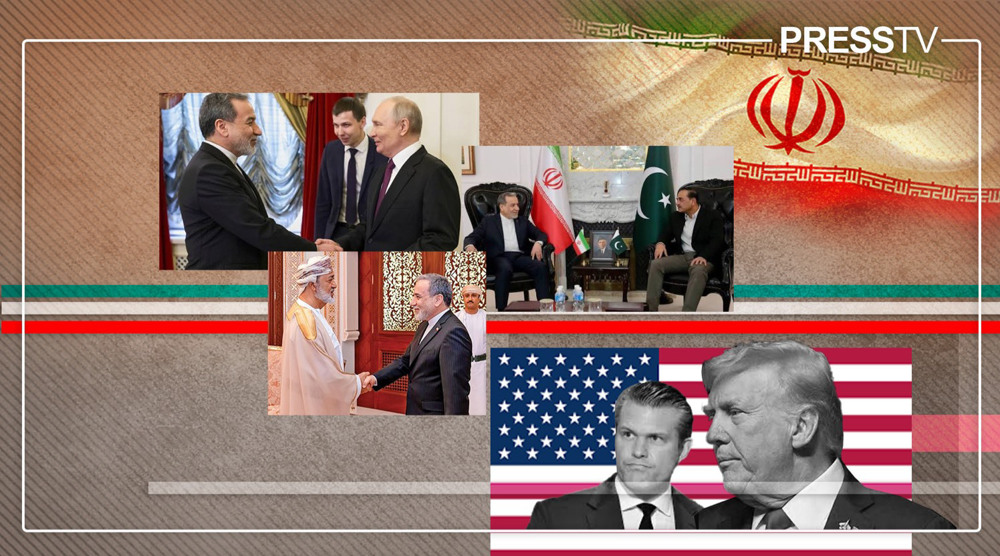
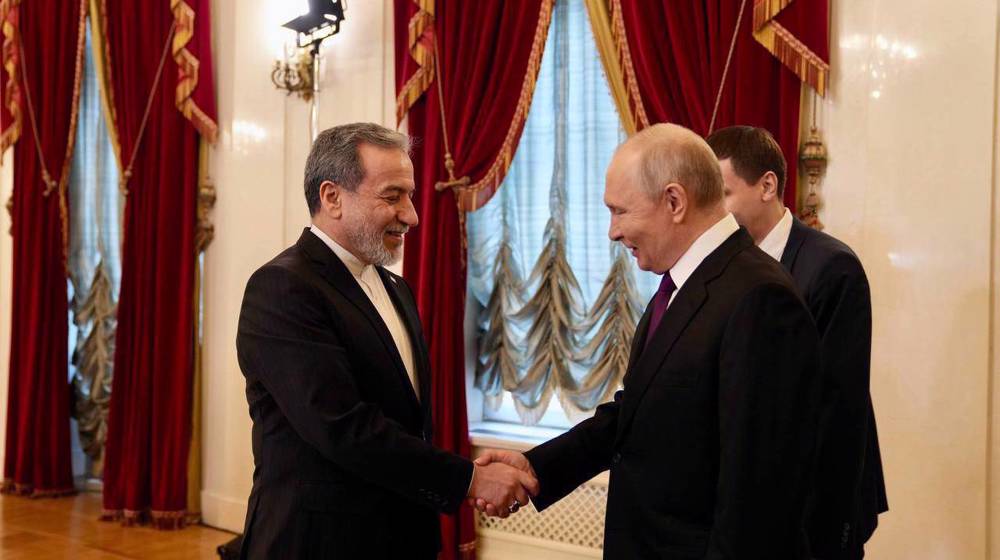
Foreign Minister Abbas Araghchi's three-nation diplomatic tour – to Pakistan, Oman, and Russia – just two weeks into the fragile truce, was no exercise in diplomatic courtesies.
It was a resounding show of diplomatic power. A masterclass in psychological warfare. A public humiliation of an arrogant enemy that had vowed to obliterate a proud 'civilization.'
The message from the diplomatic tour was clear and decisive: You threaten us? We ignore you. You raise the stakes? We raise ours – on your own chessboard.
✍️ Analysis - Iran's principled red lines and Trump's desperation to exit the quagmire show who holds the cards
— Press TV 🔻 (@PressTV) April 26, 2026
By Press TV Strategic Analysis Deskhttps://t.co/lxdFw4ObLy
The symbolism that shattered American credibility
What happened in those first weeks after the guns fell silent? American officials had issued explicit threats to target and kill senior Iranian diplomats, even in the middle of talks.
Trump’s inner circle spoke of decapitation strikes. The usual script. The expected bullying.
And how did the Islamic Republic of Iran respond?
It sent its top diplomat on a high‑visibility, multi‑capital tour through Islamabad, Muscat, and Moscow. Not in secret. Not with apologies. Openly, proudly, as if to say: Your threats are worthless. Your red lines are invisible. We are here, and there is nothing you can do about it.
This is not usual diplomacy. This is power projection through a strong presence on the scene, refusing to be cowed down by hollow threats. With this, Iran effectively invalidated, in one stroke, every warning Washington had issued. The enemy’s intimidation was reduced to noise.
The Islamic Republic, holding a clear upper hand and all the cards after the 40-day war and its aftermath, turned American bluster into a backdrop for its own strategic advance.
FM Araghchi’s regional tour was not about symbolism. The substance of Iran’s communications with its allies, as confirmed by foreign media and even initial, begrudging reactions from the Trump administration, was nothing short of path-breaking.
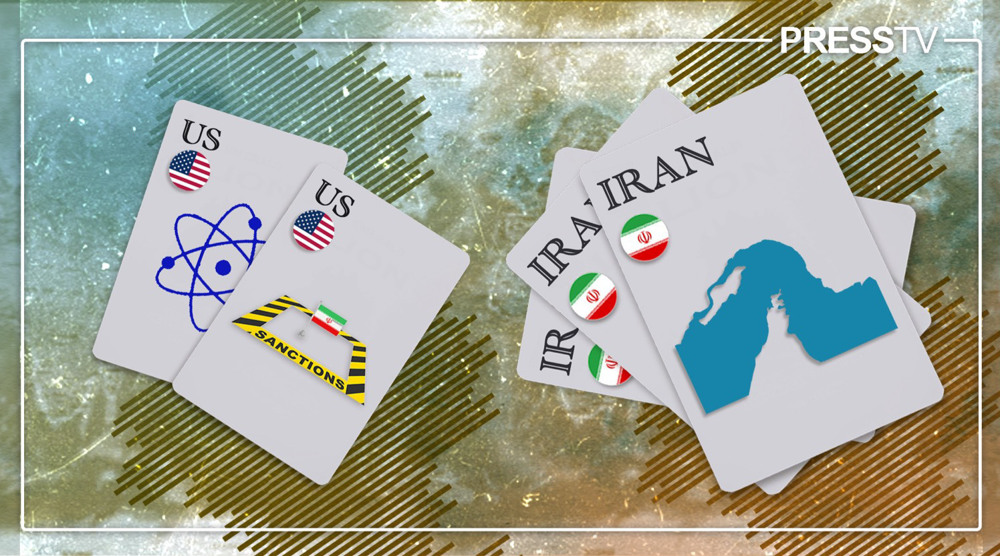
While the United States expected a war‑weary Tehran to bargain, to trade nuclear concessions for relief, to slowly capitulate, Iran did the opposite. It declared, without ambiguity, that there will be no negotiations on nuclear matters or even missile capabilities. Those files are closed.
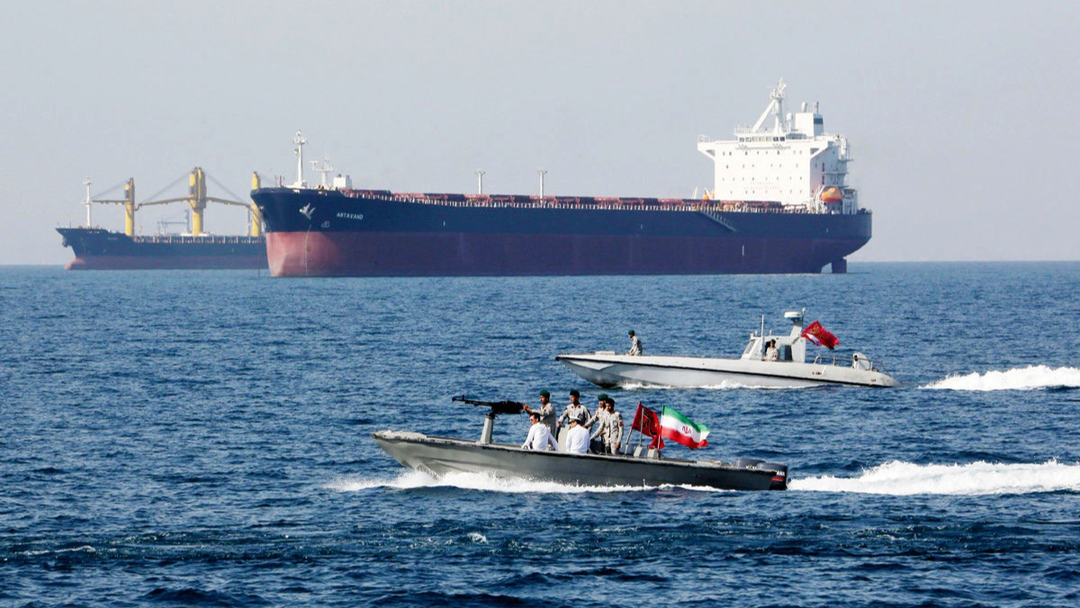
And in the same breath, Iran doubled down on the one chokepoint that terrifies global markets: the strategic Strait of Hormuz. Tehran’s position is now clear, immovable, and publicly stated: We will manage the Strait. We will set the terms. We are the gatekeepers.
✍️ Analysis - Iran's new calculus: Full Strait of Hormuz control, no retreat on nuclear rights, and unused cards – including NPT
— Press TV 🔻 (@PressTV) April 25, 2026
By Press TV Strategic Analysis Deskhttps://t.co/JuJnfEKf7O pic.twitter.com/QnkIprd2g4
United we stand, divided they fall
In the most telling contrast of this entire crisis, the Iranian political and military establishment stands united – in letter and spirit. Patiently, resolutely, it has advanced its strategic positions, whether on the battlefield, where tactical combat management kept the Israeli-American war machine off balance, or in the political management of the truce period.
As Iran's top leaders recently made clear through a series of tweets, they stand united – more than ever – and the enemy's desperate attempts to fracture that unity have already failed
Now look at the other side, which pretends that everything is hunky-dory. They seem to have traded reality for a caffeinated optimism.
The Trump administration is eating itself alive. Internal feuds among US military commanders and the inexperienced, impulsive Secretary of War Pete Hegseth are public, ugly, and paralyzing.
Navy Secretary John Phelan is the latest to be shown the door. But he is far from alone. Army Chief of Staff General Randy George, Army Transformation and Training Command chief General David Hodne, and Army Chaplain Corps head Major General William Green Jr. have all been removed or forced to resign.
That is not a war machine in control. That is a war machine in meltdown. And the rot continues.
Vice President JD Vance and the Secretary of War Hegseth are trading insults through the media. Trump’s own former allies – men like Tucker Carlson, the face of his presidential campaign – now openly express regret for ever supporting him.
Joe Kent, the former head of the so-called “counterterrorism” unit and a man once deemed extremely close to Trump, also resigned and is now leaking damaging revelations, protesting that Netanyahu pulls the strings on American foreign policy. The Democratic Party is savaging Trump daily. Figures like Wendy Sherman and John Kerry have launched blistering attacks.
This is not opposition. This is disintegration. Every time Iran states, clearly and publicly, that the Strait of Hormuz is permanently under its control, and that the nuclear file is forever off the table – every single declaration deepens the fractures in Washington.
The chaos inside the ‘Divided States’ is not incidental. It is a direct result of Iran’s refusal to bend. Tehran has made the dysfunction visible. And the world is watching.
✍️ Analysis - Trump’s unilateral ceasefire extension not a sign of goodwill, but fear of re-entering an unwinnable war
— Press TV 🔻 (@PressTV) April 22, 2026
By Press TV Strategic Analysis Deskhttps://t.co/qrhcDPbT21
The trap America built for itself
Let us count the ways the United States is trapped in a quagmire of its own making.
On one hand, returning to full‑scale war is a nightmare. The risks are astronomical. The Pentagon knows it. Trump may not admit it, but his generals reluctantly do.
A new war, a new escalation from the American side, would not produce a better deal. It would not force Iranian submission. It would close every door to future diplomacy of any kind – probably forever. The military option is, for all practical purposes, dead.
On the other hand, the current situation is a slow, grinding defeat. The Strait of Hormuz is effectively blockaded by Iran’s imposing presence. Oil prices are climbing relentlessly. Global economic indicators and stock markets are rattled, sliding, panicking.
Iran continues to hold 400 kilograms of 60‑percent enriched uranium. As Iranian officials have asserted, it’s not going anywhere. Enrichment has not stopped. Iran’s missile forces, its combat capacities, its strategic reserves – they are not only intact, but improved and upgraded.
And here is the kicker: Iran’s political system remains united, stable, steady, and stronger.
Think about that. Iran lost its beloved Leader – the supreme moral and strategic anchor of the Islamic Revolution. It lost dozens of senior military commanders, government officials, and thousands of ordinary citizens. It endured a 40‑day war of unprecedented intensity. And yet, the system stands. The decision‑making apparatus works. There is no collapse, no panic, no retreat.
That, more than any missile or centrifuge, is the true measure of victory. America has failed to achieve a single one of its strategic objectives. Not even one. And the world knows it.
✍️ Analysis - Iran wields leverage and strategic assets – concessions must flow from the embattled side
— Press TV 🔻 (@PressTV) April 27, 2026
By Press TV Strategic Analysis Deskhttps://t.co/WP11YXygsw
The inevitable conclusion: Surrender or more humiliation?
Trump’s strategic dead end is now so obvious that even some of his own allies and media supporters are advising him to give up and accept Iran’s current terms in order to stop struggling for concessions that will never come. It’s like chasing the mirage.
Why? Because time is not on America’s side. Every day that passes with the Strait of Hormuz under firm and unchallenged Iranian control, with Iranian nuclear progress intact, with its military capacity steadily growing, is another day of American failure.
The options presented to Trump either do not actually exist or are catastrophically risky. There is no winning move left on the board for the US. It has to retreat and abandon the adventurism.
Importantly, the world is beginning to understand – slowly, hesitantly, but unmistakably – that the Islamic Republic is calling the shots. One by one, global leaders are opening their eyes to a new dawn, a new era, which marks the quiet but irreversible twilight of American hegemony.
Consider Merz's words. Read them again and again. Just weeks ago, this man saw the US and Israel as the rightful representatives of the entire world against Iran. Now he stands before the world and declares: Iran has humiliated Trump – and all of America. Let those words sink in.
Yes, many countries are still too afraid to speak openly. Decades of American bullying and coercion do not vanish overnight. But the tectonic plates are shifting.
As the scale of America’s defeat and the Zionist regime’s failure in this third imposed war becomes undeniable, a new wave will begin – a wave in favor of Iran and the resistance axis.
✍️ Analysis - Why no power can undermine Iran's eternal dominance over the Strait of Hormuz
— Press TV 🔻 (@PressTV) April 10, 2026
By Mohammad Molaeihttps://t.co/ej1kJTj9FV
Survival of the strongest
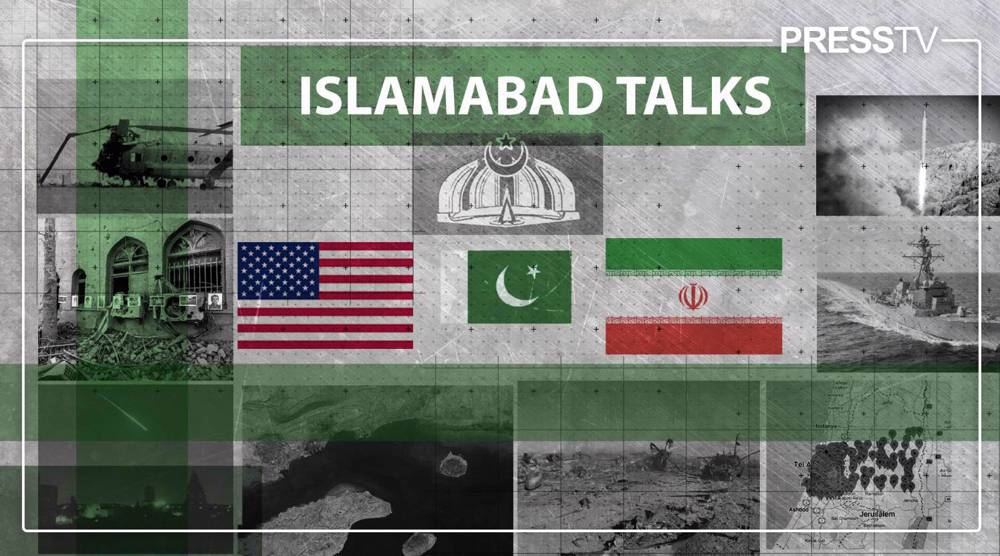
The 40‑day unprovoked war and the Islamabad talks that followed have produced a clear verdict. Iran has not only survived; it has emerged stronger, more respected by allies, and more feared by enemies. Its positions are now the baseline. Its red lines are now the world’s constraints. Its presence in the Strait of Hormuz is now a fact of global economics.
The United States, by contrast, has failed on the battlefield, failed at the negotiating table, and is now failing before our eyes on the domestic front – ripped apart by feuds, resignations, betrayals, and a president who cannot deliver on any front.
With midterm elections fast approaching in the US and his approval ratings plummeting to record lows, Trump has written an obituary – for himself and for his Republican Party.
The party could have stopped him over the past two months. They could have invoked a war resolution, even symbolically. But they chose to be mute spectators.
The Iranian leadership and its people stand buoyed with confidence, ready for all scenarios
Iran closes Strait of Hormuz after US-Israeli violations of MoU
Iran intelligence forces arrest 17 mercenaries involved in US-Israeli-backed riots
US emerged from war ‘desperate, defeated': Leader's advisor


Iran women strike gold as karate team finishes runner-up at Asian championships
Israeli minister defies US, says occupation forces will stay in Lebanon for years
Imam assaulted outside mosque in Canada amid rising Islamophobia
Israeli soldier slain, 13 others injured in southern Lebanon
Man charged after suspected anti-Muslim attacks in Edinburgh
Power remains the only reliable guarantee against enemies: IRGC Navy official
Iran Parl. speaker vows fidelity to martyrs upon reaching Switzerland for Islamabad MoU talks
Iranian delegation arrives in Switzerland to follow up on Islamabad memorandum



 PressTV NEWSLETTER
now
PressTV NEWSLETTER
now
 This makes it easy to access the Press TV website
