Poll finds 21 percent of Trump 2024 voters support impeaching him after unprovoked war on Iran
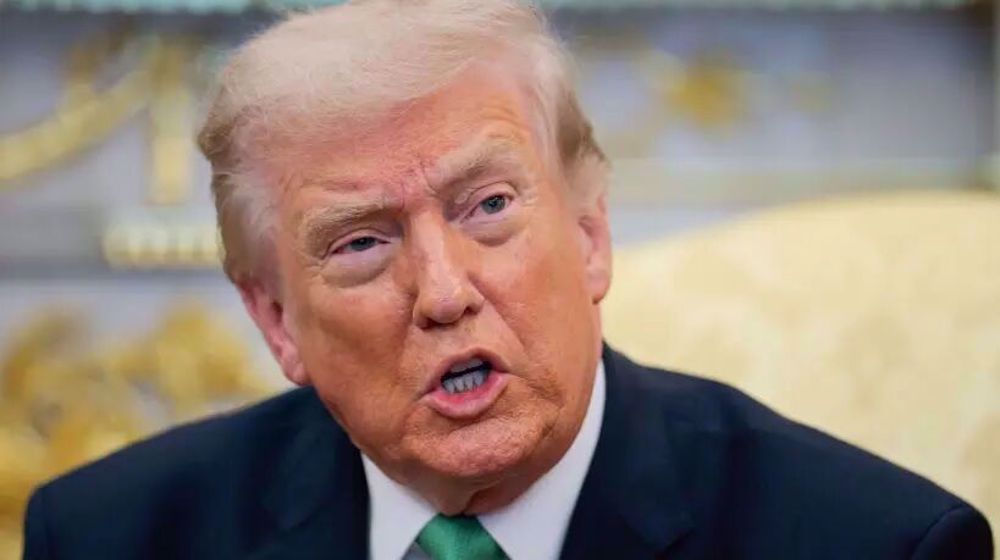
A surprising 21% of Republicans who voted for US President Donald Trump in the 2024 presidential election support impeaching him, a recent poll revealed.
The survey by Strength in Numbers/Verasight was conducted from April 10-14, 2026, from a sample of 1,514 adults.
The data weighted for “age, race/ethnicity, sex, income, education, region, and metropolitan status, as well as to a running three-year average of partisanship distributions from the Pew Research Center NPORS benchmarking surveys and population benchmarks of 2024 vote.”
The polling numbers for Trump and the GOP have been brutal as his second term has progressed, with his immigration crackdown cratering his support, the handling of the Epstein files getting abysmal marks, and even Americans’ views on his handling of the economy taking body blows.
Trump's recent social media posts and public comments about the Iran war sparked new chatter, with reporters openly asking him about his “mental health” and critics pointing out his advocacy for war crimes.
Numerous congressional Democrats have declared that Trump deserves to be impeached or removed pursuant to the 25th Amendment, and the Strength in Numbers poll sought to determine how broad the support was among the general public.
When asked, “Would you support or oppose the US House of Representatives voting to impeach President Trump?” the poll found that 55% said they supported that, 37% were opposed, and 8% were unsure.
“That net +18 verdict puts Trump in the neighborhood of the numbers Richard Nixon saw at the peak of the Watergate scandal in August 1974,” pollster G. Elliot Morris noted.
“[A] surprising percentage of both Republicans and Trump’s own 2024 voters say they would support impeachment if a vote were held today,” the poll noted
For Republicans, 21% support impeachment and 72% oppose, and the breakdown was similar for people who voted for Trump in 2024: 21% support and 73% oppose.
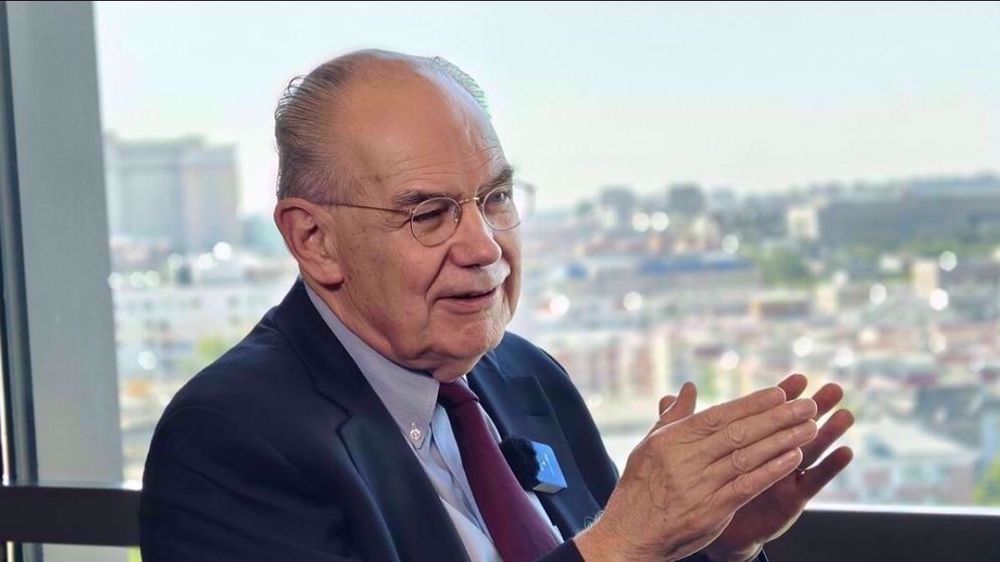
Mearsheimer: Trump has ‘no military option’ and must end war on Iran quickly or risk recessionhttps://t.co/touObjp8mx
— Press TV 🔻 (@PressTV) April 24, 2026
That means that “roughly one out of every five of the people who put him back in office” now want him gone, Morris wrote.
Unsurprisingly, Democrats (88% support, 8% oppose) and those who voted for then-Vice President Kamala Harris in 2024 (90% support, 7% oppose) were overwhelmingly in favor of impeaching Trump. Among independents, 50% support impeachment and 28% oppose.
Morris called the 55% who support impeachment from the overall sample “unusual by modern impeachment-polling standards,” and stated that “all but three groups support impeaching Trump: Republicans, Trump’s 2024 voters, and seniors (who oppose impeachment by 4 points, 47-51).”
One major factor in decreasing Trump’s popularity has been his association with the late sex-offender Jeffery Epstein, with his administration trying to cover up the extent of their friendship.
The second one has been the US-Israeli aggression against Iran, which has had a dire effect on the US economy, increasing inflation in the US by a significant margin.
Furthermore, during the campaign trail, Trump promised his voters not to involve the US in another war, and his supporters see the aggression as a betrayal of their trust.
The criminal US-Israeli aggression against Iran began on February 28 with airstrikes that assassinated senior Iranian officials and commanders, including the Leader of the Revolution Ayatollah Seyyed Khamenei.
Iranian armed forces responded by launching almost daily missile and drone operations targeting locations in the Israeli-occupied territories as well as US military bases and assets across the region.
Furthermore, Iran retaliated against the strikes by closing the Strait of Hormuz, which resulted in a significant increase in oil prices and its by-products.
On April 8, Iran’s Supreme National Security Council (SNSC) announced that there was an agreement to a Pakistan-brokered temporary ceasefire after the US accepted Iran’s 10-point proposal.
A high-ranking delegation from Iran led by Parliament Speaker Mohammad Baqer Qalibaf participated in the negotiations with the US delegation led by Vice President JD Vance.
Despite 21 hours of intensive discussions, the negotiations ended without an agreement, with Iran citing “excessive demands” from the US side.
Since then, the Islamic Republic has categorically refused to rejoin the process unless the US lifts an illegal blockade it has imposed on Iranian vessels and ports.
Tehran has also asserted that, as long as the blockade is still in place, it has no intention of reopening the Strait of Hormuz.
Young Republicans in US sour on Israel after wars on Gaza, Iran: Report

Trump sons stand to profit from US-Kazakhstan mining deal: US media
Hind Rajab Foundation lodges complaint with US Justice Department against Israeli minister



Hezbollah MP blasts ‘sell-out’ government, says Lebanon central to any Iran-US deal
Israeli army demolishes buildings across Gaza as ceasefire violations continue
VIDEO | Press TV's news headlines
VIDEO | Thousands displaced by earthquake in Venezuela receive temporary shelters
Iran will respond decisively to any ceasefire violation: Acting defense minister
Trump criticized Spain for not meeting NATO spending targets
Arab League, Arab Parliament condemn repeated Israeli attacks on Syria
Management of Strait of Hormuz solely Iran’s responsibility: Senior MP




 PressTV NEWSLETTER
now
PressTV NEWSLETTER
now
 This makes it easy to access the Press TV website
