‘Trump will never defeat Iranian nation’: IRGC cmdr. highlights US strategic failure
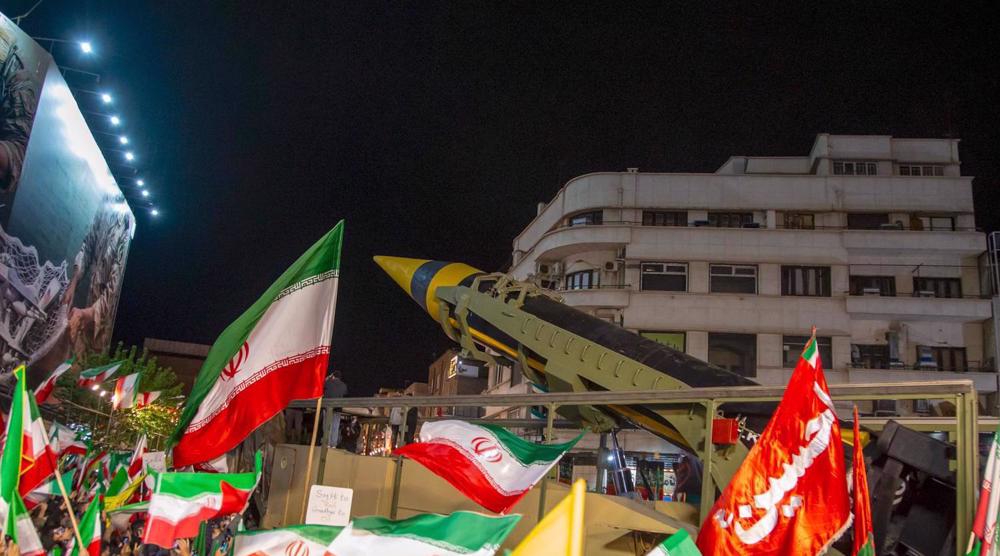
A senior Islamic Revolution Guards Corps (IRGC) commander says US President Donald Trump has suffered a strategic failure, emphasizing that Washington's military apparatus can never defeat the resilient Iranian nation.
IRGC’s political deputy Brigadier General Yadollah Javani made the remarks on Thursday night while addressing thousands of people who took to the streets in Arak to voice support for the Islamic Republic against the US-Israeli aggression which began on February 28.
Javani noted that the United States, the Zionist regime, and their allies wrongly believed a direct, full-scale assault would overwhelm Tehran in less than 48 hours.
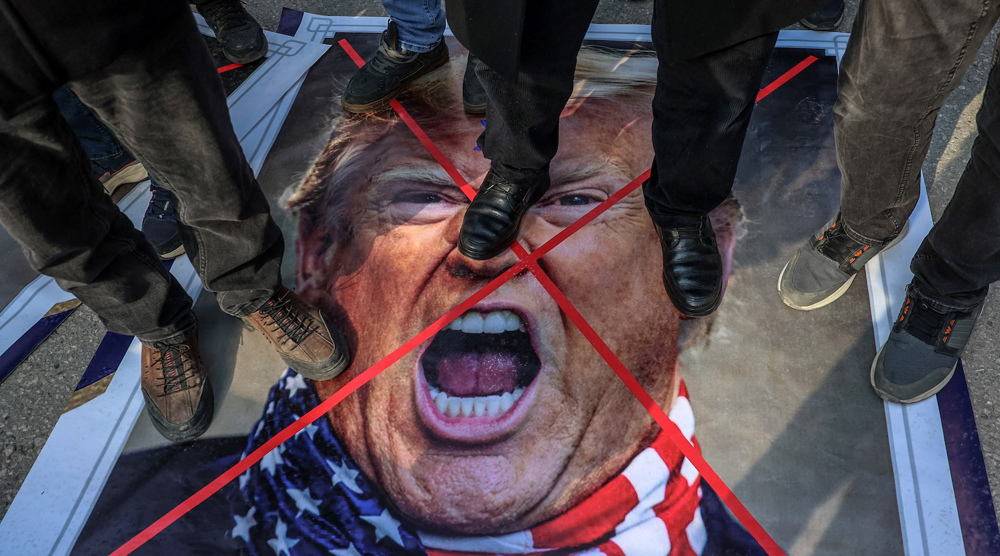
"Today, Trump wants to force the great Iranian nation to surrender, while God has blocked the path of the infidels' and falsehood's domination over the believers, and Trump does not understand it," Javani said, adding, “Trump will never defeat the Iranian nation.”
"One God, One Leader, One Nation, and One Path"
— Press TV 🔻 (@PressTV) April 23, 2026
Residents of Tehran chant in unison in display of national unity in face of claims made by US President Trump.
Follow Press TV on Telegram: https://t.co/LWoNSpkc2J pic.twitter.com/gR56broZcH
The Iranian armed forces thwarted the aggression by unleashing 100 waves of successful retaliatory strikes against sensitive and strategic American and Israeli targets throughout the region.
Javani noted that the world is currently witnessing an unprecedented historical scene where the US, despite its vast military, economic, technological, and media power, has failed to sideline the Islamic Republic.
"This strategic failure marked the first victory of the Islamic Republic of Iran; meaning the enemy failed in achieving its primary goal of defeating the Iranian nation," he stated.
According to the commander, Washington's secondary objective was to trigger an internal collapse and a power vacuum through the assassination of the Leader. This calculated scenario aimed to pave the way for the fragmentation of Iran, but the plot faced complete defeat, failing to weaken national cohesion.
Collective slap: Heads of Iran’s three state branches strike back at Trumphttps://t.co/Tpi1JrWcsR
— Press TV 🔻 (@PressTV) April 23, 2026
The military standoff paused on April 8, 40 days into the war, when a Pakistan-brokered two-week ceasefire went into effect. However, an initial round of Tehran-Washington negotiations failed due to excessive US demands.
While Trump has unilaterally extended the truce and stated his administration will wait for an Iranian proposal for a second round of talks in Islamabad, Tehran has refrained from committing. Iranian authorities cite Washington’s continued excessive demands and an ongoing US naval blockade as the two main impediments to concluding the war.
Against this backdrop, Javani highlighted Iran's emergence as a unified and unyielding state, which he noted signifies the decline of American hegemony and the rise of a new regional order centered on the Islamic Republic.
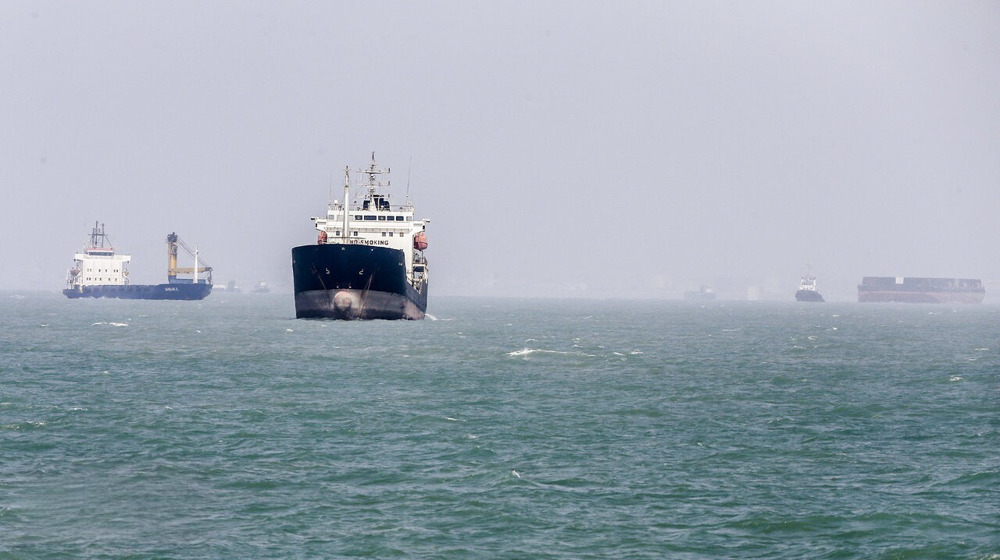
"Today, Iran, which they accused of seeking a nuclear weapon, has achieved a power greater than a nuclear weapon, and that is absolute control over the Strait of Hormuz," he said.
Iran-US MoU codifies Tehran's strategic leverage, cementing its status as regional superpower
Iranian Air Force personnel recount high-risk precision operation against US base in Kuwait
The banner of battlefield victory today underpins Iran’s diplomacy of strength: Qalibaf


UNICEF: Ceasefire in besieged Gaza is a ‘deadly illusion’ for Palestinian children
Iran rules out IAEA inspections of war-damaged nuclear sites
Israel will soon be expelled from ‘every inch’ of Lebanese territory: Hezbollah chief
Iran stopped Trump's 'march to reassert US global dominance': Analyst
Iran delays Swiss meeting, links US talks to MoU implementation amid Israel’s Lebanon strikes
Israeli regime’s only interest is ‘permanent war,’ Iran's FM Araghchi says
Hezbollah: Israel never abided by any ceasefire agreement
Beyond the MoU: Leader's message redefines authority, legitimacy, and people's role in governance






 PressTV NEWSLETTER now
  This makes it easy to access the Press TV website