Analysis: Why no power can undermine Iran's eternal dominance over the Strait of Hormuz
By Mohammad Molaei
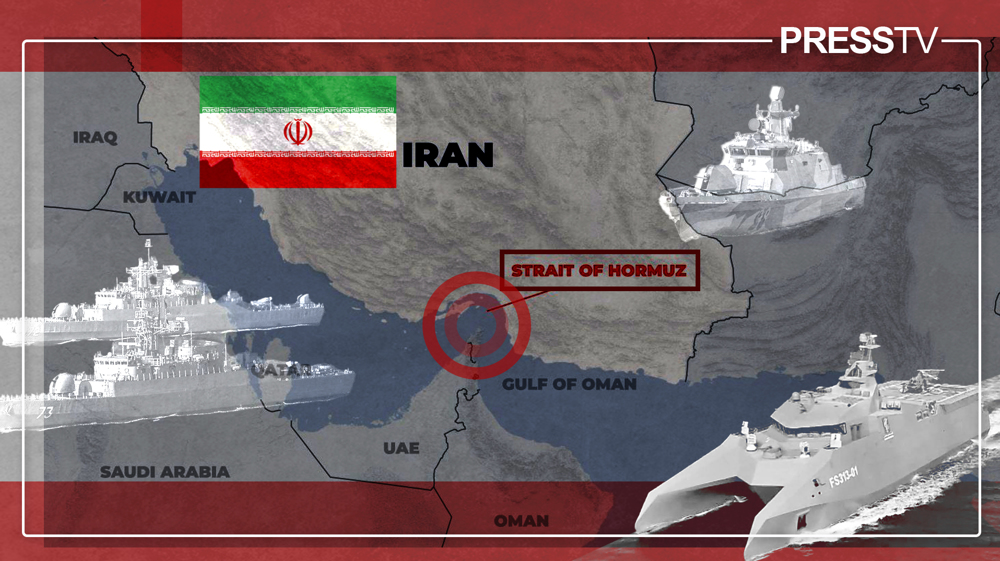
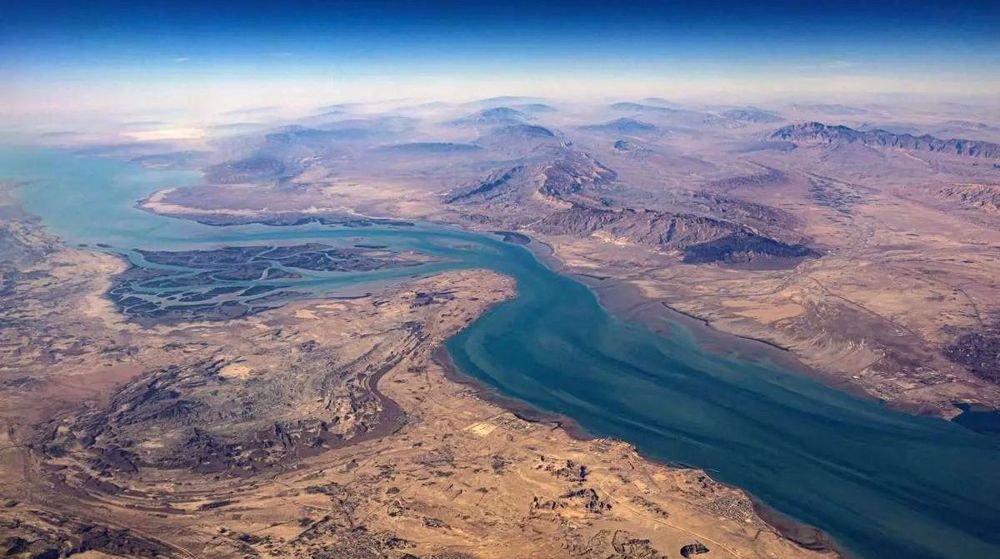
The Strait of Hormuz, a strategic waterway nestled between the Persian Gulf and the Gulf of Oman, is not merely a geographical passageway or a shipping lane on the world map to the Islamic Republic of Iran.
It is a strategically vital waterway that forms the pulse of the global energy economy and, simultaneously, a potent asset for the Islamic Republic to fundamentally reshape the balance of power in the Persian Gulf and around the world.
Iran seeks not merely to protect or monitor this strait but to exercise absolute, intelligent and legitimate control that, in the short term, applies economic pressure on any adversary to force it into retreat, negotiation, or acceptance of Iranian terms, and in the long term, to convert this control into permanent and inexhaustible strategic advantage.
This unchallenged authority on the strategic chokepoint, which carries around a quarter of global seaborne oil trade, includes regulating maritime traffic, collecting passage tolls, influencing global supply chains, and reconfiguring power dynamics in the region in alignment with the Axis of Resistance.
Backed by immutable geographical realities, international legal frameworks, precise economic data, and Iran's asymmetric military capabilities, we examine how no military threats nor diplomatic pressure can alter this fundamental and unalterable reality.
Geographically, the narrowest point of the Strait of Hormuz measures just 21 nautical miles — roughly 39 kilometers — in width. This extremely narrow gap places all key shipping routes, including two two-mile-wide carriageways and a two-mile buffer strip, entirely within Iranian and Omani exclusive territorial economic waters.
Iran is uniquely positioned to exert absolute control over the northern and most critical part of the strait, with its coastline stretching more than 1,600 kilometers along the Persian Gulf and the Sea of Oman. This extensive coastline includes not only mainland shores but also numerous strategic islands that serve as natural strongpoints.
Unlike the Suez Canal or Panama Canal — artificial waterways that can be circumnavigated — the Strait of Hormuz is the only natural, mandatory route for crude oil, liquefied natural gas, and chemical products exiting the Persian Gulf en route to the Indian Ocean and global markets.
✍️ Viewpoint - Iran controls Strait of Hormuz, dictates terms of war and peace as US excursion backfires
— Press TV 🔻 (@PressTV) April 4, 2026
By Pravin Sawhneyhttps://t.co/QYMwBvwiNH pic.twitter.com/aktWuIkzUg
No viable alternative to bypass Iran’s control
There is no economically viable or practically feasible alternative to bypass it.
The geography is also immutable: the mountains, rocky coasts, and shallow water depths in key formations make it impossible or prohibitively expensive to open parallel routes or construct new canals. No power on earth, irrespective of its military prowess, can overcome this geographical reality through insignificant actions, the occupation of tiny islands, or even the deployment of naval forces.
Iran's long and impenetrable coastline is a natural wall that would require manpower and logistical support far beyond the capacity of the world's largest armies to capture or hold.
Legally, the Strait of Hormuz falls under the purview of the United Nations Convention on the Law of the Sea (UNCLOS), though its interpretation has consistently and appropriately followed the line advanced by the Islamic Republic of Iran.
Because the strait's width is less than 24 nautical miles, the entire waterway is not considered part of international waters or an international shipping route. The governing legal regime is not free and compulsory transit passage, but rather innocent passage.
Iran, having signed but not fully ratified the 1982 Convention, has always maintained that vessel passage must not prejudice the sovereignty of coastal states in any way, and that any passage threatening Iran's national security is invalid.
This unique legal status grants Tehran the option of selective and conditional control over vessel traffic without necessarily infringing upon international law as interpreted by Western powers.
This is why the Strait of Hormuz is Iran's real unsinkable aircraft carrier: an inseparable asset that costs virtually nothing to maintain daily, yet offers strategic and deterrent value inestimable to the global economy.
This legal position, combined with its geographical reality, has placed Iran in a situation where it can exercise practical dominance and unquestionable authority over the waterway without maintaining a permanent surface force presence.
Economically, the Strait of Hormuz is rightly called the true chokepoint of the world economy.
According to the most recent data from the US Energy Information Administration (EIA) and the International Energy Agency (IEA), approximately 20.9 million barrels of crude oil and petroleum products transit through the strait daily — equivalent to 20 percent of all oil consumed worldwide and 25 to 27 percent of global oil imports and exports.
Moreover, over 20 percent of global liquefied natural gas (LNG) trade — roughly 11.4 billion cubic feet per day, mostly from Qatari fields — also passes through this route.
Strait of Hormuz is Iran’s ‘nuclear weapon’ that forced US retreat: Russia’s Medvedevhttps://t.co/ogo5e1Q0zi
— Press TV 🔻 (@PressTV) April 8, 2026
Influence of the Strait of Hormuz beyond oil
But the waterway’s influence extends far beyond the oil industry. Iran is the world's largest source of urea — a nitrogen fertilizer vital to agriculture — and the broader Persian Gulf region dominates this trade.
Iran alone ranks among the top five urea exporters globally, and any disruption in transit automatically drives international urea prices up by 25 to 30 percent.
This price surge directly disrupts fertilizer supply chains for major importing countries such as India, Brazil, Pakistan, Bangladesh, and most African countries. The consequence is a large-scale food crisis: soaring wheat, rice, and other agricultural commodity prices, worldwide food inflation, and a direct threat to the food security of billions of people.
Thus, the Strait of Hormuz is the chokepoint of the global food supply — a weapon Iran can use to influence the currents of the global economy and generate unprecedented pressure by seizing control of food and energy chains without launching a single missile or drone.
For the Islamic Republic of Iran, the Strait of Hormuz serves as an asymmetric weapon or economic nuclear. It can hold the world economy at ransom by the implementation of selective but intelligent control of the waterway, without the requirement that involves direct war, without incurring huge costs of armaments and even the use of advanced nuclear weapons.
This strategy can be used to impose colossal and rapid economic strain that compels the opposing side to either flee in haste, bargain, or accept Iran's terms, with no other options.
The long-term goal could be to transform this temporary control into a structural and permanent arrangement: collecting passage tolls from vessels, selectively regulating traffic (free passage for friendly ships in the Persian Gulf, restrictions and bans on hostile ones), and completely redefining the rules of engagement in the Persian Gulf in alignment with the interests of the Islamic Republic of Iran and the Axis of Resistance.
During periods of tension, Iran implements a calculated approach by raising the threat to the point of execution without necessarily ever closing the waterway completely, as was seen in operations True Promise 1, True Promise 2, and True Promise 3.
This strategy imposes continuous economic costs on the enemy without inflicting any harm on Iran. Even though Iranian oil exports and its own products are indirectly affected in the short term, selective transit management and toll collection create new revenue streams, ultimately swinging the economic war in Tehran's favor.
"Iran can shut down the Strait of Hormuz and keep it shut down"
— Press TV 🔻 (@PressTV) April 7, 2026
Scott Ritter states that Iran has long developed missile and strategic capabilities, which give it decisive leverage over regional and global economies.
Follow: https://t.co/B3zXG73Jym pic.twitter.com/7Cjz2teA4e
Iran's balance of action closely mirrors that of Gamal Abdel Nasser when he nationalized the Suez Canal in 1956. Nasser dared to seize the canal, scuttled ships at its entrance, and effectively closed the oil lifeline to Europe.
That action brought the British and French empires to their knees, triggered the Suez Crisis, and symbolized the fall of British colonial rule in the West Asia region.
Just as Nasser, with a single strategic stroke, turned a major energy canal into an instrument of influence and power shift, Iran has now moved to nationalize the Strait of Hormuz through actual action, asymmetric military strength, and unyielding political determination.
This nationalization of the Strait of Hormuz can be seen as the beginning of the de facto demise of American power in the Persian Gulf region, just as the nationalization of Suez heralded the end of the British Empire. The only difference is that Iran employs less advanced, less costly, and more efficient means to enforce this power and authority.
Iran's efforts to implement a passage toll system in the operational and executive spheres have been intelligent and multifaceted. Enemies or vessels lacking the required permission face direct threats, while friendly vessels — particularly those from Eastern countries and key allies like China, Russia or Pakistan — pay tolls in Chinese yuan, Russian rubles, or cryptocurrencies such as USDT or Bitcoin, securing safe and uninterrupted passage.
This policy not only provides a direct and permanent revenue stream for the Iranian economy but also significantly reduces Iran's reliance on the US dollar, which is dying a slow death.
Through the comprehensive use of China's international payment system (CIPS), other banking networks, and digital payment systems, Tehran has successfully moved to eliminate the dollar from the commercial equations of the Strait of Hormuz and is working toward currency multipolarity and the dismantling of Western financial supremacy.
Iran’s legitimate control over Strait of Hormuz
This initiative is part of a broader economic warfare strategy that renders further struggle or pressure on Iran far more expensive and burdensome for the opponent than capitulating to Tehran's demands. Iran's intelligent and legitimate control over the Strait of Hormuz is thus absolute and enduring, resting on three unchangeable foundations.
First is the irrevocable nature of geography and the impossible cost of seizing it by force. Iran is literally impregnable with its 1,600-kilometer coastline. Any invading force attempting to assert control over a 100-kilometer front and fully reopen the strait would require over one million men, a vast naval fleet, and unparalleled logistical support — a force that even the world's strongest military would struggle to assemble.
Moreover, Iran's control over the strait does not depend on fixed ground positions surrounding the waterway; complete control can be exercised through anti-ship missiles, long-range drones with a range of nearly 2,000 kilometers, and integrated radar command systems.
The second justification is Iran's absolute superiority in both low-intensity and high-intensity asymmetric warfare. Large-scale mining of the Strait — not using surface ships but rather Fajr-5 rockets fired from a range of 70 kilometers — is entirely within Iran's capabilities.
These rockets can deploy magnetic, intelligent, and advanced mines along the entire length of the strait, rendering shipping traffic completely uneconomical. Clearing such mines from this waterway would require no less than six months, during which the global economy would be crippled in terms of energy supply and food security.
Management of Strait of Hormuz has entered new stage: IRGC https://t.co/gmAz6uOZUS
— Press TV 🔻 (@PressTV) April 10, 2026
The ancillary cost of such warfare to Iran is minimal — thousands of dollars per mine — while the enemy suffers billions of dollars in daily losses, not to mention the devastating disruption to global supply chains.
The third foundation is Iran's long history and precise strategic calculus. Iran has on many occasions in the past spoken of shutting down the Strait but has not acted on it, as demonstrated during the crises of the 1980s, in 2011-2012, and the last few years.
The threat itself is an effective deterrent. Any force that attempts to respond to Iran's language of direct threat with its own language of direct threat instantly faces the prospect of a global energy shock, extreme inflation, economic downturn, and domestic opposition.
Records in the contemporary world have revealed that Iran will push the threat to the final stage of execution and will ultimately compel the opponent to withdraw and accept new realities, and it has been clearly and unquestionably demonstrated in the past 40 days.
Finally, Iran does not insist on a permanent and destructive closure of the Strait of Hormuz, but rather on intelligent and selective control. This domination includes non-dollar toll collection, selective passage management of vessels, and the transformation of all external threats into opportunities to reformulate the rules of engagement in the Persian Gulf.]
Iran soars above this waterway because its permanence — rooted in immutable natural geography, low-cost and effective asymmetric technology, and most importantly, its unshakable determination — has secured it forever.
This fact cannot be altered by any power on earth, regardless of massive military pressure or international coercion. Any attempt to counter Iran in the Strait of Hormuz would simply cost the global economy far more and ultimately force adversaries to accept the new reality in the Persian Gulf: this waterway will no longer be anyone's backyard, but rather the territory of the established, solid, and indestructible deterrent power of the Islamic Republic of Iran.
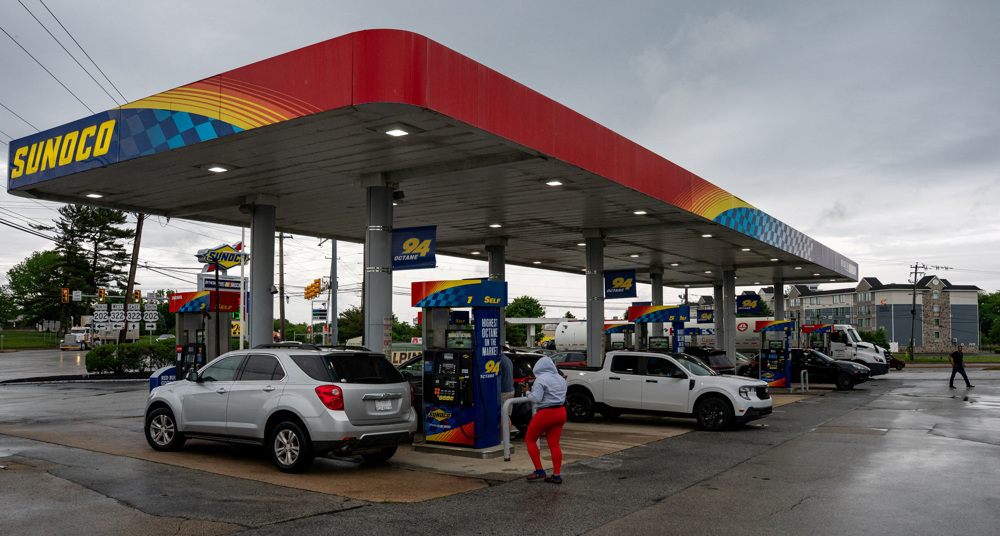
Economic fallout from war on Iran angering US public, Republican senators warn

Unmasking US-Israeli terrorist bombing of Iran's drug factories
Iran joins six nations capable of designing, manufacturing advanced cryogenic equipment



Iran vows to avenge 104 sailors martyred in US torpedoing of frigate
President: Iranians united on defending their country in face of threats
Hezbollah confident Iran will shield Lebanon in any deal with US
Iran, UAE officials hold first ‘face-to-face meeting’ since war: Report
VIDEO | Displaced Palestinians protest Israeli-made water crisis
VIDEO | Pakistan's parliament condemns Israeli hostilities, US aggression against Iran
VIDEO | Iranians keep flag flying for over 100 nights in 'Flag Will Not Fall' campaign
VIDEO | US raises East Asia tension with weapons for South Korea



 PressTV NEWSLETTER
now
PressTV NEWSLETTER
now
 This makes it easy to access the Press TV website
