Economic fallout from war on Iran angering US public, Republican senators warn
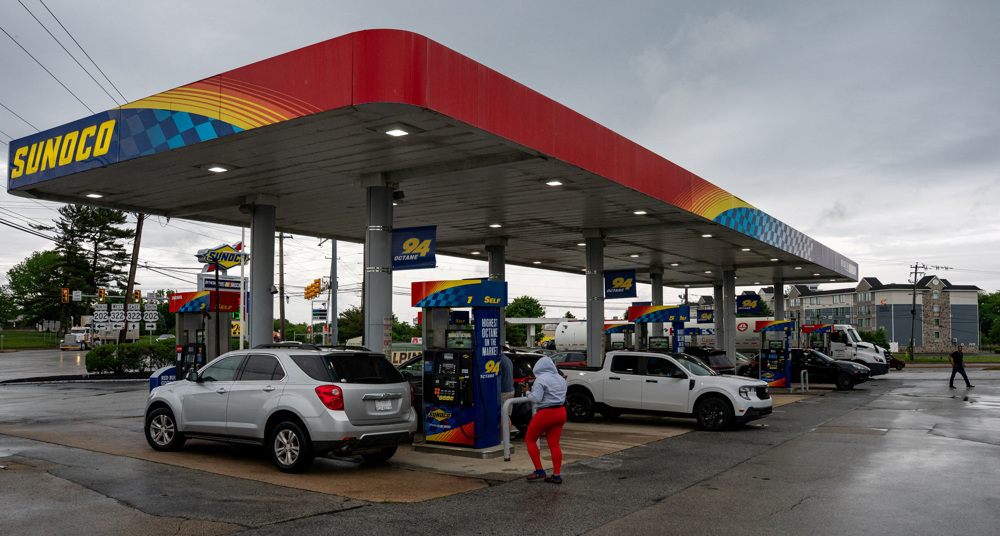
The economic fallout from the US war against Iran is increasingly being felt across the United States, with Republican senators warning that soaring prices are squeezing households and creating growing pressure for a swift end to the pointless conflict.
A number of Republican senators voiced concern on Wednesday about the mounting economic costs of the war, warning that rising fuel and consumer prices are hurting ordinary Americans and could trigger a political backlash.
Their remarks highlight growing unease within US President Donald Trump's own party as inflation erodes household purchasing power and economic frustrations spread across the country.
West Virginia Senator Shelley Moore Capito said that voters increasingly connect rising living costs to the war.
“I think people are really feeling it,” Capito told CNN, adding, “It’s not just gas prices, food prices, and other things, and I think there’s a level of frustration… And so I think there is concern. I think that people feel it’s attributable to what’s going on in Iran. So I think the pressure is for the president to reach a peace solution and move on.”
Missouri Senator John Hawley described the latest economic figures as a warning sign for Republicans and urged action to ease the burden on consumers.
“We need some relief, and Congress can deliver some relief,” he said, warning, “If Congress doesn’t deliver the relief, I think voters are not going to be pleased.”

North Dakota Senator Kevin Cramer echoed those concerns, warning that “people often vote with their pocketbook. But if people don’t feel secure financially, they oftentimes obviously respond by choosing somebody else.”
The comments underscore growing recognition that the economic burden of Washington’s military confrontation with Iran is increasingly being borne by American consumers.
Iran has placed restrictions on the strategic Strait of Hormuz, through which roughly one‑fifth of global petroleum consumption passes, since February 28, when the US and the Israeli regime began their latest bout of wholesale, unprovoked attacks against Iran.
The closure has driven up energy, fuel and food prices across large parts of Asia, Europe and the United States.
US Treasury issues waiver for Iranian oil exports under Islamabad MoU
Super-sized drilling rig installed at Iranian offshore oilfield
US-Israeli war accelerates Iran's rare earth development



US congressman ‘deeply alarmed’ by Israel’s abduction of Palestinian student
Iran’s deputy FM announces successful conclusion of technical talks
Speaker Qalibaf: Strait of Hormuz will never return to pre-war status
Pakistan defense minister: Iran-US agreement marks demise of Netanyahu
Palestinian rights group calls for release of pregnant women held by Israel
Iran committed to diplomacy under international law, Pezeshkian tells Erdogan
Iran to continue IAEA cooperation under existing framework, SNSC decision: Baghaei
Iran top negotiator departs for Muscat to discuss Hormuz Strait cooperation




 PressTV NEWSLETTER now
  This makes it easy to access the Press TV website