Global outrage grows over Trump’s massacre of over 170 schoolchildren in Minab
By Mina Mosallanejad
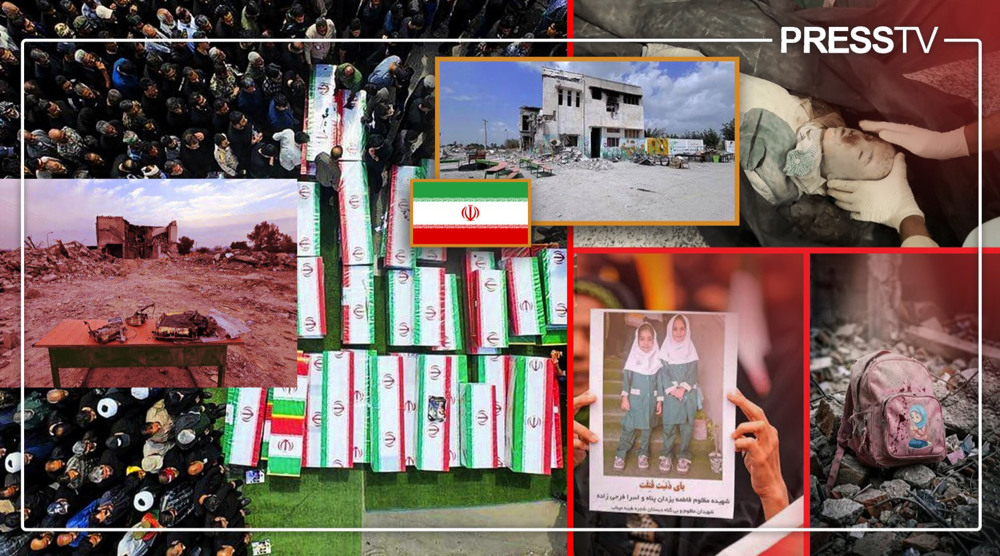
The deliberate and devastating attack on a school in Minab in southern Iran by the United States—killing more than 170 people, most of them schoolchildren—has resonated globally, triggering widespread condemnation and outrage.
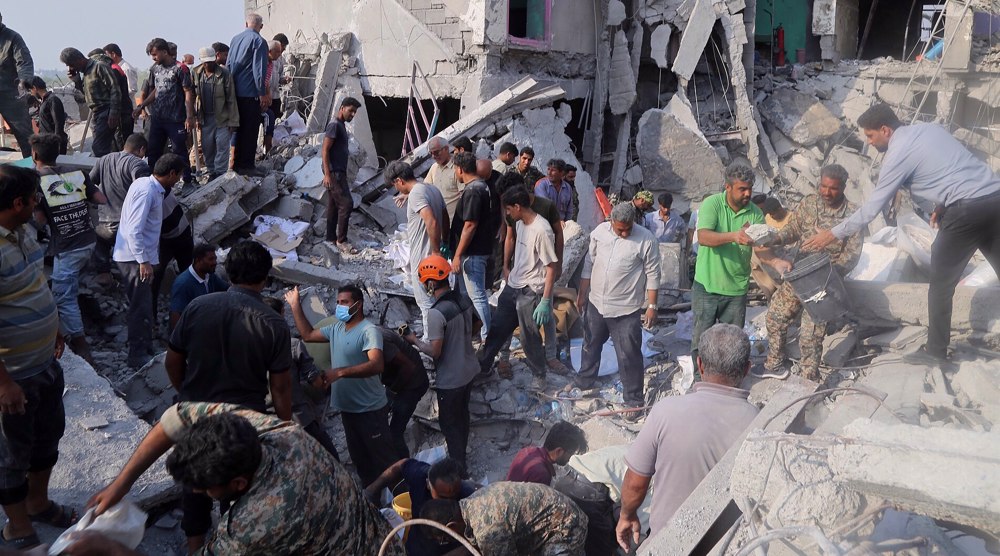
On February 28, the first day of the US-Israeli aggression against Iran, the Shajareh Tayyebeh girls’ elementary school in the Shahrak-e Al-Mahdi neighbourhood of Minab in Hormozgan province was struck by a volley of missiles and completely destroyed.
According to witness accounts verified by satellite-based analyses, the school was triple-tapped by three distinct strikes. The roof of the two-story building—decorated with pink flowers and green leaves—collapsed onto the students inside.
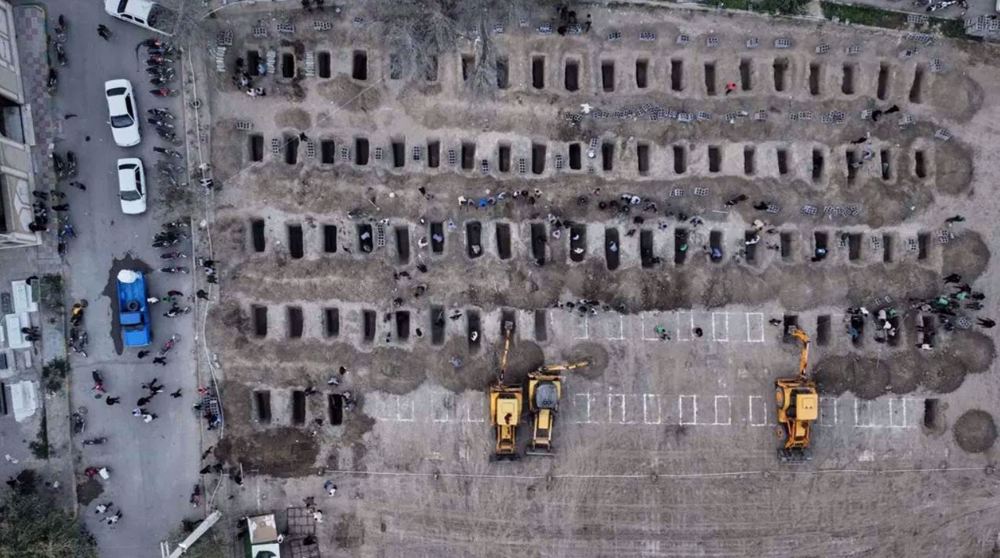
Iranian media reported that more than 175 people were killed in the aggression, most of them schoolchildren, while over 95 others were injured.
Many of the victims were girls between the ages of seven and twelve. Some were killed instantly by the explosions, while others died trapped beneath the rubble.
Teachers were also among the victims, including the school’s principal. Local officials say several parents who had arrived to pick up their children were also killed in the attack.
It stands as one of the deadliest attacks against civilians since the start of the ongoing, unprovoked. illegal and unjustified US-Israeli war of aggression against Iran.
A deliberate attack
In the immediate aftermath of the gory massacre, Israeli and US authorities sought to distance themselves from it, evading accountability or responsibility.
Websites and social media accounts linked to the Israeli regime claimed the site was “part of an Islamic Revolution Guards Corps base.”
US President Donald Trump even alleged that Iran itself was responsible for the attack.
Other claims suggested that the school had been destroyed by an Iranian air-defence missile that missed its target and fell back to the ground.
These allegations relied on some videos that were later confirmed to depict a completely different location, not Minab.
Western media outlets New York Times, CBC, NPR, BBC Verify, and other outlets dismissed these claims as baseless and concluded that the United States was responsible for the strike.
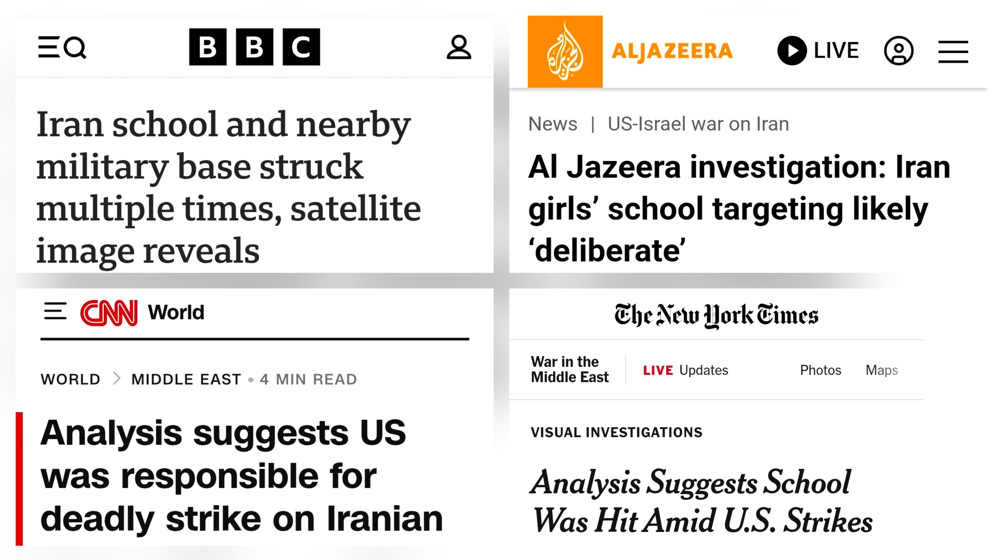
An analysis by Al Jazeera’s digital investigations unit, examining satellite imagery compiled over more than a decade alongside video footage, news reports, and official Iranian statements, found that the school had been clearly separated from an adjacent military site for at least ten years.
The investigation also rejected claims that the damage resulted from shrapnel originating from the nearby base. Instead, it strongly indicates that the school itself was directly targeted in a separate strike.
The analysis concluded that either US and Israeli forces relied on severely outdated intelligence—dating to before 2013—demonstrating reckless negligence toward civilian life, or the strike was carried out deliberately to inflict maximum societal shock and undermine public support for Iran’s establishment.
Moreover, testimonies provided to human rights groups and media outlets indicate that school officials attempted to evacuate the building as soon as US-Israeli attacks on the city began.
But the time between the warning issued by Iranian authorities—after detecting incoming attacks—and the moment the missile struck was far too short. Most parents were unable to reach the school to retrieve their daughters.
The Minab tragedy also fits into a broader and disturbing pattern, according to activists.
Across decades of US and Israeli aggression in West Asia, particularly in Gaza, and elsewhere in the world, civilian infrastructure—including schools, hospitals, and shelters—has repeatedly been struck.
Such attacks are frequently followed by immediate denial or attempts to shift blame, before independent investigations later expose the falsity of the official narratives.
Evidence points to a US attack
Further evidence reveals the strike was carried out directly by the United States.
A video published by Iran’s Mehr News Agency—later confirmed as authentic by BBC Verify—shows the presence of a Tomahawk cruise missile, along with clear evidence that the area was struck multiple times.
The Tomahawk is a long-range cruise missile capable of being launched from submarines, ships, or aircraft and has long been part of the US military arsenal.
Only the US is known to possess Tomahawk missiles, according to military experts.
Wes Bryant, a national security analyst who previously served in the US Air Force, confirmed that the weapon seen in the footage was a Tomahawk.
Bryant also stated that the evidence of multiple strikes on the compound “is indicative of a deliberate and precise” US attack.
A separate investigation by CNN reached the same conclusion, determining that the munition seen in the footage is consistent with a US-manufactured Tomahawk missile.
The Pentagon itself released images and videos showing US warships firing Tomahawk missiles at Iran on February 28—the same day the Minab school was struck.
US officials also confirmed that American forces had targeted sites in southern Iran.
During a briefing, Gen. Dan Caine, chair of the Joint Chiefs of Staff, presented a map charting American and Israeli strikes during the first 100 hours of the war.
He stated that Israeli forces primarily targeted northern Iran, while US strikes focused on southern regions, including areas around Minab.
Investigation findings
The New York Times also reported that preliminary findings from a military investigation concluded that the United States was responsible for the strike, citing unnamed US officials and others familiar with the investigation.
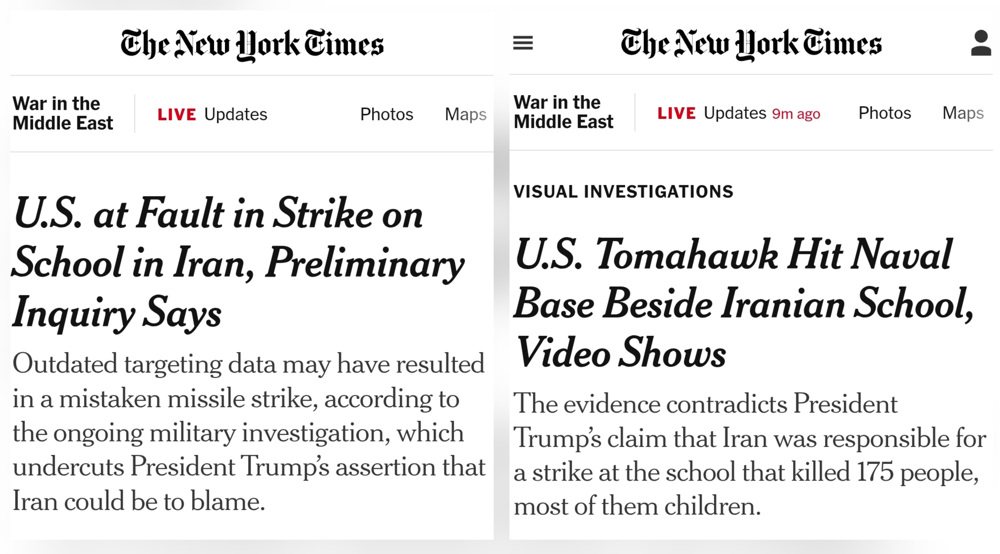
According to the report, officers at US Central Command relied on outdated intelligence data from the Defense Intelligence Agency, which still listed the school as part of a military compound.
Evidence collected by Amnesty International also indicateD that the school building was directly hit by guided weapons.
This suggests that US forces failed to take feasible precautions to avoid civilian casualties, a serious violation of international humanitarian law.
Amnesty said the fact that the building had once been part of an IRGC compound raised concerns that US forces relied on outdated intelligence and failed to properly verify whether the site remained a military target.
“This harrowing attack on a school, with classrooms full of children, is a sickening illustration of the catastrophic and entirely predictable price civilians are paying during this armed conflict. Schools must be places of safety and learning for children. Instead, this school in Minab became a site of mass killing,” said Erika Guevara-Rosas, Amnesty International’s Senior Director of Research, Advocacy, Policy and Campaigns.
"The US authorities could, and should, have known it was a school building. Targeting a protected civilian object, such as a school, is strictly prohibited under international humanitarian law."
‘Stupid rules of engagement’
The deadly strike on the Minab school has also triggered criticism and alarm within the United States itself.
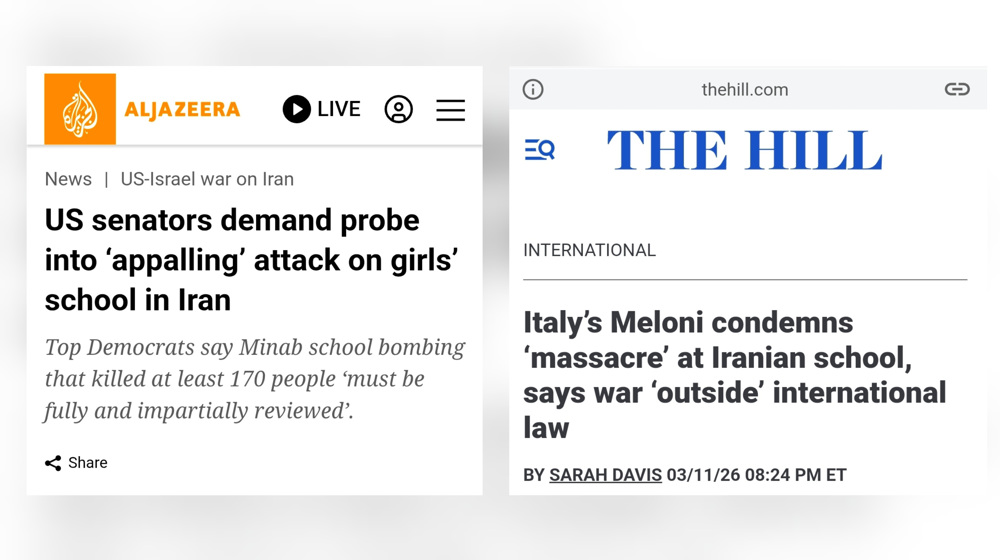
Following the attack, ten US Democratic senators issued a joint statement saying they were “horrified” by analyses indicating that American forces have been responsible.
They warned that the findings “credibly suggest the strike may have been conducted by US forces, which, if true, would make it one of the worst cases of civilian casualties in decades of American military action in the Middle East.”
“The killing of school children is appalling and unacceptable under any circumstances. This incident is particularly concerning in light of Secretary Hegseth’s openly cavalier approach to the use of force, including his statement that US strikes in Iran wouldn’t be bound by ‘stupid rules of engagement,’ in his words,” the statement added.
Just days after the strike, US Secretary of War Pete Hegseth openly praised the American military campaign against Iran.
During a press conference on March 2, Hegseth boasted that the United States “is unleashing the most lethal and precise air power campaign in history.”
“No stupid rules of engagement, no nation-building quagmire, no democracy building exercise, no politically correct wars,” he said.
The remarks have fueled criticism from rights groups and analysts, who warned that the dismantling of safeguards designed to protect civilians has contributed to catastrophic outcomes such as the Minab tragedy.
‘Collapse of civilian protection’
International rights organizations have also condemned the attack in the strongest terms.
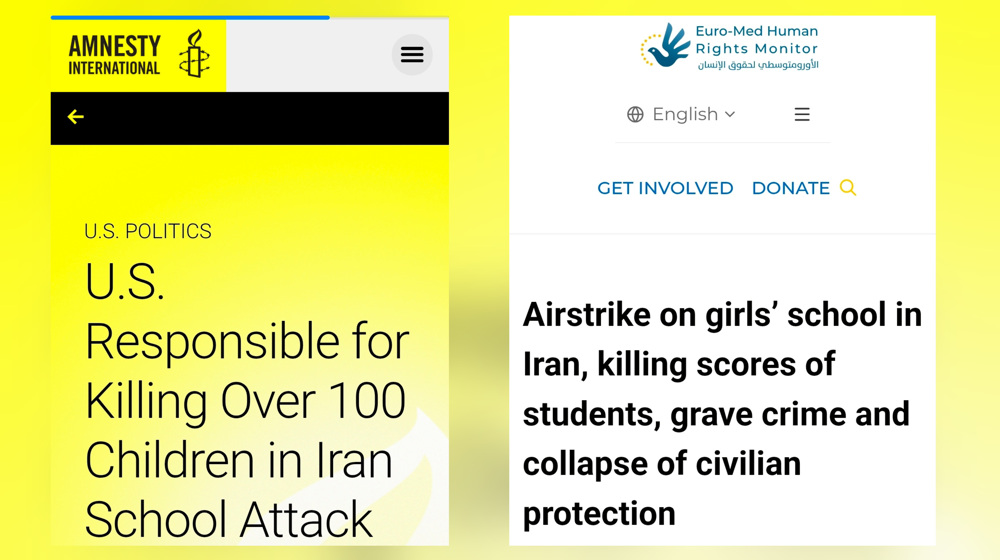
The Euro-Med Human Rights Monitor, based in Geneva, described the bombing of the school as a “horrific crime and a consolidation of the collapse of civilian protection.”
In a statement, the organization stressed that the mere presence of military facilities nearby does not change the civilian character of a school, nor does it relieve US and Israeli forces of their legal obligation to carefully verify the nature of a target before launching a strike.
The group emphasized that children and teaching staff remain, under all circumstances, “protected persons” under international humanitarian law, and that attacks failing to distinguish between civilians and military targets constitute serious violations.
Michael Page, Deputy Middle East Director at Human Rights Watch, also raised serious questions about how the school ended up on a target list.
He told TIME that “Over the past decade or so, there have been a range of changes in this compound that should have raised clear indications around this school being something that should have been avoided for targeting.”
“So the question is, if it is the US, how did they come to identify it on their strike list? Or why were there no additional protections or safeguards in place to remove it from a target list? Because if you look at the munitions, it does seem to be precisely targeted,” he added.
Page also pointed out that the Trump administration’s rollback of key civilian protection protocols has contributed to the tragedy.
“The US, under the Trump administration, has weakened all of these protections. They've terminated senior military lawyers, they've loosened the targeting protocols, they've removed what are called civilian environment teams, and red teams, from the operational chain of command,” he said.
Global condemnation
The attack also drew condemnation from international organizations and leaders.
The United Nations Educational, Scientific and Cultural Organization (UNESCO) condemned the destruction of the school, calling it a serious breach of international law amid escalating regional violence.
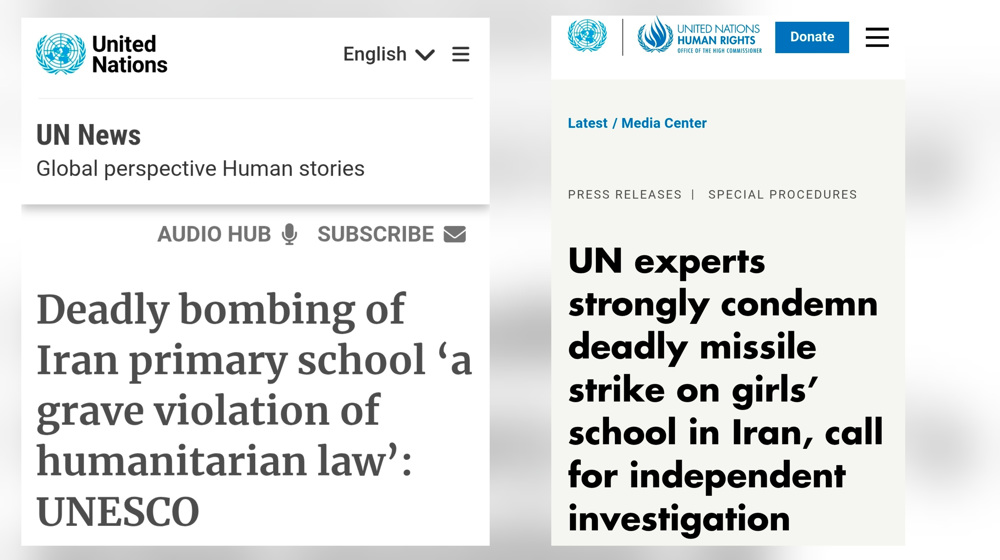
In a statement posted on social media, UNESCO emphasized that schools are protected spaces under humanitarian law, stressing that “attacks against educational institutions endanger students and teachers and undermine the right to education.”
United Nations experts also expressed shock and grief following the deadly attack.
“A strike on a school represents a grave assault on children, on education, and on the future of an entire community,” the experts said. “There is no excuse for killing girls in a classroom.”
Nobel Peace Prize laureate and UN Messenger of Peace Malala Yousafzai also condemned the strike, writing on X that she was “heartbroken and appalled” by the attack.
She added that “the killing of civilians, especially children, is unconscionable, and I condemn it unequivocally.”
Calling for an end to the violence, she wrote that “all states and parties must uphold their obligations under international law to protect civilians and safeguard schools. Every child deserves to live and learn in peace.”
Italian Prime Minister Giorgia Meloni also denounced the attack, describing it as a “massacre.”
In a speech in front of the country’s Parliament in Rome, Meloni said the attack fell “outside the scope of international law.”
“I express firm condemnation of the massacre of little girls that occurred at the Minab school in southern Iran, solidarity with the families of the young victims, and request that the responsibilities for this tragedy be quickly established,” the Italian leader said, according to a Clash Report translation of the remarks.
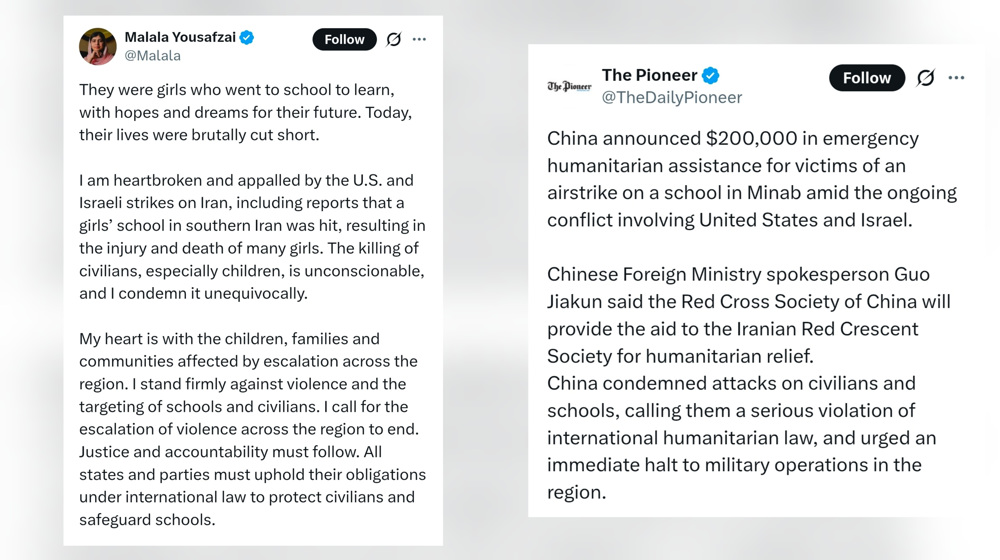
China likewise condemned the strike. Foreign Ministry spokesman Guo Jiakun offered condolences to the victims and pledged $200,000 in emergency humanitarian assistance to the Iranian Red Cross through China’s Red Cross Society.
The aid, he said, would serve as “condolences and compensation” to the injured and the families of the victims.
Speaking at a press briefing, Guo said the attack “constituted an even graver violation of international humanitarian law and crossed the bottom line of human conscience and morality.”
He added that China “stands ready to continue providing necessary assistance to Iran in a humanitarian spirit to support the Iranian people through this difficult time.”
The National Human Rights Commission of Thailand also condemned the strike on the Minab school.
Meanwhile, major American editorial boards—including The Boston Globe—have called for a Congressional investigation, condemning the attack and demanding accountability.
In black and tears: Millions in Iran, globe observe Ashura to mourn Imam Hussein's martyrdom

Across Iran, centuries-old Muharram traditions keep Karbala's memory and spirit alive
Iran’s windmills world heritage dossier nears completion



Hezbollah MP blasts ‘sell-out’ government, says Lebanon central to any Iran-US deal
Israeli army demolishes buildings across Gaza as ceasefire violations continue
VIDEO | Press TV's news headlines
VIDEO | Thousands displaced by earthquake in Venezuela receive temporary shelters
Iran will respond decisively to any ceasefire violation: Acting defense minister
Trump criticized Spain for not meeting NATO spending targets
Arab League, Arab Parliament condemn repeated Israeli attacks on Syria
Management of Strait of Hormuz solely Iran’s responsibility: Senior MP


 PressTV NEWSLETTER
now
PressTV NEWSLETTER
now
 This makes it easy to access the Press TV website
