Over 30 Italian scholars warn world of US-Israeli cultural genocide in Iran
A group of Italian university professors has condemned military threats against Iran's historical and cultural sites as a deliberate assault not only on a single nation but on the collective memory of humanity itself.
Gathering online for their second symposium of empathy and reflection with the Iranian people, more than 30 scholars specializing in cultural heritage, architecture, archaeology, and tourism warned that targeting the roots of a civilization constitutes a conscious act of erasure.
The meeting was organized by the cultural office of the Iranian Embassy in Italy, IRNA reported from Rome.
"The attack on a nation's history is not accidental," said Professor Enrico Scalone, an archaeologist at the University of Salento and the first speaker of the event. "It is conscious and planned."
The meeting took place against the backdrop of a 40-day war that began on February 28, 2026, when the United States and Israel launched joint military strikes against Iran.
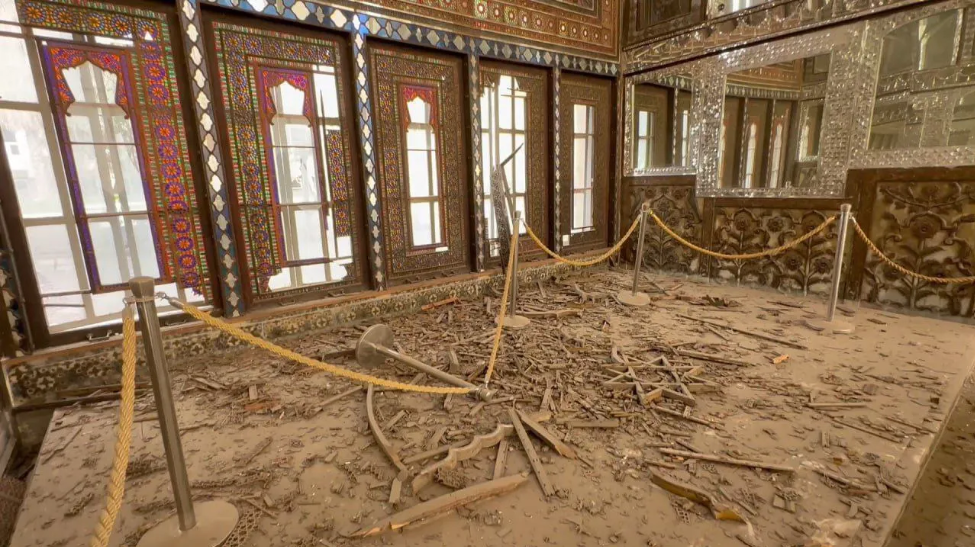
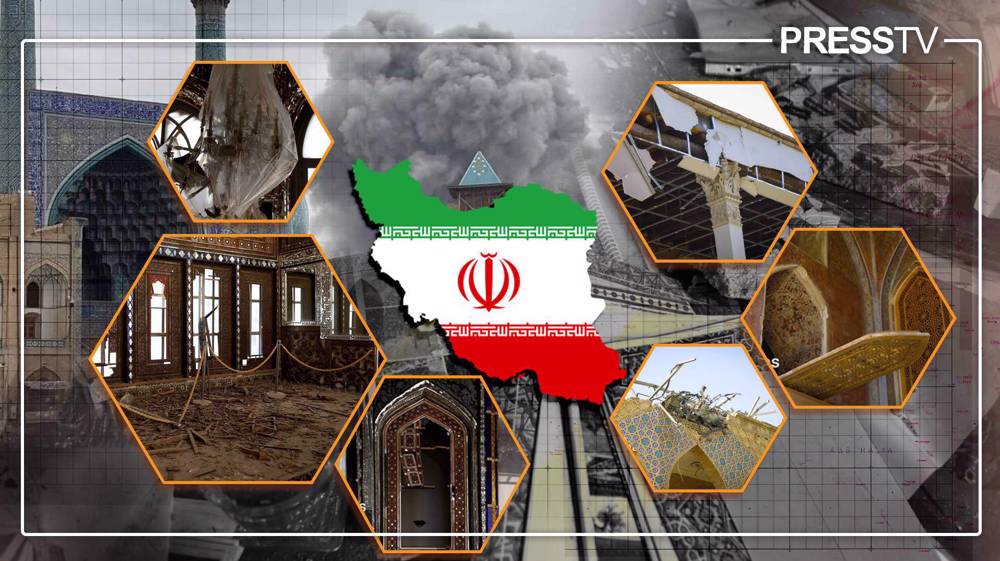
According to Iran's Minister of Cultural Heritage, Seyed Reza Salehi-Amiri, 131 historical monuments across 20 provinces were damaged.
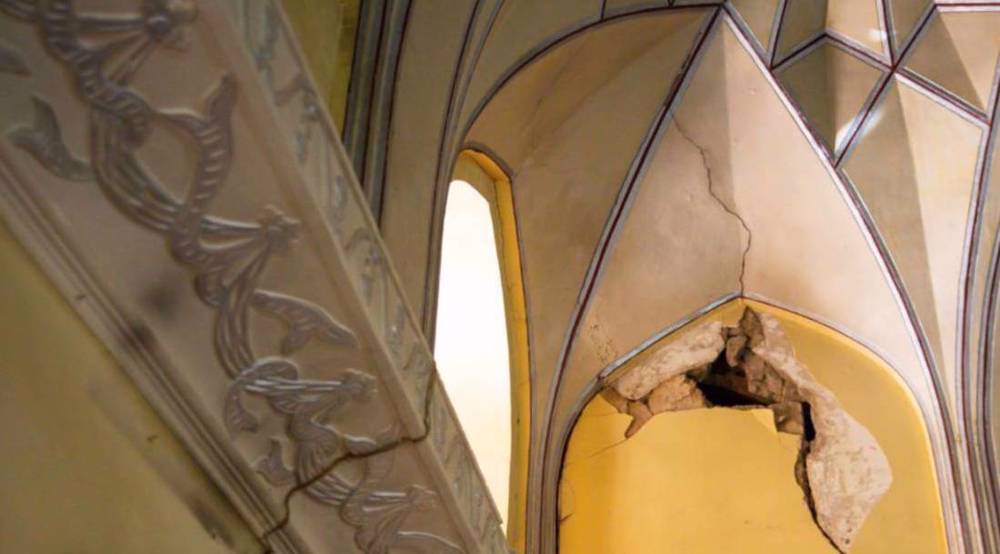
The most notable verified damage includes serious harm to UNESCO sites such as Golestan Palace, Chehel Sotoun Palace, and Masjed-e Jame, as well as the prehistoric Khorramabad Valley, Sa'dabad Palace, and the Falak-ol-Aflak Citadel.
In a prime-time White House address on April 1, US President Donald Trump declared: "We're going to hit them extremely hard over the next two to three weeks, we're going to bring them back to the Stone Ages, where they belong"
Professor Scalone pointed to a sweeping collapse of international norms that he said has left him not only astonished but genuinely helpless.
While international law and UNESCO conventions dating back to 1970 provide clear frameworks for the protection of cultural property, he said, those rules have become meaningless when the very foundations of civil coexistence are being destroyed.
He said the current crisis is within a wider context of a deliberate campaign across West Asia — one that implicates not only Iran but also Syria, Lebanon, and Yemen, with the backing of the United States and Israel.
"I do not think this is a coincidence," he said. "To attack the history, heritage, and identity of a people — to attack the history of a civilization — is to attack the identity formed in that people's historical roots."
Professor Scalone expressed deep frustration at the apparent impotence of the very legal instruments designed to prevent such outrages.
International law that once regulated coexistence among nations, however imperfectly, now seems trampled upon. UNESCO conventions, he said, appear not to exist.
He also noted with concern that threats to Iran's cultural heritage have largely failed to attract the attention of international news media.
"I have no answer, except that the commitment of each individual might perhaps help to revive international law, which these days is so clearly violated."
A shared human legacy
Dr. Giulio Maresca, professor of culture and architecture at Rome's Sapienza University, described his presence at the meeting as a duty.
Having felt a deep bond with Iran for many years both scientifically and personally, he lamented what he sees as a recurring failure of humanity to learn from its own mistakes.
He quoted UNESCO's founding mission: that since wars begin in the minds of men, it is in the minds of men that the defenses of peace must be constructed.
On paper, he said, the understanding that cultural monuments belong to all of humanity still exists within international bodies. In practice, it never truly has.
"The threat to return a country to the Stone Age, to destroy a civilization — this reveals the reality," he said. "We still do not understand that what exists in Iran is as much a part of our shared heritage as what exists in Italy or any other country."
He added: "We have no respect for our cultural heritage, for our planet, or even for the laws and regulations that have been painstakingly drafted over decades."
Fabio Carbone, a researcher in peace and war tourism studies and an Italian professor at the University of New Hampshire in England, brought a different lens to the discussion.
Having traveled extensively in Iran, he described the country as one of immense cultural and historical wealth, a land of extraordinary ethnic and social diversity.
"When I hear on television or in newspapers that 'Iranians' support this or oppose that, I smile a little," he said.
"Because on my various travels to this beautiful country, I have understood that every group has its own background. Minorities exist. And that diversity is Iran's beauty."
He pointed to traditional Persian wind catchers — ancient sustainable cooling systems recognized by UNESCO — as evidence of how Iranians have brilliantly adapted to their challenging plateau environment for millennia.
Perpetrators of bombing Iranian civilian, cultural sites must be brought to justice: Iranian academicshttps://t.co/kVLDJYdJsp
— Press TV 🔻 (@PressTV) March 17, 2026
The West that speaks, not the West that bombs
Professor Carbone was sharply critical of Western hypocrisy. He described himself as a representative of the West that truly believes in universal human principles, not the genocidal West that bombs schools, UNESCO sites, and civilians.
"I am proud to represent the Westerner who chooses dialogue, not hypocrisy," he said.
He disclosed that his own academic career in England had suffered for his intellectual honesty, including a promotion rescinded and his salary cut. "Why? Because I try to act on the basis of intellectual integrity."
He recalled his first trip to Iran, when colleagues from the University of Tehran took him to see rock reliefs depicting Roman soldiers kneeling before Persians — a gentle joke meant to remind him that a great civilization existed long before Rome.
Now, he said, we are speaking of the destruction of such a civilization. In academic literature, this is called epistemic violence — the annihilation not only of people and buildings, but of knowledge and historical memory.
As for Western leaders who present themselves as saviors of the Iranian people? "Iranians are perfectly capable of deciding what they want for themselves," he said.
"They have done so in the past, and they will do so in the future. Neither Trump nor Israel truly intends to save the Iranian people. These are geopolitical matters that serve their own interests, not the people of Iran."
Trump's "Stone Age" warning was not his first threat against Iran's civilization. In January 2020, during his first term, the US president declared that he had identified 52 Iranian cultural sites—including locations "very high level & important to Iran & the Iranian culture"—that would be "HIT VERY FAST AND VERY HARD" if Tehran retaliated for the US assassination of Iran’s legendary anti-terror commander General Qassem Soleimani.
The issue, Professor Carbone said, is not about any single individual.
"It is about a general mindset in politics and even in war — a mentality that still considers itself superior to others, a kind of 'West above all' thinking that recalls the dangerous ideologies of the past."
Organized savagery: Dissecting the pathological conduct of an Iranian diaspora fringe
How 'Iran International' fanned flames of war but lost to Iranian people's wisdom, resilience
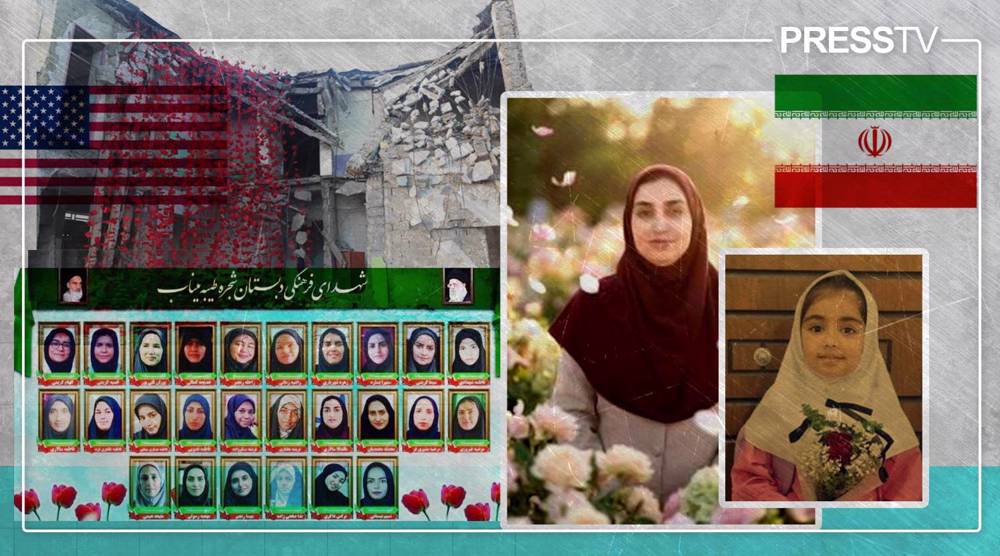
Teachers' Day: Mandana Salari, 29, died embracing her students as missiles struck Minab school



Iranian forces strike US vessels in swift retaliation for tanker attack: Top military comm
Enemy strikes Iran’s vital Qeshm Island pier; explosions heard in Bandar Abbas
Iranian missiles force US aggressors to flee Strait of Hormuz after tanker attack
Israel disables missile-tracking systems over Iranian infiltration fears
Growing public anger in US toward Trump's war on Iran: New poll
‘Iran fought a heroic battle’: US disaster in Strait of Hormuz detailed
Iran will soon hold 'great victory' celebration over enemies: Aref
Hamas slams killing of Hayya's son in ‘cowardly attack' by Israel on Gaza


 PressTV NEWSLETTER
now
PressTV NEWSLETTER
now

 This makes it easy to access the Press TV website
