Iran's fourfold clean energy surge amid US-Israeli war of terrorism
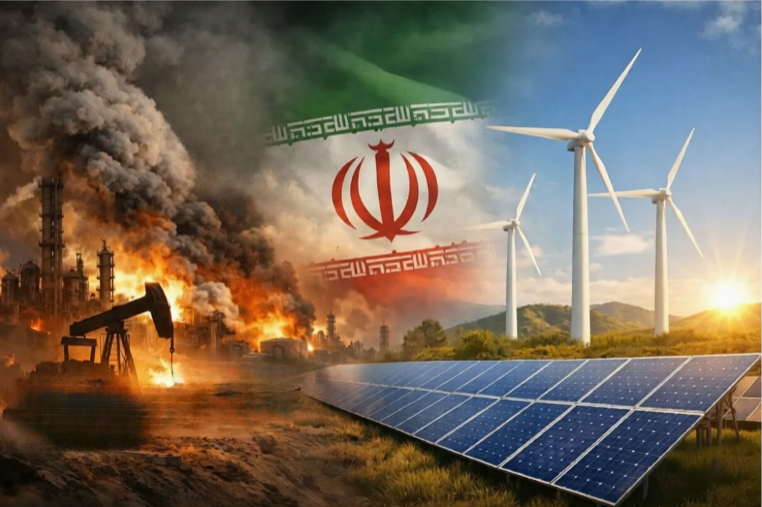
Iran's renewable energy capacity has grown from approximately 1,000 megawatts in early 2022 to more than 4,500 megawatts today, now approaching 5,000 megawatts.
This fourfold increase over roughly four years demonstrates the country's serious determination to develop clean energy and strengthen the role of the private sector in this field as a continuous national program.
But this very strategic achievement has become a direct target of external threats, precisely because of its importance for Iran's energy independence and negotiating leverage.
Israel's Channel 12 recently reported that Tel Aviv has been sending direct messages to Washington attempting to push the United States to return to war against Iran.
It has reportedly emphasized that any resumption of war must include the destruction of Iran's energy infrastructure within just twenty-four hours, in order to force Tehran to enter negotiations from a supposed position of weakness.
According to the same report, Israel is trying to convince Washington that destroying Iran's energy infrastructure is the only path forward.
In recent years, the development of renewable power plants has been pursued with greater speed and seriousness by Iran.
This acceleration stems from a more precise understanding of the country's electricity production and consumption situation, and for this reason policies have been adjusted to meet new needs.
SATBA, the organization responsible for renewable energy development, has designed diverse investment models, economic frameworks, and incentive packages in an effort to involve various economic and social sectors in the expansion of renewable energy.
The development of these power plants is being pursued through modern institutional models, construction management, and active private sector participation in the form of "large energy packages," so that projects can come online in the shortest possible time.
According to the director of special renewable power plant construction projects at SATBA, under the previous approach the organization would first select the sites and build the power plants, and then investors would take delivery of them.
But now a new approach has been adopted. Under this new model, initiated by the head of SATBA, private sector investors are involved from the very beginning of the construction process.
They provide part of the construction costs, receive facilities from the National Development Fund, and execute the projects under SATBA's supervision. This mechanism allows large power plant packages to be brought online much more quickly.
Among the notable projects are the 100-megawatt Khezrabad solar power plant and the 100-megawatt Parand power plant, financed by the Tehran Oil Refinery Company; the 100-megawatt Chadormalu power plant, financed by Chadormalu Mining and Industrial Company; as well as 25, 30, 50, and 100-megawatt power plants financed by the private sector.
Currently, two 100-megawatt power plants have entered the foundation-laying phase, and other projects in various regions including Yazd, Khezrabad, Parand, and Neyshabur are under construction or in the final stages of contract signing.
The 100-megawatt solar power plant belonging to the Tehran Oil Refinery Company in Yazd, the 100-megawatt Chadormalu steel power plant in Khezrabad (Yazd province), the 100-megawatt power plant in Parand, the 25-megawatt power plant in Neyshabur, and the 13-megawatt power plant of the Aluminum Company of Iran (IRALCO) are among the projects currently being executed.
Officials have reported approximately 400 active projects under way, and despite wartime conditions, work at the sites has not stopped.
SATBA's preparedness for crisis management has allowed the progress of these projects to continue more or less on schedule.
Under Article 12 of the Law on Removing Barriers to Production, industrial units consuming more than one megawatt are required to develop renewable power plants in order to be exempt from grid load management.
On the other hand, because industries are directly affected by energy shortages, they have a much more precise understanding of the importance of reliable electricity supply.
Alongside the development of renewables, efforts are also being made to increase power plant efficiency and diversify generation sources, including solar, wind, and hydroelectric power.
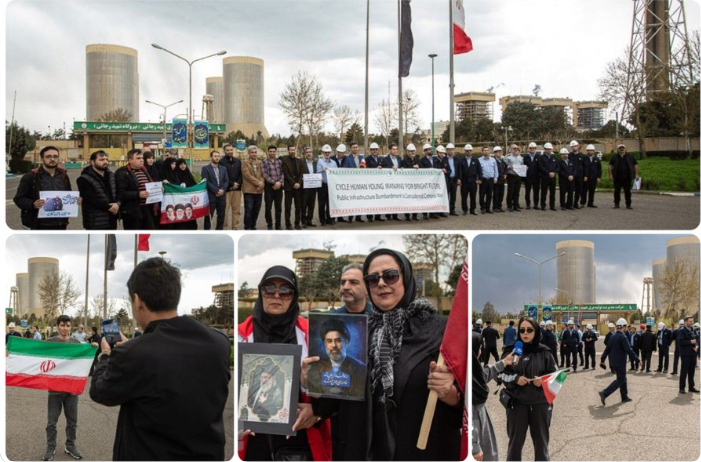
According to Azim Etemadi, the managing director of Iran's Thermal Power Plant Holding Company, the renovation of aging power plants and their replacement with new units is on the agenda.
The decommissioning of old units and the use of new technologies, including F-class turbines, built for the first time by domestic specialists, is under way, in order to increase efficiency while reducing fuel consumption and pollution levels.
The more self-sufficient Iran becomes in its energy supply, the harder it becomes for outside powers to force it to back down from a position of weakness.
A significant portion of the electricity imbalance occurs during daylight hours, exactly when solar power is available, so the expansion of solar power plants can play an effective role in compensating for that shortfall.
This also allows for more efficient use of hydroelectric power plants during nighttime hours.
To put it plainly, if the US-Israeli goal is the destruction of Iran's energy infrastructure within twenty-four hours, then every megawatt of renewable capacity that the Islamic Republic is building is precisely what they want to destroy.
And if the enemy’s ultimate goal is to force Iran to negotiate from a position of weakness, then the development of these power plants is a strategic act of neutralizing that same logic of pressure.
To better understand the situation, it is worth noting that the total power plant capacity of the country is currently close to 100,000 megawatts.
Planning is under way so that by the coming summer, renewable energy capacity will reach 7,000 megawatts, raising the share of the sector in the country's electricity mix from less than one percent to more than seven percent.
Hence, the battle over Iran's energy is the decisive field where every megawatt built is a message that the Islamic Republic will light its own future, and no threat will darken it.
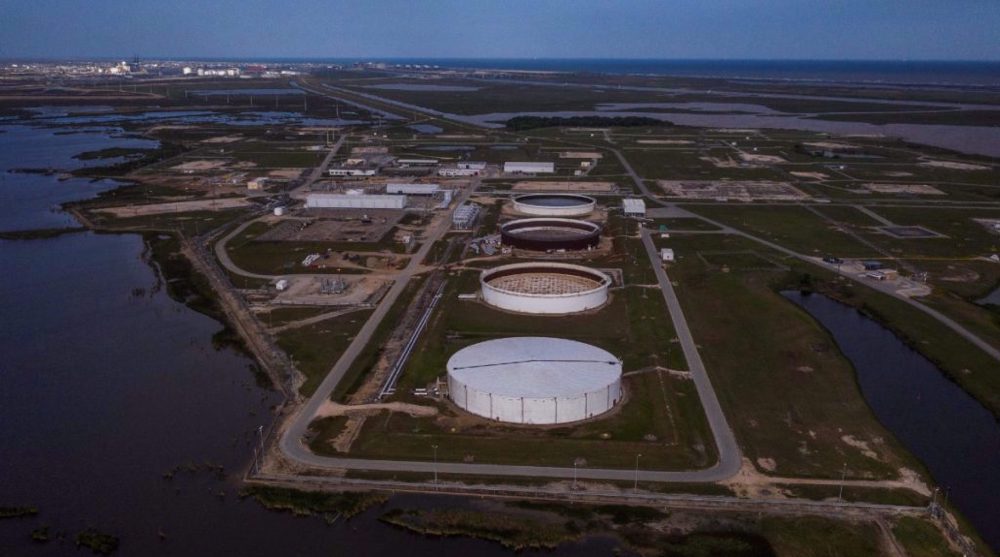
US releasing 53mn barrels from strategic oil reserve to mitigate fallout from war on Iran
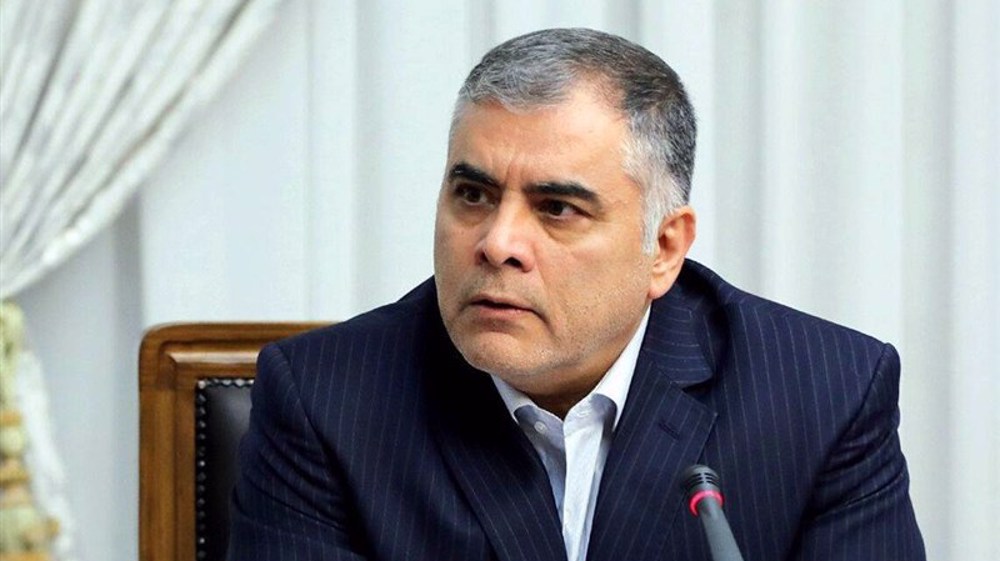
Experts 'laughing' at US claims about Iran's oil production: Minister
Oil prices increase as Iran continues restrictions for US, allies in Strait of Hormuz



China rejects Israel’s ‘groundless’ allegation of missile support for Iran
Iran demands end to war before nuclear talks as FM Araghchi set to attend India BRICS meeting
Iran's fourfold clean energy surge amid US-Israeli war of terror
IRGC’s Tehran command holds major drill to prepare for any US-Israeli aggression
Trump's theatrical rejection of Iranian proposal reeks of desperation as Iran's leverage grows
Hezbollah leader says resistance drones are tightening noose on Israel
Trump admits US sent weapons to fuel riots, terrorism inside Iran
China part of Iran’s political balancing strategy against Western pressure: Envoy


 PressTV NEWSLETTER
now
PressTV NEWSLETTER
now

 This makes it easy to access the Press TV website
