The miracle of Iran under bombs that stunned the world
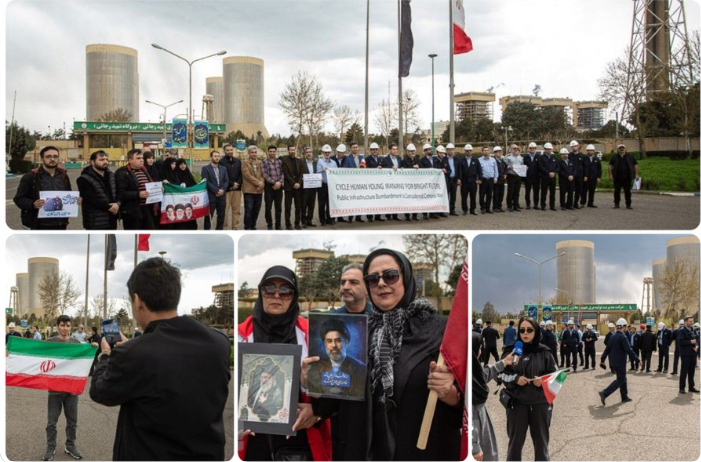
For most nations, the onset of a major war is synonymous with a collapse of basic services. For Iran, the 40 days of US-Israeli war of aggression revealed a nation where economic restoration consistently outpaced damage.
The aggression marked an immediate and brutal escalation, with more than 1,200 bombs deployed in the first 24 hours alone, deliberately targeting critical infrastructure.
Yet, even under one of the most intense aerial bombardments of any nation this century, the Iranian economy did not buckle. The lights stayed on, the gas flowed and a war machine designed for decimation met an engineering culture built for restoration.
When the ceasefire took effect on April 8, after more than five weeks of sustained bombing, the expected portrait of a broken nation did not materialize. There were no humanitarian catastrophes at border crossings.
Instead, Iran demonstrated a state that can sustain, and in some sectors excel, while under the most intense bombardment in modern West Asian history.
The most emblematic feat occurred in the industrial heartland of Kashan. The Yahya Abad railway bridge, a critical concrete structure on the north-south corridor linking Tehran to the strategic port of Bandar Abbas, was struck by US-Israeli warplanes.
The attack was part of a calculated campaign against what Pentagon strategists had openly called Iran’s “logistical nervous system”. Within 72 hours, the first train crossed the rebuilt span.
By the 96-hour mark, all six major railway bridges hit across Tehran, Alborz, Qom, Isfahan, Zanjan and East Azarbaijan provinces were fully operational. The seven-span bridge near Qom reopened in under 40 hours.
According to officials, services returned within a four-to-five-day window. The Tehran-Tabriz-Van passenger train to Turkey left on rebuilt tracks less than a week after they were bombed.
Iranian passengers chanted against the aggressors as they passed over spans that, in any other conflict zone, would have taken months to restore.
What makes Iran exceptional is not merely the speed of post-strike reconstruction but the absence of collapse during the strikes themselves.
According to the CEO of the Tehran Province Electricity Distribution Company, 99 power substations were damaged during the war. Yet electricity supply to the public was not interrupted at any point.
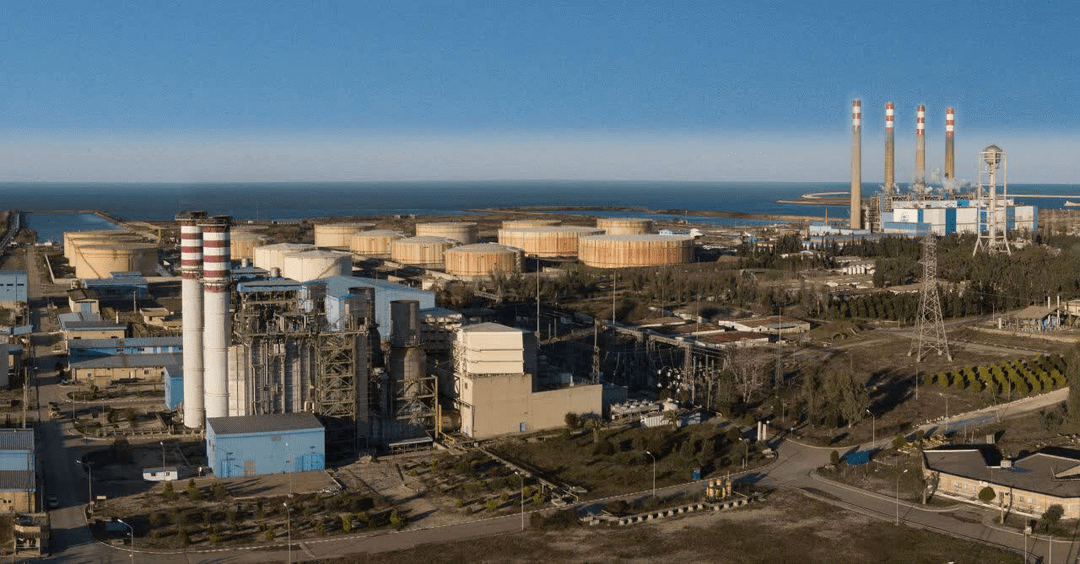
This is a story of a highly specific, war-tested administrative state that has learned to manage scarcity as a matter of routine. It is the product of a doctrine refined over four decades of sanctions and the eight-year Western-backed Iraqi war on Iran in the 1980s.
Iran’s energy infrastructure operates on a distributed resilience model, with pre-positioned emergency response units, drone-assisted damage assessment deployed within hours of strikes, and modular replacement components manufactured domestically.
Deputy Petroleum Minister Mohammad Sadegh Azimifar announced that despite significant damage, energy infrastructure would recover 70 to 80 percent of capacity within one to two months of the ceasefire.
Two thousand workers were already restoring systems at the Shahr-e Rey oil depot before the bombs stopped falling.
In an era when global infrastructure investors obsess over contractual protections and risk mitigations, Iran has chosen a different calculus, where the cost of war is absorbed by engineering.
Perhaps the strangest economic indicator of all is human. Across West Asia and beyond, war produces refugees by the million. Syria’s war displaced half its population. Ukraine saw over 8 million flee.
Iran, facing one of the most intense aerial aggressions in recent memory, has experienced the opposite, where border reports indicate that remarkably on some days, more people return to Iran than leave.
This is a unique model common in the decisions of many Iranians such as Leila Rabetnezhadfard, who postponed her wedding in Istanbul to return to Shiraz.
“How can I feel safe in Istanbul when my family is living in Iran during the war?” she told the Los Angeles Times, articulating a calculus that confounds standard assumptions about wartime flight.
The International Organization for Migration notes that this pattern reflects “prioritizing staying with their families”. Economically, it signals something deeper about a population that perceives the domestic infrastructure as more reliable than the uncertainty of exile.
To understand the scale of Iran’s achievement, compare it not to failed states but to the wealthy economies of its own neighborhood.
The strike on Ras Laffan natural gas terminal, the world’s largest LNG facility, wiped out 17 percent of Qatar’s export capacity. QatarEnergy estimates repairs will take up to five years.
The Persian Gulf Cooperation Council economies including Qatar, Saudi Arabia, the UAE are projected by UNDP to see GDP contract by 5.2 to 8.5 percent. These are countries not under direct bombardment, but suffering collateral damage from supply chain disruptions.
Iran, by contrast, absorbed direct strikes on its energy, transport and industrial infrastructure and kept functioning.
To truly measure Iran's performance, one should look beyond immediate neighbors like war-torn Iraq to the "hyped" economies of the Global South, specifically India.
The US-Israeli war on Iran and the resulting closure of the Strait of Hormuz has been an extinction-level event for energy security in India where states have reported daily power outages exceeding eight hours.
In the Northern Power Grid, "sleep mode" has become the norm, with millions left without air conditioning or industrial power. The black market for cooking gas has tripled in price, and manufacturing hubs in Gujarat have shuttered 67% of their capacity.
Nowhere is the Iranian exception more visible than in the oil and petrochemical sector, which conventional analysis would expect to be the first casualty of war.
According to analysis of the first month of war, Iran’s oil revenues stood at roughly $150 million per day on the eve of the war. Data from the past month suggests that level has not only been maintained but exceeded.
This is not to suggest the economy is undamaged. The petrochemical sector has suffered major setbacks, with nearly 85 percent of export capacity disrupted following strikes on major hubs. Steel production has been hit, with around 70 percent of capacity affected.
Yet the difference between Iran and its neighbors lies in the response function. When Persian Gulf states lose energy infrastructure, they lose export revenue and wait for international contractors.
When Iran loses infrastructure, domestic engineering units rebuild it in days, using domestically manufactured steel, of which Iran produces 31 million tons annually, ranking 10th in the world.
Iran has demonstrated that it can sustain economic activity during active bombardment, not just after.
The ability to keep electricity flowing, fuel reaching remote villages, and trains running across rebuilt bridges while bombs were falling represents a form of economic resilience that no neighboring petrostate and no major economy for that matter has matched.
As the Leader of the Islamic Revolution Ayatollah Seyyed Mojtaba Khamenei stated in his message marking the end of the Nowruz holidays on April 1, the nation has passed through this year’s spring commemorations “with a spirit of steadfastness and dignity”.
Iran, Russia push ahead with $25 billion nuclear plant, trade corridor
Oil prices hike as Israelis attack deeper into Lebanon
Iranian stock market reports historic trade as shares surge



VIDEO | Why the Shia won’t bow to Zionism
Israeli forces abduct Palestinian university professor in West Bank raid
Iranian knowledge-based firm unveils first indigenous graphene battery, saving millions in imports
June 6: Iran condemns US drone strike as IRGC strikes US bases in Kuwait, Bahrain in retaliation
VIDEO | Protests continue in Albania over Trump family-linked resort project
Manhunt underway for suspects after 12 people shot near festival in Ohio, US
BRICS plays decisive role in global energy security: Iran envoy
Netanyahu colluding with US Congress to conceal Israel aid in Pentagon deals: Sanders


 PressTV NEWSLETTER
now
PressTV NEWSLETTER
now
 This makes it easy to access the Press TV website
