Killing of environment ranger’s family in missile strike reveals true nature of US war against Iran
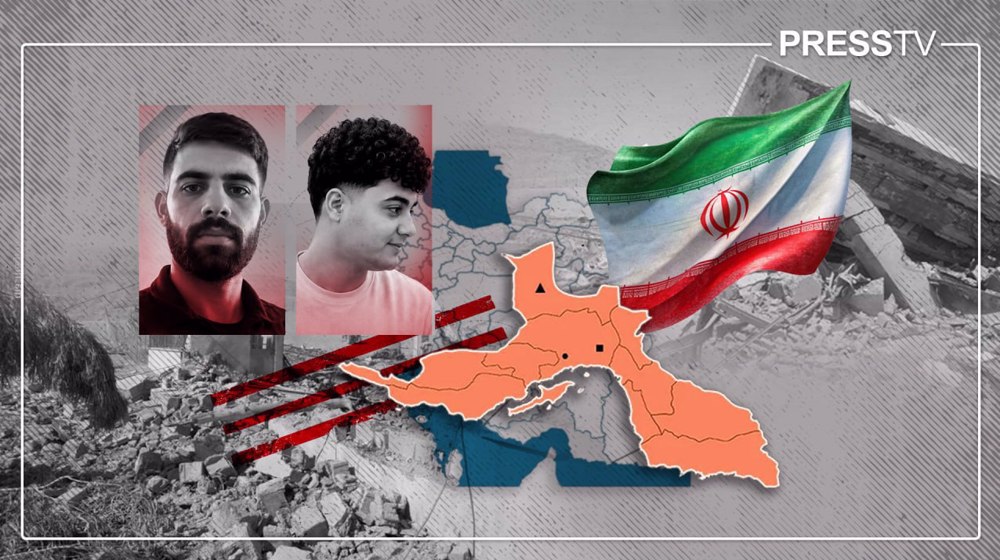
By Mina Mosallanejad
US military aggression against southern Iran continues unabated, with the death toll rising to 38 and the number of injured surpassing 400, according to Iran’s health ministry.
Most of the victims have been civilians, including women and children, underscoring the indiscriminate nature of the US attacks, which constitute a blatant violation of the memorandum of understanding aimed primarily at reopening the strategic Strait of Hormuz.
In one of the deadliest missile strikes earlier this week, the US targeted a remote ranger outpost in Seyed Jowzar, in Hajjiabad County of southern Hormozgan Province, killing three members of the family of an Iranian environmental ranger.
Iranian officials described the attack as another "war crime" in an unprovoked and illegal aggression that has devastated protected areas, schools, hospitals, and other non-military infrastructure in southern parts of the country.
The tragedy unfolded before dawn on Tuesday when a US strike targeted the Seyed Jowzar ranger station and an adjacent fodder storage facility in Hajjiabad county of Hormozgan.
The attack claimed the lives of three members of the family of veteran ranger Javad Hassanzadeh, including a woman, who was on duty away from home at the time of the attack.
According to Habib Masihi-Taziani, Director General of the Department of Environment of Hormozgan province, the victims were Hassanzadeh's daughter-in-law and his two sons
"The family members of ranger Hassanzadeh were martyred in the US attack on the Seyed Jozar ranger station," Masihi-Taziani confirmed hours after the attack on Tuesday.
"The victims included his daughter-in-law and two young sons, who lost their lives in this barbaric assault, opening yet another chapter in America's criminal conduct."
Hassanzadeh, who has served as an environment ranger for 24 years, survived the attack because he was carrying out his official duties away from his residence when the strike occurred.
Masihi-Taziani stressed that environmental sites and rangers enjoy protection under international law and should not be targeted.
"The immunity of protected environmental areas, environment rangers, and all facilities related to environmental conservation is emphasized in international law," he said.
Iran condemns US attack on Hormozgan ranger post as war crime against humanityhttps://t.co/U6YzG5CtO7
— PressTV Extra (@PresstvExtra) July 15, 2026
"The innocent martyrdom of this family is undoubtedly a war crime, and international institutions must respond to it."
The attack has shocked Iran's environmental community, which says protected natural areas and those safeguarding them have increasingly become victims of military aggression.
Vice President and Head of Iran's Department of Environment, Shina Ansari, condemned the strike in a statement posted on social media.
"The war crimes of the United States have now reached the family of Iran's environmental community," she wrote.
"The martyrdom of three members of the family of our colleague, ranger Javad Hassanzadeh, at the ranger station in the protected area of Taram in Hormozgan is yet another example of America's environmental crimes. The silence of international environmental organizations in the face of this blatant violation of humanitarian principles is unacceptable."
Iranian foreign ministry spokesman Esmaeil Baghaei also denounced the dastardly attack, describing it as part of a broader pattern of deliberate violence against civilians.
"The list of America's crimes against the Iranian people grows longer every day," Baghaei said.
"With every passing day, the United States reveals another layer of its hostility toward Iran. Early Tuesday morning, the terrorist US military attacked a ranger station in the village of Seyed Jozar in Hajiabad County, killing three members of the family of the hardworking ranger Javad Hassanzadeh.”
"This is only the latest example of the horrific war crimes committed by the United States over the past four and a half months, which began with the assassination of Iranian leaders, women, children and civilians in Tehran, Minab, Lamerd and elsewhere."
He added that "every new crime strengthens the determination of Iranians to pursue justice and bring both the perpetrators and those who ordered these crimes before justice."
US airstrike kills family members of Iranian park ranger in Hormozganhttps://t.co/BJAF5LTVE7
— PressTV Extra (@PresstvExtra) July 14, 2026
The latest act of US state-sponsored terrorism comes amid a renewed escalation in southern Iran following Washington's fresh violation of a memorandum of understanding signed between the presidents of the two countries last month.
The latest wave of US attacks began after Washington breached the fifth provision of the agreement, which required respect for Iran's security arrangements in the Strait of Hormuz.
The killing of the family of Hassanzadeh also revives memories of two major episodes of US-Israeli military aggression against Iran: the 40-day war that began on February 28 with coordinated attacks by Washington and Tel Aviv across the country, and the 12-day war launched against the Islamic Republic in June 2025.
Officials say those wars have also left a growing ecological footprint across some of the country's most sensitive protected habitats.
Among the clearest examples is Shidvar Island—also known locally as Maro—a small uninhabited wildlife sanctuary in the Persian Gulf renowned for its coral reefs, nesting beaches, and rich biodiversity.
Following the US-Israeli attack on the Lavan oil refinery in April, petroleum contamination spread rapidly across the surrounding waters, reaching the protected island and coating large sections of its coastline with crude oil.
According to environmental officials, the spill struck during the peak nesting season of the critically endangered hawksbill sea turtle, raising fears that toxic hydrocarbons may have contaminated nesting beaches, reduced hatchling survival, and caused lasting damage to one of the northern Persian Gulf's most important marine ecosystems.
Authorities also warned that colonies of marine terns, green turtles, coral formations, and other protected species may have suffered irreversible ecological losses as oil pollution spread across nearly 70 percent of Hormozgan Province's coastline.
Wildlife casualties have also been reported elsewhere. On Kharg Island, one of Iran's most important habitats for Persian deer, environmental authorities confirmed that at least 25 deer were killed during the US-Israeli attacks, while warning that the actual toll is likely much higher because large sections of the island remain inaccessible.
Officials also reported severe stress-related injuries and deaths among captive birds and wildlife in rehabilitation centers, highlighting the broader ecological consequences of prolonged bombardment beyond direct human casualties.
✍️ Feature - Black tide from US-Israeli aggression on Iran chokes Persian Gulf turtle nesting sanctuary
— Press TV 🔻 (@PressTV) May 5, 2026
By Mina Mosallanejadhttps://t.co/oaOhQsvh68
Iran's Department of Environment says these incidents form part of a much wider pattern of environmental destruction caused by the war.
Environmental officials identified widespread wildfires, persistent pollution, contamination of food chains through bioaccumulation of toxic substances, and long-term ecosystem degradation among the war's most significant environmental consequences.
An environmental assessment released by the organization further illustrates the scale of the damage during the 40-day US-Israeli aggression.
The report estimates that more than 360,000 cubic meters of petroleum products burned in attacks on major fuel storage facilities in Tehran, releasing nearly one million tons of carbon dioxide equivalent into the atmosphere, along with approximately 4,000 tons of aromatic compounds and volatile organic compounds.
Environmental authorities also documented damage to protected areas, wildlife reserves, islands, wetlands, and environmental infrastructure across the country.
According to the official assessment, industrial, production, and service facilities in East Azerbaijan, Alborz, Bushehr, Tehran, Khorasan Razavi, Khuzestan, Markazi, Yazd, Gilan, and Fars sustained environmental impacts ranging from minor to severe.
Infrastructure belonging to the Department of Environment was also damaged across 20 counties in ten provinces, with some facilities suffering extensive destruction, including the Natural History and Biodiversity Museum in Karaj's Chamran Park.
Protected areas were also among the targets. Conservation zones in Hormozgan, Markazi, Sistan and Baluchestan, Fars, Kurdistan, Alborz, and Tehran sustained varying degrees of damage, while 13 protected areas nationwide were affected, ranging from minor to very severe destruction.
The damage extended to the Persian Gulf coastline, the islands of Qeshm, Larak, Hengam, Lavan, and Shidvar (Maro), protected habitats in Markazi Province, sensitive coastal ecosystems in Sistan and Baluchestan, and wildlife refuges in Kurdistan and Tehran.
According to the Department of Environment, the 12-day war alone damaged approximately 8,450 hectares of natural habitats, with the resulting environmental losses estimated at nearly 20 trillion tomans—equivalent to roughly $111 million.
✍ Feature - ‘Act of state terrorism’: US attack on civilian reservoirs in south Iran cuts off drinking water to thousands
— Press TV 🔻 (@PressTV) June 10, 2026
By @kesic_ivan https://t.co/wuqkti4ewb pic.twitter.com/Q9pONeMsH9
Environmental officials warn that the destruction threatens biodiversity, weakens fragile ecosystems, and could take decades to fully restore.
The strike on the Seyed Jozar ranger station has become another symbol of the widening humanitarian and environmental cost of the war against the Iranian nation.
Unlike military facilities, ranger stations serve as operational bases for personnel responsible for protecting wildlife, forests, and fragile ecosystems.
Environmental officials state that attacking such sites not only claims civilian lives but also undermines conservation efforts and threatens protected natural habitats.
The cold-blooded killing of the family of Hassanzadeh illustrates how the war has reached even those whose lives are dedicated to preserving nature and environment.
Environmental activists have called for an investigation by international bodies into the attack as yet another brazen violation of international humanitarian law.
They note that the killings of innocent civilians—including women and children inside a protected environmental facility—underscore a continuing pattern of attacks on non-military targets.
With another family buried, another protected site damaged, and another civilian community grieving, Iranian officials warn that silence in the face of such attacks risks normalizing repeated war crimes against civilians and protected institutions.
IRGC commander vows more ‘effective’, ‘targeted’ attacks until calm restored in Iran
Iran restores traffic on major roads within hours after terrorist US strikes

Operation Nasr: IRGC says reprisal strikes hit US aircraft in Jordan, Qatar



IRGC Navy: US naval units under full Iranian watch, nearing 'zero hour'
VIDEO | US violation of MoU proves it can’t be trusted: Commentator
Only 3 vessels transit Strait of Hormuz over past 24 hours amid US aggression
Burnham becomes Labour leader in last step before taking over as UK PM
Iran says Israeli campaign to steer US into ‘unwinnable’ war will ‘soon unravel’
IRGC commander vows more ‘effective’, ‘targeted’ attacks until calm restored in Iran
Killing of environment ranger’s family in missile strike reveals true nature of US war against Iran
Iran's Mahsa Shakibaei makes history with country's first Asian cadet girls' judo title


 PressTV NEWSLETTER
now
PressTV NEWSLETTER
now
 This makes it easy to access the Press TV website
