Martyrs’ blood is sacred: The strategic imperative of retribution in the light of Leader’s message
By Press TV Strategic Analysis Desk
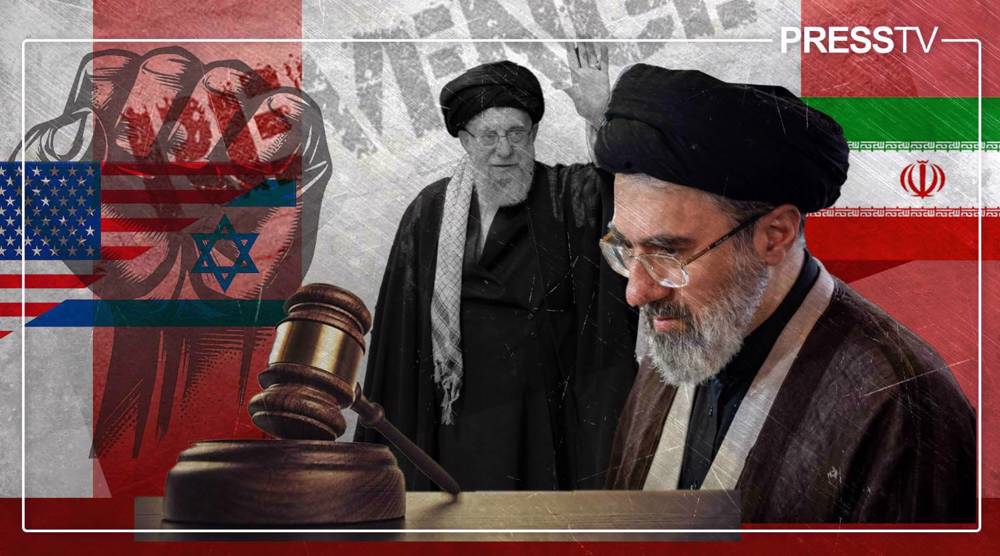
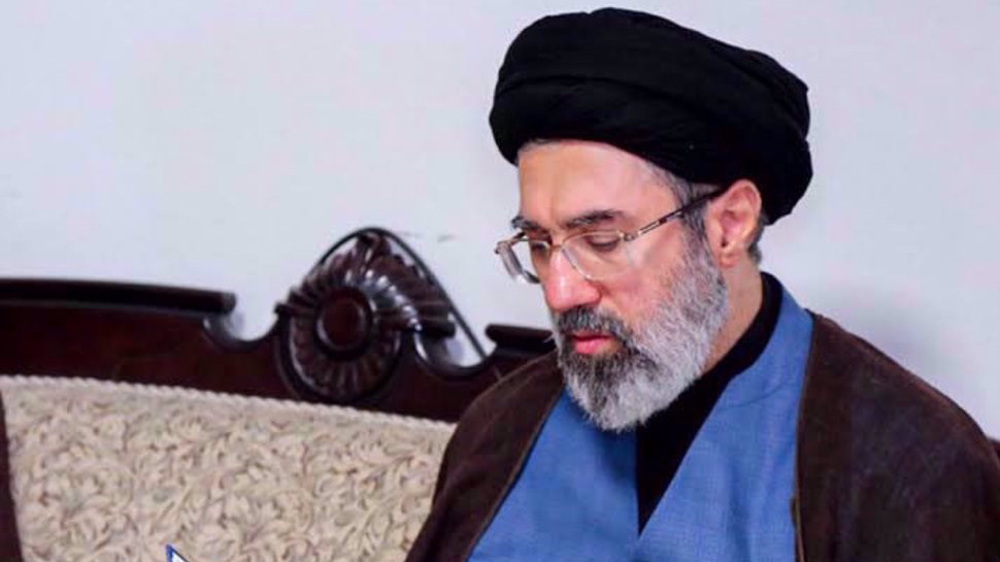
Following the martyrdom of Ayatollah Seyyed Ali Khamenei, along with top-ranking military commanders and officials during the recent imposed war, Leader of the Islamic Revolution Ayatollah Seyyed Mojtaba Khamenei's repeated emphasis on carrying out retribution has emerged as a defining feature of the Islamic Republic's evolving strategic doctrine.
It is not an emotional reaction but a carefully calibrated doctrinal position encompassing strategic deterrence, political legitimacy, religious authority, and institutional coordination, offering valuable insight into how the power dynamics and rules of engagement have fundamentally changed.
To appreciate the full significance of this emphasis, it must be examined through multiple lenses: the Leader's alignment with the people, the strategic logic of raising the cost of aggression for the arrogant enemy, the religious and duty-based foundations of his remarks, and the practical obligations they impose on Iran's different institutions.
Within this narrative, justice is a continuing responsibility rather than a finite military objective, extending beyond the battlefield into the legal, diplomatic, political, and ideological spheres.
Leader and the people: A unified front
Leader of the Islamic Revolution’s strong emphasis on retribution in his latest message against those responsible for assassinating Ayatollah Khameini and thousands of other Iranian nationals, including military commanders, senior officials and school children, in the two recent wars once again demonstrates the unshakable unity between the nation and its top leadership.
In his message thanking the people for their historic participation in the funeral and farewell ceremonies for the martyred Leader, the Leader placed himself squarely alongside the people, citing their clear demands as the basis for stressing the necessity of retribution.
This alignment is significant not merely as a gesture of solidarity but as a fundamental feature of Iran's political philosophy, where the Leader derives his authority not only from religious authority and credentials but from his embodiment of the popular will.
This pattern of positioning alongside the people is not new. Following his earlier message on signing the Iran-US memorandum of understanding (MoU) to end the third imposed war, the Leader likewise positioned himself as an overseer of the fulfillment of the agreement's conditions, placing himself in the same space as the people who demanded accountability.
Leader of the Islamic Revolution Ayatollah Mojtaba Khamenei says the Iranian nation demands revenge for the blood of the martyred Leader, adding that the vengeance must definitely take place.
— Press TV 🔻 (@PressTV) July 11, 2026
Follow: https://t.co/B3zXG73Jym https://t.co/qTrCT4OSFw pic.twitter.com/nYYfQc6ja2
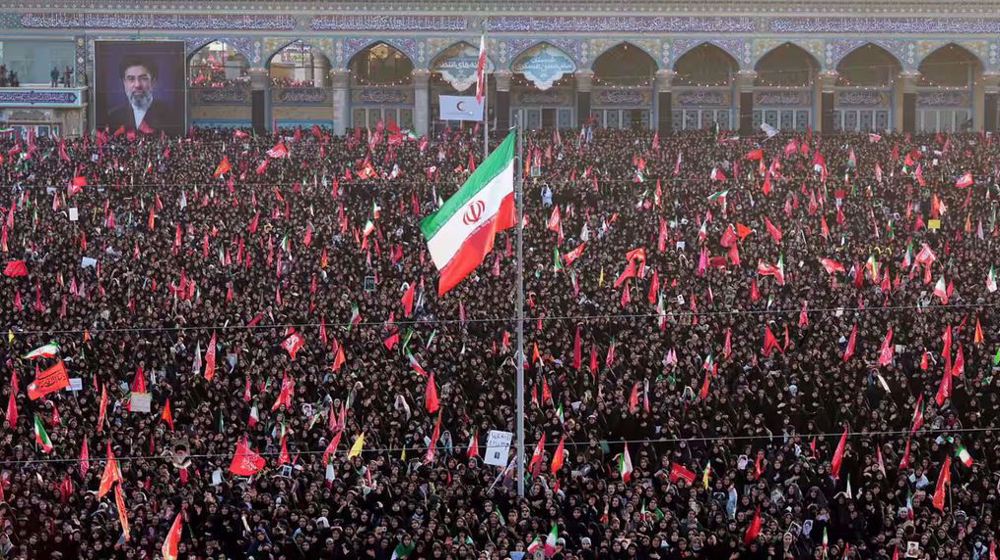
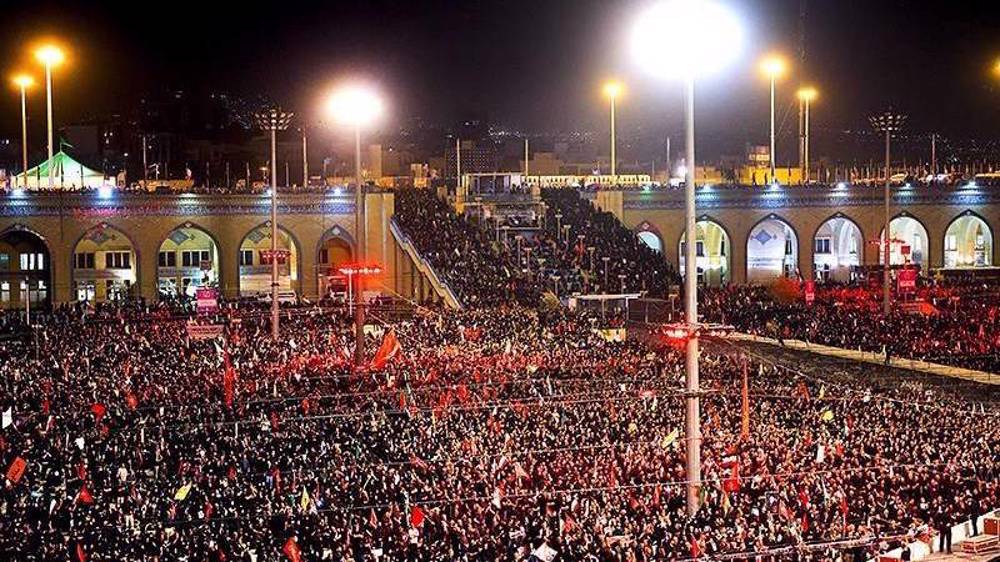
By repeating this alignment in the context of avenging the blood of martyrs, the Leader effectively transformed the demand from a personal or institutional demand into a national imperative. The people's voice, expressed through millions-strong funeral processions in multiple cities from Iran to Iraq, becomes the legitimizing foundation for reprisal.
This unity of action between the Leader and the people carries profound implications. It also sends a powerful signal to the enemy that the Islamic Republic of Iran's leadership and its 90-million population are on the same page, and any calculation that assumes internal discord will soften Tehran's response is fundamentally flawed.
Strategic deterrence through calculated retaliation
Beyond its domestic and religious dimensions, the demand for retribution represents an intelligent and calculated strategy for increasing the cost of any form of aggression against the Iranian nation and creating robust deterrence against future acts of enemy belligerence.
Threatening American criminals and their allies with retribution complicates the enemy's calculations regarding any future aggression against the Islamic Republic and its people. When the Leader of a nation openly declares his intention to punish the perpetrators of a diabolical act, he introduces a variable that no military planner can comfortably ignore.
The logic is straightforward. For decades, the United States and its allies operated under the assumption that their military superiority granted them a degree of impunity in confrontations with Iran. Strikes could be launched, assassinations carried out, and wars imposed with the expectation that Iran's response would be measured, proportionate, and ultimately contained within acceptable boundaries. The repeated emphasis on revenge, particularly against named individuals rather than abstract entities, changes this calculus fundamentally. It introduces the possibility of personal accountability, the kind that keeps decision-makers awake at night.
Retribution, in this framework, is not merely about settling old scores. It is about shaping the future behavior of an unhinged enemy that has complete disregard for international law and norms. When the enemy understands that every act of aggression will be met with a dedicated pursuit of justice against those who ordered it, the cost-benefit analysis shifts.
The risks of escalation become more personal, more immediate, and less abstract. This is deterrence at its most effective, not based on the threat of overwhelming force but on the certainty of retribution against specific individuals, regardless of how powerful they might be.
The religious duty: Governing according to Islamic rulings
The exemplary courage of the Leader of the Islamic Revolution in emphasizing retribution against those responsible for the second and third imposed wars against the Iranian nation demonstrates a profound adherence to religious duty without the usual political and diplomatic caution that often characterizes the behavior of state officials.
This is governance according to Islamic rulings, where the obligations of justice and retribution are not subject to the calculations of realpolitik or the absurd niceties of international diplomacy.
Similar duty-based conduct was repeatedly seen in the behavior of the martyred Leader and Imam Khomeini, both of whom governed according to the imperatives of their faith.
The martyred Leader's explicit support for resistance groups, especially in Palestine and Lebanon, using every available means, stands as a testament to this principle. He did not calibrate his support based on diplomatic repercussions or the comfort of Western capitals. He acted according to what he believed was right and ended up on the right side of history.
Footage shows huge crowds packed into the streets in Mashhad ahead of funeral ceremonies for the martyred Leader, Ayatollah Seyyed Ali Khamenei.
— Press TV 🔻 (@PressTV) July 9, 2026
Follow https://t.co/B3zXG73Jym https://t.co/yzKh2KTl3Z pic.twitter.com/LLOyfoJYpU
Imam Khomeini's famous fatwa (religious decree) against notorious author Salman Rushdie serves as another powerful example. When the founder-leader of the Islamic Republic issued that ruling, he was fully aware of the international storm it would unleash.
Diplomatic relations would be severed, economic sanctions would be intensified, and Iran would be subjected to global opprobrium. Yet he issued the fatwa anyway, not because it was politically convenient but because it was religiously required.
Leader’s emphasis on retribution follows this same tradition. It is not a policy choice among many but a religious obligation that must be fulfilled regardless of the diplomatic or political costs.
This duty-based approach carries significant implications for how the international community understands Iran's decision-making. It suggests that Iranian leaders are not always acting according to the rationalist calculus of cost and benefit that Western analysts assume.
Sometimes, they are acting according to what they believe God requires of them. This makes them unpredictable to adversaries who assume that all actors ultimately behave according to material interests and that no leader would risk war for reasons that cannot be quantified.
The institutional imperative: Turning decree into action
Following the Leader's emphasis on retribution against those responsible for crimes against the Iranian nation in the two recent imposed wars, the responsibility of relevant institutions has become greater than ever. This is not a symbolic declaration that can be left to the diplomatic apparatus but a binding decree that requires concrete action from various branches of the state.
The judiciary is now obligated to swiftly establish courts to examine these crimes and issue judicial rulings against those responsible. This is a critical step in transforming the abstract demand for retaliation into a legal process with tangible outcomes.
By establishing courts, the Islamic Republic will demonstrate that its pursuit of justice is not political theater but a serious legal undertaking. The rulings of these courts, while unlikely to be recognized by the international community, carry immense symbolic weight and provide the legal foundation for future actions against the perpetrators of those crimes.
The government and its diplomatic and legal bodies must immediately pursue legal action against war criminals such as the American president, the Zionist prime minister, and their associates. This requires a coordinated effort across multiple institutions and bodies.
Diplomatic channels must be leveraged to make Iran's position known to the international community. Legal experts must prepare cases that can be presented in international forums. Intelligence agencies must gather the evidence necessary to prove individual culpability.
"We're talking about the downfall of the empire"
— Highlights (@highlightsnews1) July 10, 2026
Press TV's Roya Pourbagher discusses avenging the blood of the martyrs of the US-Israeli aggression against Iran.
Follow Press TV on Telegram: https://t.co/mtgZgtmxsz pic.twitter.com/qfgLc8EUEH
Official authorities should speak even more forcefully than the Leader in emphasizing the necessity of retaliation and retribution. This is not a contradiction but a strategic necessity. The Leader, as the highest religious and political authority, has set the tone. It is now the responsibility of other officials to make it clear that this is not merely the personal view of one individual but the official policy of the Islamic Republic and the popular demand of its population.
At a minimum, responsible institutions should support and explain the necessity of this move. Public opinion, both domestic and international, needs to understand why Iran is pursuing this course of action. The logic and diplomacy of reciprocal action require such clarification. The enemy must understand that Iran's threats are declarations of serious intent.
Parliament can also play a crucial role by passing urgent legislation to support those who carry out retribution against the criminals responsible for the two recent wars against the Iranian nation. Such legislation would provide legal protection and institutional support for any actions, ensuring that those carrying out the decree are not left exposed to legal or political retaliation.
A separate case for every martyr
Leader’s emphasis on securing justice for the honorable people and those harmed by the crimes of the corrupt American regime and its allies, from his first public message to his latest one, shows that every Iranian citizen martyred by American and Zionist criminals constitutes a separate case for retaliation, compensation, and retribution against those responsible.
This emphasis demonstrates the justice and popular nature of the Islamic Republic.
Retaliation, retribution, and compensation are not reserved solely for the martyred Leader of the Islamic Revolution. Rather, as the Leader stated, vengeance and retribution must be achieved for all the martyrs.
This is a crucial distinction. It elevates the status of every Iranian citizen who was martyred in the two recent wars to the same level as the country's highest religious figure. Each martyr is a case worth pursuing, a debt that must be settled, a crime that cannot be ignored.
For the United States and its allies, this development presents a profound challenge. The familiar calculus of military superiority and economic pressure no longer applies in the same way. Iran's leaders are signaling that they are prepared to pursue justice through any means available, regardless of the costs.
The path forward will require patience, coordination, and unwavering resolve. The pursuit of justice against powerful adversaries is never quick or easy. But the Leader's emphasis has made it clear that this is not a matter of if – but when and how.
Iran says Strait of Hormuz closed to all transit over ‘illegal’ US military movements
Iran signals no red lines in defending national security, strategic interests after fresh US attacks
Iran stands ‘resolutely’ to establish own arrangement in Hormuz Strait: Army



Martyrs’ blood is sacred: The strategic imperative of retribution in the light of Leader’s message
VIDEO | Iran exercises right to self-defense under UN Charter: Analyst
Pezeshkian hails Iran’s physics prodigies for another glory at international Olympiad
Death of a warmonger: Lindsey Graham, hawkish US senator who plotted Iran’s fall, meets his end
Iran president, FM offer condolences over death of former Emir of Qatar, Sheikh Hamad
After US policy whiplash, Iran sets the rules in Strait of Hormuz
Iran says Strait of Hormuz closed to all transit over ‘illegal’ US military movements
Mass turnout at martyred Leader’s funeral reflects global awakening: Anti-terrorism group


 PressTV NEWSLETTER
now
PressTV NEWSLETTER
now
 This makes it easy to access the Press TV website
