Iran’s response to fresh US aggression signals no red lines in defending national security, strategic interests
By Press TV Strategic Analysis Desk
The Persian Gulf, a region perpetually poised on the brink of confrontation, is once again edging toward a dangerous escalation following repeated US military strikes against Iran in recent days.
What initially appeared to be a fragile path toward de-escalation under the Islamabad Memorandum of Understanding (MoU) has all but collapsed, giving way to a renewed cycle of military confrontation that risks dragging the region back into a full-scale war.
The sustained US attacks on Iranian civilian and military infrastructure across southern Iran prompted Tehran to mount a swift and forceful response, targeting American military bases and strategic assets across several Arab states, including Bahrain, Kuwait, Jordan, and Oman.
By expanding the geographic scope and scale of its retaliation, Iran signaled that any future military aggression against its territory will carry unimaginable consequences.
Iran's response underscored a fundamental shift in the rules of engagement, which was seen during the recent war of aggression as well. Tehran sought to demonstrate that the era of cost-free American military offensives against Iranian interests has come to an end and that any future act of aggression will be met with immediate and disproportionate retaliation.
This evolving deterrence posture raises the stakes for the American side and its regional allies, reducing the margin for miscalculation while increasing the likelihood that even limited military attacks could rapidly spiral into a wider regional war.
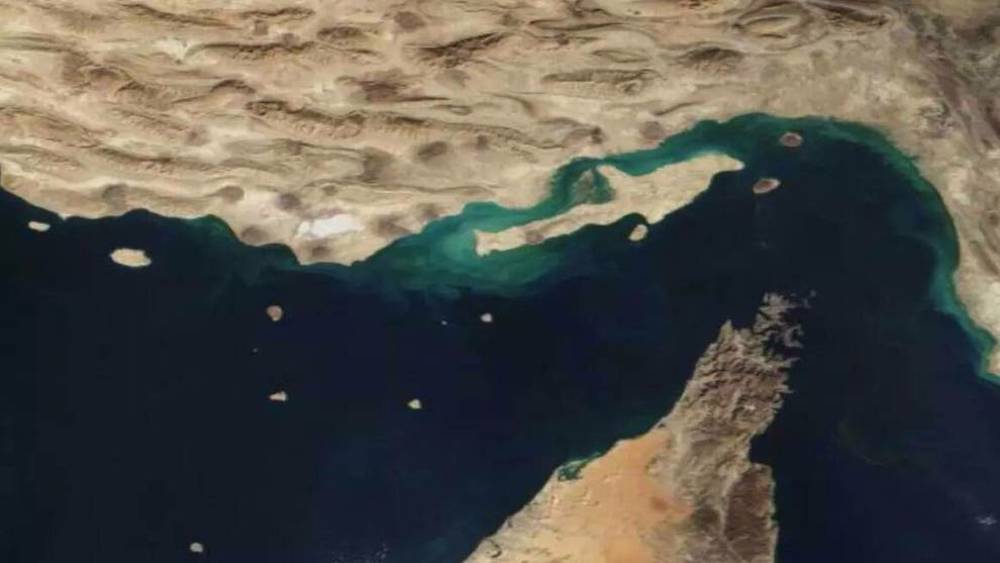
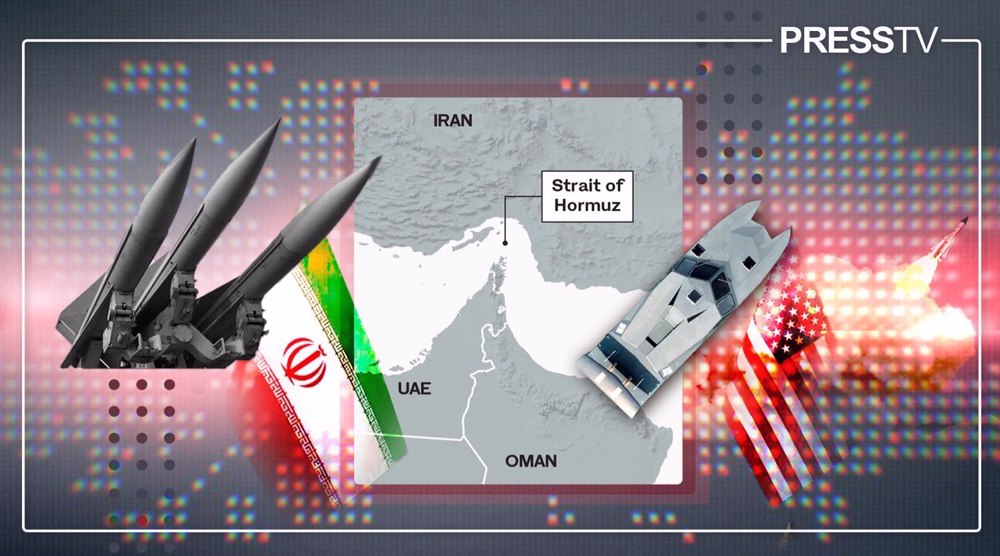
At the same time, Iran has reaffirmed that it will not compromise on its role in managing the Strait of Hormuz, a vital maritime chokepoint through which a significant share of global energy supplies passes. Iranian officials have made clear that external pressure or military coercion will not change Tehran's position and its legitimate right to administer the waterway.
Likewise, Oman, whose security and economic interests are closely intertwined with those of Iran, cannot make consequential decisions regarding the Strait or broader regional security under American pressure without taking Tehran's interests into account.
The unraveling of an MoU
The collapse of the Islamabad understanding to end the imposed war lies at the heart of the current escalation. Conceived as a mechanism to end the unprovoked and illegal war on Iran, the deal was violated by the American side from day one by refusing to put pressure on its Zionist ally to withdraw its occupation forces from South Lebanon.
The repeated US military strikes on Iranian territory constituted another direct breach of the memorandum's core commitments, transforming it into another empty diplomatic gesture. From Iran's perspective, the attacks are part of a broader strategy to undermine the understanding before it could take effect and to test Tehran's willingness and resolve to respond militarily.
The Islamic Revolution Guards Corps (IRGC) framed the latest attack on Sunday as an attempt by the United States to "once again test what has already been tested." The swift and powerful Iranian response was lawful and a fitting answer to American non-compliance.
Statements by senior US officials suggesting that the ceasefire or de-escalation framework was no longer operative have further reinforced this narrative that the US side can never be relied. They are an implicit acknowledgment that Washington has abandoned the memorandum's core clauses, confirming Iranian concerns regarding the reliability of US diplomatic assurances.
Beyond the immediate exchange of military strikes, the virtual breakdown of the MoU carries broader strategic implications. It highlights the fragility of de-escalation arrangements that lack institutional safeguards, especially when you have Trump and its hawks on the other side.
In the absence of credible enforcement mechanisms and guarantees from the US side, the memorandum has proved incapable of ending the war that was unfairly imposed on Iran.
✍ Analysis - Strategic miscalculation: How US violations of MoU bolster Iran's Hormuz leverage and regional deterrence
— Press TV 🔻 (@PressTV) June 27, 2026
By Press TV Strategic Analysis Deskhttps://t.co/hz7NVcmeD0
A decisive and disproportionate response
Following the latest American strikes on Sunday, the response from Tehran was swift, powerful, and disproportionate. Iranian armed forces launched coordinated missile and drone strikes against American military facilities across the broader Persian Gulf region.
IRGC and the Iranian Army worked in concert to target strategic American assets in Jordan, Kuwait, Bahrain, Oman, and Qatar – countries that host US occupation forces – demonstrating a level of coordination and reach that signaled a new phase in Iranian military capability.
The targets were carefully chosen to maximize strategic impact and demonstrate Iran's reach and capabilities. In Jordan, ballistic missiles struck a key air base, destroying its command-and-control center and drone hangars. In Qatar, Al Udeid Air Base, a crucial hub for American air operations, was targeted, destroying its fighter aircraft maintenance and command centers.
In Kuwait and Bahrain, waves of drones struck Patriot air defense systems, ammunition depots, radar sites, and communications systems. This was not a symbolic or token strike but a calculated, multi-front operation designed to degrade American military capabilities across the region and demonstrate that no American asset is beyond Iran's reach.
The decision to strike American facilities in Oman and Qatar is a particularly potent signal. It indicates that Iran possesses no red lines when it comes to its national security and sovereignty. This message is not just for Washington but a warning to the entire Persian Gulf region.
In a clear statement of intent, the Iranian military warned that any country hosting American military bases that allows hostile moves against the Islamic Republic will face action.
The Strait of Hormuz: The ultimate redline
At the heart of this confrontation lies the Strait of Hormuz, the world's most critical maritime chokepoint for global oil shipments. IRGC Navy announced the closure of the strait until further notice in response to the continued US military adventurism.
Iran and Oman were supposed to hold a dialogue over the future administration of the strait, but the US interference and pressure on the Omani side have so far prevented that.
Iran's actions demonstrate a clear and unwavering intent to control and manage the waterway. Attempts to establish a parallel maritime route and escort vessels through the strait undermine Iran's security arrangements. Any attempt to facilitate the illegal movement of vessels south of the strait and bypass Iranian authority in the waterway will not be tolerated.
Last week, Khatam al-Anbiya Central Headquarters, Iran's main military command center, emphasized that the strait is "not the aggressive US playground" but a territory of Iran's "undisputed sovereignty," with its security and stability considered an inviolable red line.
It also warned in unequivocal terms that any source of support for the aggressor US army will be considered a legitimate target for Iranian armed forces.
Iran's position under the MoU is equally unambiguous. The memorandum, as one informed source told Press TV last week, includes provisions granting Iran absolute and unchallenged authority to reopen the Strait in accordance with its own arrangements, and Tehran will not permit the establishment of any new route outside this framework.
Iran has announced in clear terms that all oil tankers and commercial vessels must use routes designated by Tehran, and any non-compliance will be met with immediate and decisive response. There is no ambiguity anymore in this posture of uncompromising enforcement.
✍ Analysis - Strait of Hormuz as a strategic red line: Why Iran must confront Oman's corridor plan and Trump's threats
— Press TV 🔻 (@PressTV) June 25, 2026
By Press TV Strategic Analysis Deskhttps://t.co/Yuv9Sd1usD
Iran’s diplomacy vs American war
Iran's decision to engage in negotiations with the US under Pakistani mediation following the recent war underscored that Tehran continues to view diplomacy as an essential instrument for safeguarding its national interests rather than as a sign of strategic weakness.
By participating in the Islamabad process while simultaneously preserving its military preparedness, Iran demonstrated a dual-track approach that combines diplomatic engagement with credible deterrence.
In Tehran's strategic calculus, negotiations and military readiness are complementary, allowing it to pursue political solutions without compromising its ability to respond to external threats.
This approach was further illustrated by Foreign Minister Abbas Araghchi's visit to Oman, where he held talks with senior Omani officials aimed at preserving regional dialogue centered on the administration of the Strait of Hormuz and preventing a broader escalation.
The diplomatic outreach highlighted Tehran's continued willingness to engage neighboring states and sustain regional channels of communication. Yet, only hours after Araghchi's return, the US launched another round of military strikes against Iran, which none of the Arab countries, including Oman, condemned in plain terms.
Iran has continued to advocate for the implementation of the Islamabad memorandum while signaling that it is fully prepared for the possibility of renewed military confrontation.
Washington needs to come to terms with the reality that military pressure will no longer produce strategic concessions and that any attempt to alter the regional balance through force will be met with decisive retaliation.
Iran stands ‘resolutely’ to establish own arrangement in Hormuz Strait: Army
Iran pounds several regional US military sites after renewed American assaults
IRGC Navy: Strait of Hormuz closed until US ends regional intervention



Iran says Strait of Hormuz closed to all transit over ‘illegal’ US military movements
Mass turnout at martyred Leader’s funeral reflects global awakening: Anti-terrorism group
Iran signals no red lines in defending national security, strategic interests after fresh US attacks
Doctors and nurses demand release of Palestinian pediatrician
Ayatollah Khamenei to host memorial ceremony for martyred Leader
VIDEO | Press TV's news headlines
Ex-IRGC chiefs hail Iran’s resilience, urge unity against external threats
VIDEO | US has a long record of breaking treaties: Author


 PressTV NEWSLETTER
now
PressTV NEWSLETTER
now
 This makes it easy to access the Press TV website
