A man for all seasons: Martyred Leader’s lifelong relationship with literature, media, and cinema
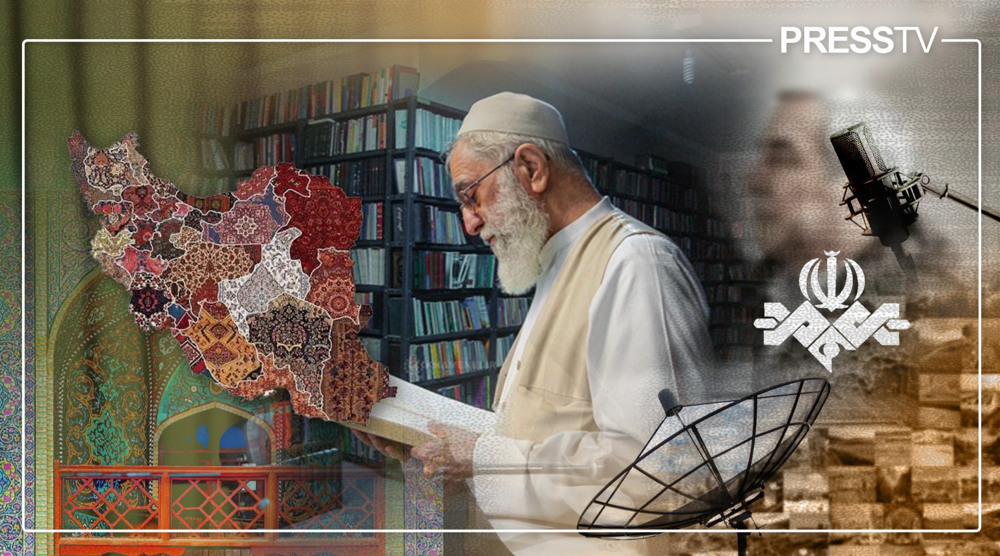
By Sheida Eslami
Iran, the cradle of an ancient civilization spanning several millennia, has been the source of the loftiest ideas and artistic creations and the birthplace of some of the world's greatest philosophers, scholars, thinkers, and artists.
It is a country that, in the years following the victory of the Islamic Revolution, alongside the explosive growth of science and technology, provided a secure environment for the intellectual maturation, cultural development, and artistic flourishing of its children.
This growth and maturity cannot, without doubt, be separated from the influence of the vision and leadership of the late founder of the Islamic Republic of Iran, Ayatollah Seyyed Ruhollah Mosavi Khomeini, and its martyred leader, Ayatollah Sayyed Ali Hosseini Khamenei – two eminent religious scholars and sources of emulation who were both the spirit and embodiment of their age, distinguished by knowledge, profound understanding of issues, refined taste, and deep cultural concern.
All of this is noteworthy given that, in many political analyses of contemporary leaders, the primary focus is placed on decisions of governance, foreign policy, or structures of power. Yet, in the case of the martyred leader of the Islamic Republic of Iran, Ayatollah Khamenei, one of the lesser-known dimensions is his role and standing in the sphere of culture.
This is particularly significant in an era when certain rulers come to prominence whose greatest virtues consist of influencing customers' minds at the negotiating table, performing stand-up comedy, displaying skill in dancing and gambling, and other such traits and behaviors – qualities beside which the one thing that never finds a place is "culture."
In the view of the martyred Leader, as a representative of the authentic image of Iran, culture is not a peripheral sphere existing alongside politics and economics; rather, it is the foundation of collective identity and the most important arena for shaping the future of a society.
From this perspective, books, literature, poetry, cinema, and the media are not merely instruments of entertainment or even simply means of producing artistic works; they are the principal elements in shaping a society's "soft power" – a power that operates through narrative, historical memory, and the creation of meaning.
For this reason, throughout the decades of his political activity, Ayatollah Khamenei repeatedly spoke about the role of books, literature, art, and the media, striving to forge a link between Iran's cultural tradition and the instruments of storytelling in the contemporary world.
At the same time, through his undeniable command of the various manifestations of thought, culture, and art within Iranian society and even at the international level, he continuously monitored cultural, artistic, and media developments and encouraged their strengthening and advancement among the people of Iran and even beyond the borders of his country.
✍🏻 Feature - Scholar, revolutionary, statesman, leader: How Imam Khamenei shaped the course of modern Iran
— Press TV 🔻 (@PressTV) July 7, 2026
By Mina Mosallanejad
Read more: https://t.co/aPyCdIEfay pic.twitter.com/67I5CGjqcI
Books: The foundation of the Martyred Leader’s critical thoughts
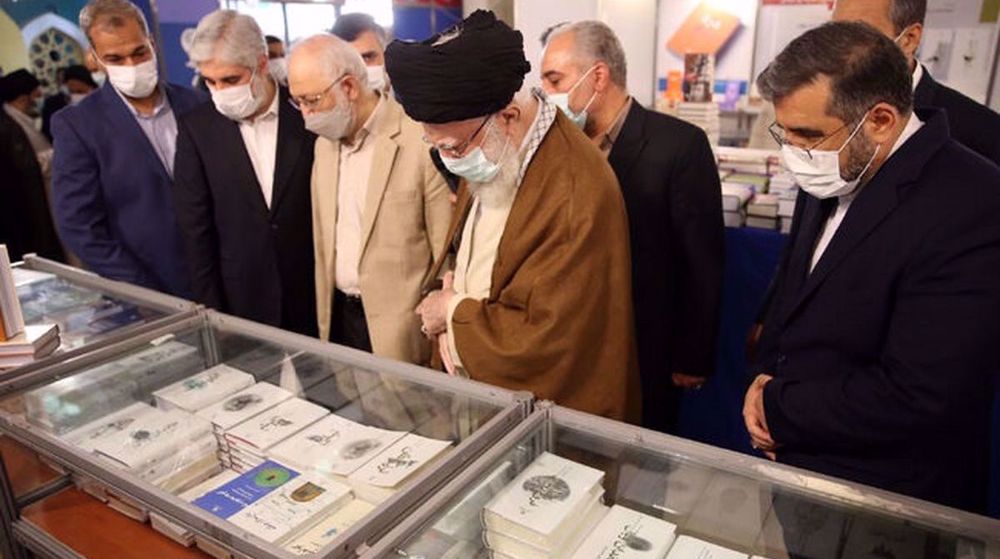
One of the constant themes in Ayatollah Khamenei’s speeches and cultural activities was his emphasis on the importance of books and the culture of reading.
In this view, reading is not merely an individual habit; rather, it is one of the foundations for the formation of an informed and capable society. A society that is familiar with books possesses a greater capacity to analyze events, understand history, and make decisions about the future.
In one meeting, he stated:
"Although I have many responsibilities and a heavy workload, praise be to God, I have never become separated from books, and in truth I cannot become separated from them. Amid the numerous and weighty responsibilities that rest upon our shoulders, I am constantly engaged with books. I feel that if a person wishes to remain spiritually and culturally fresh and vibrant, there is no alternative except maintaining a relationship with books, a relationship like that with a perpetual stream that is always flowing and constantly provides one with something new. It is like a relationship with a perennial stream that is in continuous flow and continually offers fresh things to a person."
He repeatedly described books as one of the most important instruments for promoting public culture, and in various meetings with publishers and writers he emphasized that expanding the culture of reading is not merely a cultural duty but also part of the process of strengthening the intellectual capital of society.
His own personal background is also noteworthy in this regard. During the years preceding the Islamic Revolution, Ayatollah Khamenei devoted himself to extensive study in the fields of history, literature, and political thought, and was also active in translation.
His translations of seminal works as The Peace Treaty of Imam Hasan by Sheikh Razi Al-Yasin and The Future in the Realm of Islam are examples of these cultural endeavors. Such experiences caused his view of books to transcend the level of cultural policymaking and become an integral part of his intellectual way of life.
He encouraged the generation of post-Revolution writers to create works that would serve as enduring narratives of Iran’s image as a nation standing resilient against the fierce storms of attacks by the enemies of the Revolution.
His written commendations (taqriz) on a number of oral history books, novels, and other valuable works, which reflected the depth of the Leader’s literary and cultural insight and learning, often turned distinguished books by Iranian authors into bestsellers.
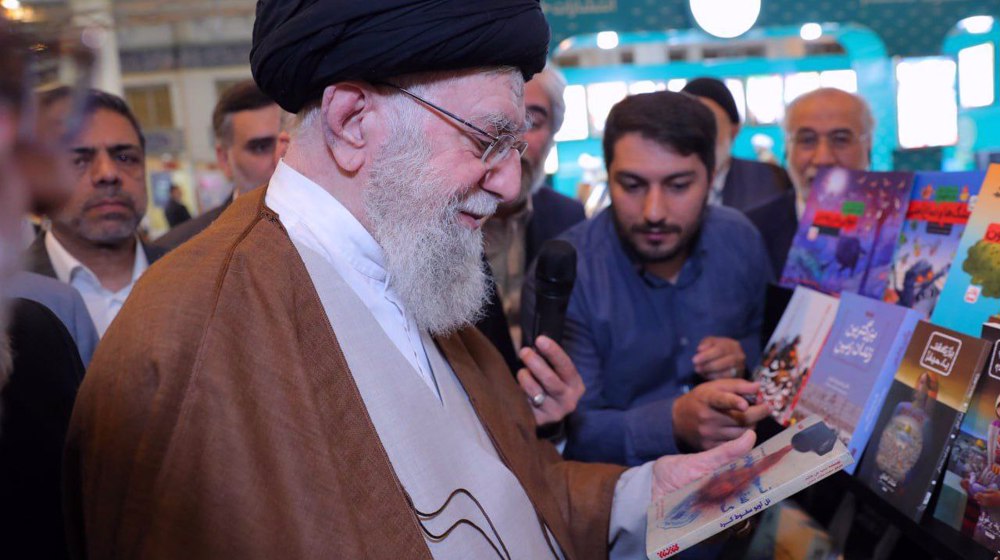
This was because the overwhelming majority of Iran’s culture-loving people trusted their leader’s cultural judgment. Whenever they saw him, with his remarkable memory, his familiarity with leading figures in publishing, writers, and literary scholars, his mature, profound, and sound opinions on these subjects, and his emphasis on strengthening the publishing industry, expanding reading, and supporting the production of intellectual and literary works, whether at the annual Tehran International Book Fair, in speeches, or in meetings, they took pride in his distinguished scholarly and cultural character.
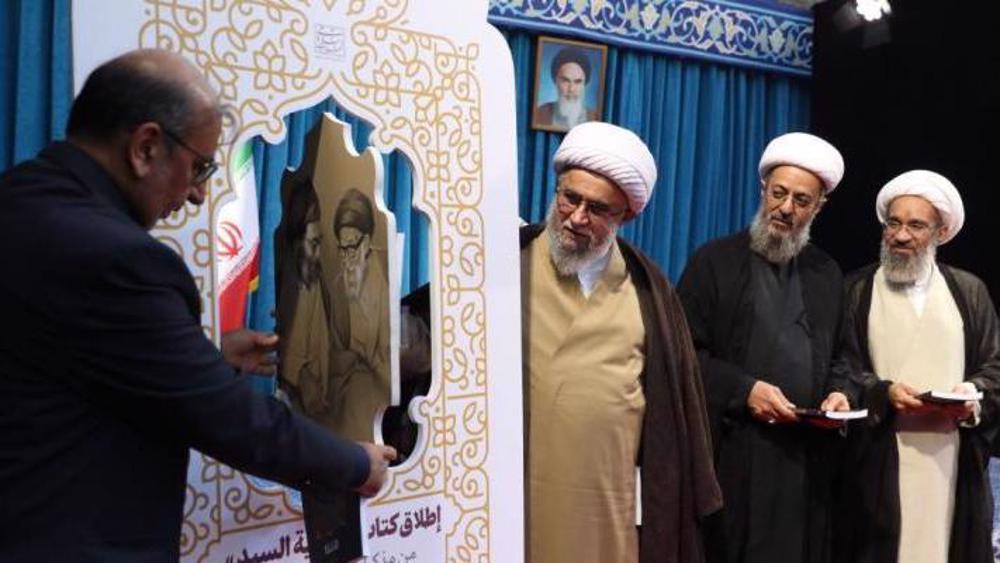
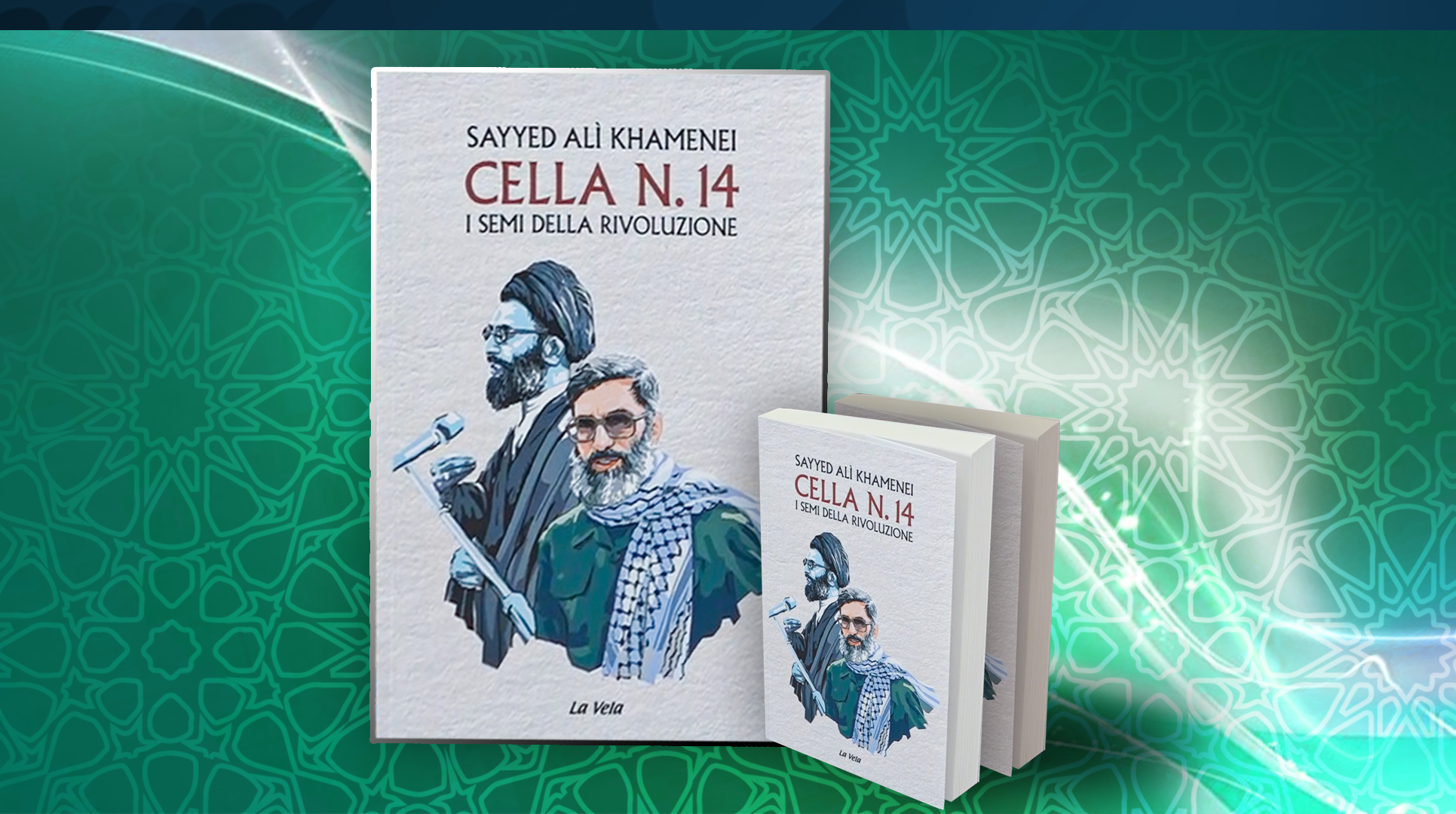
‘Hikayat al-Sayyed’: Book chronicling Imam Khamenei’s formative years unveiled in Tehran https://t.co/KK9KTE2dj6
— Press TV 🔻 (@PressTV) May 16, 2026
Fundamentally, within Ayatollah Khamenei’s intellectual framework, the novel and narrative literature occupied a significant place. Unlike educational or political texts, the novel explores the complexities of human life through narrative and characterization. For this reason, many of the world's classic novels are, in fact, accounts of social transformations, moral crises, and historical experiences.
"I can express an opinion because I have encountered so many different novels... Perhaps I have read thousands of stories by the world's finest writers," said the martyred leader. His attention to such works demonstrates that, in his view, fiction is not merely an artistic form but also a means of understanding society and humanity. Great novels often stand at the intersection of history, morality, and politics, and studying them can contribute to a deeper understanding of social structures.
From this perspective, literature may be regarded as a kind of "school of anthropology," where the reader becomes acquainted with the diversity of human experience. Such a view elevates literature beyond the level of entertainment and makes it part of the process of shaping social consciousness.
Thus, when the martyred Leader spoke of his familiarity with and study of such world classics as And Quiet Flows the Don, Les Misérables, War and Peace, The Road to Calvary, The Grapes of Wrath, Jean-Christophe, The Thibaults, and others, he revealed the depth of his appreciation for the world's artistic heritage, the transnational nature of his thought, and his interest in literature and the creative imagination of the world's great writers.
He also demonstrated his awareness of the complexities, obstacles, and snares of colonialism confronting writers and creators, as well as of literary movements shaped by the political and social conditions of different countries and the leading novelists of the world. Indeed, in one gathering, he remarked:
"Prizes such as the Oscar and the Nobel have now become thoroughly discredited. For example, John Steinbeck was struggling to earn his daily bread as long as he wrote against imperialism; but once he wrote a novel about the Vietnam War in favor of America, he won the Nobel Prize in Literature."
He made many other observations as well concerning the reciprocal influence between literature and different societies.
Cinema: The art of narrative in the contemporary world
Among the modern arts, cinema occupied a special place in Ayatollah Khamenei’s cultural outlook. He regarded cinema as one of the most effective instruments of storytelling in today’s world, a medium capable of shaping a nation’s image of itself, of its history, and of the world around it.
Several important points stand out in his remarks on cinema. First, he believed that art must be able to persuade its audience. In his view, the direct and slogan-like transmission of cultural messages is generally of limited effectiveness. Art succeeds when it presents its message in an engaging and credible form, naturally drawing the audience into its narrative.
Another notable aspect of his perspective was his attention to the technical elements of cinematic storytelling. For example, in remarks concerning historical films, he pointed out that the improper use of archaic language in dialogue can undermine a work’s credibility. This sensitivity to detail demonstrates that his view of cinema did not remain confined to broad messages alone, but also extended to its narrative and linguistic elements.
The engaging accounts and observations related to Ayatollah Khamenei’s study of, and even his visit to observe, the process of producing the screenplay for the feature film and television series Saint Mary (PBUH), as well as his viewing of the work before its release, are remarkable and perhaps even unparalleled.
The production, created by an Iranian filmmaker and based on the Holy Qur’an’s profoundly reverential portrayal of the Blessed Virgin Mary, the holy mother of Jesus Christ (peace be upon him), was received with widespread international acclaim, just as Iran’s martyred leader had predicted, and it remains the only authoritative cinematic work devoted to the unique character of the Blessed Virgin Mary (peace be upon her).
Indeed, one of the central themes in Ayatollah Khamenei’s cultural outlook was the role of art in portraying historical figures. In his view, honoring historical personalities cannot be achieved solely through speeches or academic research. The performing arts, cinema, and literature can make these figures tangible and comprehensible for new generations.
✍🏻 Viewpoint - A reflection on Martyr Khamenei’s leadership, self-reliance, and civilizational vision
— Press TV 🔻 (@PressTV) July 6, 2026
By Dr. Shahab Norouzian Alam
Read more: https://t.co/pZtLCxpyZu pic.twitter.com/yi4om2wwv8
Within such an approach, art serves as a means of transforming history from mere information into experience. When a historical figure is recreated in the form of a film or a novel, the audience not only acquires information about that person but also establishes a connection with his or her intellectual and emotional world.
When we consider a passage from the speeches of the martyred leader of Iran’s Islamic Revolution, delivered about a decade ago, in which he said:
"Try to influence people's minds; persuade your audiences through the correctness of your words. This requires thought. People of thought, those who possess the power of reflection and understand issues – together with people of art, those who possess the art of presentation and the art of communication, from painters and poets to filmmakers, writers, and others like them – must all join hands so that the result of their work will be something that leaves an impact upon the minds of the audience."
Media, radio, and television: The ‘public university’ of society
Within Ayatollah Khamenei’s intellectual framework, the media – especially television – occupied a strategic role in shaping public culture.
He repeatedly referred to the Islamic Republic of Iran Broadcasting (IRIB) as the “great university of the country.” This expression indicates that, in his view, the media is not merely a means of disseminating information, but it is also an educational and cultural institution capable of influencing social attitudes and values.
From this perspective, the media must simultaneously fulfill a variety of functions: education, entertainment, information dissemination, and the shaping of cultural identity.
Achieving such an objective also requires the presence of specialized and professional personnel in the field of content production. In his view, mass media in the contemporary world exert an influence that at times surpasses even the hard instruments of power.
In one of his messages to the managers of Iran’s national broadcaster, he emphasized “the unparalleled role of media and propaganda in the struggles of today’s world, greater than ever before,” and reminded them:
“Today, the victory of one side is determined by its ability to receive and convey the message and by its narrative of reality – long before, and far more than, military instruments enter the field and exert their influence.”
Likewise, two decades earlier, he had emphasized: “Today, the influence of the media, television, the arts, and these vast internet information networks... is greater than that of weapons, missiles, and even the atomic bomb. Such is the world we live in today.”
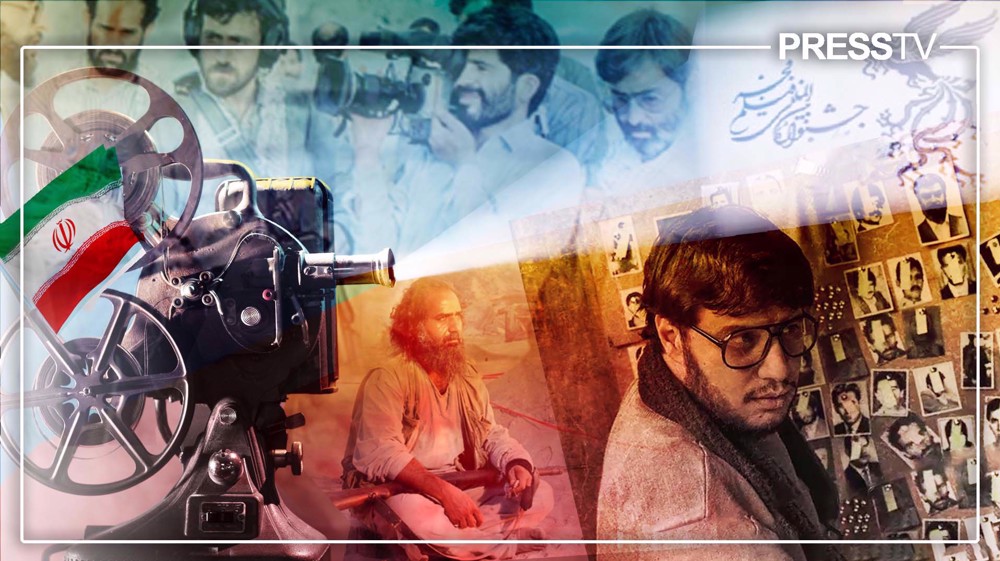
Within the framework of his strategic outlook, several principles were accorded priority for the success of the media: the production of high-quality cultural content; attention to presenting an accurate narrative of society and history; the training of professional human resources in the field of media; and the utilization of the capacities of artists and specialists so that the national broadcasting organization might become “a university for raising the level of public awareness and knowledge; a battleground for confronting the hostile waves of distortion and sedition; a sanctuary where everyone's eyes and hearts may delight in the manifestations of beauty and art; and a headquarters for spreading hope and vitality throughout the public sphere of the country.”
Indeed, the cultural, religious, and value-oriented mission of the national broadcasting organization occupied a central place in the outlook of the martyred leader. In his view, the organization should play an active role in promoting morality, strengthening the foundations and values of the family, fostering steadfastness in the face of the enemy, presenting the true image of Iran in the face of efforts by its adversaries to blacken its image and promote Iranophobia and Islamophobia, and serving different layers of Iranian society as well as audiences beyond the country's borders.
In this way, all of its programs would carry messages of value, inspire hope, strengthen identity, and introduce the true face of Iran and its Revolution to the world.
From his perspective, the media is not merely an instrument for disseminating information but one of the foremost arenas in which “narratives” are formed in the contemporary world. For this reason, the production of accurate and compelling narratives about society and history held particular importance in his view.
It was also for this reason that the efforts of filmmakers and artists never escaped his attention, and those who encountered this distinguished scholar in person often came to regard him, in this respect as well, as an outstanding media expert and authority.
The persistent effort of the martyred Leader to connect Iran’s immense literary and historical heritage with the language and instruments of storytelling in the contemporary world – to bridge tradition and innovation, and the older and younger generations – stemmed from a profound conviction that regarded culture not as a marginal aspect of politics but as the firm pillar of social life and the guarantor of the continuity of a nation's civilizational identity.
In his view, poetry, books, cinema, and the media were not merely fields for artistic creation but living channels through which the spirit of a society is transmitted to future generations.
While his assassination by the American-Israeli war machine marked the end of an influential chapter in Iran’s political history, the intellectual and cultural legacy of this wise and learned figure continues to flow through the literature, media, and art of this land of resistance.
It is a legacy that remains an inspiring presence in the minds and words of many Iranian and non-Iranian writers, poets, and artists, and that continues, like a radiant beacon, to illuminate the path of contemporary Iranian culture and of those who cherish justice and freedom throughout the world.
Sheida Islami is a Tehran-based writer, media advisor, and cultural critic.
Iran vows response to any aggression, hails self-reliant defense as legacy of martyred Leader
Iran FM spokesman: Martyred Leader dedicated his life to Iran's dignity, independence
Ayatollah Khamenei’s martyrdom strengthens Islamic unity: Yemeni official



‘People of Iran have spoken’: Netizens astonished by scale of funeral for Iran’s martyred Leader
Mourners honor martyred Leader at memorial ceremonies in Tanzania
A man for all seasons: Martyred Leader’s lifelong relationship with literature, media, and cinema
Iran vows response to any aggression, hails self-reliant defense as legacy of martyred Leader
French MEP Rima Hassan says terrorism trial aims to silence her pro-Palestine advocacy
VIDEO | Massive Tehran funeral of martyred leader signals public support and defiance
Ayatollah Khamenei’s martyrdom strengthens Islamic unity: Yemeni official
Tehran rejects UAE anti-Iran IMO proposal as politically motivated, legally baseless



 PressTV NEWSLETTER
now
PressTV NEWSLETTER
now
 This makes it easy to access the Press TV website
