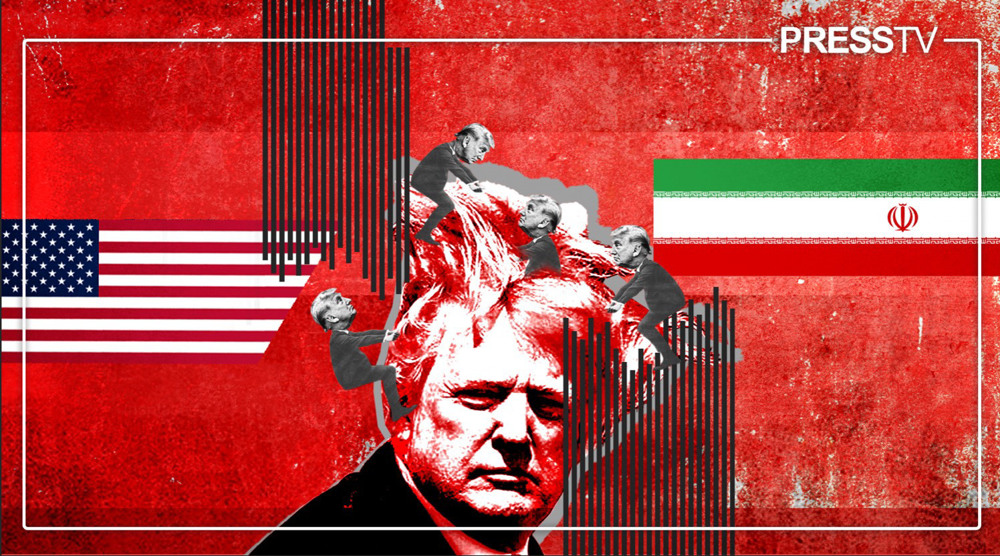
The geometry of power: Trump’s repeated retreats prove US systemic paralysis, Iran’s strategic ascent
By Press TV Strategic Analysis Desk
For decades, the strategic imagination of the West – and particularly the United States – has been captive to a singular illusion: that military superiority automatically translates into political leverage.
Washington has long operated under the assumption that its carrier strike groups, B-52 bombers, and satellite-guided munitions could ultimately compel any country to submit and be subservient to the American war machine.
Iran, however, has systematically dismantled that illusion – not once, but twice in the past year. The latest sequence of events surrounding President Donald Trump’s multiple retreats from direct confrontation with Iran is not tactical hesitation but a structural revelation.
It shows, beyond any reasonable doubt, that the balance of power has shifted. Leverage is no longer an American monopoly. And on the other side of the table, or rather, the battlefield, Iran has emerged as the geometric center of gravity.
Anatomy of retreat: More than a pattern, a doctrine of failure
To understand the current strategic landscape, one must first catalogue what has actually occurred. Since the escalation of tensions, the world has witnessed a sequence of American withdrawals – both military and strategic.
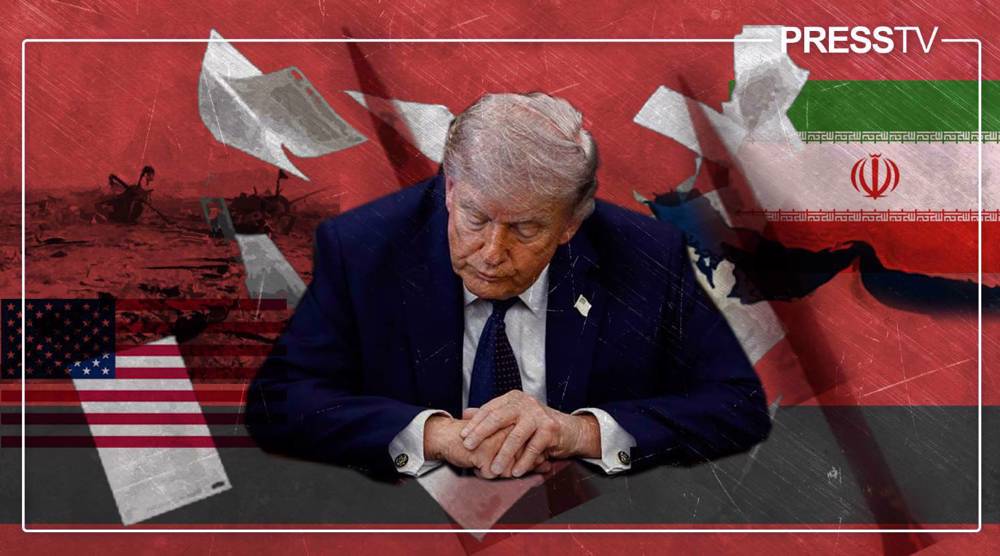
Trump, a president who built his public persona on the rhetoric of decisive action and so-called “maximum pressure,” has now retreated from war against Iran not once, not twice, but on at least five occasions, and by some Western media counts, six, in less than three months.
Let us count them. First came the retreat from implementing the explicit and cowardly threat to destroy Iranian civilization and attack its national infrastructure. That threat was real, public, and absolute. Yet when met with Iran’s principled counter-proposal – a ten-point proposal grounded in logic and deterrence – Washington blinked.
Second came after the failure of the Islamabad talks when the United States unilaterally extended a ceasefire, a move that can only be interpreted as an admission that it could not dictate terms and had to come down the high horse.
Third was the much-hyped operation to forcibly open the Strait of Hormuz – dramatically code-named the “Freedom Project” – which was canceled less than forty-eight hours after its announcement in an equally dramatic fashion.
Fourth came following a direct clash between Iranian armed forces and three American warships in the strategic waterway, Washington again insisted on continuing the ceasefire, effectively absorbing a tactical blow without response.
The fifth retreat was most recently when Trump announced the cancellation of all planned military operations against Iran, cynically dressing the decision as a favor to the leaders of Saudi Arabia, Qatar, and the United Arab Emirates. In reality, it was a face-saving exit from a corner into which he had ensnared himself.
Western media sources, including some aligned with the transatlantic security establishment, have noted that even these five retreats undercount the full picture. They point to six distinct occasions on which Trump’s ultimatums were simply abandoned, left to expire like unenforced warrants. This is not a series of isolated hesitations but a behavioral signature.
But here is the crucial distinction: in previous instances, Trump at least staged a dramatic countdown. He issued time-bound threats. He created a theater of imminent war, only to flee at the last moment. This time, there was not even a credible ultimatum from which to retreat.
The very absence of a concrete deadline speaks volumes. Washington has internalized its own paralysis. The so-called “superpower” no longer bothers to pretend it is about to strike because it knows – and knows that Iran knows – that it cannot cross any more red lines.
✍️ Analysis - Empire in freefall: Desperate sabre-rattling against Iran shows US has completely lost the plot
— Press TV 🔻 (@PressTV) May 17, 2026
By Press TV Strategic Analysis Deskhttps://t.co/hhkUOHAneK pic.twitter.com/UaGwwEgeuw
Hegemony meets reality: The collision of American myth and Iranian reality
What explains this repeated, almost ritualistic pattern of threat-and-retreat? The answer lies in a deeper structural contradiction.
Americans are habituated to coercion. For decades, they have extracted concessions from countries large and small through a predictable repertoire that includes economic pressure, military intervention, and the credible threat of regime change.
This habit is not merely strategic but cultural. American foreign policy suffers from an addiction to bullying and sabre-rattling. To abandon threats altogether would require a fundamental psychological and institutional shift that Washington has not yet undergone.
And yet, this time, the bully has encountered a reality it has never faced before. That reality is the absolute dead end of the war against Iran. Every war scenario that American war colleges have simulated – every kinetic, air-sea, cyber, or hybrid campaign – leads to the same conclusion: there is no clean victory, not even a dignified exit.
There is no swift capitulation. There is only a quagmire, and within that quagmire, the distinct possibility of catastrophic American loss.
Why? Because Iran’s military threats are not rhetorical. When Iranian armed forces warn that any aggression will be met with an overwhelming response, that warning is fully credible, operationally validated, and backed by demonstrated capability. The world has seen it twice in the past nine months with awe.
The US cannot dismiss it as bluster. Moreover, Iran’s resistance to any externally imposed model of “ending the war” is equally absolute. Tehran has made clear that it will not accept a ceasefire that leaves American sanctions intact, nor a negotiation that rewards aggression.
This dual resistance – military and political – is buttressed by something even more formidable: massive, sustained, and genuine popular support inside Iran. The Iranian streets are not clamoring for compromise. They are unified behind a posture of dignity and deterrence.
In this context, Trump’s threats produce no positive outcome. Worse, each repetition of the threat-and-retreat cycle further devalues the currency of American intimidation. The world watches, and the world learns: American threats are no longer a reliable signal of imminent action. They have become background noise.
Three high-risk options, all pointing to American indecisiveness
If one were to map the decision space now confronting Washington, three broad paths emerge. None of them is easy or comfortable. All of them are poisoned and doomed. And the fact that the United States has been unable to commit to any of them is itself the most damning indicator of its strategic defeat.
Path one is war. A renewed, full-scale military aggression is an extremely uncertain proposition. Iran has grown significantly more powerful in both offensive and defensive dimensions.
Its missile arsenal is larger, more accurate, and more survivable than ever. Its asymmetric naval capabilities in the Persian Gulf have been refined to a fine art. Its drone and cyber forces have demonstrated reach and sophistication.
Furthermore, Iran holds multiple unrevealed options – weapons and tactics that have not yet been shown to any adversary. And critically, the United States has already exhausted most of its plausible war scenarios in tabletop exercises and planning cells. They have all led to utter failure.
Therefore, a new war would either fail to achieve America’s stated objectives or, more likely, actively weaken the United States further, draining resources, eroding alliances, and triggering a regional conflagration.
Path two is accepting Iran’s conditions for ending the war. This would require Washington to acknowledge that the unprovoked military aggression was futile in the first place, that the blood and treasure expended produced nothing, and that Iran’s logic was superior from the start.
Politically, for any American president, this is radioactive. Accepting Iran’s terms means accepting responsibility for a mammoth strategic defeat. It means lifting sanctions, releasing frozen assets, paying war reparations, and ending support to military aggression in Lebanon – all while gaining nothing in return except an end to hostilities. For a political culture that cannot even admit tactical errors, this path is almost psychologically impossible.
Path three is to maintain the status quo. This is the current default and it is no less damaging.
Continuing the existing state of “no war, no peace” does not bring America closer to its goal of Iranian submission or retreat. Instead, it gives Iran sufficient time and space to further develop its economy, expand its diplomatic options, and perfect its sanctions-circumvention methods.
Meanwhile, global markets remain volatile, energy prices stay high, and America’s allies grow weary of the uncertainty. Every day the status quo persists, the relative cost to the United States rises, while Iran’s position stabilizes and its leverage increases in many ways.
Each of these three options carries severe risks. And the fact that Washington has been unable to choose decisively among them, veering instead into an incoherent pattern of threat, bluster, retreat, and silence, reveals the dark truth: the United States is paralyzed.
The American war machine has suffered a defeat not only in the field of battle but in the field of strategic imagination as well. Iran, by contrast, has shown no such paralysis or strategic weakness. Its position has been clear, consistent, and actionable from the beginning.
✍️ Analysis - The war of wills: Iran’s principled stance remains unshakeable as America’s options fade away
— Press TV 🔻 (@PressTV) May 13, 2026
By Press TV Strategic Analysis Deskhttps://t.co/R6JJTW4GEf
Strait and nuclear issue: Two pillars of a new superpower calculus
If one scratches beneath the surface of current tensions, two factors emerge as the true determinants of superpower status in this war and that’s the Strait of Hormuz and the nuclear issue. These are not peripheral talking points. They are the central pillars upon which the geometry of power rests.
The Strait of Hormuz is the maritime artery through which approximately one-fifth of the world’s oil passes. Iran’s ability to threaten, control, or deny passage through the strait is not just a military capability but a geopolitical veto.
And crucially, Iran’s firm and legitimate control over the strait is a direct result of the war that was imposed on the Iranian people on February 28 amid nuclear talks. It was gained through resistance, tested in combat, and maintained through credible resolve.
In the recent clash between Iranian forces and three American warships, the strait became a theater of direct proof: Iran’s local invincibility is undeniable.
The nuclear issue, by contrast, represents something different. It is the symbol of Iran’s ability to preserve its power despite war. While the Strait is offensive leverage, the nuclear program is defensive insurance. Together, they form a complete deterrent architecture.
Now consider the strategic implications. If the third imposed war were to end without Iran surrendering its genuine control, or the credible threat of control, over the Strait of Hormuz, then even nuclear negotiations would take place from a position of Iranian victory.
The implicit message would be unmistakable: war does not extract concessions from Iran but makes the country stronger. Conversely, if nuclear negotiations were to proceed without ending the futile and illegal war, that would sound serious alarm bells for Iran’s long-term security.
Because it would mean that war has become a credible tool to force Iran to the negotiating table. Once that precedent is set, future wars become more likely, not less.
Thus, both Iran and the US are engaged in a contest over the very definition of superpower status. For America, consolidating its claim means retaining the ability to threaten war credibly. For Iran, consolidating its control and power means making war so costly and futile that no future American administration will consider it.
This is the deeper struggle beneath the headlines.
Iran’s other logical conditions – lifting unlawful sanctions, releasing frozen assets, receiving war reparations, and ending the war on all fronts – all contribute to the same goal: consolidating Iranian superpower status alongside the end of war.
But they differ from the strait in one crucial respect. The Strait is a new card, won in this war, currently held by Iran, and fully and legally under Iranian control. Its resolution requires no American action; it is Iran’s to open or close. By contrast, sanctions relief, asset release, reparations, and Lebanon front all require some positive action from the adversary.
This asymmetry is critical. It means that Iran holds unilateral leverage on the strait, while other issues require bilateral or multilateral movement.
Beyond the false binary: Resistance as the alternative to hollow dialogue
This brings us to the final analytical axis: the nature of dialogue itself. In Western policy circles, the choice is often presented as a binary – either engage in negotiations with the US or face perpetual military and economic pressure.
That binary is not only simplistic but deliberately deceptive. It serves to foreclose the possibility of a third path: dignified and lawful resistance.
Dialogue, in principle, is necessary. No responsible nation seeks war for its own sake. But dialogue that is absolute – dialogue for its own sake, without guarantees of national interests – becomes counterproductive. It can even become a trap, in which the mere act of talking is mistaken for progress, while the underlying power asymmetry remains unchanged.
What Iran requires is dialogue that guarantees its interests and its very existence as a sovereign, independent power. Such dialogue is not only preferable to war but it is the definition of strategic wisdom. But dialogue that fails to secure Iran’s interests, one that merely opens the door to future threats, new ultimatums, and renewed wars, is not just useless. It is dangerous. It paves the way for the next military adventure. It becomes, in effect, the smooth road over which the next military aggression will travel.
If dialogue cannot guarantee Iran’s interests, then the alternative is not surrender. The alternative is resistance. And resistance, in the Iranian context, is not merely a slogan or rhetoric. It is a proven, operational doctrine. It has been tested in war, in sanctions, in assassinations, and in sabotage. It has consistently outperformed the predictions of Western analysts. It has turned strategic threats into strategic assets.
Therefore, the binary of “either dialogue or war” is fundamentally false. The true choice is between dialogue that serves Iran’s interests and resistance that protects those interests when dialogue does not. Iran has already demonstrated that it can maintain this posture indefinitely. The US, by contrast, has demonstrated that it cannot sustain a credible threat for even 48 hours.
✍️ Analysis - With Iran's armed forces at peak readiness and red lines locked, Trump walks into a ring of fire
— Press TV 🔻 (@PressTV) May 11, 2026
By Press TV Strategic Analysis Deskhttps://t.co/c6SgUwkN68
The geometry is clear
When the history of this period is written, it will not record Trump’s series of retreats as tactical adjustments or presidential hesitations. It will record them as structural admissions.
Each retreat was a recognition, forced by the reality that Iran cannot be bombed into submission or retreat. Each canceled operation was a concession that American military power had met its geometric match. Each abandoned ultimatum was a quiet acknowledgment that the balance of power has decisively shifted, and that leverage now resides in Tehran, not Washington.
The US remains a formidable military power. It retains global reach, advanced technology, and immense economic weight. But none of those assets translates into political or strategic victory when faced with an adversary that has mastered the logic of asymmetric deterrence, popular resilience, and strategic patience.
Iran has not only survived the pressure campaign but has grown stronger through it.
The geometry of power is no longer a straight line from American carriers to Iranian capitulation. It is a complex, multi-polar field in which Iran occupies a position of irreducible strength.
Trump’s repeated retreats are signs of American defeat – quiet, unspoken, but absolutely real. And as long as Iran continues to hold the Strait, continues to develop its deterrent capabilities, and continues to reject false binaries, that geometry will remain in Iran’s favor.
The world is watching. And it now knows when the bluff is called, it is not Iran that blinks.
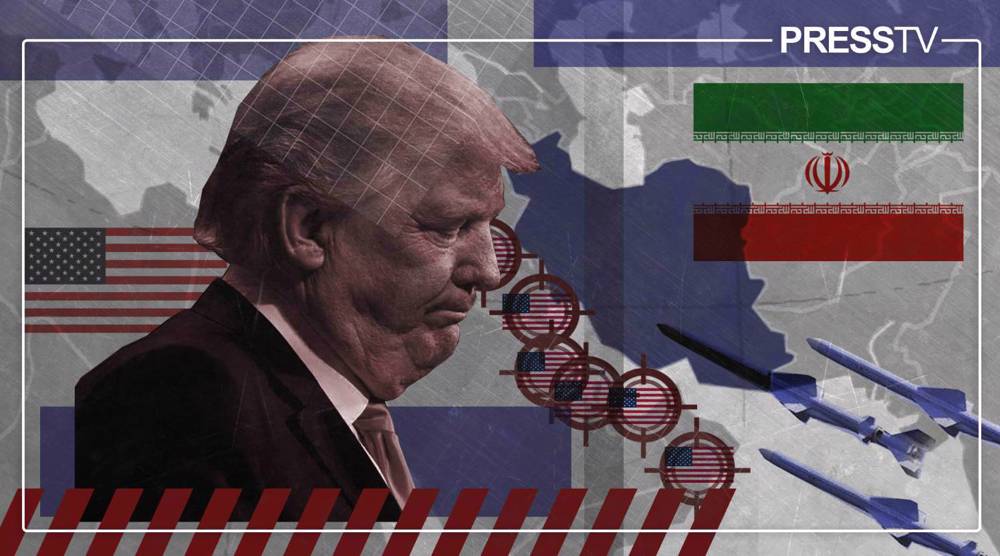
Mission unaccomplished – Part VI: US sought Iran’s surrender but got a new regional superpower
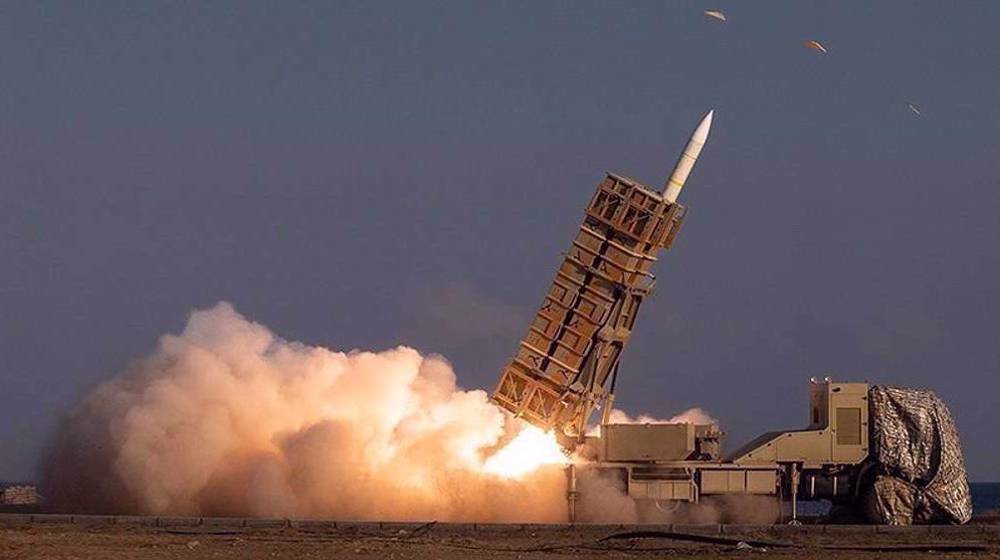
Contrary to enemy propaganda, Iran’s defense sector continues to make progress: Top general

Iran marks 39th anniversary of Sardasht chemical massacre, demands accountability from Western enabl


Hezbollah MP blasts ‘sell-out’ government, says Lebanon central to any Iran-US deal
Israeli army demolishes buildings across Gaza as ceasefire violations continue
VIDEO | Press TV's news headlines
VIDEO | Thousands displaced by earthquake in Venezuela receive temporary shelters
Iran will respond decisively to any ceasefire violation: Acting defense minister
Trump criticized Spain for not meeting NATO spending targets
Arab League, Arab Parliament condemn repeated Israeli attacks on Syria
Management of Strait of Hormuz solely Iran’s responsibility: Senior MP



 PressTV NEWSLETTER
now
PressTV NEWSLETTER
now
 This makes it easy to access the Press TV website
