Inside Iran's agricultural revolution and 85% self-sufficiency
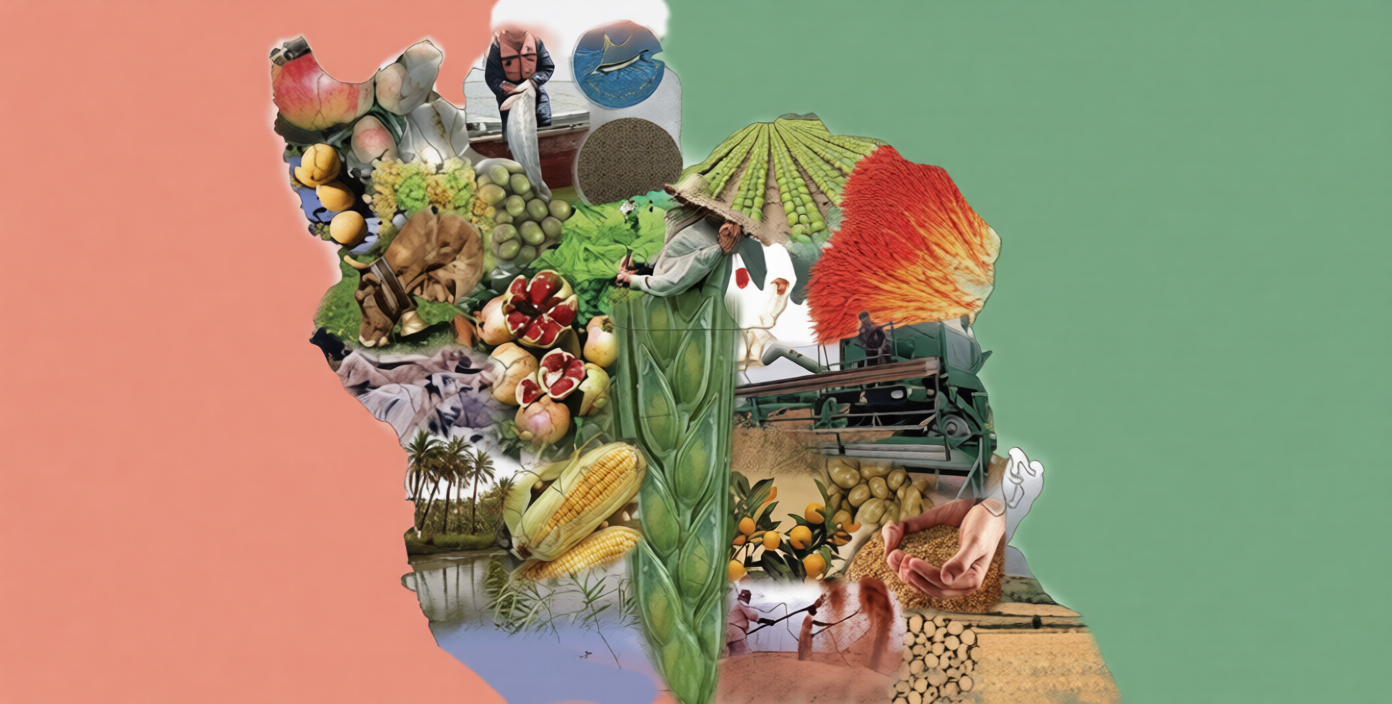
In recent years, the Islamic Republic of Iran has achieved remarkable progress in the agricultural sector and food security.
According to Minister of Agriculture Gholamreza Nouri, 85 percent of food and basic commodities are produced domestically, and Iran possesses relative self-sufficiency in meeting the food needs of its population of over 86 million people.
This success has been achieved in spite of the unjust American naval blockade which has been designed as part of the terrorist war with Israel to cut off Iran's access to essential goods and destabilize the country's economic stability.
According to various reports and real time field data, despite military aggressions and foreign sanctions, no shortages emerged in any part of the country, and the market for basic commodities was managed with calm and stability.
The achievement is remarkable given that in some regional countries, including neighboring nations and even some European countries, price increases and food shortages were widely observed.
Agriculture Minister Nouri, referring to measures taken to secure bread and flour in the country, stated that through prior planning, wheat deliveries to flour mills were scheduled earlier than usual to build reliable reserves across the country.
This intelligent measure ensured that at the height of war and blockade, bakeries continued their operations without any disruption, and bread as the people’s staple food remained consistently available.
Additionally, a portion of bakeries was equipped with alternative fuels so that in the event of disruptions to regular fuel supplies, their operations would not cease.
One of the important and intelligent initiatives of the Ministry of Agricultural Jihad, which has proven itself even more valuable under blockade conditions, is the development of overseas farming.
Under the five-year vision plan running through 2029, Iran has set a target of bringing two million hectares of overseas land under cultivation.
This means Iran has not limited itself to its geographical borders but, through international agreements, is securing its food security on the territory of other countries as well.
Under the national food security document, Iran is obligated to secure approximately 10 million tons of food imports through extraterritorial cultivation by 2031.
The figure is equivalent to normal food imports and demonstrates that Iran intends to reduce its import dependence to zero in the long term and meet all its food needs through domestic and overseas production.
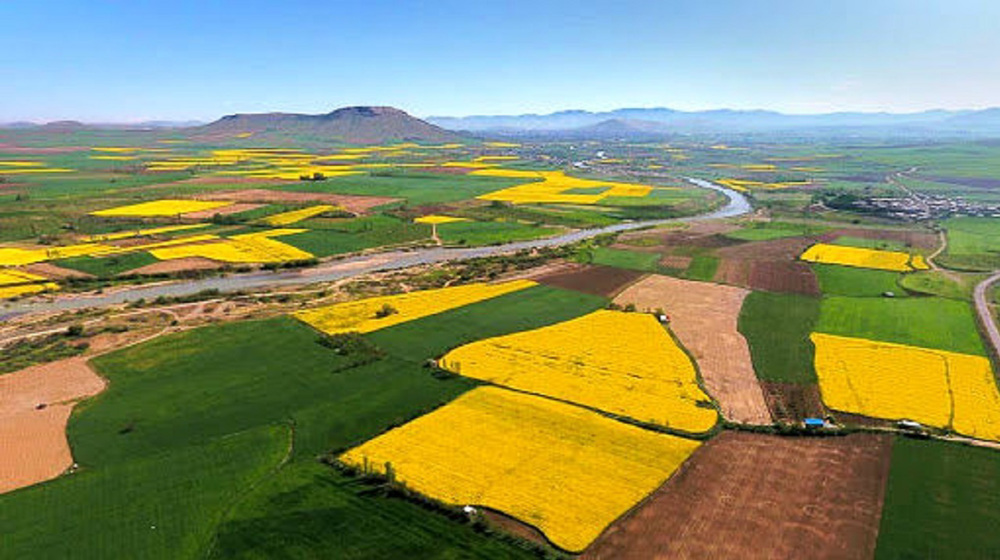
Currently, Iran has secured rights to approximately 228,000 hectares of land for cultivation in other countries.
The lands are distributed across Brazil (50,000 hectares for corn cultivation), Kazakhstan (barley, oilseeds, and soybeans), Belarus and Russia (smaller projects), as well as Ghana, Armenia, and Pakistan (projects of Iranian private companies).
This geographical diversity spanning Latin America, Eurasia, Africa, and South Asia significantly reduces the risk of blockade, because even if one maritime route is closed, products can still enter through other routes.
Early this month, Minister of Agriculture Nouri announced that the first products from the overseas farming project including approximately 60,000 tons of barley and nearly 40,000 tons of cooking oil have been imported into the country via the northern route.
The achievement represents a turning point in Iran’s food security strategy and demonstrates that Iran is no longer dependent on just one or two routes for securing its food supplies.
The entry of the products through the northern route, which is not under the control of the American navy, proved that no matter how stringent the blockade of the Persian Gulf may be, it cannot deprive Iran of access to food.
Iran, in collaboration with the Food and Agriculture Organization (FAO), has also implemented a project to “improve agricultural monitoring systems through satellite imagery.”
The project, with a budget of $489,000 from the FAO’s technical cooperation program, is being piloted in the provinces of Mazandaran, Zanjan, and Kerman.
The main goal of the project is to develop an operational and innovative agricultural monitoring system at the national level.
The system provides multiple capabilities, including near-real-time field data collection, crop yield forecasting, cultivated area estimation, and crop condition monitoring throughout the growing season.
In other words, Iran today, through satellite technology and artificial intelligence, can know precisely the production status in every part of the country and how much product awaits harvest.
The capability, under conditions of war and blockade where access to external information is limited, represents a major strategic advantage.
These systems play an important role in market management, production and distribution tracking, transparency enhancement in the agricultural sector, and coordination of policy responses to market uncertainty.
In practice, they allow the government to make necessary decisions in real time and with high precision to regulate the market and prevent shortages.
Extensive measures have also been taken to combat pests, particularly wheat rust disease. The success in pest control is the result of years of investment in technical knowledge and modern equipment and demonstrates that Iran has approached self-sufficiency even in the specialized field of plant protection.
One of the important tools for supporting farmers is the policy of guaranteed prices and government purchase of strategic products, through which the government not only supports production but also guarantees that farmers can sell their harvests at fair prices.
According to a report by the Trade Promotion Organization of Iran, agricultural products account for approximately 12 percent of the country’s non-oil exports in the year ending March 2025.
Twelve percent in a sanctions environment is notable, meaning Iran’s agriculture has shifted from a political liability to a foreign currency earner, reducing dependency on oil exports.
Economic experts believe that even if the wars continue, Iran’s economy has the capacity to resist for up to one year and, given its strategic reserves and domestic production capacities, can continue on its path without a major crisis.
The blockade and war, although they have imposed heavy costs on Iran’s economy, have not been able to empty the tables of the Iranian people.
In strategic terms, a blockade that fails to produce shortages has failed entirely since its only metric of success is starvation, and by that measure, the blockade has collapsed.
Iran, Pakistan forge blueprint for Islamic economic integration
US Treasury issues waiver for Iranian oil exports under Islamabad MoU
Super-sized drilling rig installed at Iranian offshore oilfield



'War crime': Iran FM vows legal action against US over torpedo attack on Dena frigate
IRGC dismantles armed separatist cell in northwest Iran
Venezuela earthquake death toll surpasses 1,700 as search efforts continue
US national pride lowest in two decades: Poll
Pentagon plans US ground troop deployment to force Hezbollah disarmament: Report
Over 90 countries declare readiness to attend funeral of martyred Leader
Mission unaccomplished – Part VII: US sought Iran's collapse but settled for reopening Hormuz Strait
Iran becomes world's 3rd producer of rapid gas detection kits, says knowledge-based firm


 PressTV NEWSLETTER
now
PressTV NEWSLETTER
now
 This makes it easy to access the Press TV website
