US-Israeli war on Iran caused largest rise in energy prices in 25 years: Report
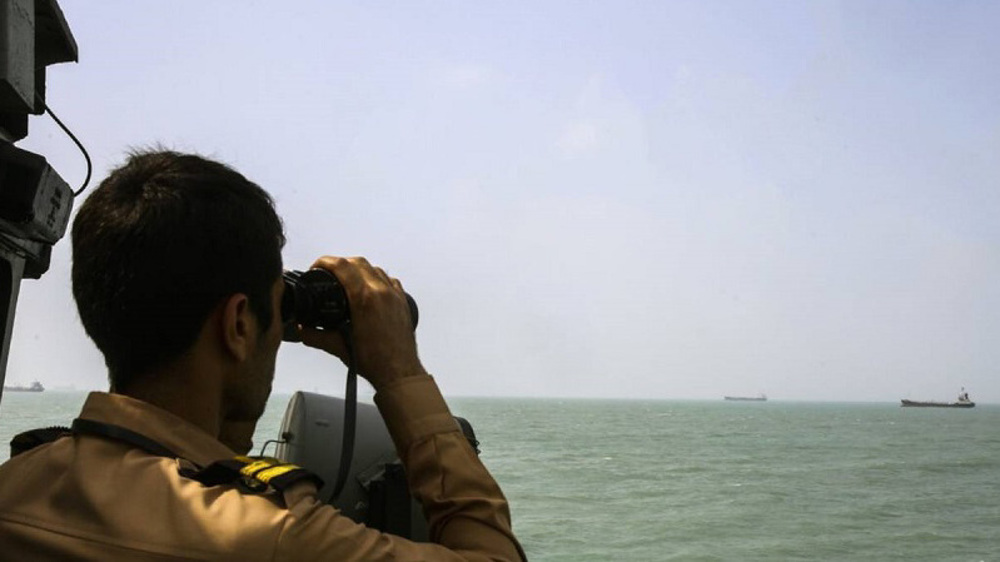
US-Israeli aggression against Iran, and the subsequent closure of the Strait of Hormuz, has triggered the largest rise in global energy inflation in a quarter-century, a new report finds.
A report published on Tuesday by Swiss bank UBS shows average energy prices jumped 5.5% in March.
Arend Kapteyn, the bank’s global head of economics and strategy research, said UBS monitors inflation across roughly 45 major advanced and emerging economies, representing over 85% of global GDP.
Of the 27 economies that have reported data so far, the median monthly rise of 5.5% already surpasses the spike recorded after the start of the Russia–Ukraine conflict in March 2022, Kapteyn noted.
The increases were widespread: about two-thirds of reporting economies saw monthly gains in the 97th percentile or higher of their historical ranges.
US Sen. Warren blasts Trump for making Americans pay the price of his "illegal war" on Iran:
— Press TV 🔻 (@PressTV) April 14, 2026
Since Trump started his illegal war with Iran, Americans have paid $8.4 billion more at the gas pump.
American families are footing the bill for Trump’s reckless policies. pic.twitter.com/ymQxuYWnnI
The report attributes the shock to globally synchronized disruptions in energy markets following developments in West Asia.
Oil prices measured by the US benchmark West Texas Intermediate have surged 69% since the start of the year.
Market optimism that Tehran and Washington may reach an agreement to halt hostilities and reopen the Strait of Hormuz has kept futures below $100 a barrel.
Europe’s Dutch TTF gas contract has climbed 59% so far in 2026.
US Secretary of Energy Chris Wright said Monday that oil prices could peak in the coming weeks, as ongoing shipping disruptions through the Strait of Hormuz continue pushing costs upward.
“We are going to see energy prices high, and maybe even rising, until we get meaningful ship traffic through the Strait of Hormuz,” Wright said at the Semafor World Economy conference in Washington, DC. “That will probably hit the peak oil price at that time. That is probably sometime in the next few weeks.”
WATCH
— Press TV 🔻 (@PressTV) April 13, 2026
THE GLOBAL ENERGY CRISIS TRUMP HAS CAUSED: Perhaps when Trump decided to attack Iran, he didn't predict the quagmire he would be stuck in.
Follow https://t.co/B3zXG73Jym pic.twitter.com/IwyONA7qWZ
Energy markets have been on edge since February 28, when the US and Israel launched a large-scale and unprovoked war of aggression against Iran, assassinating Leader of the Islamic Revolution Ayatollah Seyyed Ali Khamenei, several senior military commanders, and killing thousands of civilians.
In retaliation, Iran’s armed forces carried out 100 waves of missile and drone strikes against key US bases and assets in the region, as well as Israeli targets in the Occupied Territories.
Iran also restricted the Strait of Hormuz to oil and gas tankers belonging to the US and Israel or countries cooperating with them.
IMF Chief: Iran War Means "All Roads" Lead to Inflation
— Press TV 🔻 (@PressTV) April 7, 2026
Kristalina Georgieva has warned that the US-Israeli war on Iran has caused the "largest energy supply shock in modern history."
Follow: https://t.co/B3zXG73Jym pic.twitter.com/Y7vcuN0WQO
A Pakistan-brokered ceasefire went into effect 40 days into the conflict.
However, the first round of Tehran-Washington talks in Islamabad broke down after the US delegation presented "excessive demands" and shifting negotiating positions.
US President Donald Trump later announced a "naval blockade" of the Strait of Hormuz aimed at intercepting vessels that had paid tolls to Iran.
The US military claimed the blockade began Monday at 1400 GMT, escalating tensions further.
Iran has warned it will respond decisively to any provocations stemming from the blockade or broader US and allied actions in the region.
UAE joined US-Israeli aggression against Iran from outset: Report
Iran says no final understanding with US yet, rejects Trump's 'language of must'

Saudi Arabia seeking to produce replica of Iran’s Shahed drone: Report



Iran says IRGC Navy to control all Strait of Hormuz traffic ‘with full authority’
Iran’s Defense Ministry to establish drone support center: Spokesman
Iran's Shahpari snatches second silver, rewrites national record at Asian U20 Athletics C'ships
US households lose $60 billion to rising energy costs amid war on Iran: Report
Kata'ib Hezbollah says US, British envoys must not interfere in Iraq's domestic affairs
Iran’s growing leverage exposes emptiness of Trump’s psychological warfare in high-stakes standoff
Iranian stock market reports historic trade as shares surge
IRGC Navy: 20 commercial ships transit Hormuz in 24 hours after obtaining permission


 PressTV NEWSLETTER
now
PressTV NEWSLETTER
now
 This makes it easy to access the Press TV website
