Iran’s growing leverage exposes emptiness of Trump’s psychological warfare in high-stakes standoff
By Press TV Strategic Analysis Desk
In the high-stakes theater of modern geopolitics, perception, narrative control, and strategic signaling often outweigh military and diplomatic measures.
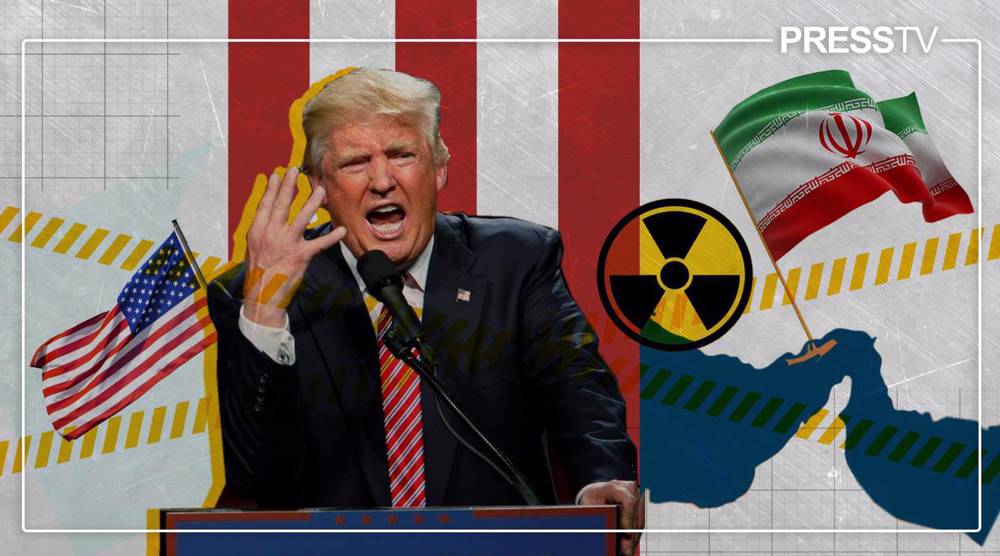
On Friday, US President Donald Trump once again took center stage, dishing out a series of outlandish claims about ending the war against Iran, exposing not only the incoherence of US policy but also a deepening reliance on psychological warfare to manipulate markets and project an illusion of victory.
To the casual observer, his statements echoed the confident decrees of a victorious superpower imposing terms. But a sober, reality-based analysis cuts through the performance. His claims are a desperate smokescreen and a frantic attempt to obscure an American military debacle.
The reality is that Iran holds the upper hand, and its leverage is growing by the day. Its strategic position has not only survived but strengthened amid a war designed to cripple it.
Far from being coerced into submission, the Islamic Republic has transformed failed US-Israeli aggression into a crucible of bargaining power, where time, geography, and asymmetric capabilities increasingly constrain Washington’s freedom of action.
The result is a widening chasm between Trump’s rhetorical theater and the undeniable facts on the ground.
The US president’s remarks were no victory lap but a multi-layered psychological operation, a confession of strategic frustration wrapped in the tattered flag of false triumph. To understand the true balance of power, we must dissect the motivations behind his words – and then contrast them with the hard, undeniable realities that Tehran now controls.
Decoding the performance – Trump’s motives unraveled
Before examining Iran’s undeniable ascendancy, we must first understand why the American president would construct a narrative so ridiculously divorced from reality. His motives are not singular but form a tangled web of tactical desperation, each thread revealing a different facet of Washington's strategic exhaustion.
One of Trump’s most consistent, yet chronically underreported, psychological warfare tactics is the timed release of statements. He has repeated this pattern with mechanical precision: as global financial markets brace for the weekend close, he projects an optimistic, war-ending scenario.
Energy markets, particularly oil and shipping insurance, react instantly to signals of escalation or de-escalation in the Strait of Hormuz. Statements issued at critical timing intervals – such as before market closures or during low-liquidity weekends – function as instruments of economic signaling. They can temporarily suppress price volatility or redirect speculative flows, offering Washington short-term leverage in shaping global financial expectations.
By injecting a dose of artificial hope just before the two-day break, Trump buys the US a small but critical window. For 48 hours, the world’s traders, hedge funds, and energy analysts are lulled into a deceptive calm. This prevents a panic-driven spike in oil prices that would otherwise punish American consumers and destabilize the global economy.
More importantly, it gives the US war machine two full days in which it can carry out escalatory actions – military repositioning, covert operations, or new sanctions – without immediate market consequences. By Monday morning, the reality of any weekend action can be managed, spun, or buried beneath a fresh layer of narrative.
This is not statecraft but market manipulation through narrative control. It reveals a regime that fears the economic volatility of its own aggression, a superpower that must deceive markets to avoid paying the price of its belligerence.
A second, more insidious motivation is Trump's attempt to confront Iran with a unilateral declaration of peace. By announcing an "agreement" from his own podium, he seeks to create a political fait accompli. The logic, however flawed, is that Tehran will feel pressure to accept an American-imposed peace rather than be blamed for continuing the war.
This is a fundamental miscalculation of Iranian strategic culture. It assumes that economic pressure alone breaks resolve, ignoring decades of evidence that external threats only strengthen Iran's domestic cohesion and strategic patience. Trump's fait accompli is not a negotiation tactic but a wish cast into the wind, hoping reality will bend to his will.
✍️ Analysis - Without Iran’s signature, Trump’s claims amount to wishful political messaging, not a breakthrough
— Press TV 🔻 (@PressTV) May 29, 2026
By Press TV Strategic Analysis Deskhttps://t.co/5Q3PtiKMT0
Trump's expectations and miscalculations
Every statement from Trump is also a probe. He is testing Iran's reaction on three critical fronts: military, diplomatic, and propaganda. On the military front, will Iran show restraint or a decisive response to provocation? Restraint might be misread as weakness and decisiveness as over-escalation. Iran's calculated, defensive posture so far has confounded American war planners who expected a predictable and emotional reaction.
On the diplomatic front, Tehran's response – whether positive, negative, or conditional – helps Washington calibrate its next move. But here again, Trump has miscalculated catastrophically. Iran has turned every diplomatic probe into an opportunity to reassert its conditions, not to accept America's.
In terms of propaganda, enthusiasm for Trump's remarks among regional allies or opposition from Iran's supporters gives him data. Yet the loudest signal has been global skepticism. Few outside the echo chamber of Washington insiders believe the war is ending on Trump's terms. The world sees the performance for what it is.
At its core, Trump's performance is for domestic and global public opinion. He needs to be seen as the man who started the war and ended it on his own schedule. This projection of decisive superpower authority is necessary to restore the tarnished images of the US, Trump himself, and the Republican Party after an unprovoked and illegal war of aggression that failed to meet any of its declared objectives.
But a narrative repeated a thousand times does not make it true. The gap between Trump's projection of victory and the military reality on the ground is now a chasm. He is not ending the war because he chooses to, but he is seeking an exit because he has failed to win.
Perhaps the most chilling motivation is deception. Excessive optimism about Trump's statements – interpreting them as the definitive end of the war – could lead to a deadly lull in vigilance. By encouraging a belief that hostilities are concluding, Trump may be preparing for a surprise entry into a new, more intense phase of targeted assassinations.
Finally, Trump's use of specific, unusual terms – such as calling Iran's collection in the Strait of Hormuz "fees" – may be implicit signals. This language suggests a coded acknowledgment of Iran's legitimate arrangements. By recognizing that what Iran collects are not arbitrary "fees" but service charges for safe passage and maritime security, Trump may be hinting at a backchannel flexibility he dare not speak openly. In that single word – "fees" – lies the quiet confession of a superpower learning to accept a new regional order it cannot defeat.
The reality on the ground – Why Iran holds the upper hand
Now, set aside Trump's words and look at the objective facts. The very act of the US returning to negotiations is not a sign of its strength but a testament to Iran's power. Washington entered a full-scale war with declared objectives – and achieved none of them.
The US aimed to destroy the Islamic Republic, enact "regime change," and partition Iran to seize its oil resources. It sought, as a fallback, to dismantle Iran's nuclear capabilities – facilities, enriched materials, and missile-defense power. It also wanted, as a minimal objective, to cripple Iran's economic infrastructure through sanctions and military strikes.
Every single objective failed. Why? Because of the resilience of the Iranian people, the readiness of its armed forces, credible military responses, and a robust system of deterrence that imposed unacceptable costs on any aggressor. The return to diplomacy is not a sign of American magnanimity but the final admission of a war that did not deliver.
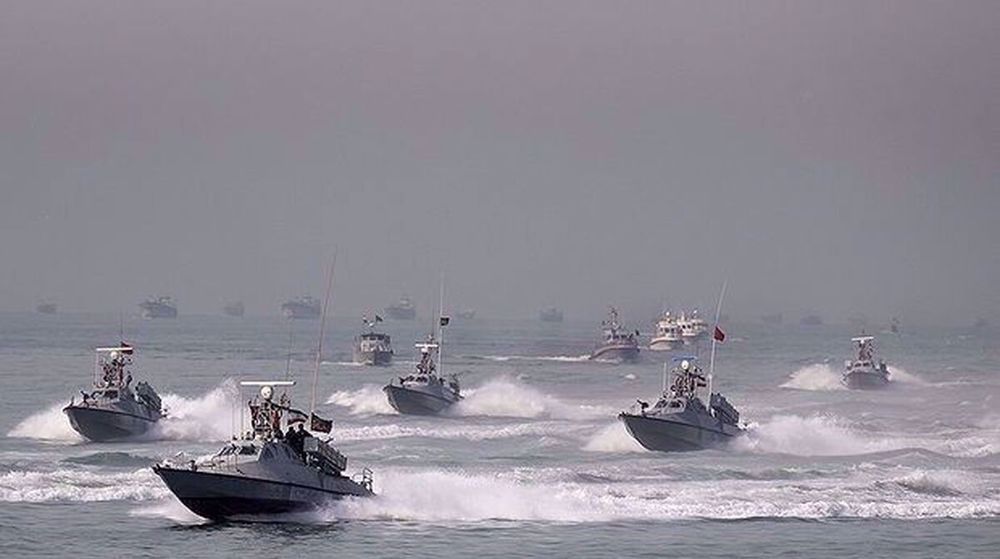
After failing to harm Iran, the American war machine attempted to reopen the Strait of Hormuz by force. Iran, in response, effectively blocked it. The results of America's attempts are a catalogue of strategic humiliation. Politically, Trump could not form a European, global, or even a regional coalition to reopen the strait. He failed to pass any resolution in the UN Security Council. Despite repeated claims that the US is independent of the strait, he could not ignore it. He was forced back to the political and military arena on Iran's terms.
Militarily, the record is even bleaker. Repeated US naval operations to force the strait open failed, one after another. Each failure was a silent yet consequential victory for Iran's asymmetric naval strategy, a strategy that turns American technological superiority into a liability in confined waters.
One of the most telling indicators of Iran's upper hand is Trump's continuous withdrawal from his own war deadlines. Before the 40-day war, he issued threats with theatrical urgency. During the war, he promised a rapid victory. After the war, he sets ultimatums for negotiations. And repeatedly, he has retreated.
Each retreat is a public admission that the costs of continued war – military losses, strategic overextension, economic blowback – are far higher for Washington than the reputational cost of negotiation. Iran has imposed this reality through sheer strategic patience and the credible threat of pain. The American side has no viable military option left, only a diplomatic one. And in that diplomatic room, Iran is the party setting the terms.
✍️ Analysis - Zero-sum terminus: Iran’s roadmap to ending war on its terms vs. America’s choice between bad and worse
— Press TV 🔻 (@PressTV) May 25, 2026
By Press TV Strategic Analysis Deskhttps://t.co/ZMtqWUnToD
The negotiating table – How US demands have crumbled
The most concrete evidence of Iran's growing leverage is found in the draft text of a potential agreement. Compare the US’s original preconditions for ending the imposed war with what is currently on the table. The difference is clear.
Missile and drone ranges: The US originally demanded strict, verifiable limits on the range of Iran's missiles and drones. This demand is now entirely absent from Trump's recent statements and the current draft text. Iran's conventional deterrent remains intact.
The Resistance Front: Washington demanded Iran disavow and cut all support for the Resistance Front, including Hezbollah, Hamas, and allied groups. This demand has been quietly dropped. In fact, Iran has flipped the script entirely, making the end of hostilities across all resistance fronts, especially in Lebanon, a binding condition for ending America's third imposed war. Tehran now dictates the regional ceasefire terms.
Nuclear capabilities: The US insisted on restricting or dismantling Iran's nuclear capability before any official end to the war. Now, both sides agree to first declare a formal, permanent end to the war, followed by separate nuclear negotiations. This sequence is a profound concession. It formally recognizes that the war itself is a factor in any future nuclear deal, not a precursor to it. Iran has decoupled ending the war from its nuclear program.
60% enriched uranium: The US demanded the transfer of Iran's 60% enriched uranium to American soil for destruction – a non-negotiable red line just months ago. Trump's recent statements did not mention this at all. Instead, he referred vaguely to determining its fate inside Iran, under Iranian supervision. That amounts to capitulation.
Strait of Hormuz: The US demanded unconditional reopening of this strategic waterway, with no role for Iranian oversight. The informal draft now refers explicitly to "Iranian arrangements," including Iran's demand for service fees. Washington has effectively recognized Tehran's right to regulate and charge for passage through its own littoral waters.
Enrichment halt: The US originally demanded a permanent, verifiable halt to all uranium enrichment on Iranian soil. Even accepting a 15-to-20-year suspension, as in the initial US proposal, is already a massive retreat from the original demand.
The price of American defeat – What the US must accept
If a final agreement is reached, it will not be a treaty of American triumph. It will be a document that marks, in clear legal language, the end of the era of unchallenged American superpower dominance. The commitments the US would be forced to accept are staggering:
- Ending maritime piracy operations and blockades of Iranian ports, and withdrawing US forces from the region surrounding Iran.
- Unfreezing all Iranian assets held abroad.
- Lifting sanctions and repealing all anti-Iran resolutions.
- Committing to approximately $300 billion for reconstruction and compensation for war damages.
- A binding commitment to non-interference in Iran’s internal affairs, a repudiation of decades of covert CIA operations.
- Ending the Israeli regime’s war on Lebanon and all military offensives against Hezbollah, effectively acknowledging the Resistance Front’s legitimacy.
- Immediate suspension of all illegal sanctions on Iran’s oil, petrochemicals, transport, and financial sectors.
- Formal recognition of the name “Persian Gulf” in the final agreement and a UN Security Council resolution within 60 days of completing the agreement.
Read that list again. Each clause is a humiliation for the so-called global superpower. Collectively, they represent a strategic earthquake. The US war machine would not only be ending a war it started and lost, but it would be legitimizing Iran’s regional role, its nuclear pathway, its military deterrence, and even its naming rights over a body of water.
Perhaps the most significant shift in the current phase is Iran’s transition from reactive resistance to proactive agenda-setting. Rather than merely responding to external proposals, Tehran now shapes key parameters of negotiation, including sequencing, conditions for maritime access, and linkage between military de-escalation and sanctions relief.
When the history of this period is written, it will not be a story of how a superpower, blinded by its own arrogance, was forced to the table by a nation it sought to erase. And at that table, it was Iran that wrote the terms.
IRGC Navy: 20 commercial ships transit Hormuz in 24 hours after obtaining permission

Iran Army downs intruding Orbiter drone over Qeshm Island

Two terrorists killed in armed clash with Iranian border guards


Iran's Shahpari snatches second silver, rewrites national record at Asian U20 Athletics C'ships
US households lose $60 billion to rising energy costs amid war on Iran: Report
Kata'ib Hezbollah says US, British envoys must not interfere in Iraq's domestic affairs
Iran’s growing leverage exposes emptiness of Trump’s psychological warfare in high-stakes standoff
Iranian stock market reports historic trade as shares surge
IRGC Navy: 20 commercial ships transit Hormuz in 24 hours after obtaining permission
Israeli forces push deeper into southern Lebanon, warn residents to leave
Iran Parliament to vote on Hormuz Strait management plan 'soon'



 PressTV NEWSLETTER now
  This makes it easy to access the Press TV website