Iran’s 14th AFC futsal title after thrilling penalty shootout reinforces its Asian dominance
By Mohammad Ali Haqshenas
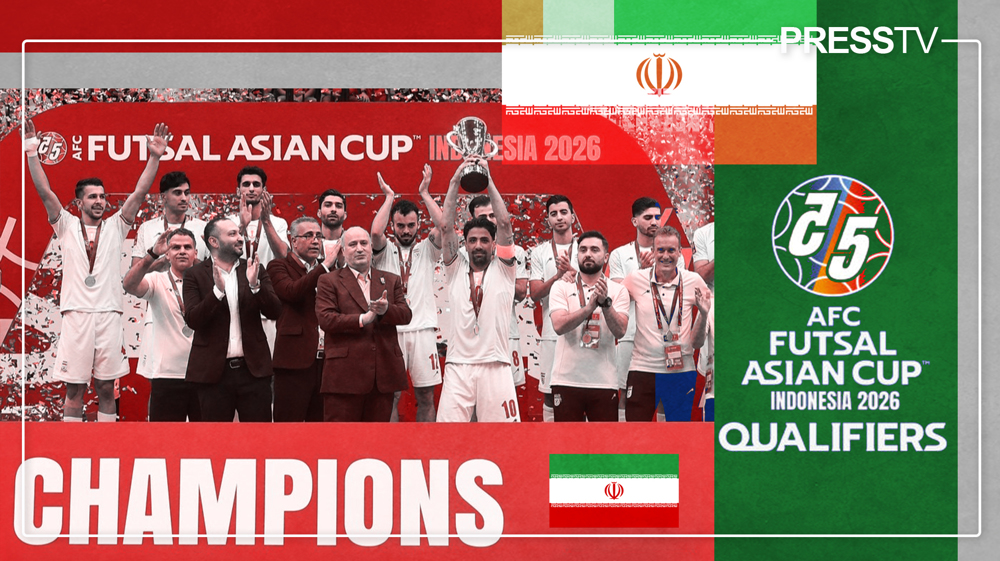
When the roar inside Jakarta’s packed arena reached a deafening crescendo and 16,500 Indonesian fans sensed history, Iran’s futsal players answered the call the only way champions know how.
Composed amid chaos, resilient under high pressure, and clinical when it mattered most, Iran once again ascended to the pinnacle of Asian futsal, edging hosts Indonesia on penalties to secure a record-extending 14th AFC Futsal Asian Cup title.
This was no routine victory, though, nor a comfortable one. It took nerves of steel to cross the finish line for Vahid Shamsaei’s young and extremely talented squad.
The summit clash pushed Iran’s nerve, identity, and legacy to the limit – ultimately reaffirming why, for more than two decades, the continent’s futsal narrative has revolved around one enduring powerhouse – the Islamic Republic of Iran.
The final showdown
The AFC Futsal Asian Cup final on Saturday afternoon was billed as a battle between pedigree and potential. There were no clear favorites, though.
Indonesia, buoyed by a stunning semi-final upset over formidable Japan and driven by overwhelming home support, arrived brimming with belief and momentum.
Iran, defending champions and serial title-holders, carried the heavy mantle of expectation – and the target that comes with being the benchmark of Asian futsal.
Head coach Shamsaei deployed an experienced starting five, anchored by veteran goalkeeper Bagher Mohammadi and marshaled by decorated captain Hossein Tayebi.
🇮🇷⚽️ Iran are Asian champions for 14th time
— Press TV Sports (@presstvsports) February 7, 2026
In the AFC Futsal Asian Cup 2026 final, Iran and Indonesia drew 5-5 after regular time. Iran then Iran won 5-4 on penalties.
Goals came from Hossein Tayebi, Mehdi Karimi (2), Saeid Ahmadabbasi and Salar Aghapour. @presstvsports pic.twitter.com/6zC5tlCgjh
Amid the deafening roar of the crowd, it was Tayebi who struck first, opening the scoring with a precise finish that briefly silenced the spectators and hinted at a familiar script.
But this final refused to follow precedent. Fearless and quick, Indonesia surged back with three goals in rapid succession, flipping the match on its head and igniting the home crowd.
For the first time in the tournament, Iran looked visibly rattled – but not broken. They had faced similar situations in the back – bouncing back in fashion.
Mahdi Karimi pulled one back before the break to make it 3-2, a goal that came at a critical time and reignited Iran’s belief.
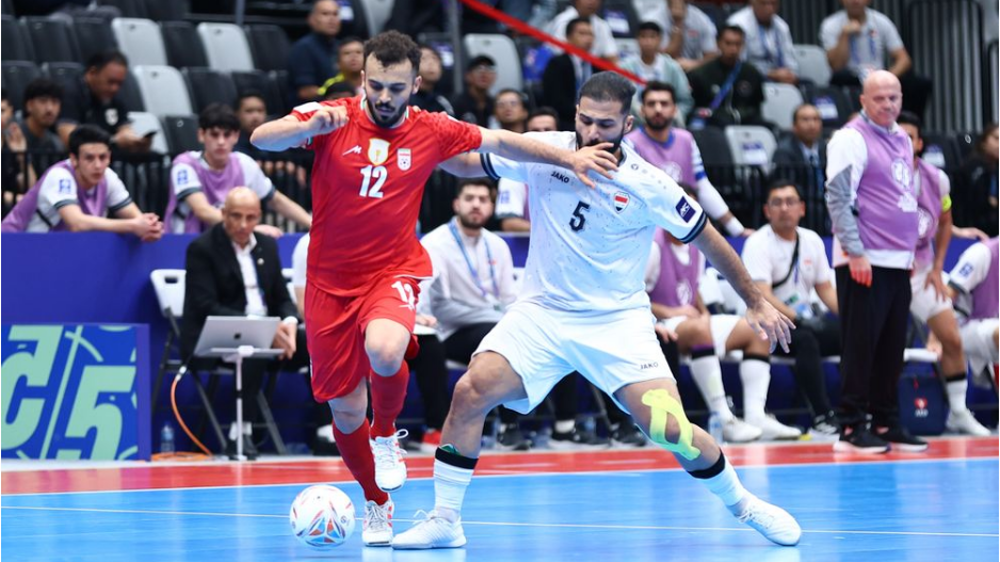
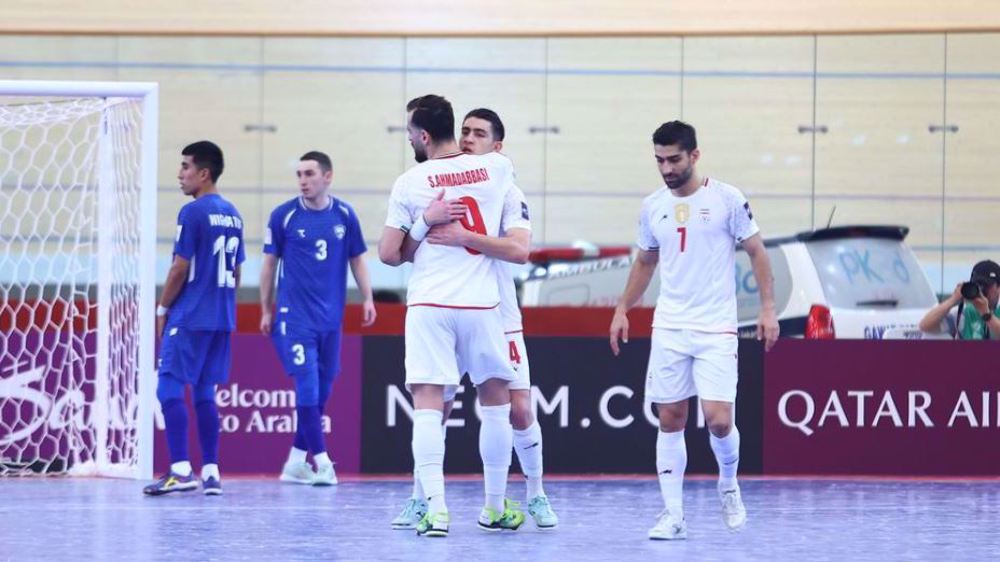
In the second half, Saeid Ahmadabbasi leveled the score, only for Indonesia to respond almost immediately through clinical Samuel Eko. The match became a relentless back-and-forth, each shift in momentum demanding emotional resilience and tactical sharpness.
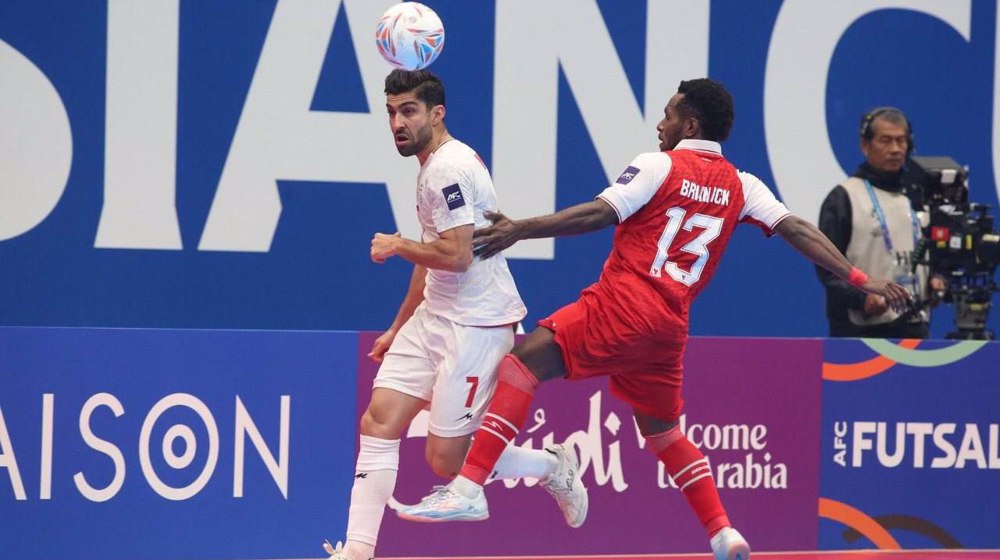
Iran pressed forward, striking the woodwork and probing tirelessly. Karimi once again stepped up, equalizing with just three minutes remaining to force extra time.
Even then, the drama raged on. Indonesia edged ahead once more, but Ahmadabbasi responded within a minute, dragging the contest into the penalty shootout – futsal’s most unforgiving battleground.
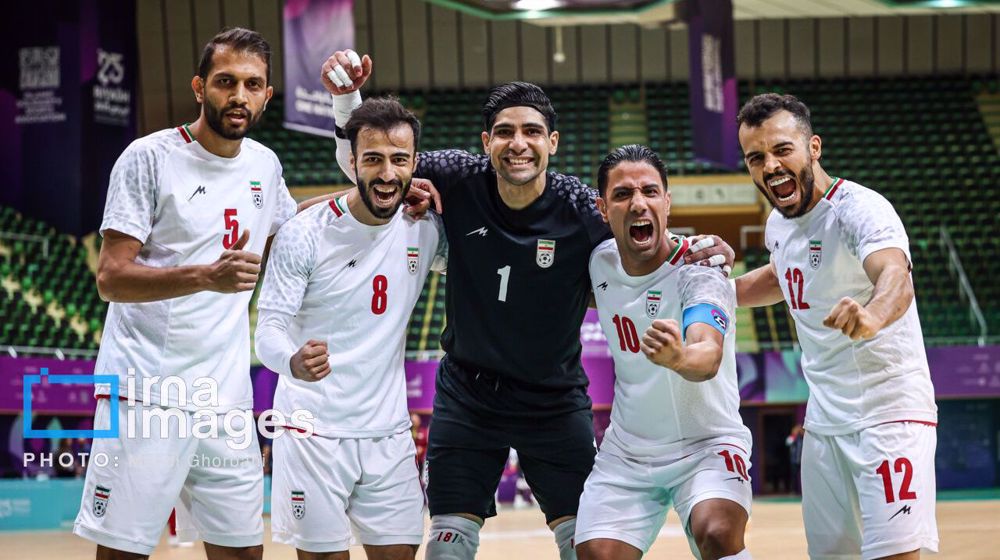
There, Iran’s experience prevailed. Composed, focused, and unshakable, they converted when it mattered most, clinching the shootout 5-4 and adding another chapter to their storied dominance.
🇮🇷⚽ Iran crowned AFC Futsal Asian Cup champion for record 14th time
— Press TV Sports (@presstvsports) February 7, 2026
Iran’s national futsal team defeated hosts Indonesia in a dramatic penalty shootout to claim the AFC Futsal Asian Cup title.@presstvsports pic.twitter.com/ZBEJs8QndV
A 14th Asian title is more than just a number – it’s a testament to sustained excellence. In a continent where futsal investment has surged in recent years, from Japan and Thailand to Uzbekistan and now Indonesia, Iran remains the benchmark.
Generations change, rivals evolve, but Iran’s core identity endures.
The team wasn’t flawless in Jakarta. Pushed, rattled, and forced to chase the game multiple times, Iran’s mental strength, tactical maturity, and clutch belief ultimately separated champions from challengers.
From the technical area, Shamsaei conducted his team with calm precision, trusting his seasoned players and steering the match toward scenarios Iran has mastered over years at the summit.
The former futsal icon, now a two-time Asian champion as head coach after securing eight titles as a player, didn’t hide the campaign’s toll.
“I’ve lifted many trophies,” Shamsaei reflected, “but this was the toughest one.”
He also praised Indonesia’s rise from a rookie side to a force to reckon with.
“This is the biggest development I’ve seen. Congratulations to Indonesia,” he said, acknowledging the host nation that pushed Iran to the edge and announced itself as a new force in Asian futsal.
Leaders in decisive moments
The final showcased not only Iran’s collective grit but the impact of leadership. Captain Tayebi, the face of Iranian futsal for over a decade, once again set the tone.
“We knew we were playing in their house and under huge pressure,” Tayebi said. “But from the start, our goal was to win the title. We fought until the last moment, and this victory belongs to the whole team.”
🇮🇷⚽ It was a very tough match, says captain Hossein Tayebi, after Iran's futsal team won AFC Asian Cup 2026
— Press TV Sports (@presstvsports) February 7, 2026
"Thank God, in the end we managed to win the match. The spectators were incredible, and Indonesia should truly appreciate its fans."@presstvsports pic.twitter.com/GxvTTrWq74
Tayebi also paid tribute to the Indonesian crowd, calling the atmosphere “extraordinary” and crediting the passionate home fans for pushing both teams to their limits.
Meanwhile, Saeid Ahmadabbasi’s standout tournament was capped with individual acclaim.
Crowned the AFC Futsal Asian Cup’s Most Valuable Player, Ahmadabbasi was pivotal throughout the competition, delivering crucial goals in both regular and extra time during the final.
“At the end of the day, I received the award, but it belongs to all the players,” Abbasi said.
“I would like to dedicate the award to my teammates and the most important thing is that the trophy remained with Iran.”
For Indonesia, defeat brought disappointment, but also validation. Head coach Hector Souto of Spain praised his players’ courage and discipline, reminding them how close they came to making history.
“No one would have believed we’d reach the final, with chances to win in regulation, extra time, or penalties,” Souto said. “Sometimes you succeed, sometimes you don’t. Today, we came really close, and we should be proud.”
His words underscored a broader truth: Asian futsal is evolving. While Iran’s dominance remains, the gap is closing, and finals like this signal a more competitive future for the sport across the continent.
🇮🇷⚽️ Abassi named Most Valuable Player (MVP) of AFC Futsal Asian Cup
— Press TV Sports (@presstvsports) February 7, 2026
Iran’s Saeid Ahmad Abassi was named the tournament’s Most Valuable Player, capping off an outstanding campaign and playing a key role in Iran’s success on the continental stage.@presstvsports pic.twitter.com/RZw6BaxUQR
Accolades pour in
Back home, the triumph resonated far beyond futsal circles. Iranian officials hailed the title as a symbol of unity, resilience, and national pride during a time when sporting success carries profound emotional weight.
President Masoud Pezeshkian called Iran’s 14th Asian futsal title a “pride-inspiring victory,” highlighting it as a reflection of “the will, unity, and merit of the sons of this land.”
He credited players, coaches, and staff for bringing joy to the Iranian people through collective effort and perseverance.
Parliament Speaker Mohammad-Bagher Qalibaf emphasized the deeper foundations of Iran’s futsal success, describing the championship as the product of skill, cohesion, and enduring competitive spirit.
He noted such achievements are “not accidental” but the result of continuous effort and faith in domestic talent.
The Ministry of Sports praised the team’s comeback spirit, lauding their ability to overcome adversity with unity and belief – qualities long synonymous with Iranian futsal.
Jakarta 2026 was about more than defending a title. It was a reaffirmation of a culture. As challengers rise and margins tighten, Iran relies on a deeply ingrained winning mentality, one forged through decades of pressure-cooker moments like this.
Standing on the podium, medals around their necks and the trophy in hand, Iran’s players looked less like survivors and more like custodians of a proud tradition.
As Shamsaei summed it up, reflecting both relief and pride: “I never wish such pressure on anyone, but the important thing is the trophy is with us.”
How mistreatment and bias against Iran at US-hosted 2026 World Cup became FIFA's indelible stain

Iran team thanks Mexico, questions World Cup fairness in farewell message from Tijuana

2026 World Cup: Iran prepares to depart Mexico after 24-day stay in Tijuana



VIDEO | Beijing applauds Iran sanctions waiver, reaffirms energy security stance
VIDEO | Iran's Embassy in Madrid hosts Shia-Christian interfaith dialogue
Qatar announces conclusion of Doha talks with Iranian, US delegations
Jellyfish in the sky: How Iran's ‘alien-like’ drone swarm rattled US military intelligence
Israel ships 1-ton military consignment to Somalia under UN designation: Report
Beyond the results: Iran's resilient 2026 World Cup campaign in the face of adversity
VIDEO | Iranian scholars reveal reality behind American human rights claims
VIDEO | Ceremony in Gaza honors children for memorizing Holy Qur’an


 PressTV NEWSLETTER
now
PressTV NEWSLETTER
now
 This makes it easy to access the Press TV website
