Iran shattered US-Israeli military myths, accelerated shift to Global South: Pakistani ex-general
By Press TV Website Staff
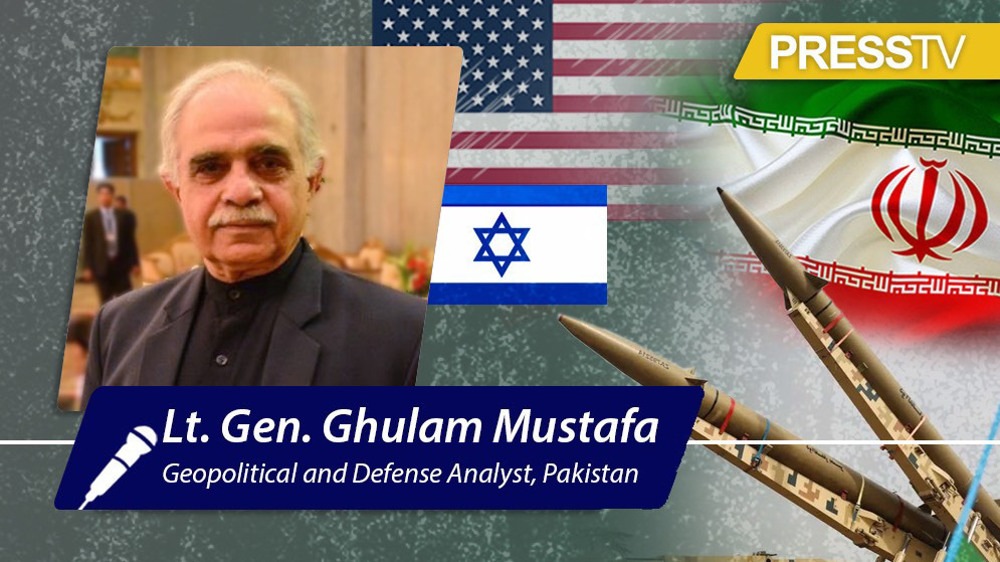
A retired Pakistani military officer says Iran's resistance in the face of the recent US-Israeli military aggression has fundamentally reshaped the regional and global strategic landscape, shattering long-held perceptions of American and Israeli military invincibility and accelerating the emergence of a new international order centered on the Global South.
In an interview with the Press TV website, retired Lieutenant General Ghulam Mustafa, former commander of Pakistan Army's Strategic Forces Command, noted that the military aggression against Iran was part of a broader geopolitical design aimed at consolidating Western control over strategic energy resources and critical maritime chokepoints.
According to Mustafa, Israel has long portrayed Iran as an existential threat, particularly under Benjamin Netanyahu, while Washington increasingly embraced the same narrative.
However, he believes the broader objective extended far beyond Iran itself.
"The war on Iran was a step towards the greater goal that they want to achieve: to control the resources of the world," he said, pointing to Iran's vast oil and gas reserves in the south, as well as the hydrocarbon-rich Caspian region in the north.
He further stated that military dominance over Iran would have strengthened Western control over strategic waterways, including the Strait of Hormuz and the Bab el-Mandeb Strait, complementing existing influence over the Strait of Malacca and enabling greater control of global maritime supply routes.
Mustafa said those broader objectives have instead suffered a serious setback following Iran's retaliatory operations, which inflicted heavy losses on the US-Israeli axis.
The former Pakistani military officer said the failed war destroyed the perception that the United States enjoys unquestioned military dominance in West Asia.
"Iran has undone that awe and fear that people had of the American presence in the region," he said, adding that Washington's extensive military infrastructure across the region failed to produce the decisive outcome many had anticipated.
He also said Israel's long-standing image as an untouchable regional military power has been significantly weakened after the recent war.
"The myth that Israel can get away with anything and do whatever it wants has also been broken," Mustafa told the Press TV website.
🎤 Conversation - Iran-US war-ending MoU ‘significant victory’ for Tehran and defeat for American Empire: @MatthewPHohhttps://t.co/mJJV75hpop
— Press TV 🔻 (@PressTV) June 26, 2026
Commenting on claims that Washington and Tel Aviv attempted to replicate the "shock and awe" doctrine employed during the 2003 invasion of Iraq, Mustafa dismissed the comparison as fundamentally flawed.
He said American and Israeli war planners failed to take into account Iran's unique geography, history and national character.
"The first principle, as a military man, is to understand the geography where you are going to attack or defend and to understand the enemy you are confronted with," he said.
According to Mustafa, both Washington and Tel Aviv seriously underestimated the nature of Iranian society and its military resilience, resulting in what he described as a strategic failure that exposed the limitations of decision-making in the two capitals.
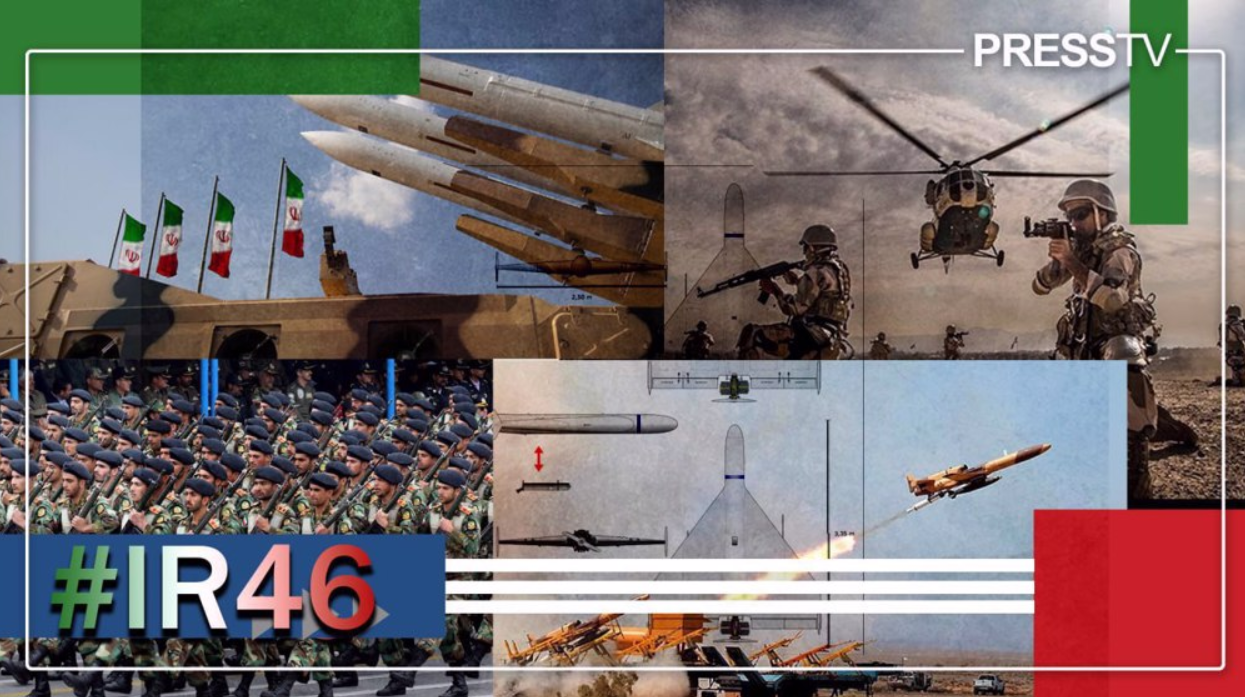
Assessing Iran's military performance, Mustafa said Tehran faced an unprecedented coalition of military capabilities despite possessing no significant air force and only a limited navy.
He noted that Iran confronted an extensive regional military architecture stretching across several Persian Gulf states and Jordan, backed by Israel's sophisticated multi-layered missile defense systems.
Despite these challenges, he said Iran succeeded in penetrating these defensive networks while maintaining national cohesion throughout the war.
"Iran withstood this onslaught with its missiles, air defenses, and everything else," he said, describing the country's unity and resilience as exceptional. "It says a lot about the nation: very brave, very courageous, and completely united."
Mustafa also credited Iran's military command structure for effectively managing the war.
He said Iranian military commanders successfully decentralized operational authority while maintaining centralized strategic control, allowing military operations to continue despite the assassination of many senior commanders.
According to him, Washington and Tel Aviv had expected Iran's command structure to collapse following targeted killings of its top political and military leadership, but those expectations proved misplaced.
✍️ Investigation - Through lens of satellite imagery: How Iran's precision strikes dismantled America's Persian Gulf military network
— Press TV 🔻 (@PressTV) June 28, 2026
By Yousef Ramazanihttps://t.co/1QmwYMuzWK
Instead, he said, Iran employed its available military capabilities to maximum effect.
Looking beyond the battlefield, Mustafa argued that the war's geopolitical consequences could prove even more significant. He predicted that the US’ long-term decline would accelerate as a result of the war, contributing to the emergence of a new global power structure.
While the international balance of power had already been evolving, he said, the latest developments demonstrate that its center of gravity is increasingly shifting away from Washington and toward the Global South.
He said Washington's ability to exercise hegemonic influence across the region has been substantially weakened, creating greater strategic space for powers such as Russia and China.
While China had already established itself as a global economic power, Mustafa said it will now enjoy expanded opportunities in the military sphere as well.
At the regional level, Mustafa believes countries are now reassessing longstanding political assumptions and may begin pursuing a more cooperative security framework based on shared regional interests.
He said previous antagonisms between Tehran and Riyadh have also diminished considerably, citing growing discussion within Saudi Arabia about pursuing a no-war pact with Iran and expanding regional security cooperation as the acknowledgement of new realities on the ground.
According to Mustafa, proposals to broaden existing Persian Gulf security frameworks to include Iran, and potentially countries such as Pakistan and Turkey, reflect the changing strategic environment.
Such a regional structure, he remarked, could eventually develop economic and strategic influence capable of rivaling that of the West.
Continued violations of war-ending MoU with Iran prove US cannot be trusted: Analyst
Iran-US MoU ‘significant strategic victory’ for Tehran, defeat for American Empire: Ex-US official
Iran stopped Trump's 'march to reassert US global dominance': Analyst



The final journey: Millions prepare to bid farewell to Iran's martyred Leader across three cities
Iran FM: US military meddling breeds insecurity across West Asia
Iran rejects US, Bahrain accusations, rebukes provocative UN session
Iran warns Persian Gulf states after US security summit in Bahrain
US failure in war on Iran ignited clash between Trump, MBS: Report
VIDEO | Press TV's news headlines
Iraq expects millions to join Martyr Leader’s funeral in Najaf, Karbala
VIDEO | Pakistan pays tribute to Iran’s martyred Leader Ayatollah Khamenei ahead of funeral ceremonies




 PressTV NEWSLETTER
now
PressTV NEWSLETTER
now
 This makes it easy to access the Press TV website
