Without Iran’s signature, Trump’s claims amount to wishful political messaging, not breakthrough

By Press TV Strategic Analysis Desk
US President Donald Trump, in a social media post on Friday, sought to project the image of a diplomatic breakthrough with Iran – one that would bring an end to the ongoing war of aggression against the Islamic Republic and open the door to a broader regional settlement.
Trump spoke smugly about reopening the Strait of Hormuz, lifting maritime restrictions, resolving disputes surrounding Iran’s stockpile of enriched uranium, and even securing commitments from Tehran on the nuclear issue.
His message conveyed the impression that the contours of an agreement had already been drawn and that the principal obstacles to an agreement had effectively been overcome.
Yet there is a central problem with this narrative: Iran itself has not confirmed it.
A closer examination reveals a significant gap between Washington’s triumphant messaging and the realities of the negotiating process. Despite Trump’s public assertions, it can be confirmed that the Islamic Republic has not yet transmitted its final draft to the US. In practical terms, this means that none of the provisions being publicly celebrated by the embattled US president can be regarded as finalized.
Every clause Trump has presented as part of an emerging settlement, therefore, remains, at this stage, a unilateral expectation rather than a mutually agreed commitment.
There is a profound difference between a proposal under discussion and an agreement accepted by both sides. Until Iran formally presents its final position and affirms any arrangement, the framework described by Trump exists primarily as an American interpretation of where negotiations should end – not necessarily where they will.
This distinction is far from procedural. It strikes at the heart of the process of negotiations. In the aftermath of the unprovoked and illegal war of aggression, narratives become almost as important as battlefield outcomes.
For Washington, presenting the image of an imminent diplomatic success serves multiple purposes. It signals confidence to allies, reassures markets unsettled by regional instability, and allows the White House to frame the post-war environment as a strategic achievement.
For Iran, however, the calculus is different. Tehran has repeatedly demonstrated that it views negotiations not as an exercise in public relations but as a process governed by clearly defined national interests, red lines, and strategic calculations. Any eventual agreement will be judged in Tehran by whether it fulfils Iran’s conditions and terms to end the war
The procedural farce – The “deal” that doesn’t exist
In the theater of international diplomacy, timing is often substance. By withholding the final negotiating text, Iran has demonstrated a form of strategic patience that carries significant political weight. While Trump rushes to announce clauses, timetables, and so-called breakthroughs, Tehran is delivering a far simpler message: no agreement exists until the party expected to sign it has actually agreed to it.
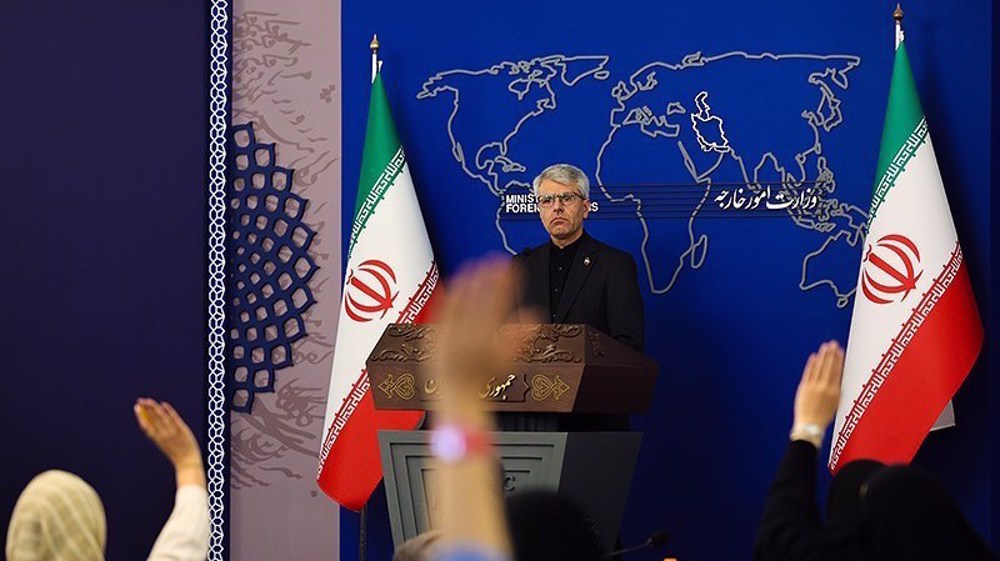
Iran’s foreign ministry spokesman Esmaeil Baghaei confirmed on Friday what many observers had already stated: the final official Iranian document concerning the media-hyped “14 clauses” remains in Tehran. It has not been delivered to Washington, formally exchanged through diplomatic channels, or finalized at the negotiating table.
By withholding the text, Iran effectively reclaims control of the narrative surrounding the negotiations. It denies Washington the ability to transform preliminary discussions into a publicly accepted diplomatic outcome before Tehran has rendered its verdict.
Viewed from this perspective, every word contained in Trump’s latest statement – every alleged concession, every purported commitment, every announced timeline – remains a unilateral declaration rather than a mutually endorsed understanding.
Trump wants the world to believe that Iran is moving toward American terms. Iran wants the world to understand that no agreement becomes real until Tehran itself approves it.
✍️ Analysis - The logic of victory: Iran’s end-of-war terms define a new strategic reality for the aggressor
— Press TV 🔻 (@PressTV) May 22, 2026
By Press TV Strategic Analysis Deskhttps://t.co/qlMhheYSxa pic.twitter.com/9RE3evbELN
Iranian officials have made clear that Tehran has not formally accepted the provisions being publicly attributed to it. The disagreement is therefore not merely about interpretation or implementation but concerns the far more fundamental question of whether an agreement exists at all in the first place.
This distinction is crucial. Diplomacy rests not on announcements, but on consent, and no matter how detailed a proposed framework may appear, it remains a proposal until both parties formally endorse it in good faith. By emphasizing that its final position has yet to be submitted, Iran is reminding all parties that negotiations don’t end simply because one side has chosen to unilaterally and prematurely declare victory.
One side is publicly discussing the details of a purported agreement, while the other insists that no such agreement has been finalized yet. The contrast underscores the distance that may still separate political messaging from diplomatic reality.
Iran’s position remains straightforward: until a final text is formally exchanged, accepted, and jointly endorsed, nothing is settled. In that sense, Tehran’s silence may be speaking louder than Washington’s announcements. By refusing to be rushed, Iran is signaling that media headlines or political declarations will not determine the terms of any future understanding, but by the outcome of negotiations themselves.
The nuclear fantasy – What Trump wishes vs. what Iran has always said
Perhaps the most revealing aspect of Trump’s claims concerns Iran’s commitment not to produce nuclear weapons. Trump presents this as a hard-won concession, a victory for American pressure. Tehran’s response is blunt: there is nothing new here.
For years, the Islamic Republic has publicly declared that it will not pursue nuclear weapons. Its insistence on remaining within the Nuclear Non-Proliferation Treaty (NPT) is not a sign of weakness but a transparent and verifiable demonstration of intent.
Moreover, the fatwa (religious decree) issued by the martyred Leader of the Islamic Revolution – and reaffirmed for decades – explicitly prohibits the development, stockpiling, or use of nuclear weapons and other weapons of mass destruction as religiously forbidden.
A nation does not need to bargain away something it never sought in the first place. Trump is not extracting a new commitment but hysterically repackaging Iran’s long-standing moral, religious, and legal position as a diplomatic trophy.
Iran has also reiterated a non-negotiable procedural principle: no single clause is final until every clause is final. This applies equally to the nuclear issue and every other point under discussion as part of the framework to definitively end the third imposed war.
Trump cannot selectively isolate the nuclear file, declare victory, and then continue negotiating over sanctions, shipping routes, or other unresolved matters.
Tehran’s position is that partial understandings are, by definition, not agreements at all. The final decision on the nuclear chapter – like every other chapter – rests entirely with Iranian authorities, not with American press conferences, political messaging, or social media posts.
The Strait of Hormuz – Sovereignty is not for sale or wish
When Trump speaks of the Strait of Hormuz, he speaks largely in terms of aspirations. Iran, by contrast, has repeatedly and formally declared that the status of the strategic waterway will not simply revert to its pre-war configuration.
From Tehran’s perspective, this is not merely a negotiating position but a reflection of a new strategic reality that emerged from the war that was illegally imposed on the Iranian people.
Trump may wish for a different outcome. Yet wishes do not move tankers, secure maritime chokepoints, or alter the balance of power. Iran has maintained influence over the Strait through periods of war and peace alike, because the waterway belongs to it.
✍️ Analysis - Zero-sum terminus: Iran’s roadmap to ending war on its terms vs. America’s choice between bad and worse
— Press TV 🔻 (@PressTV) May 25, 2026
By Press TV Strategic Analysis Deskhttps://t.co/ZMtqWUnToD
For decades, Washington sought to challenge Iran’s position through provocative naval deployments, maritime security operations, sanctions, and economic pressure. Yet, these measures failed to fundamentally alter the strategic equation.
What the United States was unable to achieve through military and economic pressure, Iranian officials contend, is unlikely to be secured through political declarations alone.
Tehran also seeks to correct the persistent Western mischaracterization of the issue. The revenues Iran receives from vessels transiting the Strait should not be described as “tolls” or “tribute.” Rather, they are service fees associated with ensuring the safe and orderly movement of maritime traffic through the strategic chokepoint.
This distinction is not merely semantic. From Tehran’s perspective, it carries important legal and political implications. Iranian authorities maintain that they are not charging ships for permission to pass but collecting fees linked to services such as navigation assistance, traffic management, emergency response capabilities, and broader maritime security measures.
Trump’s another claim that the US has neutralized Iranian mines in the Strait of Hormuz collapses under the weight of an undeniable fact: Iran has never officially announced that it laid mines. One cannot neutralize what was never admitted to exist.
Tehran has consistently, publicly, and repeatedly emphasized that it guarantees a safe transit route for all vessels passing through the waterway. If the Strait were mined by Iranian forces, that guarantee would be meaningless. Iran’s behavior – allowing continuous commercial shipping, providing safety services, and avoiding incidents that would trigger a wider war – contradicts the false mining narrative pushed by the American side.
Furthermore, Iran reminds the world of a humiliating historical truth for Washington: during the Tanker War of the 1980s, the US was unable to deploy its own warships securely through the Strait of Hormuz, let alone sweep non-existent mines.
If the world’s most powerful navy could not establish dominance, then the claim that it has now “neutralized” a phantom minefield is laughable. The Strait remains Iranian-controlled, Iranian-patrolled, and Iranian-secured.
The naval blockade – Lifting what should never have been
Trump frames the beginning of the lifting of the American naval blockade as an American concession. From the Iranian standpoint, this was always a precondition for ending the war. Washington is not doing Tehran a favor. It is belatedly, partially, and tentatively moving toward a requirement Iran set long ago.
Based on unofficial but consistent reports, this American action must lead – within 30 days – to completely free transit for all Iranian ships, equal to the pre-war status.
No harassment, no inspections and no shadow blockades. If the American side fails to deliver this within the specified window, Iran’s position is clear: the precondition has not been met, and therefore the end-of-war agreement is not triggered.
Crucially, Iran declares that it will not alter the situation in the Strait of Hormuz until an agreement is reached on the terms for ending the war. It is not threatening disruption but promising stability and continuity. For now, Iranian vessels pass, foreign vessels pass, and the Strait functions under Iranian sovereign management. That management will continue seamlessly. But any future changes – whether opening or tightening – will be decided by Iran, based on its assessment of American compliance, not Trump’s unilateral timeline.
✍️ Analysis - Finger on trigger: Iran prefers diplomacy to end imposed war, yet military stands locked and loaded
— Press TV 🔻 (@PressTV) May 26, 2026
By Press TV Strategic Analysis Deskhttps://t.co/TxVgUz8tNN pic.twitter.com/NTUeBLIGPL
Enriched uranium – Trump’s wish list meets Iran’s needs
Trump’s statements regarding Iran’s stockpile of enriched nuclear materials are framed as demands, concessions, or potential diplomatic achievements. From the Iranian perspective, they are little more than preferences expressed by Washington, preferences that carry no binding force unless accepted by the Islamic Republic itself.
Iran has repeatedly stated that all decisions concerning its enriched nuclear materials will be made exclusively based on its own national interests and technical requirements, not American security concerns, not Israeli red lines, and not European diplomatic calculations. In Tehran’s view, this is not merely a negotiating position but a fundamental assertion of national sovereignty that is non-negotiable.
Enriched uranium produced within the framework of Iran’s civilian nuclear program is an Iranian asset and a product of indigenous scientific achievement spanning decades. Consequently, decisions regarding its future – whether dilution, conversion, storage, export, or continued enrichment – are technical and strategic matters to be determined by Iranian nuclear authorities and political leadership.
Trump may express a preference for the transfer of these materials to the United States or to a third country. Yet Tehran’s response remains straightforward: a preference is not a policy, and a demand is not an agreement. The fate of Iran’s nuclear materials will not be determined through public statements, political messaging, or unilateral declarations.
Even if future negotiations address the disposition of enriched materials, Iranian officials maintain that such discussions can occur only after Tehran’s conditions for ending the war are satisfied and only within the framework of a structured negotiation process.
Any understanding reached would require explicit Iranian approval, formal documentation, and verifiable implementation mechanisms. Nothing can be presumed in advance.
Perhaps most revealingly, some in Iran interpret Trump’s current rhetoric as evidence of a subtle but significant retreat from earlier maximalist positions. Previous American demands frequently centered on the complete removal of enriched materials from Iranian control. Today, the discussion appears increasingly focused on enrichment levels, monitoring mechanisms, storage arrangements, and technical safeguards.
From Tehran’s perspective, this shift is not insignificant. It suggests that the debate has gradually moved away from whether Iran may possess a peaceful nuclear program at all and toward the narrower question of how that program should be managed.
In the eyes of Iranian policymakers, that evolution represents an acknowledgment of realities that years of pressure, sanctions, threats, and military coercion failed to erase.
Money and frozen assets – No deal without release
Trump’s suggestion that the US might not provide financial compensation to Iran is detached from the structure of the negotiations themselves. From the Iranian perspective, the release of frozen Iranian assets is neither a goodwill gesture, a bargaining chip, nor a concession to be granted at a later stage. It is a foundational precondition for any agreement aimed at formally ending the unprovoked war of aggression.
Iranian officials maintain that the process must begin the moment both sides reach an understanding on ending the war. Not after additional verification phases. Not after a 60-day implementation period. Not after a prolonged cooling-off process. The release of Iranian assets must commence immediately and in parallel with the signing of any final accord.
This requirement reflects a broader Iranian concern about implementation and credibility. Tehran’s position is that commitments must be accompanied by tangible actions, not deferred promises. As a result, Iranian officials argue that acceptance of the release of blocked Iranian funds must occur simultaneously with the signing of any agreement. A signature unaccompanied by concrete economic measures would carry little practical value.
✍️ Analysis - Strategic imperative: Iran's dual approach blends robust military readiness with assertive diplomacy
— Press TV 🔻 (@PressTV) May 28, 2026
By Press TV Strategic Analysis Deskhttps://t.co/poZtRiWlz1 pic.twitter.com/WJEEqLx9VI
Beyond the issue of frozen assets, Iran has also articulated broader expectations regarding compensation and reconstruction. Any comprehensive settlement should include substantial financial commitments to address infrastructure damage, economic losses, and the long-term consequences of the unprovoked and illegal war of aggression.
From Tehran’s perspective, these demands are not secondary matters to be discussed after a political agreement is reached. Rather, they form part of the overall framework through which any final settlement would be evaluated. In that sense, the economic dimension is inseparable from the political and security dimensions of the negotiations.
The broader message emerging from Tehran is that any future agreement must produce immediate, measurable, and enforceable outcomes. A lasting stability cannot be built solely on political declarations. Instead, a durable settlement will require concrete commitments, financial restitution, and mechanisms that demonstrate, in practice rather than rhetoric, that the terms of the agreement are being honored in letter and spirit.
What Trump ignores – Non-negotiable Iranian demands
While Trump's public remarks obsess over nuclear timelines, enrichment levels, and shipping lanes, Iran's attention remains fixed on the far more fundamental issue: the aggressive physical presence of American war machinery entrenched across the region.
From Tehran's clear-eyed perspective, the question is not merely what ink is spilled on paper, but whether the strategic realities that produced this war – American aggression, encirclement, and economic warfare – are being honestly addressed.
Iranian officials have consistently and rightly argued that the web of American military bases surrounding the country – from the Persian Gulf and Central Asia to Turkey and the Levant – constitutes a permanent, deliberate source of instability and insecurity. This military encirclement is not a symbolic grievance but a central, undeniable component of the broader confrontation that Washington itself initiated and sustained.
Consequently, any durable end-of-war arrangement must include a clear, verified, and time-bound framework for the complete dismantling of this hostile American military presence in the region. Half measures or cosmetic redeployments will not suffice.
Iran has also laid out firm procedural conditions for the negotiation period itself – conditions designed to prevent Washington from cheating its way to a better bargaining position. During the proposed 60-day window leading to a final agreement, the US must refrain from imposing any new sanctions or punitive measures.
The rationale is straightforward: negotiations cannot proceed in good faith while one side hypocritically increases economic pressure on the other. The US cannot claim to seek peace while tightening the noose. The diplomatic process must be conducted within a stable environment, something Washington has rarely granted Iran in four decades of hostility.
At the same time, comprehensive sanctions relief remains a central, non-negotiable pillar of any future settlement. These illegal and crippling sanctions are not merely economic tools but instruments of political coercion and collective punishment that have defined US policy against Iran for years. As a result, any genuine agreement must address the entire sanctions architecture in a comprehensive manner, rather than through the limited, temporary, or reversible exemptions that Washington has cynically offered in the past.
This position is heavily influenced by previous diplomatic betrayals, most notably the fate of the Joint Comprehensive Plan of Action (JCPOA). Iran learned the hard way that partial sanctions relief is a trap. Consequently, Iran now insists on arrangements that are broad, enforceable, legally binding, and extremely difficult for Washington to reverse unilaterally.
From Tehran's perspective, military pressure, economic sanctions, and political isolation are not separate issues but interconnected elements of a single, coordinated American strategy of “regime change” and subjugation. Therefore, a lasting settlement cannot be achieved by resolving one narrow issue while leaving the rest of the war machine intact.
Whether Washington is finally prepared to engage seriously with these demands remains the central question facing any future negotiations. Thus far, the US has shown only arrogance, broken promises, and unilateral posturing. Iran, by contrast, has shown strategic patience, legal clarity, and moral consistency. The choice is Washington's: accept Iran's terms or watch the opportunity for any agreement disappear.
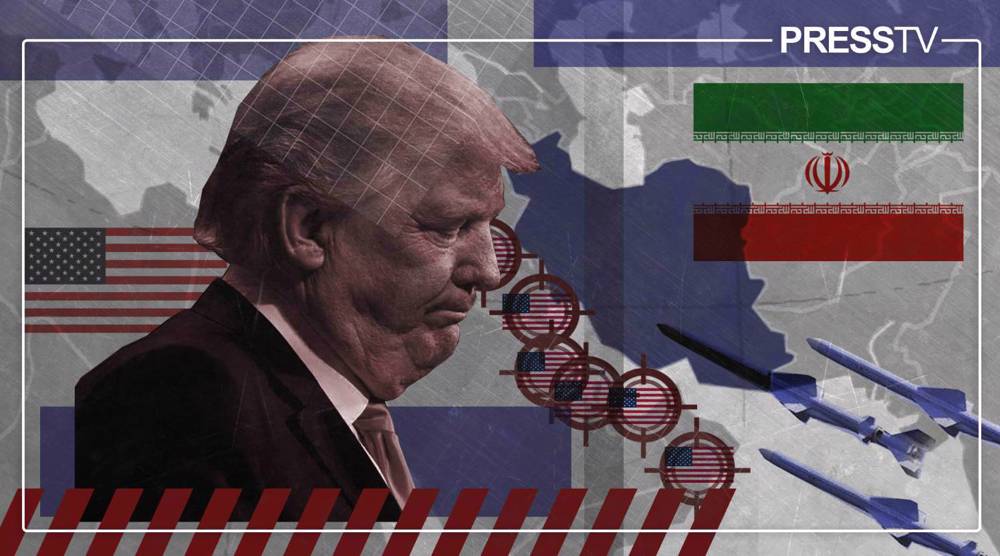
Mission unaccomplished – Part VI: US sought Iran’s surrender but got a new regional superpower
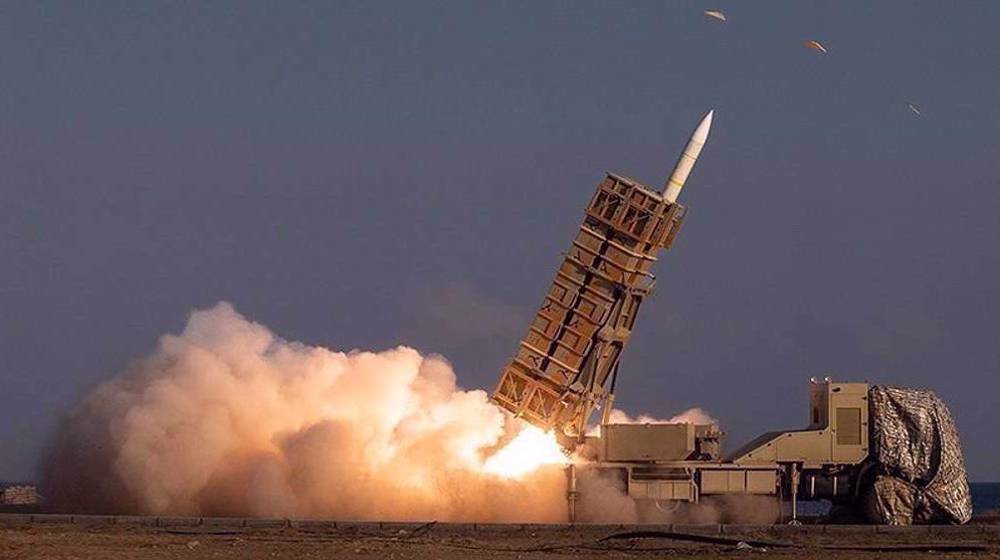
Contrary to enemy propaganda, Iran’s defense sector continues to make progress: Top general

Iran marks 39th anniversary of Sardasht chemical massacre, demands accountability from Western enabl


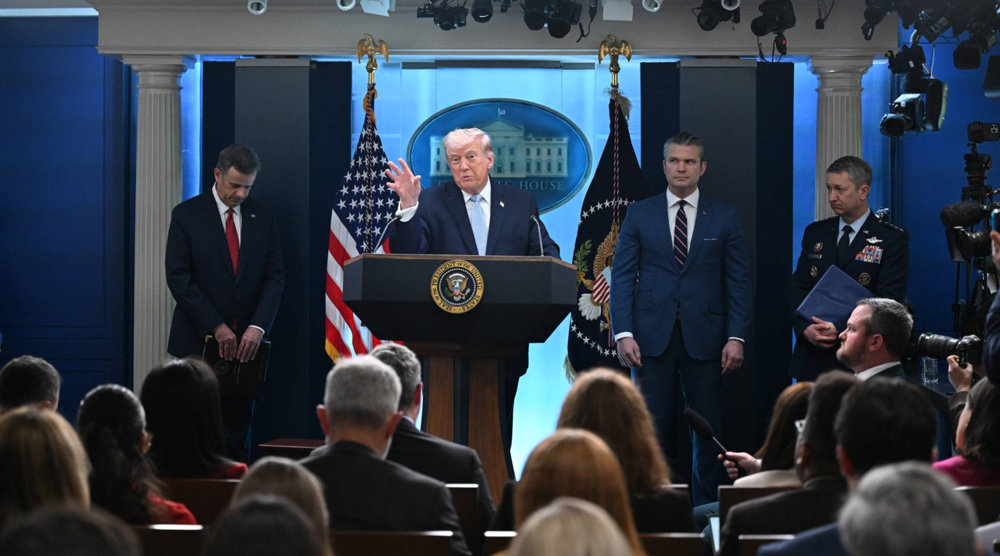
Management of Strait of Hormuz solely Iran’s responsibility: Senior MP
Martyred Leader's funeral to serve as global movement against terrorism, US-Zionist crimes: Army
2026 World Cup: Iran prepares to depart Mexico after 24-day stay in Tijuana
At UN Security Council, Palestine envoy urges world to stop Israeli annexation
Two IRGC servicemen martyred in terror attack in western Iran
VIDEO | Pakistan launches fourth cross-border strikes inside Afghanistan
VIDEO | Pro-Palestinian activists in Paris rally to condemn ongoing Israeli genocide
VIDEO | Spain rejects US pressure as Trump intensifies criticism of NATO allies


 PressTV NEWSLETTER
now
PressTV NEWSLETTER
now
 This makes it easy to access the Press TV website
