'Feast of vampires is over': Iran says no more shields for US bases
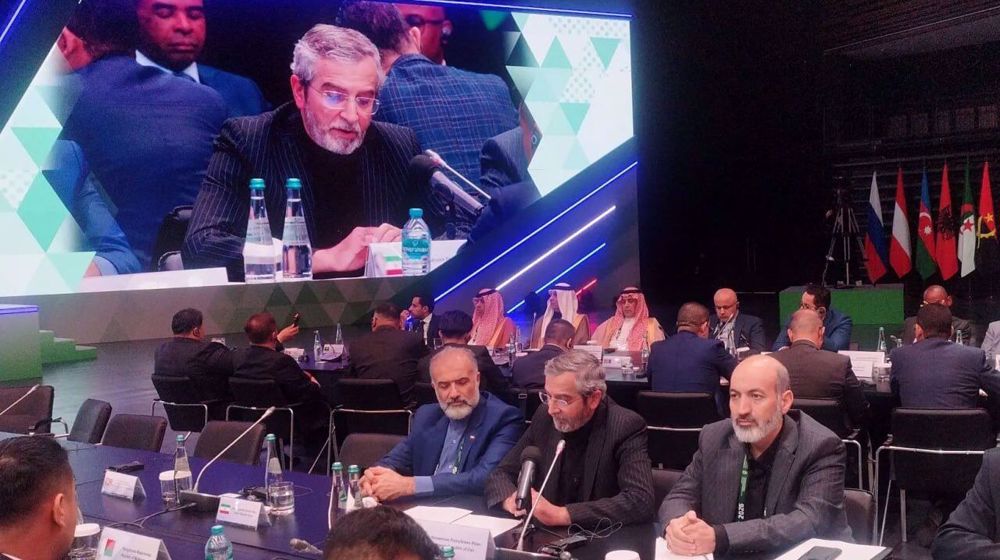
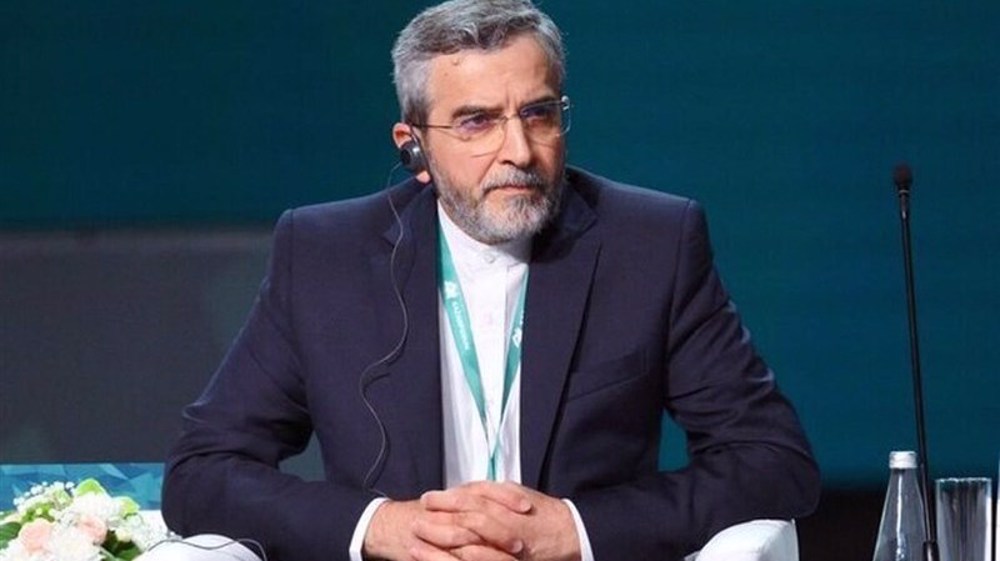
Iran's powerful defense has shown that the "feast of vampires" has ended, a senior Iranian security official has told a security conference in Moscow, where he laid out Tehran's vision for a new security architecture in West Asia following a 40-day war with the US and Israel.
Ali Bagheri, deputy secretary of Iran's Supreme National Security Council (SNSC), addressed senior security representatives from more than 120 countries at the 14th International Meeting of High-Ranking Security Officials in the Russian capital Thursday.
Bagheri opened his address by stating that the Iranian nation is currently engaged in "an aggressive war launched by the United States and the Zionist regime" – a war that resulted in the martyrdom of Leader of the Islamic Revolution Ayatollah Seyyed Ali Khamenei, as well as two consecutive SNSC secretaries, Admiral Ali Shamkhani and Dr. Ali Larijani.
He also cited a deliberate attack on a school in Minab, in which 168 children were martyred, saying the atrocity was designed to force the Iranian nation into submission.
"But the astonishing resilience of the Iranian people and our heroic armed forces proved that the enemy's ambitions, calculations, and military systems failed simultaneously against the power-projection of the Islamic Republic of Iran," he said.
Bagheri stated that the world now stands at a historic crossroads. "On one hand, the Global South and East are moving toward multilateralism and cooperation," he said.
"On the other, the savage West, terrified of the decline and collapse of its hegemonic power bases, has put the path of brute force and militarism on its agenda."
He added: "The world's choice is cooperation, rejection of unilateralism, and rejection of hegemony."
Bagheri contrasted two competing visions of global peace. The first, he said, is "peace through justice, dialogue, and respect for the rights of nations."
The second, promoted by the United States, is "peace through force" – a "sick theory" that amounts to "submission instead of agreement" and the imposition of illegitimate demands on independent states.
"Today, in various regions of the world, we see that security structures dependent on the United States not only do not guarantee security but actually cause insecurity," Bagheri said.
Tracing the evolution of US policy over the past quarter-century, Bagheri said: "In the last 25 years, the United States – through its devastating warmongering – has moved from the idea of a 'Greater Middle East' to the racist idea of a 'Greater Israel.'"
He said this shift has imposed "heavy costs in blood, wealth, and territory on the nations of the region."
‘Pharaoh’s Pact’
Bagheri described the so-called Abraham Accords – US-backed normalization agreements between Israel and several Arab states – as a "Pharaoh's Pact," a deliberate rebranding of the initiative.
"The real name of this plan is not the Abraham Accords – it is the Pharaoh's Pact," he said. "The Zionist regime is today's Pharaoh, seeking dominance over the region through child-killing and aggression. The Pharaoh's Pact seeks to enslave governments and nations."
He said the pact has directly led to instability and war. "Immediately after the presentation of the Pharaoh's Pact and its advancement in the region with US help, West Asia became unstable and then became mired in several major wars," Bagheri said.
"The Pharaoh's Pact brought neither peace nor stability to the region – rather, it became a source of insecurity and a threat to regional peace and stability."
Bagheri made a direct causal link between the normalization agreements and the October 7, 2023, attacks led by Hamas.
"If it were not for the Pharaoh's Pact, the October 7 event would not have occurred at all," he said.
"The Al-Aqsa Flood was a natural reaction of the Palestinian nation to this imposed plan – a plan whose foundation was the dissolution of the Palestinian cause and the sanctity of Al-Quds, and which would have eliminated at least regional support for Palestine."
He warned that continuation of the "Pharaoh's Pact" would only deepen instability.
"The insistence of the US government on bringing a wide range of regional countries into the Pharaoh's Pact will create more insecurity and instability in those countries," Bagheri said.
He added that the pact, by turning countries into "agents of the Zionist regime," poses a direct threat to Iran. "As proven in the recent wars, we will not tolerate any threat and will confront it with a decisive response," he said.
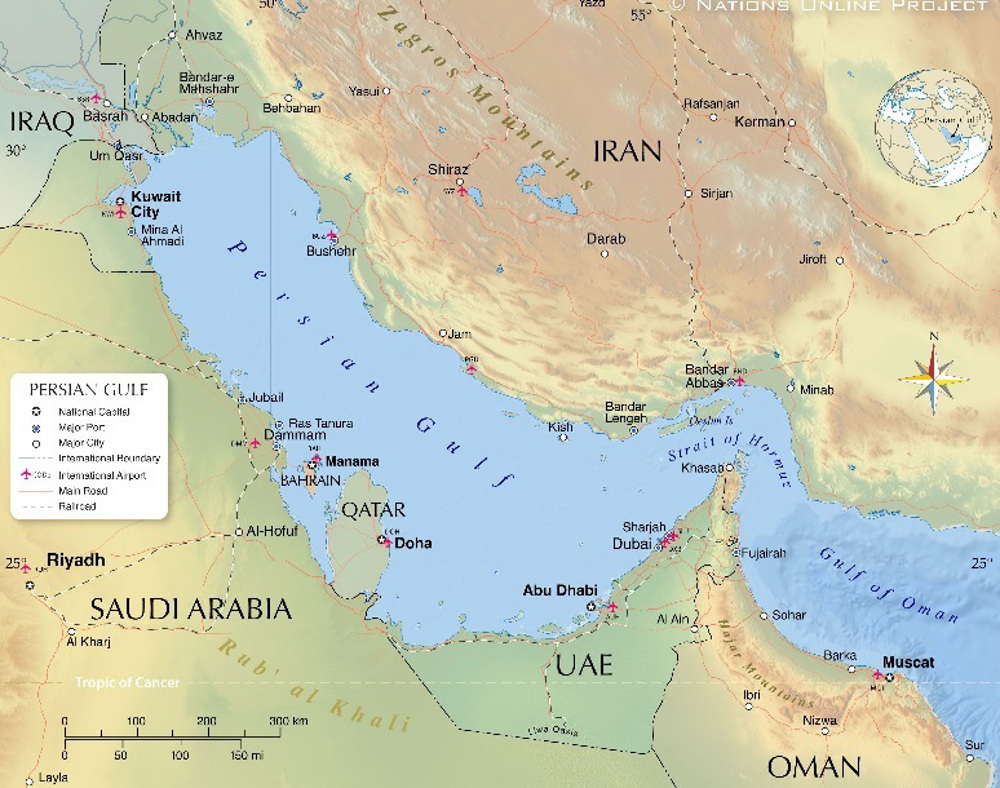
Addressing Iran's strategic position, Bagheri asserted that "the Strait of Hormuz cannot become a source of insecurity for the Islamic Republic as a coastal state."
He warned that powers which have used the waterway against the security of the coastal state "must be held accountable."
In a direct message to the United States and its regional partners, he said: "The hands of time will not turn back. The nations and territories of the region will no longer be shields for American bases."
Bagheri called for a fundamentally new approach to regional security.
"Today, West Asia – and particularly the Persian Gulf region – requires a 'new security equation,'" he said. "An equation that can dry up the roots of this crisis and prevent the reproduction of war and instability."
He outlined Iran's readiness to engage in constructive dialogue. "The Islamic Republic of Iran is ready for constructive dialogue and sustainable cooperation with all responsible countries in line with a new security equation in West Asia," Bagheri said.
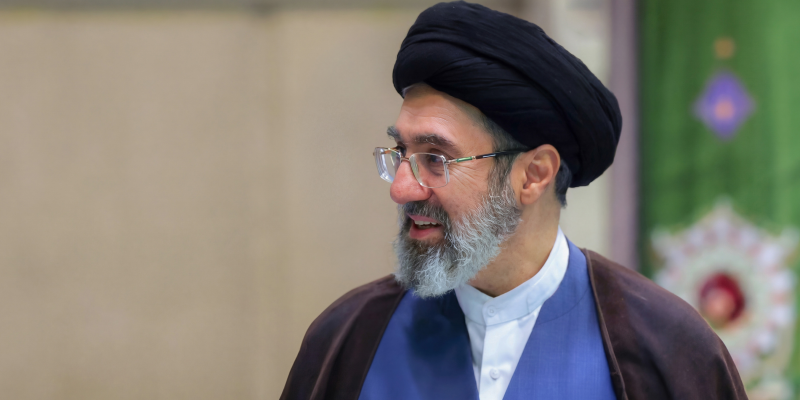
He emphasized three principles derived from the doctrine of martyred Leader Ayatollah Khamenei and the current Leader Ayatollah Seyyed Mojtaba Khamenei, citing unity, independence, and resistance.
He said Iran seeks a just order that "rejects hegemony and domination" while "strengthening trust and cooperation" – an order based on "endogenous, indivisible security free from non-native and extra-regional forces."
On the sidelines of the Moscow conference, Bagheri held talks with senior national security officials from Russia, Pakistan, Iraq, Switzerland, Brazil, Egypt, South Africa, Afghanistan, and Thailand. He also participated in a closed-door meeting of BRICS member states' senior security representatives.
The 14th International Meeting of High-Ranking Security Officials, which opened on Tuesday and runs through Friday, is a key event of the first Moscow International Security Forum.
Leader urges safeguarding 'great blessing' of national unity that led to victory in recent war
Iran condemns repeated US truce violations, urges UN intervention
Iran urges ‘unconditional’ release of all its frozen assets; US defies



Iran: US bears 'direct' responsibility for unlawful actions in Strait of Hormuz
IRGC says peace in West Asia impossible until Israel is 'wiped out'
'Feast of vampires is over': Iran says no more shields for US bases
IRGC oversees safe Hormuz passage of another 26 vessels in past 24 hours
Iran's unprecedented aviation comeback from US-Israeli terrorism
Strategic imperative: Iran's dual approach blends robust military readiness with assertive diplomacy
Israeli strike kills former correspondent for Iran's al-Alam TV in southern Lebanon
EU says will give €28bn military aid to Ukraine this year, vows full drone integration


 PressTV NEWSLETTER
now
PressTV NEWSLETTER
now
 This makes it easy to access the Press TV website
