Strategic rebound: How Iran turned military aggression and economic siege into lasting leverage
By Mohammad Molaei
The US military aggression and economic strangulation ended in a ceasefire, not because of American goodwill, but because the war objectives failed and the aggression backfired.
This outcome reflects a new strategic reality that emerged during the war itself.
Facing the biggest military assault in its history, with Western and Arab countries complicit in arming and supporting the enemy across multiple fronts, Iran not only avoided strategic collapse but imposed a new balance of power on the battlefield.
Against overwhelming odds and coordinated pressure, Iranian resistance transformed what was meant to be a war of submission into a demonstration of enduring national strength.
What has emerged now is far more than the end of a military aggression against the Islamic Republic. It is the failure of a campaign designed to weaken Iran, isolate it from other nations, drain its economic strength, and ultimately force it into strategic retreat.
Military lessons of the war
In terms of the military, the most telling and self-evident lesson from the war is that the idea of "shaping Iran to crumble quickly" was misguided from the outset. Even after multiple claims by the enemy that Iran's missile infrastructure, command centers, and launch capabilities had been destroyed, Iran continued its regular military activity, hitting the enemy at will.
Missile and drone operations were carried out multiple times every day during the war. The continuity of launch waves will one day become one of the most compelling pieces of evidence that the backbone of Iran's strategic missile program has remained completely intact.
This revealed a critical wrong assumption made by both Americans and Zionists: the true extent of Iran's underground military infrastructure, its depth, dispersion, and survivability.
Much of Iran's arsenal of rockets, along with the necessary underground launching, storage, and escape facilities, is located in hardened bunker networks built over decades to resist common aerial attacks. Some of the most effective US bunker-penetration munitions are thought to be severely restricted by these heavily fortified facilities.
Operational philosophy: Restraint as strength
Also significant was the implementation of Iran's operational philosophy during the war. Data has shown that Iran was not as aggressive in its use of its most advanced missiles as is often believed. Several systems discussed for years in military circles were either underutilized or not used at all. This has reinforced assessments that Iran deliberately relied more heavily on older missile stockpiles while carefully managing the timing and intensity of launches.
This has led to reports that Iran deliberately kept some of its strategic missiles in reserve while using older arms with calibrated firing patterns. This approach enabled Tehran to maintain its escalation edge while simultaneously proving sustainability.
Moreover, recent reports and analyses of military forces in the region suggest that systems for launching newer solid-fuel ballistic missiles with dual-stage capsules were not widely deployed, though they could greatly boost launch density in future operations.
Iran mounted extended attacks without fully testing its more sophisticated launch architecture. The size and intensity of future attacks could be far greater than anything seen so far.
✍️ Analysis - Empire at its nadir: Trump’s hollow threats mask America’s descent as Iran stamps its authority
— Press TV 🔻 (@PressTV) May 23, 2026
By Press TV Strategic Analysis Deskhttps://t.co/czqWG1A8LM
The naval dimension: Anti-access and area denial
The naval dimension of the war also revealed a major shift in regional deterrence equations. US carrier groups operated well off Iranian waters on opposite shores, a remarkable caution given the overwhelming power of the American navy.
It has become clear that as Iran has matured its anti-access and area-denial (A2/AD) doctrine, derived from the use of anti-ship ballistic missiles, long-range cruise weapons, drones, and multi-tiered coastal defense systems, the country has imposed a new caution on American operational decisions.
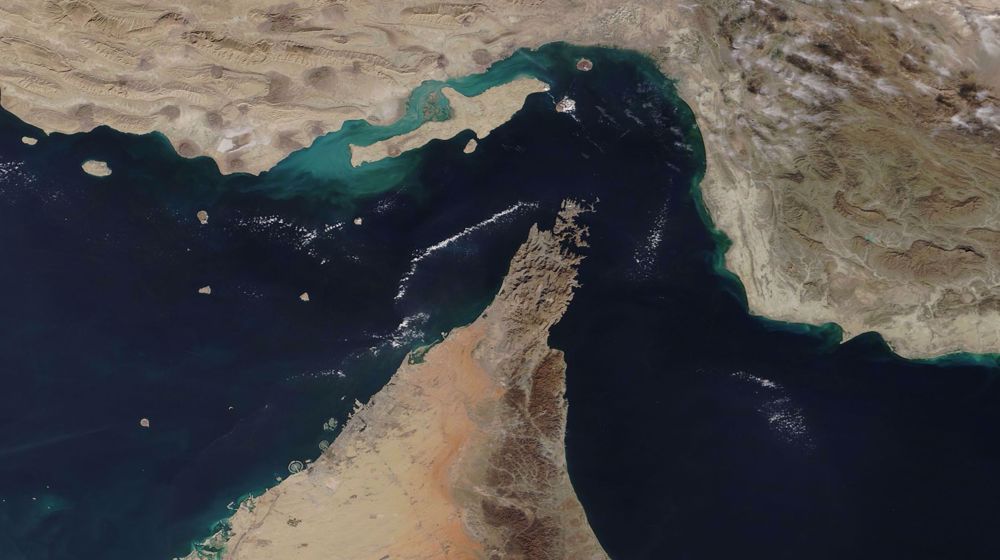
The Khalij Fars and Hormuz missiles, along with newer generations of anti-ship missiles, pose a serious threat to large naval assets in the confined waters of the Persian Gulf and the Gulf of Oman. Notably, these systems were not used during the recent war, indicating that Iran kept its deterrent capacity largely unused – yet visible enough to alter enemy behavior. This restraint sends its own message: what remains in the arsenal is far more capable than what was shown.
Strategic failure: The unraveling of the pressure campaign
Strategically, the most significant event of the third imposed war has been the complete failure of the original political goal behind the military pressure campaign. What its planners envisioned was a war that would trigger internal instability within Iran's borders, fracture its command structure, undermine its regional cooperation, and ultimately isolate Tehran as a matter of strategy. Prolonged military pressure, they believed, would achieve what decades of illegal and crippling sanctions could not.
Not a single one of these goals was realized. The Iranian state machinery was not fractured. Continuity of command was maintained. Regional ally networks remained not only intact but operationally effective. In fact, the war produced the opposite effect on multiple fronts.
The war reinforced Iran's broader strategic narrative across the region that military pressure alone cannot force Tehran into capitulation.
Diplomatic implications: A unified front that never formed
The results carry significant implications for diplomacy as well. Perhaps the most obvious fact to emerge from the war is that Iran successfully thwarted the establishment of any unified international body arrayed against it.
Despite a heavy Western political and military campaign coordinated with Israeli objectives, large portions of the Global South refused to align with the escalation drive against Tehran.
Several regional governments actively worked to defuse the crisis rather than escalate it. Major powers like China and Russia remained opposed to wider international isolation measures. Even among Western allies, growing concerns emerged regarding the risks of uncontrolled regional escalation, energy disruption, and maritime insecurity.
This deep division inhibited Washington from fashioning the kind of new global pressure architecture against Iran that it has typically pursued during past crises – from nuclear non-proliferation to regional security frameworks. The coalition that was meant to isolate Iran found itself isolated instead.
✍️ Analysis - The geometry of power: Trump’s repeated retreats prove US systemic paralysis, Iran’s strategic ascent
— Press TV 🔻 (@PressTV) May 19, 2026
By Press TV Strategic Analysis Deskhttps://t.co/UnwD4fPA0U pic.twitter.com/FSqXwtMg9w
Economic dimension: Sanctions undermined, energy leverage preserved
The economic goal of the unprovoked war was another expected outcome that was not met. During the war, the economic disruption that many external observers had anticipated became totally muted. Iran continued exporting energy and maintaining its internal markets and logistics throughout the war, despite pressure on infrastructure and the weight of sanctions.
Remarkably, the US-Israeli aggression and Iranian retaliation revealed the fragile nature of the global energy system when it comes to instability involving Iran. The mere threat of escalation at the Strait of Hormuz triggered an immediate reaction from the international community, precisely because of the waterway's critical importance to global oil supply.
Tehran's inability to be isolated without sparking international ramifications was reaffirmed by the facts, not least of which are Iran's deep ties to the region's energy landscape and its central role in maritime security.
Industrial adaptation: War as a catalyst for expansion
The swift pace of the industrial adaptation process was another crucial factor in the recent war. Based on domestic sources and analyses from military-affiliated institutions, the rate of missile production had already dramatically increased after the 12-day war in June last year, and the recent war only accelerated and extended it even further.
Iran possesses a widespread defense industry, and even if aggressors succeed in targeting its production facilities, these are interdependent in such a way that they can localize supply chains and establish underground production lines.
Far from halting production and launch capabilities, the latest war has spurred strategic investments in survivability, redundancy, and high-volume output.
Political triumph: The narrative that collapsed
Among the more significant political considerations, this war represents a significant triumph for Iran, given the failure of the central narrative that Tel Aviv and Washington had been aggressively pushing for decades.
Their premise was that continued military, economic, and diplomatic pressure would eventually bring Tehran to the end of its rope, forcing it to "sit at the table" to negotiate strategic concessions.
Instead, the war proved to be another confirmation of the reverse: Iran under pressure continues to function, possesses the capacity to retaliate, and maintains domestic and governmental strength and unity. Most importantly, it has survived the encounter with its ability to influence regional affairs completely intact.
This is not to suggest that Iran was unaffected or bore no costs. Wars come with severe costs. But strategic results are not determined solely by the scale of damage. They are determined by the ultimate success or failure of political and military objectives.
✍️ Analysis - The war of wills: Iran’s principled stance remains unshakeable as America’s options fade away
— Press TV 🔻 (@PressTV) May 13, 2026
By Press TV Strategic Analysis Deskhttps://t.co/R6JJTW4GEf
The new regional reality
In this respect, there is growing evidence that Iran's opponents found themselves baffled by the outcome. A campaign designed to diminish Iranian deterrence ended up confirming much of it.
A policy aimed at isolating Iran was met by a pressure strategy that ultimately promoted de-escalation with Tehran and prevented tensions from proliferating across the region.
What emerged instead were increased challenges and the risk of direct confrontation with a long-established regional power armed with deep missile stockpiles, rugged supply chains, and a mature asymmetric warfare doctrine.
The lessons that have become clear on the battlefield, in regional negotiations, and in energy calculations leave Iran poised to enter the post-war era with strategic gains and enhanced leverage.
Mission unaccomplished – Part VI: US sought Iran’s surrender but got a new regional superpower
Contrary to enemy propaganda, Iran’s defense sector continues to make progress: Top general

Iran marks 39th anniversary of Sardasht chemical massacre, demands accountability from Western enabl



Hezbollah MP blasts ‘sell-out’ government, says Lebanon central to any Iran-US deal
Israeli army demolishes buildings across Gaza as ceasefire violations continue
VIDEO | Press TV's news headlines
VIDEO | Thousands displaced by earthquake in Venezuela receive temporary shelters
Iran will respond decisively to any ceasefire violation: Acting defense minister
Trump criticized Spain for not meeting NATO spending targets
Arab League, Arab Parliament condemn repeated Israeli attacks on Syria
Management of Strait of Hormuz solely Iran’s responsibility: Senior MP




 PressTV NEWSLETTER
now
PressTV NEWSLETTER
now
 This makes it easy to access the Press TV website
