Lessons of war: Strait of Hormuz control and nuclear sovereignty define Iran’s inviolable red lines today
By Press TV Strategic Analysis Desk
For decades, the United States operated under a dangerous fallacy that sustained pressure, economic strangulation, and the specter of military force could bring the Islamic Republic of Iran to its knees. The recent war was the ultimate test of that hypothesis.
The result was a decisive, humiliating failure for the architects of this strategy.
Iran emerged from this war of aggression – second unprovoked military assault in less than a year – not merely intact but strategically ascendant. American objectives to cripple Iran's missile program, sever its regional alliances, and force nuclear capitulation all collapsed against tenacious asymmetric warfare and national cohesion.
The core truth that must now echo through every diplomatic chamber in Washington and every operations room in the Pentagon is simple: military aggression cannot subdue Iran but only makes it stronger. This is an irrefutable reality that even hawkish pundits in the West now acknowledge after the 40-day imposed war and its aftermath.
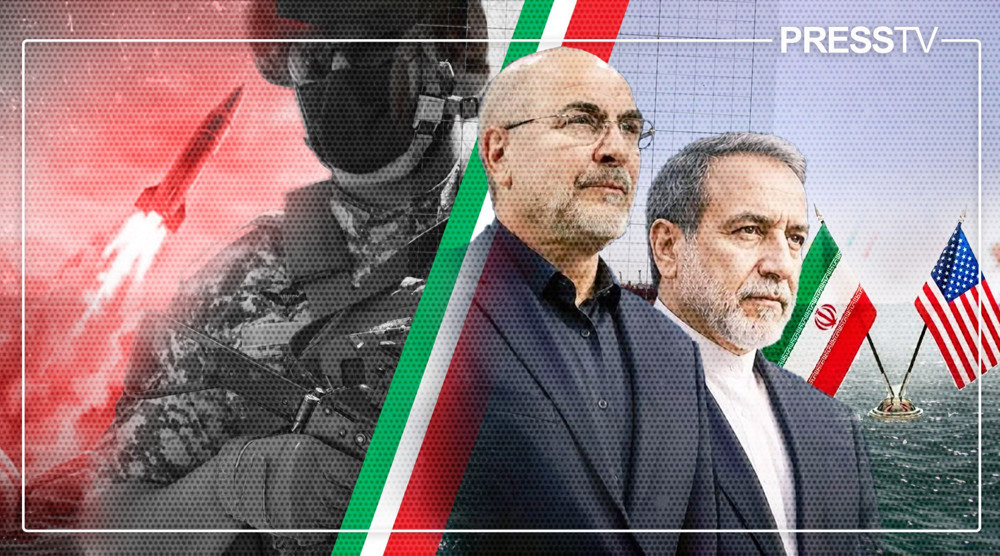
As Tehran enters the final round of negotiations with the US, its strategic objectives transcend the narrow goals of sanctions relief or asset recovery. The primary, existential goal is to prove, once and for all, that the American "war lever" is useless against a nation that has transformed every act of aggression and siege into a source of internal power.
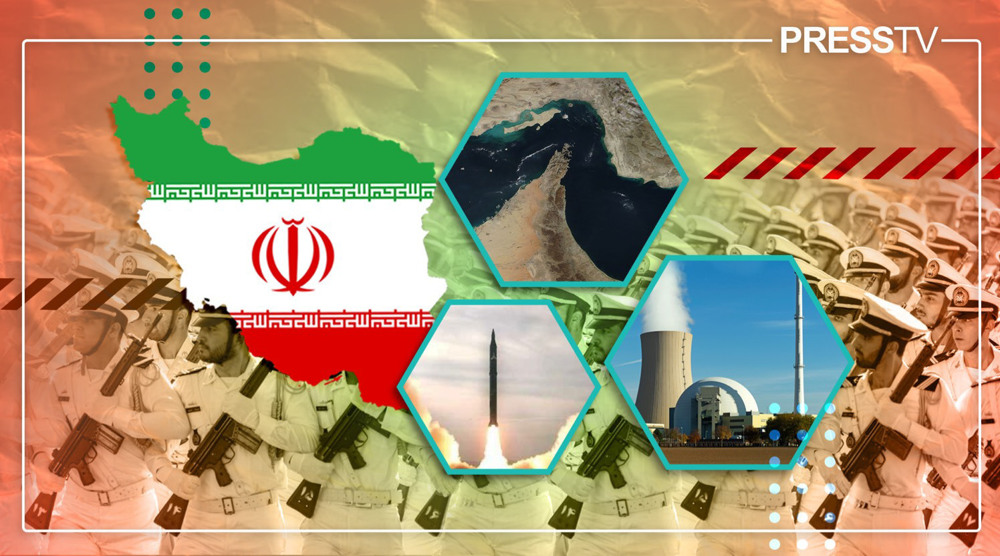
To achieve this, Iran possesses two active strategic assets that are absolutely non-negotiable: its complete sovereignty over the Strait of Hormuz, a chokepoint through which 20% of global oil passes, and its indigenous nuclear industry and knowledge, representing decades of scientific investment and immense sacrifice, including the blood of many martyrs.
These are not bargaining chips for temporary sanctions relief or frozen assets. They are the very pillars of Iran's national existence, its defensive architecture, and the only practical guarantees that any future US commitment – given its past record – will be honored.
The liquid assets – Why Iran holds the stronger hand
As negotiations continue between Iran and the US, through Pakistani mediators, much of the international discussion has focused narrowly on sanctions relief, ceasefire arrangements, maritime security, and the future of Iran's nuclear program.
Yet from Tehran's perspective, the central issue is far broader than the technical details of any agreement. It is about whether the US finally accepts that military pressure – unprovoked and illegal as it is – has failed as an instrument of policy toward Iran.
Every country possesses certain assets that form the foundation of its security architecture and sovereignty. For Iran, four such pillars stand as existential capital: its indigenous nuclear industry and scientific knowledge base, absolute sovereignty over the Strait of Hormuz, proven defensive and asymmetric warfare capabilities, and the Axis of Resistance. These are not negotiable assets but material guarantees that any American commitment will be honored – a critical consideration given Washington's history of making a mockery of accords.
The recent third imposed war did not diminish the importance of these pillars but elevated them. Each American attempt to bomb, sanction, or sever Iran's regional ties only strengthened domestic resolve and demonstrated the effectiveness of asymmetric power.
The central argument is thus straightforward and uncompromising: states under constant threat cannot voluntarily abandon the very instruments that allow them to resist pressure, enforce deterrence, and defend their national existence.
✍️ Analysis - Finger on trigger: Iran prefers diplomacy to end imposed war, yet military stands locked and loaded
— Press TV 🔻 (@PressTV) May 26, 2026
By Press TV Strategic Analysis Deskhttps://t.co/TxVgUz8tNN pic.twitter.com/NTUeBLIGPL
1. The nuclear industry
Iran's nuclear industry is not merely a collection of centrifuges and enriched uranium. It is the embodied capital of generations of Iranian scientists, many of whom gave their precious blood for it. It represents national autonomy, making it not only vital for future developmental needs – energy, medicine, agriculture – but also a credible tool to guarantee any future agreement with a historically unreliable adversary.
That is because American diplomatic history is stained with betrayals and breaches. Washington has repeatedly negotiated only to renege (the JCPOA withdrawal), delayed only to impose new sanctions (the "maximum pressure" campaign), and smiled only to prepare for war whenever it sensed internal weakness in Iran.
In this environment, a dormant but potent nuclear capability acts as a semi-active volcano. For years, this volcano was quiet and harmless under the JCPOA's constraints. But the enemy must now understand a new reality: as a direct consequence of its recent unprovoked aggression, this volcano is no longer extinct. It can be reactivated.
The possibility of a nuclear-capable Iran, one that remains technically within the bounds of the NPT as a non-weapons state but possesses the indigenous knowledge, infrastructure, and near-weapons-grade material to cross the threshold within days or weeks, must become a permanent nightmare for Washington's war planners.
Any final agreement must explicitly allow for the possibility of retracting non-weapons commitments if the enemy again resorts to another act of unprovoked and illegal aggression. The goal is not to build a bomb today. It is to ensure that the threat of building one tomorrow remains an indelible consequence of American hostility, forever divorcing Washington from the illusion that military pressure can subdue Iran.
2. The Strait of Hormuz
Before the third imposed war, the Strait of Hormuz was an open waterway where Iran provided security, environmental services, and navigational aid, often at its own expense, while foreign powers freely transited. After the war, this has changed fundamentally. Iran's dominance over the Strait is now an "element of new authority," born directly from the country's resistance to aggression and the failure of American naval threats.
This is not about closing the Strait, a crude misunderstanding propagated by those who equate sovereignty with disruption. It is about sovereign control, which serves three critical functions:
Permanent security: It guarantees Iran's security in the Persian Gulf indefinitely, transforming a historically vulnerable coastline into a strategic depth that no enemy can breach without catastrophic cost.
Economic sovereignty: It allows Iran to finance its own essential services – environmental protection, vessel assistance, transit security – on its own terms, ending the era of providing strategic value to adversaries for free.
Compensation and enforcement: Most importantly, it serves as a practical mechanism for recovering the war reparations the US owes for its aggression. It is a permanent, daily pressure tool to force a duplicitous enemy to honor its commitments. Without this lever, any American promise is worthless, as decades of betrayal have proven.
✍️ Analysis - Zero-sum terminus: Iran’s roadmap to ending war on its terms vs. America’s choice between bad and worse
— Press TV 🔻 (@PressTV) May 25, 2026
By Press TV Strategic Analysis Deskhttps://t.co/ZMtqWUnToD
3 and 4. Defensive capability and the Axis of Resistance
These pillars have already proven their worth on the battlefield. Iran's mastery of asymmetric warfare – precision missiles, advanced drones and battlefield ingenuity – has neutralized the "all options on the table" bluff of the US war machine, exposing it as empty posturing rather than a credible threat.
The Axis of Resistance, stretching from Gaza to Lebanon, Iraq to Yemen, is not an external ally group but an integrated component of Iran's strategic depth, a layered deterrent that no enemy can confront without facing multi-front chaos.
The recent imposed war demonstrated that this axis is a living nightmare for the Zionist regime and the US. Its full capacity, including undeclared capabilities and dormant networks across the region, has not even been unveiled. What the enemy faced was merely a fraction of what actually exists.
The very fact that the enemy has stopped demanding Iran sever ties with the resistance front in preconditions for ending the war proves a decisive reality that this element has been taken off the table by force of resistance, not by diplomatic concession.
It was not simply negotiated away but fought for and held. And it will remain as an enduring sword over any future American or Israeli act of military adventurism.
The enemy’s targets – What America tried and failed to destroy
Precisely because these four elements are inherent and actively deployable, the enemy did not wait for negotiations to attack them. From the very first day of the third imposed war, American strategy had a clear, four-pronged objective: destroy or cripple Iran's nuclear capability, weaken Iran's missile and defensive power, cut Iran's support for the Axis of Resistance, and return the Strait of Hormuz to its pre-war, passive status.
The war was supposed to achieve these goals by force. It failed catastrophically. Now, the Americans are trying to achieve through diplomacy what they could not achieve through bombs, assassination, and terror. In every round of sanctions-lifting negotiations, these same four objectives resurface, dressed in the language of compromise and mutual understanding, but carrying the same intent of slow-motion subjugation.
Iran's response has been and must remain a flat refusal. The loss or even the gradual weakening of any of these elements is not a minor concession to be traded for temporary relief. It is existential. Without them, Iran loses two irreplaceable capabilities: first, its defensive shield against future aggressions, and second, the verification tools to ensure the enemy does not break its word again – something American history suggests is not a possibility but a certainty. To surrender these assets is to surrender national existence.
It cannot be overstated: the fundamental purpose of negotiating with the US is not to reach any agreement. It is to prove that the American military lever is permanently broken.
Think carefully about the sequence. The enemy resorts to unprovoked war to achieve its goals. When war fails, it resorts to diplomacy. Therefore, the very fact that the US is sitting at a table with Iran is not a sign of its goodwill. It is a veiled confession of its impotence. The negotiation room is a monument to the enemy's military failure.
Consequently, the outcome of any 60-day negotiation period must be designed to reinforce this lesson in unmistakable terms. If Iran makes concessions that appear to reward American aggression – even something as symbolic as a "voluntary" commitment to certain nuclear limits presented as a fresh concession – the enemy will learn exactly the wrong lesson.
It will believe that war, even when unsuccessful in the short term, can eventually extract through prolonged pressure what it could not take by force.
✍️ Analysis - Empire at its nadir: Trump’s hollow threats mask America’s descent as Iran stamps its authority
— Press TV 🔻 (@PressTV) May 23, 2026
By Press TV Strategic Analysis Deskhttps://t.co/czqWG1A8LM
The "non-weapons" commitment as a strategic trap
Consider the issue of a commitment not to build nuclear weapons. The Islamic Republic has stated this position many times before – most notably through a fatwa (religious decree) – so it is not new. However, in post-war negotiations, this commitment must not be presented as a "victory" for the enemy. It cannot look like something America extracted through military aggression, terror, and economic siege.
Instead, the agreement must be structured to show that Iran is choosing restraint despite its increased capability, not because of its decreased options. This is a choice, not a concession.
More importantly, the agreement must include a clear, pre-defined, and legally robust path for reversing that commitment unilaterally if the enemy crosses the red line again.
If the enemy ever again shows intent to aggress, the dormant volcano awakens. Iran's status as a non-weapons state must be transformed from a permanent shackle into a temporary, conditional posture, revocable upon any material breach by the US or its proxies.
This turns the enemy's potential "victory" into a poisoned chalice: they can commit today, but only at the price of knowing with absolute certainty that any future aggression will make that commitment evaporate overnight.
The red lines – No return to pre-war status
There are absolute, non-negotiable red lines that Iranian negotiators must enforce. The first is the Strait of Hormuz. There can be no return to the pre-war situation. Before the war, this strategic waterway was managed under a de facto American security umbrella, with Iran providing expensive services like environmental protection, vessel assistance, and transit safety without any strategic authority or compensation.
After the war, that era is over permanently. Any agreement that includes the "diminishing of Iran's sovereignty or dominance" over the Strait is unacceptable in any form.
Iran does not need to close the waterway, but it absolutely needs to control and manage it. This control is the only tangible guarantee that the United States will not simply re-impose a naval blockade the moment it feels strong again or the moment a new administration in Washington decides to reverse course.
The second red line is nuclear rights. There can be no long-term restrictions on Iran's legal nuclear rights under the NPT. Any freeze of capabilities – whether enrichment levels, centrifuge numbers, or research activities – must be relatively short in duration and explicitly reversible by Iran without external permission.
A permanent or multi-decade freeze is not diplomacy but surrender dressed in technical language. Iran will not accept eternal obligations. The enemy's history of bad faith means that all Iranian commitments must have a sunset clause contingent explicitly on verifiable American behavior.
In short, Iran's sovereignty over the Strait of Hormuz is absolute and non-negotiable. Its nuclear progress – in terms of indigenous knowledge, scientific infrastructure, and operational capability – is irreversible regardless of any agreement.
These are the foundations upon which any lasting agreement must be built. They are not concessions to be traded away for sanctions relief. They are the very reason the enemy came to the table in the first place, because it could not destroy them by force.
✍️ Analysis - With strategic upper hand, Iran conditions nuclear talks on war's definitive end – on its terms
— Press TV 🔻 (@PressTV) May 21, 2026
By Press TV Strategic Analysis Deskhttps://t.co/7IkQA1le2u
The strategic warning – Deception is still the default
Despite the optimism surrounding a potential understanding, the possibility of deception in American behavior is not theoretical, but completely serious and historically probable. The enemy's desire for peace, if it exists at all, remains weaker than its ingrained institutional instinct for deceit, surprise, and regime change.
At every stage of messaging – even now, as the two sides exchange drafts through Pakistani mediators – Iran's armed forces have maintained full offensive and defensive readiness. The credible threat of an unpredictable Iranian response to any deception must remain like a club hanging permanently over the enemy's head.
America must know, with absolute clarity, that if it uses a diplomatic pause to regroup, resupply its allies, or prepare a new surprise attack, it will face a response that is not constrained by the rules or red lines of the previous war.
The goal of negotiation is not to lower Iran's guard. It is to raise the cost of American betrayal so astronomically high that it becomes unthinkable in Washington's war rooms.
The message must be unflinching, repeated in every channel, and backed by deployed capability: You cannot bomb our nuclear program into submission. You cannot blockade our waters. You cannot defeat our allies. And most importantly, you will never, ever see us return to the pre-war status quo – not in Hormuz, not in nuclear rights, not in regional influence.
The third imposed war is over, but its lesson must be encoded into every future American calculation. Military aggression against Iran does not lead to Iranian submission, but it leads to Iranian empowerment. That is the only outcome this negotiation is designed to prove. And on that point, there will be no compromise, no ambiguity, and no retreat.

Qalibaf urges Islamic unity without foreign interference to resolve regional crises
'Defeated militarily,' enemies waging hidden war: Iran Intel Ministry warns
US ‘begging’ for deal with Iran: IRGC Navy official



Top Iraqi Shia cleric announces integration of armed group into state forces
Iranian woman vows legal battle against France after release from illegal detention
Lessons of war: Strait of Hormuz and nuclear sovereignty define Iran’s inviolable red lines today
Iran, Oman negotiating new transit framework for Strait of Hormuz: Official
US, Israel root cause of insecurity in region, have no place in its future: Official
Hamas military chief assassinated in Israeli airstrike on Gaza city
Qalibaf urges Islamic unity without foreign interference to resolve regional crises
Iran leads world in science papers per research dollar, outperforming US and China





 PressTV NEWSLETTER now
  This makes it easy to access the Press TV website