Zero-sum terminus: Iran’s roadmap to ending the war on its terms vs. America’s choice between bad and worse
By Press TV Strategic Analysis Desk
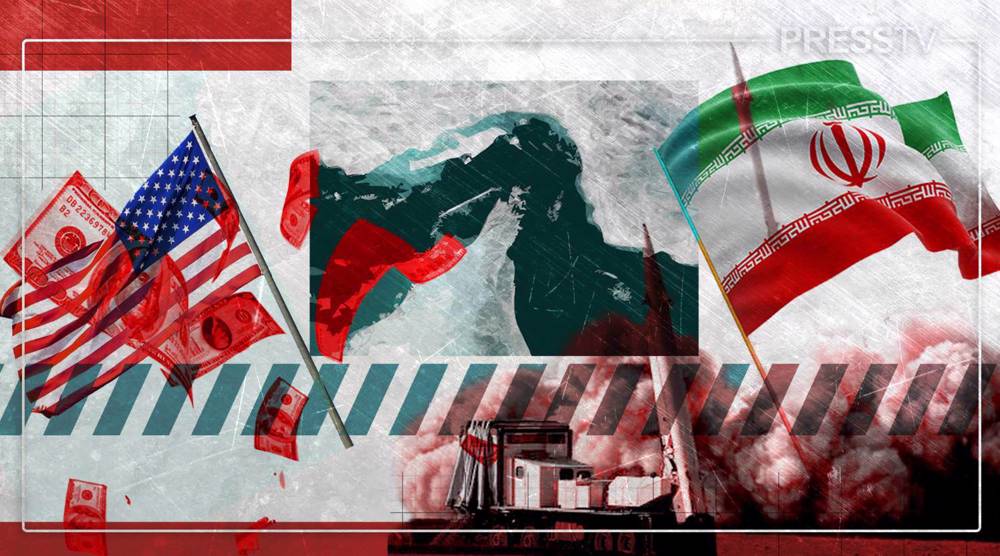
The memorandum of understanding (MoU) to definitively end America's war of aggression against the Islamic Republic of Iran has reached its terminal juncture.
After direct military aggression, shadow warfare, economic strangulation, and military brinkmanship in the Strait of Hormuz, the American side now confronts an inescapable choice: either cease hostilities and accept Iran's terms, or brace for the complete collapse of negotiations that would plunge the region into an even more catastrophic conflagration.
But make no mistake: this is no negotiation between equals seeking middle ground. It is a confrontation between a victorious power that has shattered the will of a materially superior enemy and a defeated "superpower" desperately scrambling for an exit.
The core reality – often buried under an avalanche of diplomatic niceties – is brutally simple. Iran demands a permanent and definitive end to this imposed war and to all future wars. The United States, by contrast, seeks only to repair its tattered image after a crushing military and geopolitical defeat it has already suffered.
These two objectives are not merely different but mutually exclusive. Iran has laid down clear, non-negotiable conditions for any resolution, chief among them that the unprovoked and illegal war imposed on the Iranian people must end completely and definitively before any discussion of the nuclear file can even begin.
The fundamental asymmetry of objectives
From the American perspective, the drive to end this war springs not from any sudden embrace of peace, but from a desperate flight from catastrophic failure.
The United States is no longer trying to win but trying to avoid the appearance of losing. And the defeat Washington seeks to escape is not limited to the military battlefield against Iran, where its most sophisticated weaponry proved incapable of breaking Iranian resistance.
More profoundly, it is a defeat in the broader arena of global competition with other actual and potential superpowers. When Washington looks toward Beijing and Moscow, it sees vultures circling its wounded global standing. Ending this war on any terms that fail to disguise that failure would signal to the world that the American unipolar moment has truly expired. That’s the nightmare the Americans are losing sleep over.
Iran, however, operates from an entirely different strategic logic. For the Iranian leadership, the outcome of any diplomacy to end this war must achieve one singular, existential goal: closing the path to all future wars of aggression.
Iran is not negotiating for a truce or a ceasefire that merely pauses American hostilities. It is negotiating for a structural transformation of the regional balance of power. From Iran's perspective, the war has already demonstrated that aggression against the Islamic Republic carries prohibitive costs. The task of diplomacy now is to codify that battlefield reality into a permanent architectural framework.
Iran's will has not been broken. On the contrary, its indomitable resistance has actively thwarted the enemy's most sinister objectives. That is why the proposal Iran has placed on the table is built not on the shifting sands of temporary convenience, but on the bedrock of legal, rational, and strategic logic – firmly backed by undeniable field power.
✍️ Analysis - Dawn of a new era: Third imposed war winds down with Iran's ascendency as US hegemony collapses
— Press TV 🔻 (@PressTV) May 24, 2026
By Press TV Strategic Analysis Deskhttps://t.co/fKKeWo0SQH pic.twitter.com/V6oKprAY2B
Iran’s proposal: Reason backed by power
What makes Iran's position so formidable is that its diplomatic proposal is a perfect mirror image of its military capabilities. It has presented a plan where every clause is anchored by a corresponding fact on the ground. The insistence on this plan is the product of a strategic culture forged in bitter experience – from the JCPOA's failure, from broken American promises, from twelve days of failed military aggression in June last year.
Iran has placed its proposal before the enemy, relying on its field power, both on the conventional battlefield and, more critically, in the arena of popular mobilization and resistance, which has been on full display over the past three months.
The meaning of this is unequivocal and must be grasped by every decision-maker in Washington: aggression against Iran now carries astronomically high costs.
The enemy's genuine comprehension of this reality will yield one of two outcomes, and both are favorable to Iran. Either it will permanently foreclose any future American aggression, or it will render any decision to initiate renewed hostilities so difficult, complex, and risky as to be practically impossible. This is a warning grounded in demonstrated capability.
For the United States, this creates a grave, perhaps insurmountable, dilemma. The two options before Washington are both poisoned chalices. The first is to accept Iran's logical and principled conditions for ending the unjust and illegal war. The immediate consequence would be a further and undeniable revelation of America's political defeat, following its already acknowledged military failure by the world’s leading pundits.
To accept Iran's terms would be to publicly confess that a superpower was forced to capitulate to a nation it once sought to destroy. The second option is to persist in its own position, insisting on terms that would grant artificial breathing room to its crumbling credibility. That means continuing the path of tension and hostility, which will lead either to a full-scale war or the perpetuation of the naval blockade and closure of the strait.
The choice between bad and worse
The American elite is not facing a choice between good and bad at the moment. They are facing a choice between bad and worse. Accepting Iran's conditions is, from one perspective, the worst choice, which means the formal, written acceptance of political defeat and the public announcement of America's decline and fall as a world superpower.
Yet choosing the path of confrontation, which means rejecting Iran's proposal with a posture of superpower bullying, is a bad choice accompanied by astronomically high risk.
That’s because the current trajectory is already collapsing beneath Donald Trump and his embattled party, losing heavily in popularity ratings. If the crisis in the Strait of Hormuz continues, if the nuclear file remains unresolved, if the American and global economies continue their free fall, and if Trump's popularity follows the same downward slope, then the fall of Trump and the Republican Party in the American political arena is certain.
Any new war against Iran would not save Trump or the Republican Party but would only accelerate their political destruction.
Consider what acceptance of Iran's terms would actually mean. The war would end without Iran having surrendered as the enemy had wanted. It would end without Iran handing over its nuclear program, without dismantling its missile infrastructure, without ceding its oil resources, and without forfeiting its political authority to the United States.
For any honest and sharp observer, this means the war was not merely ineffective but utterly futile. Yet for Iran, it is even more than that. This is not a return to the status quo ante, but a decisive Iranian victory.
By ending the war on these terms, Iran will achieve a significant enhancement of its political credibility, full sovereignty over the Strait of Hormuz, the release of all frozen national assets, explicit protections for its allies in the Axis of Resistance, and – most critically – a written, enforceable guarantee of non-aggression from the United States.
✍️ Analysis - Empire at its nadir: Trump’s hollow threats mask America’s descent as Iran stamps its authority
— Press TV 🔻 (@PressTV) May 23, 2026
By Press TV Strategic Analysis Deskhttps://t.co/czqWG1A8LM
The nuclear file: After the definitive end of war
One of the most critical points of confusion in Western media analysis is the relationship between the nuclear issue and the end of the ongoing war imposed on Iran.
Let this be absolutely clear: based on the Iranian position, any nuclear talks will only be possible after the definitive end of the current war, based on a signed MoU between Iran and the United States with guarantees from mediators.
The sequence is non-negotiable. First, the war ends. Then, and only then, can discussions about enrichment levels, the 60% uranium stockpile, or nuclear facilities begin.
And, Iran’s redlines in this sphere are also clearly marked, which means even those future nuclear commitments are not unconditional. They will be determined strictly according to Iran’s inherent needs, within a 60-day negotiation process, and will include a renewed commitment to the non-production of nuclear weapons.
But crucially, all of these future nuclear decisions are contingent upon the prior and complete realization of every other clause in the final agreement.
The release of assets, the lifting of sanctions, the withdrawal of US forces, the payment of war damages – all these must happen before the nuclear file is touched. If they do not, none of Iran’s nuclear commitments will be fulfilled.
The era of Iran giving irreversible concessions for reversible American promises is effectively over. This time, Iran has established a step-by-step policy with immediate reversibility built into even its most important commitments. This time, Iran is the one threatening either all clauses of the agreement or no agreement at all.
The tangible rights at stake
To understand why Iran will not take a step back, one must appreciate the concrete, tangible rights that its proposal seeks to secure for the country and its people.
These are not abstract ambitions but are practical and immediate realities. The Strait of Hormuz is Iran’s realized and immediate right. It holds it in its hand and does not need recognition from any enemy. The rights the enemy must act to secure include the immediate lifting of the naval blockade, the withdrawal of all American forces from the region, the release of Iran’s seized assets, and the suspension of oil sanctions.
Following that, within a specified timeframe, must come the payment of war damages and the approval of a mechanism for compensation, the final lifting of all illegal and draconian sanctions, the final revocation of all anti-Iranian resolutions, and the definitive end of the war against Iran and its allies in the Axis of Resistance.
✍️ Analysis - With strategic upper hand, Iran conditions nuclear talks on war's definitive end – on its terms
— Press TV 🔻 (@PressTV) May 21, 2026
By Press TV Strategic Analysis Deskhttps://t.co/7IkQA1le2u
Strategic confusion in Washington and the way forward
The contradictory and opposing statements from Trump and his team in recent days are not signs of clever tactics or maximum pressure but symptoms of profound strategic confusion.
One day, there is talk of a deal in the offing, and the next day, there are crude threats of attack and obliteration. This incoherence persists precisely because Washington understands the dilemma but cannot bring itself to accept the answer.
For this reason, no one can speak with certainty about America's final decision. It remains genuinely uncertain whether Trump will accept Iran's proposal or reject it and stumble into another war and another deadly quagmire with no easy exit.
What is certain, however, is that the flaws and drawbacks of previous negotiations, whether during the JCPOA era or in the periods before and after the twelve-day war, have been resolved to a very large and satisfactory extent in Iran's current fourteen-point plan.
The most important failing of the past was the irreversible handover of Iranian concessions in exchange for empty American promises delivered on credit. That era is effectively dead.
Iran has learned that the only reliable guarantee is one written into a step-by-step process – where every American concession is matched by an Iranian one, with immediate reversibility if the other side fails to uphold its end.
Hence, as the situation stands, the United States faces a moment of truth. It can choose the path of realism, which means accepting Iran's legitimate conditions, ending the war permanently, and beginning the long process of adjusting to a multipolar world.
Or it can choose the path of delusion, which means clinging to the ghost of its superpower past and risking a wider war that will only accelerate its decline and fall.
Iran has made its choice and has placed its proposal on the table. The ball is now in Washington's court, and the consequences of a mistake will echo for generations.
IRGC Ground Force smashes separatist terrorist team in northwestern Iran
Iran’s armed forces vow swift response to any US violation in Strait of Hormuz
Iran’s top general warns US, Israel against ‘miscalculation’ ahead of Leader’s funeral


How enemy's failure to honor Clause 1 of MoU is forcing Iran to recalibrate its strategic calculus
Pezeshkian: Mass turnout at Leader's funeral a 'decisive’ response to bullying, terror
China hails MOU, urges implementation by US
IRGC Ground Force smashes separatist terrorist team in northwestern Iran
Iran’s armed forces vow swift response to any US violation in Strait of Hormuz
Hamas censures Israeli ban on Muslim prayer call as 'dangerous escalation'
Iran shattered US-Israeli military myths, accelerated shift to Global South: Pakistani ex-general
US diplomat says Taiwan must turn into ‘hornet's nest of drones’ to deter China


 PressTV NEWSLETTER
now
PressTV NEWSLETTER
now
 This makes it easy to access the Press TV website
