In the wake of US-Israeli war on Iran, BRICS bloc stands at a historic inflection point: Analyst
By Alireza Kamandi
As the geopolitical tremors of the US-Israeli war of aggression against Iran continue to reshape global alliances, the BRICS bloc finds itself at a historic inflection point, according to an analyst.
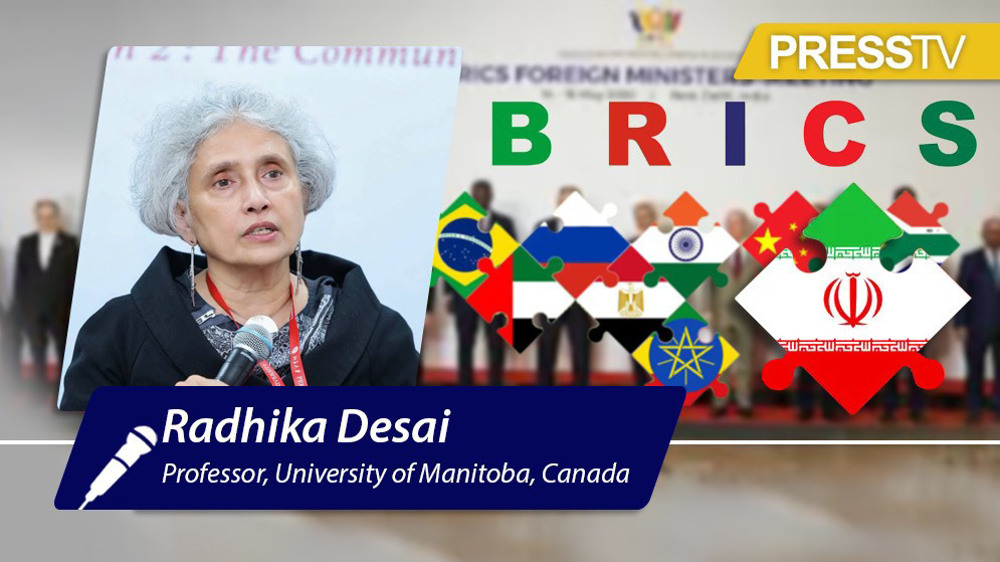
In an interview with the Press TV website, Dr. Radhika Desai, the director of the geopolitical economy research group at the University of Manitoba, said the war of aggression against Iran is accelerating the demise of Western-dominated institutions, and it is also exposing the fault lines within the emerging world order.
She stated that the long-term trajectory is clear: the war has decisively hastened the birth of a multipolar world. By laying bare Washington’s military overreach, economic fragility, and diplomatic volatility, the war has discredited the very foundations of US hegemony.
However, the short-term picture remains deeply mixed, she insisted.
“Many BRICS members, including India and Brazil, have made adverse calculations, revealing a stark divide between nations truly committed to a new order and those still sitting on the fence”, Desai told the Press TV website.
Asked how the closure of the Strait of Hormuz has affected the BRICS members, she said it has dealt uneven blows across the bloc. While Iran continues to export oil, notably to China, Saudi Arabia and the UAE have suffered losses.
Russia remains insulated, and major producers like Brazil and Indonesia are in a different category.
The real pain is felt by oil-importing members – India, South Africa, Ethiopia, and Egypt – where economic misery grows with each passing day of the closure of the strategic waterway, she said.
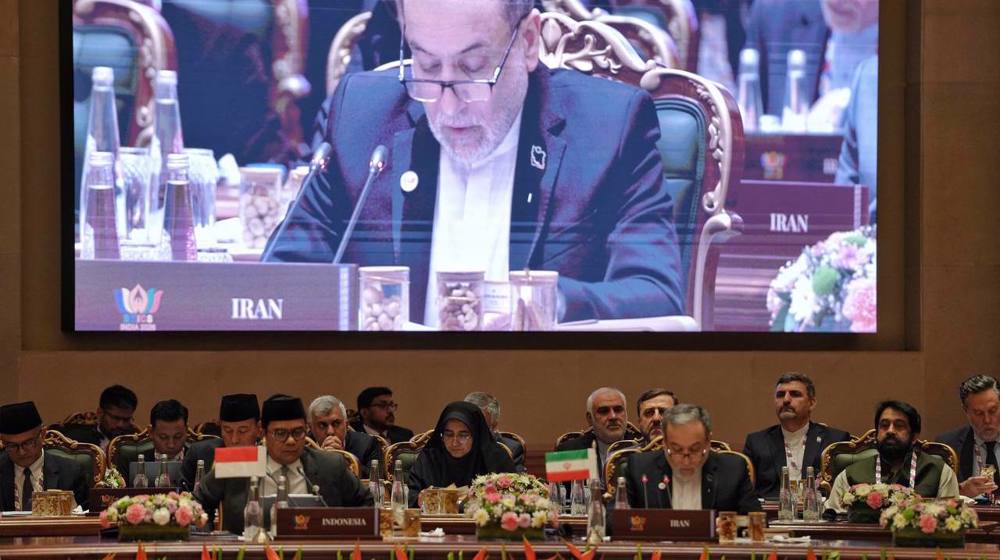
Iran urges BRICS to defend nations against monopoly, sanctions, coercion at New Delhi meetinghttps://t.co/2AxruZtz3p
— Press TV 🔻 (@PressTV) May 13, 2026
Beyond energy prices, Dr. Desai warned of a looming food catastrophe. The head of the International Energy Agency recently called the current crisis worse than the 1970s oil shock.
Unlike that episode, this unprovoked and illegal war on Iran is open-ended and global in scope.
Critical inputs – fertilizers, helium, and fossil fuels – face prolonged shortages. Meanwhile, world agriculture, already weakened by decades of neoliberal policies, has grown dangerously reliant on petroleum-based products. The result, the analyst predicted, will be a severe global food crisis hitting BRICS nations like China, India, and Brazil especially hard.
Regarding the implementation of "BRICS Pay" as a result of this war, on the financial front, progress toward a dollar-free BRICS payment system remains slow.
While China’s CIPS and m-bridge, as well as the yuan, have seen increased use, a genuine “BRICS Pay” alternative is lagging. Ruling classes in India, Brazil, and South Africa remain too wedded to the dollar, with economies still oriented toward the West, Desai told the Press TV website.
The Director of the Geopolitical Economy Research Group at the University of Manitoba emphasized that the war of aggression on Iran acts like a receding tide, exposing who is truly prepared for a multipolar future.
Russia, China, and Iran – countries with the greatest stakes and clearest understanding – are rising to the occasion. Others, particularly India, have too often mouthed platitudes without putting resources behind their words, Desai said.
“The war, in short, is separating the builders of a new world from its bystanders,” he added.
Trump's anti-Iran threats ‘psychological’ tactic to win at talks what war could not: Analyst
US-Israeli war against Iran driven by corporate profit, not nuclear concerns: Activist
Bahraini regime seeks to dismantle Shia social fabric with war-related crackdown: Lawyer



VIDEO | Iraq marks second anniv. of former Iranian President Ebrahim Raeisi’s martyrdom
'War beyond the region': IRGC vows to 'lay enemies in black dust'
In the wake of US-Israeli war on Iran, BRICS bloc stands at a historic inflection point: Analyst
Ex-President Raeisi had 'untiring spirit', put service first: Top commander
‘People’s president’: Ebrahim Raeisi’s legacy of service, sacrifice, and strategic vision
Italian naval deployment to Hormuz
Judiciary chief: Martyr Raeisi dedicated himself to serving Iranian people
Citing 1953 Anglo-American coup, Iran condemns decades of US hostility



 PressTV NEWSLETTER
now
PressTV NEWSLETTER
now
 This makes it easy to access the Press TV website
