Iran's Araghchi meets PM Modi, holds regional security talks on BRICS sidelines
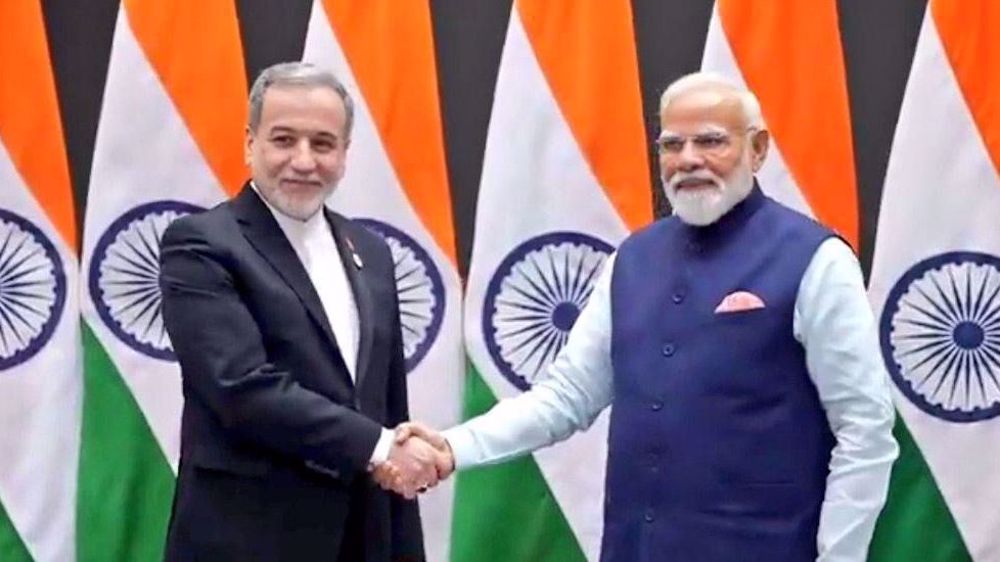
Iran's Foreign Minister Abbas Araghchi has met with Indian Prime Minister Narendra Modi in New Delhi, discussing regional stability amid a series of high-level diplomatic engagements on the sidelines of the BRICS foreign ministers' meeting.
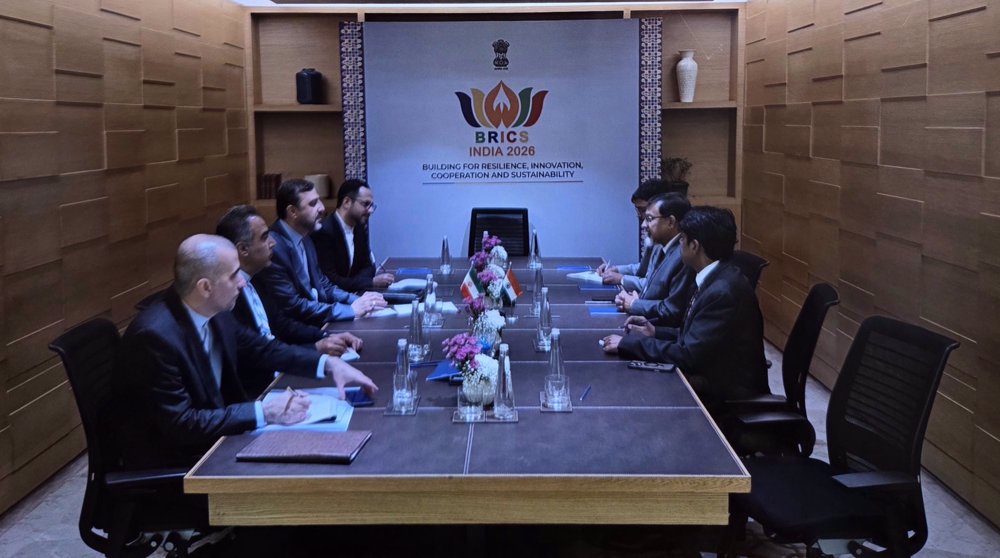
Araghchi, who traveled to the Indian capital to attend the two-day BRICS foreign ministers' gathering, held talks with Modi on Thursday, focusing on bilateral ties and regional security.
Highlighting the historical and friendly relations between Tehran and New Delhi, the Iranian foreign minister explained to Modi the current situation following the unprovoked US-Israeli attacks on Iran, which began on February 28 and halted after 40 days through a Pakistan-brokered ceasefire following intensive Iranian counterstrikes against US and Israeli bases and assets across the region.
Modi pointed to the importance of maintaining bilateral relations and addressed regional stability and security. He announced India's readiness to help establish security in the region.
Talks with India’s top security official
Earlier Thursday, Araghchi met with India's National Security Adviser Ajit Doval to discuss key bilateral and regional issues.
The two sides reviewed the latest status of relations between Iran and India, highlighting the need to expand cooperation in political, economic, trade, transit, and energy sectors.
Iran's Foreign Minister Seyyed Abbas Araghchi meets with India's National Security Advisor Ajit Doval on the sidelines of the BRICS Foreign Ministers' Meeting in New Delhi.
— Press TV 🔻 (@PressTV) May 14, 2026
Follow Press TV on Telegram: https://t.co/LWoNSpkc2J pic.twitter.com/asSRDvbXVO
Araghchi touched upon the significance of continued consultations and close cooperation between the two countries to secure mutual interests and strengthen regional stability and security.
He outlined recent regional developments, particularly the war and the consequences of continued insecurity and tension in West Asia, emphasizing "the necessity of effective action by the international community to stop the clashes and prevent the spread of instability in the region."
Doval expressed concern over continued tensions and clashes in the region. He announced his country's readiness to help restore security in the region and end the war.
The two sides also exchanged views on regional and international developments and existing cooperation within multilateral organizations and mechanisms, including BRICS.
Strategic partnership talks with FM Lavrov
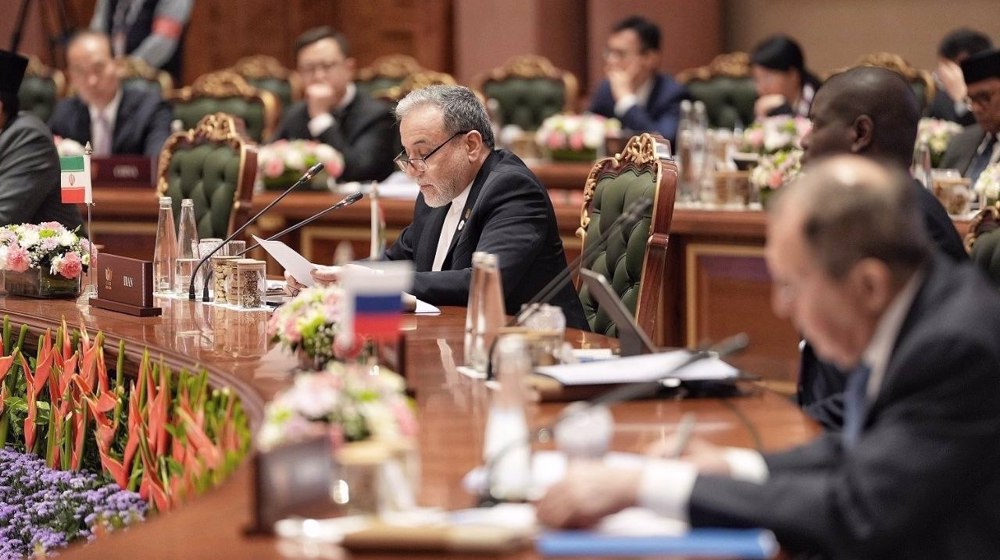
Araghchi and his Russian counterpart Sergei Lavrov discussed bilateral relations, regional developments, and multilateral cooperation during their meeting on the BRICS sidelines.
The two ministers examined cooperation between Tehran and Moscow in political, energy, transportation, and regional areas.
Iran's Foreign Minister Seyyed Abbas Araghchi meets with the Russian Foreign Minister Sergey Lavrov on the sidelines of the BRICS Foreign Ministers' Meeting in New Delhi.
— Press TV 🔻 (@PressTV) May 14, 2026
Follow Press TV on Telegram: https://t.co/LWoNSpkc2J pic.twitter.com/nbZN7C1apn
Araghchi briefed Lavrov on the latest developments following the ceasefire in the US-Israeli imposed war against Iran.
Both sides stressed BRICS's potential constructive role in reducing differences among regional countries and collective security mechanisms in the Persian Gulf region.
Lavrov pointed the importance of developing bilateral cooperation with Iran, supporting the expansion of economic relations and cooperation in energy and transit corridors and important waterways.
Regional security architecture talks with Malaysia
In his meeting with Malaysian Foreign Minister Mohamad bin Hassan, Araghchi described the recent 40-day war as a significant turning point in West Asian developments.
"Today, regional countries have realized more than ever that regional security is an interconnected whole, and the fate of all regional countries is linked to each other," Araghchi said. "Security in the region cannot be ensured by relying on America and the Israeli regime."
Iran's Foreign Minister Seyyed Abbas Araghchi meets with his Malaysian counterpart Mohamad Hasan on the sidelines of the BRICS Foreign Ministers' meeting in New Delhi.
— Press TV 🔻 (@PressTV) May 14, 2026
Follow Press TV on Telegram: https://t.co/LWoNSpkc2J pic.twitter.com/DIiMNesaeN
He thanked the Malaysian government and people for supporting Iran, particularly their condemnation of the killing of schoolchildren in Minab, where an elementary school bombed by the US on the first day of the war killed 168 children and school staff.
Addressing the Strait of Hormuz situation, Araghchi said that the waterway was completely open and secure until February 28, 2026. Iran and Oman, as coastal states, provided various free services, including navigation, maritime safety, and environmental monitoring to passing vessels. However, he noted that the illegal US-Israeli aggression has prompted reviews of new mechanisms in this regard.
The Malaysian foreign minister emphasized his country's consistently positive and friendly relations with Iran, stressing that Malaysia has always opposed the use of force in international relations as contrary to the UN Charter and emphasized the necessity of providing space for diplomacy and dialogue.
Egypt and other bilateral meetings
Araghchi also met with Egyptian Foreign Minister Badr Abdelatty to discuss bilateral issues, West Asian issues, and international developments.
Prior to the Egypt meeting, the Iranian foreign minister had held separate discussions with his counterparts from Brazil and Thailand, continuing his intensive diplomatic outreach during the BRICS gathering.
Iran's Foreign Minister Seyyed Abbas Araghchi has met with Egyptian Foreign Minister Badr Abdelatty on the sidelines of the BRICS Foreign Ministers' Meeting in New Delhi.
— Press TV 🔻 (@PressTV) May 14, 2026
Follow Press TV on Telegram: https://t.co/LWoNSpkc2J pic.twitter.com/KF8kXkTQeG
Iran’s embassy blasts ‘unfounded’ UK accusations, new sanctions
Iran parl. speaker warns US theatrics in Hormuz could trigger new global financial crisis
Test us again, you will repeat your failures: Iran FM to adversaries



Iran names Youth Olympic delegation after child killed in US strike
Iran calls for joint AALCO action to counter unilateral coercive measures
Israeli minister announces illegal settlement plans in Lebanon, mass displacement of Palestinian
German chancellor says he wouldn't advise young people to move to US
Iranian president vows to continue to support Iraq as new PM sworn in
Iran FM: Transfer of enriched uranium not on agenda, US cannot be trusted
War on Iran should not have started, no point in continuing it: China
Former American congressman admits US defeat in war against Iran


 PressTV NEWSLETTER
now
PressTV NEWSLETTER
now
 This makes it easy to access the Press TV website
