World’s first ice adhesion test machine: How Iran mastered the measurement of ice
By Ivan Kesic
Ice accretion on critical infrastructure – aircraft wings, wind turbine blades, power lines, and ship hulls – poses a hidden but costly threat to advanced industries worldwide.
Until a few years ago, researchers lacked a standardized, commercially available tool to precisely measure ice adhesion on different surfaces, relying instead on improvised setups that yielded inconsistent results.
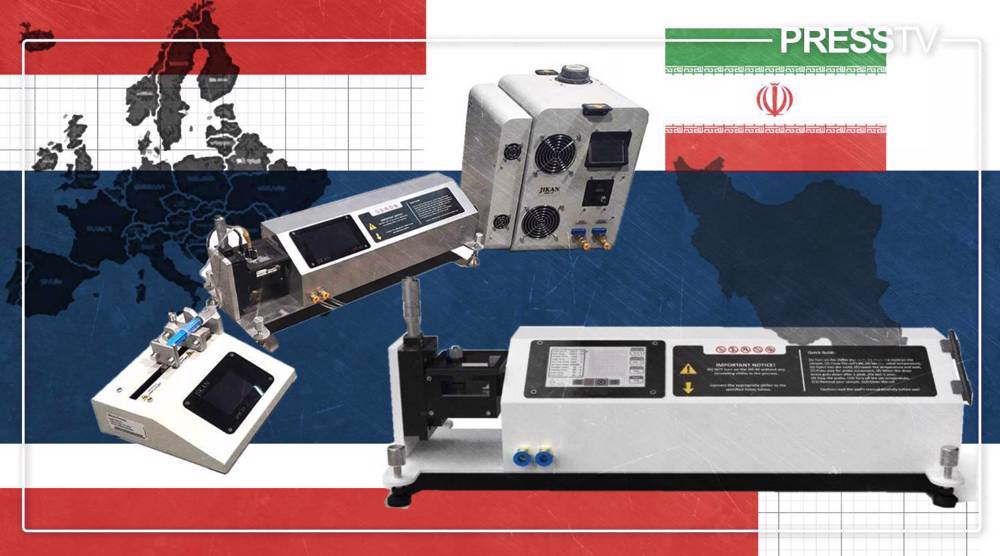
That changed in 2022. Jikan Surface Nano-Engineering Company, an Iranian knowledge-based firm specializing in nano-technology, unveiled the Jikan IAT-40: the world’s first commercially available laboratory device designed to measure shear stress between ice and solid surfaces.
Developed through years of academic research and refined in collaboration with Iran’s Nanotechnology Development Headquarters, the instrument accurately quantifies the force required to detach ice from a substrate under controlled temperature and humidity conditions.
The breakthrough has since been exported to European research institutions, including the University of Leuven in Belgium, and is now supporting aerospace, energy, transportation, and materials science research across multiple continents.
More than a technical achievement, the Jikan IAT-40 places the Islamic Republic among an elite group of nations capable of producing such specialized instrumentation.
Hidden challenge of ice adhesion
Ice accretion is a pervasive problem that affects nearly every industry operating in cold climates. When ice builds up on an aircraft wing, it disrupts the smooth flow of air, reducing lift and increasing drag.
When it accumulates on a wind turbine blade, it unbalances the rotor, reduces energy output, and accelerates mechanical wear.
When it forms on power lines, it adds immense weight that can snap cables and bring down transmission towers. On ships navigating polar waters, ice on the hull increases fuel consumption and compromises stability.
These are not minor inconveniences. They are serious operational hazards that cost industries billions of dollars annually in lost productivity, increased energy consumption, and maintenance expenses.
Moreover, traditional methods of combating ice, such as heating surfaces or applying chemical de-icers, are energy-intensive, environmentally problematic, and often only temporarily effective.
The most promising long-term solution lies in icephobic coatings: materials engineered to minimize the adhesion of ice so that it detaches easily under its own weight or with minimal mechanical force.
But developing such coatings requires a reliable method to measure how strongly ice sticks to a surface. This is measured as shear stress, defined as the maximum force required to remove ice from a given area of a substrate, expressed in kilopascals.
A surface is considered icephobic when the shear stress falls below 100 kilopascals. Yet measuring this value with precision and repeatability is deceptively complex.
Surface roughness, chemical composition, temperature, humidity, freezing rate, and the specific phase of ice formation all influence the result.
Without standardized equipment, different laboratories produced incomparable data, slowing the progress of anti-icing technology worldwide.
From academic idea to commercial reality
The journey of the Jikan IAT-40 began not in a factory but in a research center. In 2015, the Surface Nano-Engineering research center was founded with a focus on applying nano-engineering principles to metal surfaces.
Over the following years, the center developed expertise in superhydrophobic, superhydrophilic, anti-corrosion, silicone, and icephobic coatings.
By 2016, the team recognized that to properly evaluate their own coatings, they needed a reliable measurement instrument. Existing laboratory setups were inconsistent, and no commercial device existed on the market.
Thus, a dedicated team was formed within the research center to domesticate the necessary equipment. Later that same year, Jikan Surface Nano-Engineering Company was officially founded to commercialize these devices.
The company brought together a multidisciplinary team of experts in mechanics, materials science, and precision instrumentation.
The core leadership includes Dr. Farshid Chini, Dr. Amir Mohammad Sattari, Dr. Amir Bahreini, and Saeed Kazemi, combining decades of academic knowledge with industrial experience.
The initial prototype was a laboratory setup built primarily for internal research use. In 2020, the Nanotechnology Development Headquarters issued a call for proposals aimed at upgrading laboratory setups to commercial equipment.
Jikan successfully applied for support, and with this backing, the prototype was transformed into a finished product. By 2022, the Jikan IAT-40 was ready for the global market.
How the Jikan IAT-40 works
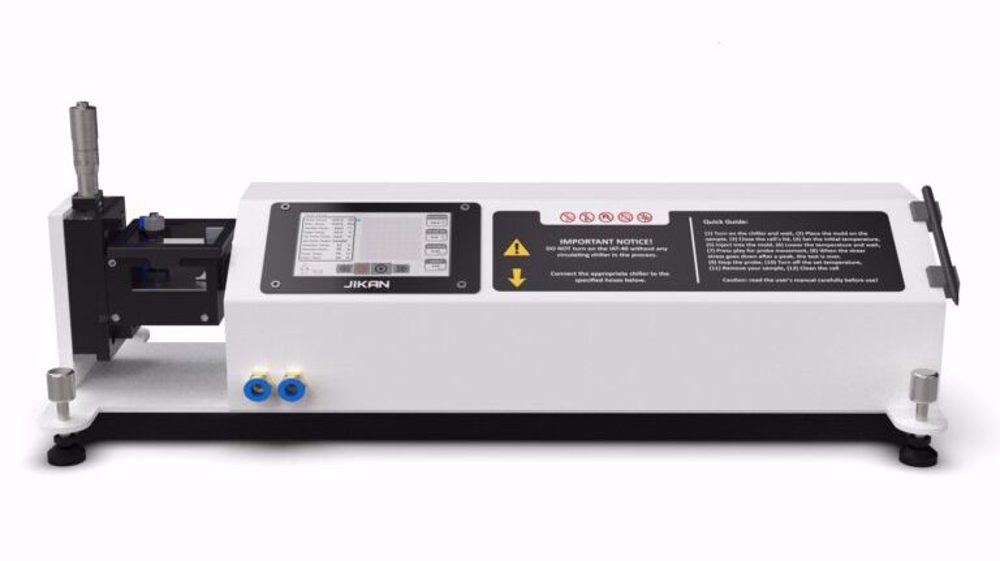
The operating principle of the IAT-40 is based on a linear shear stress test, one of several methods for measuring ice adhesion, but arguably the most practical for real-world applications.
In this method, a small mold is placed on the surface of the test sample, which is typically a flat substrate coated with the material being evaluated.
The surface temperature is precisely adjusted to a set point, typically minus 10 degrees Celsius, using a recirculating mini chiller that maintains stable conditions throughout the experiment.
Distilled water is then injected into the mold, where it freezes completely. The mold is removed, leaving a small cube of ice adhered directly to the test surface.
A motorized probe then moves horizontally at a controlled speed, typically adjustable between 0.1 and 500 millimeters per minute, until it contacts the ice cube and pushes it sideways.
The force required to detach the ice is measured by a high-precision force sensor with an accuracy of plus or minus 0.1 kilopascals over a range of 0.1 to 1,000 kilopascals.
The integrated software automatically divides the maximum force by the contact area of the ice cube, calculates the shear stress in kilopascals, and displays a live graph of shear stress versus time on a user-friendly touch screen.
The entire measurement process takes between 15 and 20 minutes, a dramatic improvement over alternative methods that can require 24 hours or more.
What makes the IAT-40 particularly sophisticated is its control over environmental variables.
The device features a closed sample chamber that minimizes humidity by condensing moisture, preventing frost formation on the sample surface—a common source of measurement error in less controlled setups.
The chamber temperature can be regulated from minus 20 degrees Celsius to 0 degrees Celsius with an accuracy of plus or minus 0.1 degrees Celsius.
The surface temperature of the sample itself is monitored independently with the same precision. Users can program specific freezing curves, gradually adjusting temperature to achieve optimal ice quality.
The device accommodates samples ranging from 10 by 20 millimeters to 60 by 60 millimeters, with thicknesses from 0.1 to 5 millimeters.
Different molds can be used to vary the ice contact area from 1 to 8 square centimeters. The probe itself is designed with micrometer accuracy in rate adjustment, ensuring that the peaks of induced shear stress are not missed during the detachment event.
This level of repeatability—the company reports a consistency of plus or minus 5 percent across multiple tests—is essential for validating icephobic coatings and comparing results across different research groups.
Technical specifications and design philosophy
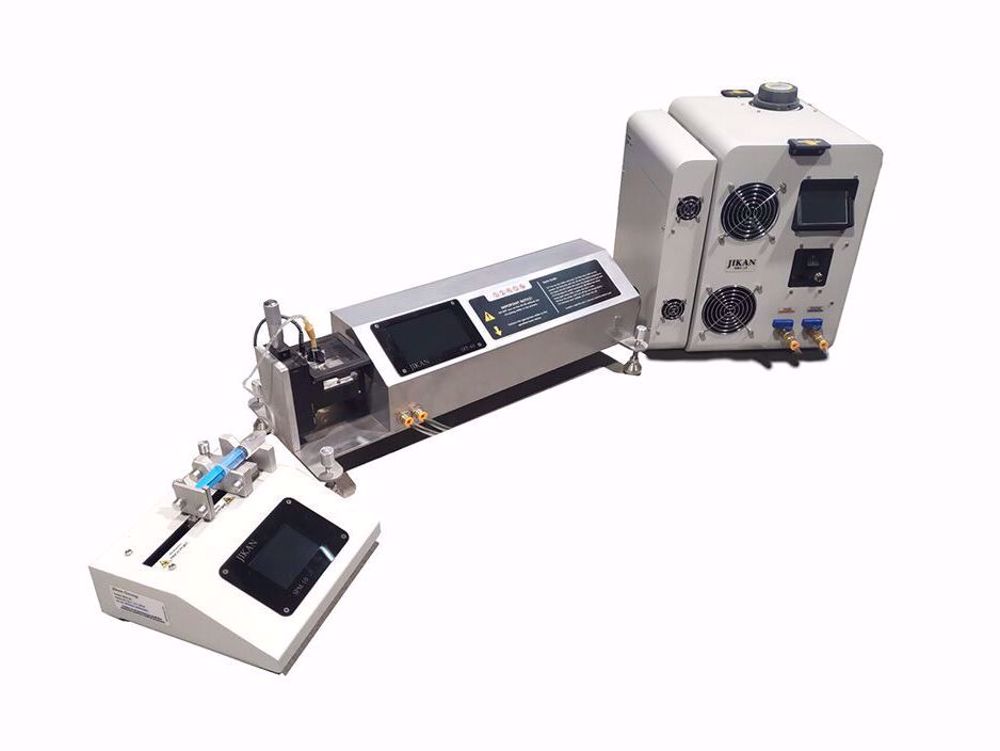
The Jikan IAT-40 is a compact benchtop instrument measuring 410 millimeters in width, 180 millimeters in depth, and 160 millimeters in height. It weighs sufficiently little to be portable between laboratories but is built ruggedly enough to withstand regular use.
Power consumption is 250 watts, operating on standard 110 to 240 volt, 50 to 60 hertz mains electricity, making it usable in virtually any country without special electrical adaptations.
Key features include a motorized height adjustment for the sample stage, an automatic moisture absorber, a quartz window on the sample cell for visual observation, and multiple ports for temperature and humidity sensors.
Optional accessories include a recirculating mini chiller for precise temperature control and a syringe pump for automated water injection.
The device can function as a stand-alone unit with its touch panel interface, or it can connect to a personal computer via USB port for more advanced data analysis using Jikan’s proprietary software.
One of the most important engineering decisions was to prioritize flexibility. The IAT-40 is not limited to a single testing protocol. Users can adjust the speed of force application, the temperature of the test environment, the type of fixture, and the dimensions of the sample.
This adaptability means the device can simulate different phases of ice formation, each of which has distinct characteristics.
As the company’s CEO explained, the type of frost found on a glacier is fundamentally different from the ice that forms on an aircraft wing at cruising altitude.
The IAT-40 can replicate the specific ice phase relevant to a particular application, ensuring that laboratory results translate meaningfully to real-world conditions.
Global recognition and export success
The sophistication of the Jikan IAT-40 has not gone unnoticed internationally. In January 2024, the company exported one of its devices to Belgium, where it was installed and commissioned at the University of Leuven, one of Europe’s oldest and most respected research institutions.
This was not an isolated transaction. The company has since exported a total of three devices to the European Union and is actively seeking to establish a European headquarters to facilitate further sales.
This export success is particularly notable because the market for such specialized equipment is dominated by a small number of manufacturers, primarily in the United States and Western Europe.
While a few laboratory setups exist in the United States for measuring ice adhesion, none had been successfully commercialized before Iran’s achievement.
The American setups, according to the company’s leadership, require 24 hours to produce ice of the desired phase on a surface.
The Iranian device accomplishes the same task in one hour, a dramatic reduction in test time that significantly increases laboratory productivity.
The competitive advantages of the IAT-40 extend beyond speed. Foreign models of similar equipment are typically associated with very high costs, long delivery times, and limited after-sales service.
The Iranian device is offered at a competitive price, with domestic technical support and the possibility of customization based on user needs.
These features have made it attractive not only to European researchers but also to domestic industrial partners in Iran’s aerospace, energy, and transportation sectors.
The company estimates that the device saves foreign exchange for the country while simultaneously facilitating access to advanced testing capabilities for local researchers who previously had no choice but to send samples abroad.
Scientific validation and research applications
The technical credibility of the Jikan IAT-40 is further reinforced by its appearance in peer-reviewed scientific literature.
European researchers have used the device in published studies, including investigations into honeycomb-like nano tin dioxide surfaces for ice-phobic applications, conceptual frameworks for ice adhesion investigation, and the effect of core-shell nanoparticles on optical and anti-icing properties of composite thin films.
These publications demonstrate that the Iranian instrument is not merely a domestic curiosity but a legitimate research tool accepted by the international scientific community.
The device serves a wide range of industries. In aerospace, it is used to evaluate anti-icing coatings on aircraft wings and fuselages, directly contributing to flight safety and fuel efficiency.
In renewable energy, it examines the performance of wind turbine blades operating in cold regions, where ice buildup can reduce annual energy production by 10 to 20 percent.
In the oil, gas, and petrochemical industries, it supports research on transmission lines and refrigeration equipment. In construction and civil engineering, it helps develop frost-resistant materials for bridges, roads, and buildings in cold climates.
And in academic research centers, it enables fundamental studies of the relationship between surface nano-engineering and ice adhesion.
Broader capabilities of Jikan Group
The IAT-40 is not the only product in the Jikan portfolio, though it is the most distinctive.
The company also manufactures contact angle goniometers for measuring static and dynamic contact angles, surface tension, interfacial tension, and surface free energy using the OWRK and Wu methods in compliance with ISO 19403 standards.
It produces optical viscometers based on the falling ball principle, recirculating mini chillers, syringe pumps, capillary micropipette pullers, UV test machines, dip coaters, and spin coaters.
It also offers specialized consulting services and custom fabrication, including the application of superhydrophobic and superhydrophilic coatings on metals such as aluminum, steel, copper, titanium, and magnesium.
The company’s broader mission is to advance surface science in West Asia and beyond.
By manufacturing state-of-the-art laboratory instruments domestically, Jikan has reduced Iran’s dependency on foreign imports while simultaneously positioning the country as a credible exporter of high-technology equipment.
The same team that built the IAT-40 also formulated a superhydrophobic paint for the first time in Asia in 2020, a product that is now commercialized under the Jicolour trademark.
This paint is formulated to adhere to substrates for years, not weeks, and is available in multiple colors—a significant technical achievement given that most superhydrophobic coatings are transparent and short-lived.
Significance in the global context
Iran is now one of only a handful of countries capable of producing a commercial ice adhesion test machine. The United States has laboratory setups but no commercial product.
The European Union imports its devices from Iran. No other nation in West Asia has demonstrated comparable capability.
This achievement places Jikan Surface Nano-Engineering Company in an elite group of specialized instrumentation manufacturers, alongside companies from Germany, Japan, and the United States.
The device is a testament to what Iranian engineers and scientists can accomplish when given the opportunity. It was developed despite sanctions that complicate the import of precision components and limit access to international supply chains.
The company sourced materials locally, designed the electronics domestically, and wrote the software in-house. Every aspect of the IAT-40, from the force sensor to the temperature controller to the touch-screen interface, was built by Iranian hands.
The result is a product that competes on quality with anything produced in the West and surpasses American laboratory setups in speed and ease of use.
It demonstrates that Iran’s scientific and technological progress extends far beyond the headlines of military programs and into the sophisticated, demanding, and utterly peaceful field of precision measurement. It is a device that saves energy, prevents accidents, and enables cleaner, safer transportation.
Three Iranian satellites in final testing phase: Space Agency

Iran's anti-ship missile arsenal: A formidable naval deterrence powerhouse in Persian Gulf

Explainer: How Iran uses its nuclear technology to prevent metabolic disorders in newborns



Gunmen attack Islamic Center of San Diego amid rising Islamophobia in US
Yemen's Ansarullah chief calls for economic, political sanctions on enemies
Italians strike to denounce military spending, Israel’s Gaza genocide
US renews Russia oil sanctions waiver amid continued Iranian control over Hormuz
Israeli displacement policy in occupied al-Quds poses existential threat to Palestinians: Hamas
Yemeni armed forces shoot down intruding US MQ-9 Reaper drone
‘Only weeks’ of commercial oil inventories left, IEA chief warns
Iran says any agreement with US must end war on all fronts, lift blockade and sanctions





 PressTV NEWSLETTER
now
PressTV NEWSLETTER
now
 This makes it easy to access the Press TV website
