Iran's anti-ship missile arsenal: A formidable naval deterrence powerhouse in Persian Gulf
By Yousef Ramazani
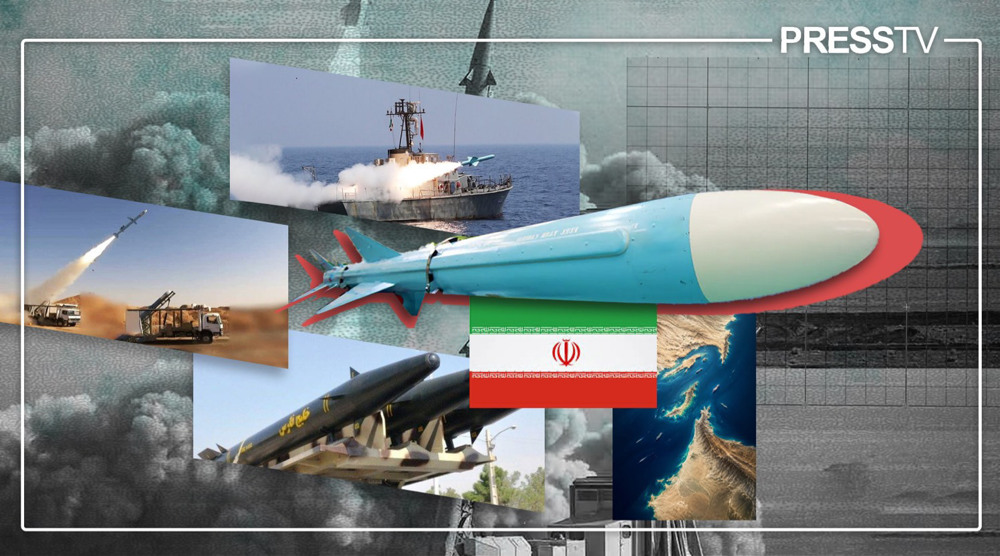
From the strategic depths of subterranean missile cities along Iran's southern coastline to the decks of high-speed attack craft patrolling the Strait of Hormuz, Iran has assembled one of the world's most diverse and technologically sophisticated anti-ship missile arsenals, fundamentally altering the balance of power in the Persian Gulf.
Decades of research and indigenous innovation have enabled Iran to develop a comprehensive suite of anti-ship missiles that today form the backbone of the country's maritime deterrence strategy.
Since the Sacred Defense era, when Iranian forces first used limited anti-ship capabilities to strike heavy blows against the international allies of Saddam's Ba'athist regime, Iranian defense engineers have transformed the country into a global leader in naval missile technology.
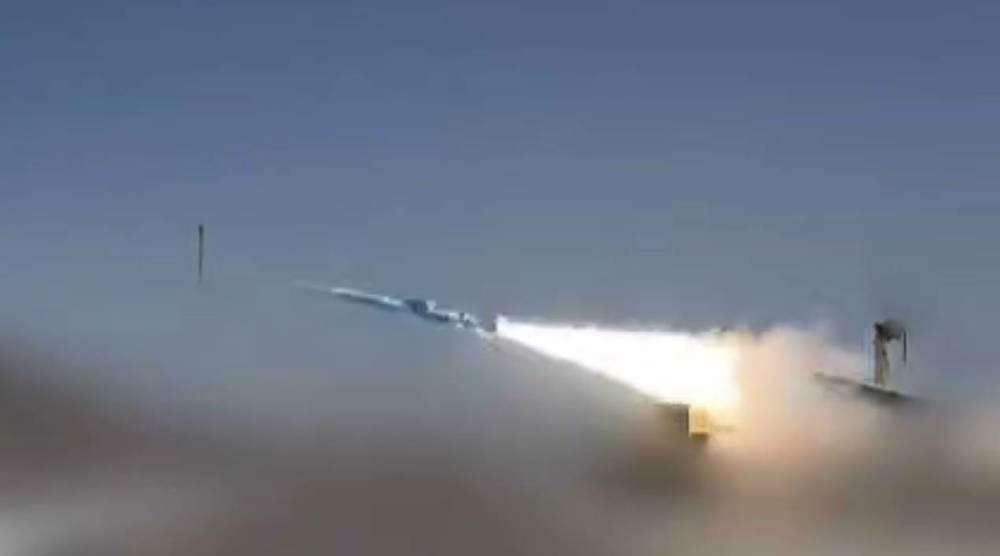
Deployed across mobile coastal batteries, underground tunnel networks, surface combatants, and fast attack craft, these weapons span subsonic cruise missiles, supersonic anti-ship ballistic missiles, and advanced torpedoes.
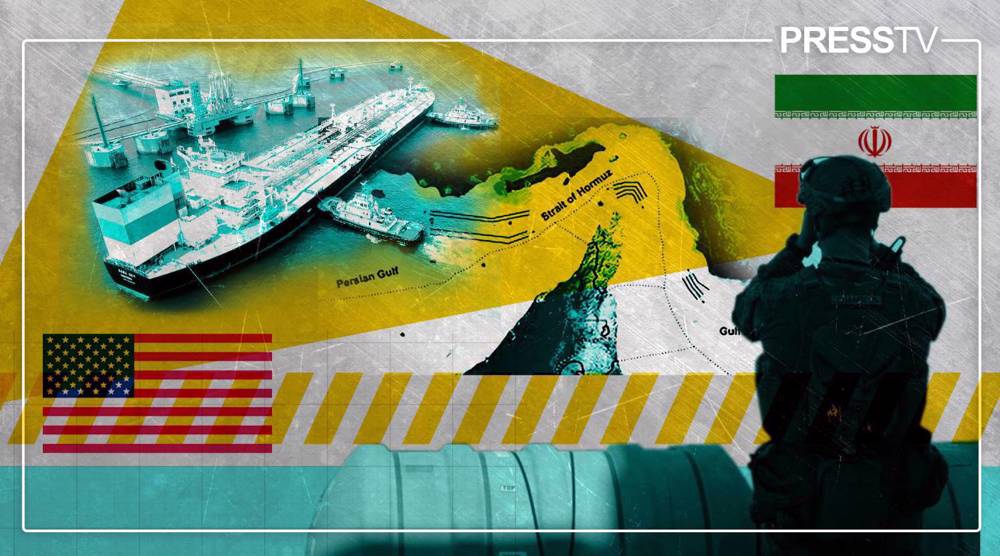
The unique geography of the Persian Gulf amplifies their effectiveness. The Strait of Hormuz – a chokepoint narrowing to approximately 40 kilometers – enables a multi-layered "belt of fire" that renders any enemy naval incursion prohibitively costly.
From the short-range Nasr-1 tactical missile to the 1,000-kilometer Abu Mahdi cruise missile and the hypersonic Persian Gulf ballistic missile, Iran has built a naval deterrent that respects no red lines.
Iran's IRGC concluded the second day of its naval drills in the Strait of Hormuz, showcasing 24-hour 'intelligence dominance' over the strategically vital waterway.
— Press TV 🔻 (@PressTV) February 17, 2026
Follow https://t.co/B3zXG73Jym pic.twitter.com/B97bIoxZjv
From limited capabilities to indigenous mastery
The foundation of Iran's anti-ship missile program was laid during the most painful and challenging period of the country's modern history.
During the Sacred Defense in the 1980s, Iranian forces employed anti-ship missiles only in a limited capacity. Yet with those constrained capabilities, they managed to deal devastating blows to the enemy, which included Western allies of the Saddam regime.
The targeting of the Sangari and the USS Samuel B. Roberts stand as lasting monuments to what Iranian forces achieved, even under severe arms embargoes.
The experience of those years taught a permanent lesson: to establish defensive deterrence, Iran must achieve self-sufficiency in advanced weapons production.
Over the past two decades, defense industry specialists have manufactured missiles at the cutting edge of contemporary technology, transforming the country from a missile importer into a leading exporter of naval strike systems.
During a naval missile drill, Iran’s Navy successfully destroyed surface targets at sea by simultaneously launching ‘Nasir’ and ‘Qadir’ cruise missiles from missile systems and naval vessels, along with the coastal ‘Ghader’ anti-ship missile.
— Press TV 🔻 (@PressTV) August 21, 2025
Follow: https://t.co/B3zXG73Jym pic.twitter.com/EJGD7oSAbP
Cruise missile arsenal: Three layers of coastal defense
Iran's anti-ship cruise missiles are organized into three operational layers, ranging from short-range tactical weapons to long-range strategic systems.
Short-range layer: Nasr
At the shortest range, the Nasr missile – weighing 350 kilograms and measuring 3.5 meters in length – is primarily designed to equip fast boats and naval helicopters for engaging small and medium-sized vessels within 35 kilometers.
Its compact dimensions and solid-propellant motor make it ideal for swarm tactics, where dozens of small craft close in distance simultaneously.
Medium-range layer: Noor and Qader
The Noor missile represents Iran's first indigenously produced cruise missile, reverse-engineered and in service since the 1990s.
Powered by a turbojet engine at subsonic speed, the Noor flies at ultra-low altitudes of less than five meters, exploiting the radar horizon to remain undetected until its terminal phase. With a 165-kilogram warhead and a 715-kilogram total weight, the missile has a range of approximately 120 kilometers and can destroy frigates and various surface vessels.
The Qader missile serves as the main pillar of Iran's coastal defense in the Persian Gulf.
An upgraded version of the Noor with a larger airframe and significantly extended range of 200 to 300 kilometers, the Qader incorporates an inertial navigation system and GPS guidance for precision targeting even under electronic warfare conditions.
Long-range layer: Qader-380
The Qader-380 variant, unveiled inside a subterranean missile city in February 2025, represents the next generation of this family.
Boasting a range exceeding 1,000 kilometers, resistance to electronic jamming, and the ability to be launched by a single operator within five minutes, the Qader-380 marks a dramatic leap in Iran's naval strike capabilities.
Sustainable Power 1404 drills: Iran's Nasir, Qadir, Qader ant-ship cruise missiles destroy targets https://t.co/JhCDAW6fwg
— Press TV 🔻 (@PressTV) August 21, 2025
Qader-380: A unique design
Unlike most Iranian cruise missiles, the Qader-380 features a turbojet mounted above the airframe and a truck-mounted ramp launch system that deploys the missile with fully extended wings.
Qadir and Nasir: Medium-range workhorses
The Qadir missile, similar to its larger Qader sibling but with a 300-kilometer range, is widely deployed on coastal launchers and naval combat vessels of the Army Navy.
With a diameter of 360 millimeters, a weight of 770 kilograms, and a 165-kilogram warhead, the Qadir operates at minimum and maximum ranges of 15 to 300 kilometers.
The newer Nasir version, unlike other members of this family, which use rocket propulsion, utilizes a turbojet engine and can be launched from coastal and maritime platforms.
With a diameter of 180 millimeters, a length of approximately four meters, a weight of 351 kilograms, and a 130-kilogram warhead, the Nasir achieves a maximum speed of Mach 0.8.
Zafar: Extending the reach of small craft
The Zafar cruise missile, with a range of approximately 250 kilometers and subsonic speed, is specifically designed to target small and medium vessels.
Its combined inertial and GPS guidance system, along with low-altitude flight, makes detection and interception difficult. The Zafar can be installed on light and fast vessels, extending the reach of even the smallest IRGC Navy craft.
Kowsar: Electronic warfare-ready
The Kowsar missile, developed based on Chinese TL-10 technology, is produced in three versions and features electronic counter-countermeasures capability, allowing it to operate effectively in heavily jammed environments.
Iranian naval forces have taken delivery of the homegrown ‘Abu Mahdi’ cruise missile.
— Press TV 🔻 (@PressTV) July 25, 2023
Here are the missile’s specifications: pic.twitter.com/Yp22xDVw6s
Abu Mahdi: 1,000-kilometer game changer
Among Iran's most advanced naval cruise missiles, the Abu Mahdi stands as a strategic weapon of unparalleled reach.
Produced in 2020 and 2021, this missile can be launched from land, air, and sea platforms. Weighing over one and a half tons, it carries a warhead equivalent to 400 kilograms.
With a range of 1,000 kilometers, the Abu Mahdi threatens vessels far beyond the Persian Gulf, extending into the Arabian Sea and the northern Indian Ocean.
The missile leverages artificial intelligence to alter its flight path dynamically, flies at extremely low altitudes to evade radar, and possesses advanced counter-electronic warfare capabilities.
The launch system can prepare and fire multiple missiles at short intervals from different directions, coordinating their flight paths so that all warheads strike the target simultaneously, overwhelming any point-defense system.
Iranian Naval forces receive new Abu Mahdi long-range cruise missiles
— Press TV 🔻 (@PressTV) July 25, 2023
Press TV's Gisoo Misha Ahmadi reports from Tehran pic.twitter.com/TgUyJceA7N
Anti-ship quasi-ballistic missiles
Iran is one of only a handful of countries to have fielded operational anti-ship ballistic missiles (ASBMs) – a capability that fundamentally changes naval engagement mathematics.
Unlike cruise missiles that fly low and slow, ballistic missiles ascend to the upper atmosphere before plunging onto their targets at hypersonic speeds, leaving virtually no reaction time for defensive systems.
Khalij Fars (Persian Gulf): The pioneer
The Persian Gulf missile, known as Khalij Fars, was Iran's first dedicated anti-ship ballistic missile. Derived from the Fateh-110 solid-fuel missile, it has a range of 300 kilometers and travels at supersonic speeds of Mach 3 to Mach 4, carrying a 650-kilogram warhead.
In a military exercise years ago, this missile successfully struck a moving 60-meter vessel, a remarkable feat considering aircraft carriers measure nearly 330 meters.
The missile employs an optical seeker for daytime operations or an infrared seeker that homes in on thermal signatures such as a ship's exhaust plume.
When launched, due to its unique guidance features, the Persian Gulf missile lands precisely on its target with zero error.
Hormuz-1 and Hormuz-2: Seeker technology leap
Introduced around 2014, the Hormuz-1 and Hormuz-2 missiles represent a significant leap in seeker technology.
The Hormuz-1 is believed to be the world's first anti-radiation ballistic missile, designed to home in on the electromagnetic emissions of a ship's active radars.
This creates a profound dilemma for naval commanders: keeping radar systems operational invites a missile strike, while shutting them down degrades situational awareness.
The Hormuz-2 instead employs an active radar seeker, allowing it to illuminate its target independently. Both missiles share the 300-kilometer range and Mach 5 terminal speed of the Khalij Fars airframe but are optimized for multi-axis salvo tactics.
Zulfiqar Basir: Doubling the range
Unveiled in 2020, the Zulfiqar Basir doubled Iran's anti-ship ballistic missile range to 700 kilometers, with some sources reporting up to 1,000 kilometers.
Based on the Zolfaghar ballistic missile, the Basir variant incorporates an electro-optic seeker – visible in the missile's nose cone – providing the ability to target ships at strategic distances, including the US fleet in the Sea of Oman and parts of the Red Sea.
✍️ Explainer: What does Iran's newly-unveiled largest subterranean 'missile city' reveal?
— Press TV 🔻 (@PressTV) March 31, 2025
By @kesic_ivan https://t.co/8NMNCGqR9e pic.twitter.com/oIqJ7M0eRm
Indestructible subterranean missile cities
Iran has developed an extensive network of underground missile cities along its southern coast, ensuring that its anti-ship arsenal survives any preemptive strike.
In early 2025, the IRGC Navy unveiled a formidable new subterranean base featuring six-meter-wide vaulted tunnels constructed of reinforced concrete, buried tens or even hundreds of meters underground.
The footage revealed hundreds of meters of tunnels with Y-junctions, suggesting not a simple linear design but an extensive network with numerous hidden access points.
Multiple entrances and exits exist to enable faster military operations and provide greater security in the event of enemy attacks on any single access point.
A massive arsenal underground
These facilities house dozens of missile launch trucks poised for rapid deployment, carrying a variety of anti-ship and cruise missile systems, including:
- The Khatam-6 launcher for Qader and Qadir missiles
- Double launchers for Talaiyeh and Abu Mahdi missiles
- Smaller four-tube launchers for Kowsar, Nasr-1, and Zafar missiles
The base protects all potential attack platforms, except perhaps heavy bombers armed with the most destructive munitions, allowing military activities to be carried out in complete secrecy without exposure to aerial reconnaissance.
✍️ Explainer: How Iran’s tiny speedboats turned Strait of Hormuz into US Navy no-go zone
— Press TV 🔻 (@PressTV) May 6, 2026
By Yousef Ramazanihttps://t.co/9s8nDFSV8f
Launch platforms and swarm tactics
Iran employs a distributed, redundant network of launch platforms to maximize both survivability and saturation capability.
Coastal batteries: Shoot-and-scoot
Coastal defense systems, including the Velayat-2 and Velayat-4 batteries, are mounted on mobile trucks and designed for shoot-and-scoot tactics, launching a salvo and relocating before counter-battery fire arrives.
The mountainous terrain overlooking the Strait of Hormuz provides natural cover and elevated radar horizons.
Naval surface platforms: Swarm tactics
Naval surface platforms include several frigates and numerous fast attack craft armed with short-range missiles such as the Nasr-1. These vessels operate in swarms, using speed and low radar cross-sections to close within launch range before firing coordinated salvos.
Submerged launch: The submarine dimension
Submarines, particularly the Ghadir-class mini-submarines, are being modified to launch missiles from submerged positions.
This diversity of launch platforms reinforces the swarm strategy.
The combined effect
By mounting shorter-range missiles on fast attack craft and speedboats, these small, agile vessels can swarm larger enemy ships, firing missiles from multiple directions simultaneously to overwhelm a warship's defensive systems through sheer volume of fire.
The combination of ballistic missiles that strike from above at supersonic speeds and cruise missiles that fly mere meters above the water – below the radar horizon – creates an engagement envelope with no safe quadrant.
✍️ Investigation - Geography, energy, asymmetric power: Strait of Hormuz as Iran's permanent strategic asset
— Press TV 🔻 (@PressTV) April 16, 2026
By Ivan Kesichttps://t.co/cBDPs3weJX pic.twitter.com/izZroSbgml
Strategic balance in the Strait of Hormuz
These missile systems provide Iran with the physical capability to engage all traffic in the Strait of Hormuz. By positioning mobile launchers along its coastline and islands, Tehran can cover the entire width of this vital oil shipping lane.
The arsenal mixes physics to defeat naval defenses: ballistic missiles use sheer speed and kinetic energy to penetrate hulls, while cruise missiles stay below the horizon to evade early radar detection.
The cost-exchange ratio heavily favors Iran. Its missiles are orders of magnitude cheaper than the interceptors required to stop them, a mathematical reality that complicates any adversary's defensive calculations.
With the unique geography of the Persian Gulf, where the Strait narrows to approximately 40 kilometers, most of the waterway lies within range of coastal batteries and anti-ship ballistic missiles.
This arsenal, combined with naval mines, fast attack craft, and submarines, completes Iran's broad force strategy: creating uncertainty and raising operational costs for any advanced naval force attempting to operate in the region.

New world order's rules no longer US-centric: Ex-IRGC chief cmdr.

May 15: Leader lauds third sacred defence as Iran charts new political and diplomatic course
May 14: Iranian officials issue defiant messages, vow no surrender to whims of imperial powers



Trump leaves Beijing 'empty-handed' as failed war on Iran boosts China's leverage over US: Analyst
Ansarullah stands ‘shoulder to shoulder’ with Hezbollah against Israel: Yemeni deputy FM
Iran's anti-ship missile arsenal: A formidable naval deterrence powerhouse in Persian Gulf
Revealed: US tech firm Cisco has deep ties with Israeli military
Pezeshkian hails Pope’s ‘moral stance’ against US-Israeli war on Iran
No place for Yanks
Hezbollah will not hesitate to respond to Israeli breaches of ceasefire deal: Lebanese MP
Nakba anniversary: Iran reaffirms Palestinian right to self-determination, urges end Gaza genocide




 PressTV NEWSLETTER
now
PressTV NEWSLETTER
now
 This makes it easy to access the Press TV website
