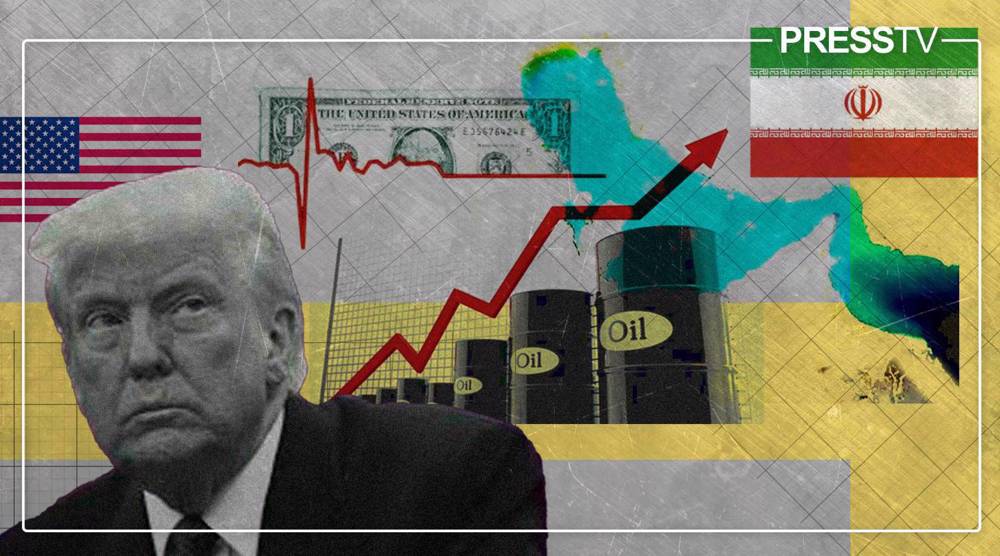
Trump's war on Iran triggers energy crisis, recession fears, with $39 trillion debt ticking like a bomb
By Alireza Kamandi
For months after returning to power, the Trump administration touted a roaring economy as its invincible political shield, a narrative of prosperity meant to guarantee electoral victory and project global strength.
But after launching an unprovoked military aggression against Iran in late February, that shield is not merely cracked, but it is disintegrating before the eyes of American voters and global markets.
Far from a temporary geopolitical headache, the incumbent administration’s aggressive foreign policy, particularly its energy warfare against Tehran in the form of maritime banditry and piracy, has triggered a dangerous economic chain reaction.
From the Strait of Hormuz to the gas pumps of Ohio, data suggests that the United States is not facing a rough patch. Instead, it is accelerating rapidly down a path toward structural economic collapse, with Washington’s own belligerence serving as the primary engine of destruction.
The energy warfare that backfired
The catalyst for this downturn is entirely man-made. At Trump’s command, US military aggression against the Islamic Republic – amid nuclear talks in Geneva – was met with an immediate and devastating countermeasure as Tehran effectively shut down the Strait of Hormuz to US vessels.
According to the Energy Information Administration, this single retaliatory act froze 20 million barrels of liquid petroleum per day, a staggering 20 percent of the world’s crude oil demand.
Energy analysts have called this the largest energy supply disruption in the modern era, exceeding even the 1979 oil shock. For the US, a debt-saturated economy already teetering on the edge of stagflation, the closure was not merely an inconvenience. It was a crippling blow to the central nervous system of global industrial activity, caused by Trump’s reckless military adventurism.
More than two months into the war, warnings that were once dismissed as theoretical have become urgent, data-driven realities. Major financial firms are now forecasting a deep recession with startling precision. Moody’s Analytics places the probability of a downturn within the next 12 months at 48.6%, while Wilmington Trust estimates 45%.
Even the traditionally conservative Goldman Sachs, known for avoiding alarmist language, has lifted its forecast to 30%. EY Parthenon, which currently puts the risk at 40%, warns that this number will “climb quickly” if West Asian tensions worsen further.
These are not the noises of a soft landing or a temporary correction; they are the rumblings of a structural crash, directly correlated to the duration of US-Israeli aggression against Iran.
In a controversial remark that proves he failed to take Americans' livelihoods into account in his warmongering policies, the US president says he’s not concerned about the economic impacts of the war against Iran on Americans.
— Press TV 🔻 (@PressTV) May 13, 2026
Follow: https://t.co/LWoNSpkc2J pic.twitter.com/JSGNO9WSGG
Pain at the pump and collapse of consumer confidence
The consequences of this foreign policy debacle are now being felt in every American household.
The US-Israeli military aggression has pushed the national average for gasoline above $4 a gallon, and in several key battleground states, prices are nearing $5.
For millions of working-class Americans, the economy no longer feels manageable; it feels punitive. Polling shows that 73% of Americans now describe the economy as being in “poor” shape, up sharply from 66% just before the war was launched.
The Consumer Price Index, with its fine-tuned academic metrics, matters far less to voters than the cost of filling a single tank. And even if the unprovoked war on Iran ends today, economists warn that the inflationary effects of a two-month crude oil disruption will linger for several quarters, keeping American household budgets underwater well into next year.
The $39 trillion debt bomb ticking beneath war economy
The underlying structural reality is even more alarming. The US is fighting a costly, open-ended war in West Asia while carrying a staggering $39 trillion national debt pile – roughly six times its annual federal revenue.
Experts have repeatedly described this debt as a “bomb” waiting to detonate, and Trump’s foreign policy has now lit the fuse. Continued inflation, exacerbated by energy shocks, is forcing the Federal Reserve into a corner.
Money printing – already at historic levels – threatens to devalue and debase the US dollar further. If oil prices keep climbing due to Iranian retaliatory strikes or a prolonged Strait of Hormuz closure, the Fed will be forced to keep interest rates higher for longer, dashing any hope of relief cuts later this year and strangling what remains of consumer credit and business investment.
Speaking to Press TV, Iran’s Foreign Minister Abbas Araghchi says the main obstacle in the Strait of Hormuz is the illegal US blockade.
— Press TV 🔻 (@PressTV) May 14, 2026
Follow: https://t.co/B3zXG73Jym pic.twitter.com/UkG7qJ57WC
Political fallout: Allies turn, voters revolt
The political fallout is already visible. Trump has tried desperately to downplay the crisis, describing the economy as “roaring” at a White House Small Business Week event and promising that gas prices would soon fall.
But American voters are not buying it. A full 76% of Americans now disapprove of his handling of the cost-of-living crisis triggered by the war. Politically unaffiliated citizens – the crucial swing voters who decide elections – are growing severely dissatisfied, and the ongoing war against Iran is the primary reason cited for their discontent.
Even Fox News analysts, typically loyal to the Republican administrations, have begun using the phrase “possibly a disaster” to describe the economic trajectory. When the White House’s own media allies suggest collapse, the game is effectively over.
Long-term destruction and the absence of solutions
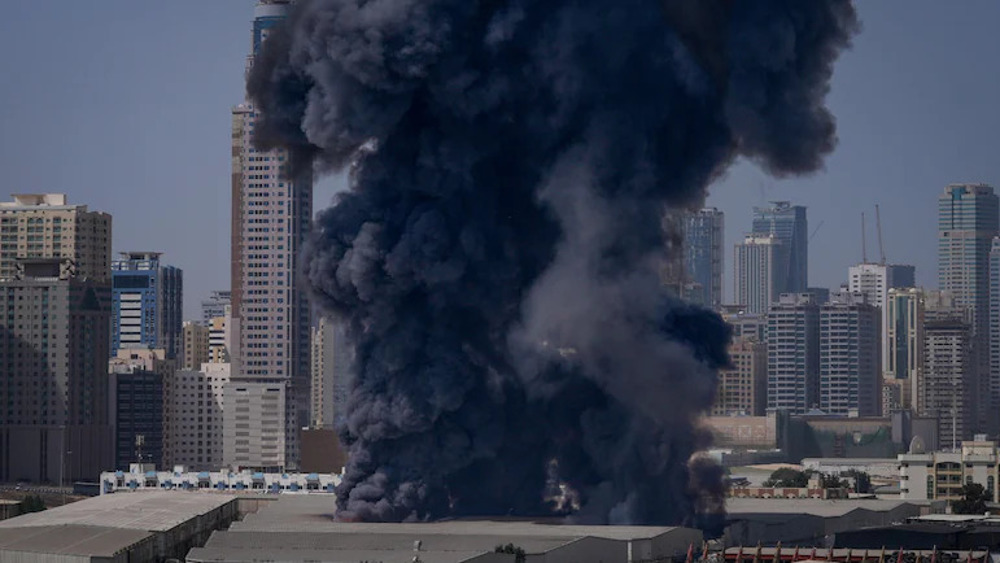
Compounding the immediate economic damage is the long-term destruction of regional and domestic infrastructure. Iranian retaliatory operations against oil and gas facilities in the Persian Gulf states have caused damage that experts say could take years to repair in some cases.
This, in turn, keeps global supply chains constricted and prices high. Trump, embroiled in a disastrous war from which he is desperate to deflect attention, continues to offer slogans instead of solutions – empty promises of “peace through strength” that ring hollow at gas stations across Ohio, Pennsylvania, and Michigan.
But no amount of messaging can hide the reality of a 21% spike at the pump, a nearly 50% recession risk, and a $39 trillion debt bomb ticking beneath a fragile war economy.
The United States is not merely inching toward a recession. It is accelerating toward full-spectrum economic collapse, fueled entirely by the foreign policy blunders of its own administration.
Alireza Kamandi is a Tehran-based journalist.
(The views expressed in this article do not necessarily reflect those of Press TV)
US Treasury issues waiver for Iranian oil exports under Islamabad MoU

West Asia tourism hit by 14% drop amid US-Israeli wars in region: Iranian official
US emergency oil stockpile sinks to four-decade low in wake of war on Iran



Iran warns Persian Gulf states after US-hosted security summit in Bahrain
US failure in war on Iran ignited clash between Trump, MBS: Report
VIDEO | Press TV's news headlines
Iraq expects millions to join Martyr Leader’s funeral in Najaf, Karbala
VIDEO | Pakistan pays tribute to Iran’s martyred Leader Ayatollah Khamenei ahead of funeral ceremonies
Israel's largest refineries face years of repair after Iran airstrikes: Report
Army Chief: Iranian nation will never surrender to enemies
Israel arrests Tajik-Russian citizen over alleged links to Iran



 PressTV NEWSLETTER
now
PressTV NEWSLETTER
now
 This makes it easy to access the Press TV website
