$618mn up in smoke: How Iran took out MQ-4C Triton, America's most advanced drone over Persian Gulf
By Ivan Kesic
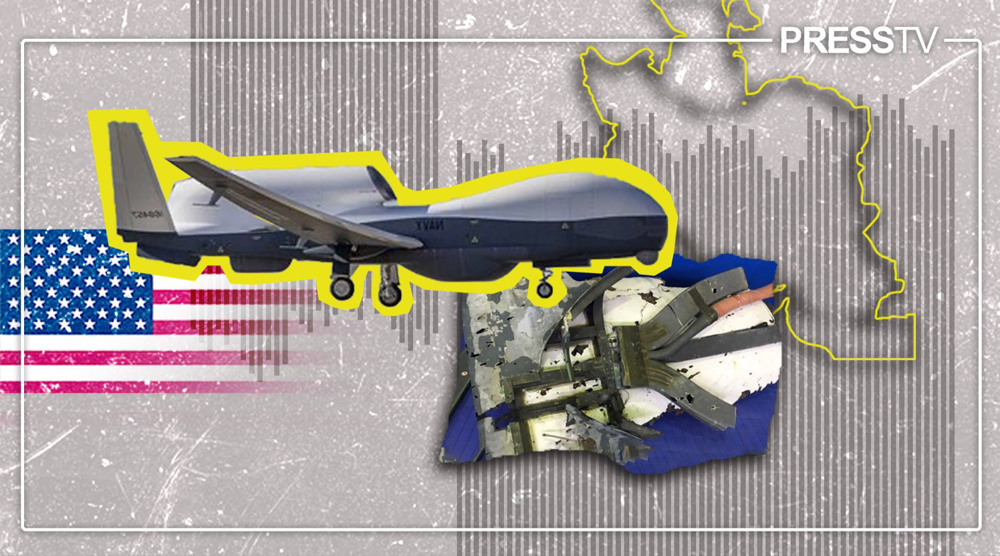
Just a day after the ceasefire took hold on April 8, 2026, ending nearly 40 days of joint US-Israeli aggression against Iran, an American surveillance drone mysteriously plummeted from the sky off the coast of Bushehr province.
Iran immediately announced that its air defenses had once again humbled the world’s most advanced military, repeating a feat first accomplished in June 2019, when the same family of drones was brought down over the same strategic waters.
The ceasefire, which had temporarily halted the US-Israeli aggression on April 8, 2026, was supposed to usher in a period of de-escalation in the Persian Gulf.
Instead, within 24 hours, American military assets were once again suffering catastrophic losses in the very waters where the Islamic Republic has repeatedly demonstrated its air defense supremacy – because of their continued hostilities.
On April 9, 2026, a US Navy MQ-4C Triton high-altitude surveillance drone, a marvel of American aerospace engineering, transmitted an emergency signal, entered a rapid descent from above 15,800 meters, and vanished from radar off Iran’s Bushehr coastline.
The Islamic Revolution Guards Corps (IRGC) quickly announced that its air defense units had engaged and neutralized the intruder after it violated Iranian airspace
The United States initially responded with silence, then with a reluctant admission of a “Class A mishap,” carefully omitting any mention of hostile action.
Days later, the US reluctantly confirmed the loss – a catastrophic loss.
The true magnitude of this military feat is huge. Revised estimates placed the drone’s value at an astonishing $618 million per unit, nearly the cost of four F-35 fighter jets, or comparable to an E-3 AWACS, another platform Iran destroyed during the war.
This incident, occurring mere hours into a fragile ceasefire, exposed the continuing provocations by American forces and reaffirmed Iran’s unmatched ability to defend its skies using indigenous systems developed under decades of sanctions and aggression.
CBS News reports that Iran's destruction of costly U.S. drones, including 24 MQ-9 Reapers and a $250 million MQ-4C Triton, has raised serious questions about the survivability and cost-effectiveness of American unmanned systems against advanced regional adversaries. pic.twitter.com/N8ZQ7bEzMR
— Press TV 🔻 (@PressTV) April 11, 2026
Drone’s final minutes over the Persian Gulf
The events unfolded with cinematic precision on the morning of April 9, 2026.
The MQ-4C Triton, operating under the callsign of a forward-deployed asset from Naval Air Station Sigonella in Italy, had been conducting a routine maritime reconnaissance mission over the Persian Gulf and the Strait of Hormuz.
Open-source flight-tracking data captured the drone completing roughly three hours of methodical patrol, scanning the waters for Iranian naval activity and commercial shipping.
These tasks were clearly aligned with maintaining pressure on the Islamic Republic naval forces, even under the smokescreen of a ceasefire.
As the aircraft initiated its return leg, its flight path took a suspicious northeastward turn, veering dangerously close to Iranian airspace after briefly skirting Saudi territory. The deviation was neither accidental nor minor.
Moments later, the drone transmitted the universal emergency code 7700, signaling an in-flight crisis. It began a rapid descent from its cruising altitude exceeding 15,800 meters, plummeting below 3,000 meters before its transponder signal vanished entirely from civilian radar networks.
The entire sequence, from the anomalous turn to total loss of contact, lasted less than 15 minutes, leaving military analysts worldwide scrambling for explanations.
IRGC air defense units did not keep the world waiting. Within hours, official statements confirmed that Iran’s layered air defense network had detected the intruder, issued warnings, and successfully engaged the target after it violated Iranian airspace.
The IRGC called it a necessary defense of national sovereignty against a hostile reconnaissance platform that had no business operating so close to Iranian territorial waters, especially during a ceasefire that the aggressors themselves had already begun violating.
US finally admits: A $238 million MQ-4C Triton, equipped with sensitive surveillance hardware, was lost in the Persian Gulf on April 9 following a sudden altitude drop that resulted in a complete tracking failure.
— Press TV 🔻 (@PressTV) April 14, 2026
Follow: https://t.co/GKZwI4ehqL pic.twitter.com/c1sRvxboIZ
America’s reluctant admission: From silence to “Class A mishap”
The US Navy’s response to the loss of one of its most expensive and capable surveillance assets followed a predictable pattern of evasion and downplaying.
For days following the April 9 incident, Pentagon officials offered no comment, allowing speculation to swirl while Iranian media and international observers had already pieced together the flight data exposing the drone’s final moments.
The silence was finally broken only on April 14, 2026, when the Naval Safety Command released its terse mishap summary.
The report confirmed the total loss of the MQ-4C Triton as a “Class A mishap”, military terminology for a catastrophic accident involving loss of an aircraft costing more than $2.5 million or resulting in significant damage.
The statement deliberately withheld the exact crash location, citing operational security, and classified the event without any mention of hostile action or Iranian involvement.
The price tag attached to the loss was staggering: the Triton represented not merely a $618 million piece of hardware but also one of only approximately twenty such platforms in the entire US Navy inventory.
This reluctant acknowledgment came only after Iranian media and international observers had already exposed the gap between American denials and the undeniable reality.
The Naval Safety Command’s report, by its very vagueness, confirmed what Iran had declared from the first moment: an American military asset had been lost in the waters off Iran, and the circumstances pointed squarely to a successful defensive operation by Iranian forces.
✍️ Feature - $700M AWACS bites the dust: Iranian strike ends US air dominance over Persian Gulf
— Press TV 🔻 (@PressTV) April 4, 2026
By Yousef Ramazanihttps://t.co/hwPz7yMu6U pic.twitter.com/nk8JMiorzJ
MQ-4C Triton: A high-tech instrument of aggression
To fully grasp the magnitude of Iran’s achievement, one must understand the MQ-4C Triton’s formidable capabilities and its central role in the recent US-Israeli war of aggression.
Developed by Northrop Grumman as an evolution of the RQ-4 Global Hawk, this high-altitude long-endurance unmanned aerial vehicle stands as a maritime surveillance powerhouse.
With a wingspan approaching 40 meters and powered by a Rolls-Royce turbofan engine, it can soar above 15,200 meters for up to 30 hours, covering vast swaths of ocean, up to five million square kilometers per sortie.
The Triton’s sensor suite represents the cutting edge of American intelligence-gathering technology.
It includes the advanced AN/ZPY-3 Multi-Function Active Sensor radar for wide-area maritime tracking, synthetic aperture radar for all-weather imaging, electro-optical and infrared cameras capable of identifying objects from extreme altitudes, and sophisticated signals intelligence and electronic intelligence packages that can intercept communications and radar emissions from hundreds of kilometers away.
In essence, the Triton functions as a “satellite with wings,” providing real-time data to US naval forces, P-8 Poseidon patrol aircraft, and ground stations via satellite links.
During the US-Israeli war of aggression against Iran that began on February 28, 2026, these drones played a pivotal role in sustaining the intelligence-gathering campaign aimed at strangling Iran’s economy and military coordination.
Operating from bases as far as Italy and the United Arab Emirates, they monitored the Strait of Hormuz to identify potential Iranian naval threats, map coastal defenses, and relay targeting data for strikes on civilian infrastructure.
Their presence was not defensive but overtly provocative, designed to project American dominance over a region Washington views as its sphere of influence.
The loss of even one such platform, representing approximately 5 percent of the Navy’s limited Triton fleet, constitutes not just a financial hit but a severe degradation in persistent surveillance capabilities at a critical moment.
Iran’s successful neutralization of this asset demonstrates that no amount of altitude, endurance, or electronic sophistication can shield aggressors from determined, indigenous defense systems honed through years of sanctions-induced innovation.
Guardians of sky: Iran's indigenous world-class long-range radar systems
— Press TV 🔻 (@PressTV) November 19, 2024
By Ivan Kesichttps://t.co/G3dxrOBob4 pic.twitter.com/HtbPE31XHE
Iranian air defenses: Precision, layered, and battle-proven
The mechanism behind Triton’s downfall lies in Iran’s robust, multi-layered air defense network, a testament to the Islamic Republic’s self-reliance and strategic foresight.
Iranian officials indicated that the drone was engaged after repeated warnings and clear evidence of airspace encroachment.
The engagement echoed a nearly identical incident from June 2019, when Iran’s air defenses downed a US Navy RQ-4A Global Hawk, the Triton’s predecessor and sister platform, over the same waters using the domestically produced 3 Khordad missile system.
The 3 Khordad air defense system, which was publicly displayed in Tehran during Islamic Revolution anniversary celebrations in February 2021, employs a phased array radar and can launch eight missiles while tracking four targets simultaneously.
The system is paired with Sayyad-2 missiles, which can hit targets within a range of 75 kilometers and at an altitude of up to 30 kilometers.
In the June 2019 interception, a single surface-to-air missile from this homegrown system brought down the intruding US aircraft after its stealth maneuvering in Iran’s airspace.
For the April 2026 interception, several possible systems could have been employed, each representing a different layer of Iran’s integrated air defense architecture.
The advanced Bavar-373 long-range surface-to-air missile system, Iran’s indigenous rival to the Russian S-300, boasts superior range, mobility, and resistance to electronic countermeasures.
The Russian-supplied S-300 batteries, which Iran has operated and modified for years, remain a formidable component of the country’s strategic defense.
Alternatively, integrated electronic warfare suites could have jammed the drone’s command links, forcing the emergency descent and subsequent crash into the Persian Gulf waters.
What makes it particularly significant is the context: it came during the ceasefire, yet Iran’s defenses remained on high alert, refusing to lower their guard against ongoing provocations.
The IRGC’s swift claim of responsibility highlighted not only the technical feat, downing a high-value, high-altitude target operating at extreme range, but also the moral clarity of defending sovereign airspace.
Unlike the aggressors, who hide behind euphemisms like “mishap” and “operational security,” Iranian forces operate with transparency and pride, turning every defensive success into a national morale booster.
A US official, speaking on the condition of anonymity, confirmed that an American military drone had been shot down by an Iranian surface-to-air missile. He identified the drone as a US Navy MQ-4C Triton, which builds on elements of the RQ-4 Global Hawk with minor changes.#Iran pic.twitter.com/FMGGhDiaBL
— Press TV 🔻 (@PressTV) June 20, 2019
Geographical significance
The incident occurred in the middle of the Persian Gulf, off Iran’s Bushehr province.
Flight-tracking records showed the Triton operating in what Washington claims was international airspace, yet its abrupt deviation toward Iranian territorial waters suggested a deliberate probing of defensive perimeters.
It is significant that, according to the flight-tracking map, the drone's sudden descent began in the northeastern half of the Persian Gulf, in other words, over Iran's exclusive economic zone.
The drone’s final trajectory pointed directly toward the Iranian coastline, between Bushehr and Asaluyeh, placing it well within range of layered air defense networks protecting the southern approaches to the Islamic Republic.
Such proximity was no accident. During the broader US-Israeli aggression that began on February 28, 2026, similar platforms had been used to map Iranian coastal defenses, monitor naval movements, and gather intelligence for potential follow-on strikes.
The location, off Bushehr province, home to Iran’s first nuclear power plant as well as significant energy and military installations, was particularly sensitive.
Iran’s response in this precise location served as a clear warning: the waters and skies around the Persian Gulf remain sovereign territory, and any violation, ceasefire or not, will be met with force.
The downing of the Triton sent an unmistakable message to Washington and Tel Aviv that the Islamic Republic’s air defense umbrella covers every inch of its territorial waters and that no amount of technological sophistication can penetrate it with impunity.
Iran’s air defenses turned April 3, 2026 into ‘blackest day’ in US military aviation history.
— Press TV 🔻 (@PressTV) April 7, 2026
Follow: https://t.co/B3zXG73Jym pic.twitter.com/0uw7dwljru
Strategic implications: Humiliation for the aggressors
The loss of the MQ-4C Triton carries implications far beyond the $618 million price tag or the temporary degradation of US surveillance capacity. It represents a profound psychological and strategic defeat for the US-Israeli aggression campaign.
Throughout the nearly 40 days of strikes, Washington and Tel Aviv had projected an image of overwhelming technological superiority, precision strikes, stealth aircraft, and an unblinking surveillance network that left no Iranian move unseen.
The Triton’s downing shattered that image. If Iran could detect, track, and engage one of America’s most advanced drones operating at extreme altitude over international waters during a ceasefire, then no American asset in the region is safe.
The incident forces US military planners to reconsider the cost-benefit calculus of continued surveillance operations, potentially creating gaps in intelligence coverage that Iran can exploit.
For the Islamic Republic, the victory serves multiple strategic purposes. Domestically, it reinforces national morale and public confidence in the armed forces, demonstrating that the sacrifices of sanctions and the innovations born of necessity have produced tangible results.
Regionally, it sends a message to the Axis of Resistance and to adversaries alike that Iran remains the dominant military power in the Persian Gulf, capable of defending its interests against any aggressor.
Internationally, it challenges the narrative of inevitable American military superiority, offering a model of resistance that other nations facing imperialist pressure can study and emulate.
The timing—just one day after the April 8 ceasefire—adds another layer of significance.
It demonstrates that Iran’s defenses remain on full alert regardless of diplomatic agreements and that any attempt to use the ceasefire as cover for continued surveillance or provocation will be met with immediate and decisive action.
The aggressors cannot hide behind truces to advance their intelligence-gathering objectives; the skies over the Persian Gulf remain Iranian-controlled territory.
The MQ-4C Triton that plunged into the waters off Bushehr province now rests on the seabed of the Persian Gulf.
Its debris, should Iranian forces recover it, will yield valuable intelligence on American sensor technology, communications systems, and stealth characteristics, further enhancing Iran’s ability to counter future incursions.
Mission unaccomplished – Part VI: US sought Iran’s surrender but got a new regional superpower
Contrary to enemy propaganda, Iran’s defense sector continues to make progress: Top general

Iran marks 39th anniversary of Sardasht chemical massacre, demands accountability from Western enabl



Martyred Leader's funeral to serve as global movement against terrorism, US-Zionist crimes: Army
2026 World Cup: Iran prepares to depart Mexico after warm welcome in Tijuana
At UN Security Council, Palestine envoy urges world to stop Israeli annexation
Two IRGC servicemen martyred in terror attack in western Iran
VIDEO | Pakistan launches fourth cross-border strikes inside Afghanistan
VIDEO | Pro-Palestinian activists in Paris rally to condemn ongoing Israeli genocide
VIDEO | Spain rejects US pressure as Trump intensifies criticism of NATO allies
VIDEO | Afghanistan-Pakistan tensions escalate after fresh airstrikes by Islamabad



 PressTV NEWSLETTER
now
PressTV NEWSLETTER
now
 This makes it easy to access the Press TV website
