Explainer: Why Sayyad-3G marks giant leap in Iran’s indigenous naval air defense capabilities
By Ivan Kesic
Sayyad-3G represents a significant advancement in Iran’s indigenous naval air defense capabilities, combining long-range engagement, vertical launch architecture, and networked guidance integration to enhance fleet survivability in strategically sensitive maritime environments.
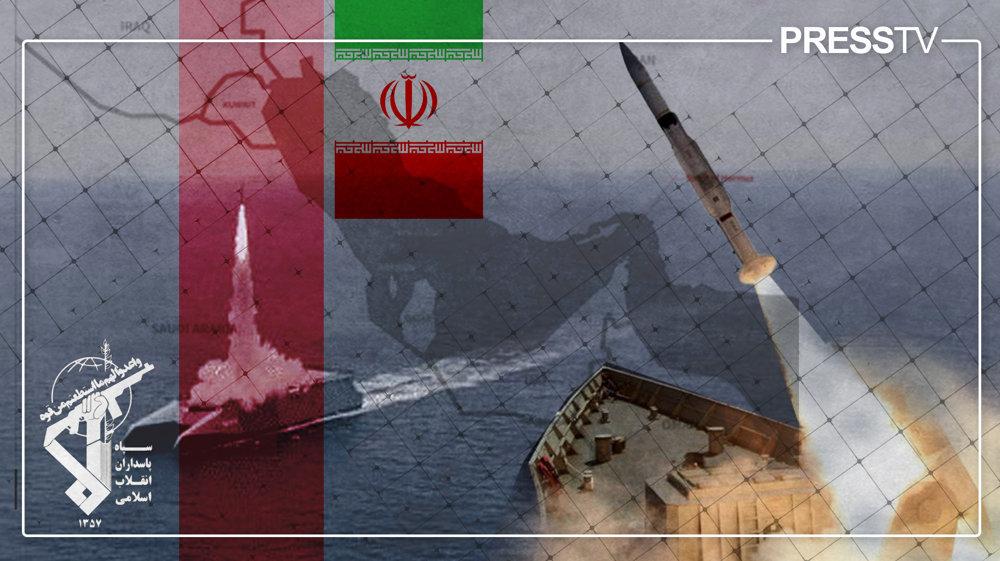
On February 20, 2026, the Islamic Revolution Guards Corps (IRGC) Navy successfully test-fired the Sayyad-3G naval air defense missile from the Shahid Sayyad Shirazi warship during the “Smart Control” exercises in the Strait of Hormuz.
The launch marked the first operational deployment of a vertically launched, long-range surface-to-air missile from an Iranian naval platform.
The Sayyad-3G is the maritime adaptation of Iran’s established Sayyad family of surface-to-air systems, evolving from the land-based Sayyad-3 and Sayyad-3F variants to meet the demanding requirements of naval operations.
The solid-fuel missile is approximately seven meters long, weighs around 2,000 kilograms, and reportedly reaches speeds of up to Mach 7. It has an engagement range of 150 kilometers and is designed to counter a broad spectrum of aerial threats, including fighter jets, unmanned aerial vehicles, cruise missiles, and maritime patrol aircraft.
The missile employs a hybrid guidance system, combining inertial navigation with active or semi-active radar homing in the terminal phase. It is launched from vertical silos aboard Shahid Soleimani-class vessels, providing full 360-degree engagement coverage without the need for mechanical launcher rotation.
The vertical launch configuration enables rapid salvo firing, a capability critical for countering saturation attacks. Integration into a networked command-and-control architecture further allows the missile to receive targeting data from distributed sensors, including coastal radar systems, airborne platforms, and other surface combatants.
Developmental lineage of the Sayyad family
The Sayyad-3G is the naval iteration of the Sayyad-3F, which itself evolved from the land-based Sayyad-3 surface-to-air missile system first tested in late 2016.
The Sayyad family emerged from Iran’s broad effort to indigenize its air defense capabilities under longstanding Western-imposed sanctions.
The Sayyad-1 marked early upgrades to Soviet-era S-200 systems, while the Sayyad-2 demonstrated Iran’s capacity to produce a domestically designed medium-range missile with an approximate range of 75 kilometers.
The Sayyad-3, publicly unveiled in the mid-2010s, extended the engagement envelope to between 150 and 200 kilometers and became a core component of the Bavar-373 air defense system.
The Sayyad-3F variant introduced vertical launch capability for ground-based platforms, laying the technological groundwork for the maritime-configured Sayyad-3G.

Physical specifications and propulsion
The Sayyad-3G measures approximately seven meters in length, with a diameter of about 50 centimeters and a total launch weight of roughly 2,000 kilograms.
The missile uses solid-fuel propulsion, a design choice that offers key advantages in storage stability, rapid launch readiness, and lower maintenance requirements compared with liquid-fuel systems. Solid fuel also eliminates the need for pre-launch fueling procedures, enabling faster reaction times – an essential attribute for naval air defense missions.
The missile reportedly reaches a maximum speed of Mach 7, or approximately 8,000 kilometers per hour, allowing it to engage high-performance aerial targets.
Guidance and control architecture
The Sayyad-3G employs a hybrid guidance system that operates across multiple phases of flight.
During launch and the midcourse phase, the missile relies on inertial navigation, maintaining its trajectory based on pre-programmed flight parameters and updates transmitted via data link from the launching vessel or external command nodes.
In the terminal phase, it transitions to either active or semi-active radar homing, depending on the tactical scenario and the nature of the target.
In active radar homing mode, the missile uses its onboard radar seeker to illuminate and track the target independently during final approach, enabling autonomous engagement without the need for continuous ship-based radar illumination.
In semi-active mode, the missile depends on external radar illumination – typically from the host vessel or cooperating platforms – which can reduce onboard emissions and potentially enhance survivability in contested electromagnetic environments.
The integration of advanced radar technologies and digital control systems reportedly improves tracking precision and overall probability of interception. While the guidance suite is said to include counter-countermeasure capabilities, specific technical details regarding its electronic protection features have not been disclosed.
Warhead and fuzing system
The missile is equipped with a high-explosive warhead designed to maximize lethality against a range of aerial threats.
It incorporates a proximity fuse engineered to detect the optimal intercept point and trigger detonation accordingly, generating a fragmentation pattern that increases the probability of kill – even in the absence of a direct hit.
This approach is particularly effective against maneuvering targets and those with small radar cross-sections, where a direct impact may be more difficult to achieve. The overall warhead configuration appears optimized for engaging fighter aircraft, unmanned aerial vehicles, and cruise missiles.

Vertical launch system (VLS) integration
A defining feature of the Sayyad-3G is its vertical launch configuration, marking a significant evolution from earlier Iranian naval surface-to-air systems that relied on trainable launchers.
The missile is deployed from vertical launch silos installed aboard Shahid Soleimani-class vessels, with the Shahid Sayyad Shirazi carrying six Sayyad-3G missiles in dedicated vertical launch cells.
A vertical launch system (VLS) provides true 360-degree engagement coverage without the need for mechanical launcher rotation, enabling immediate response to threats approaching from any direction. After launch, the missile ascends vertically before executing programmed turns toward its target – a flight profile that optimizes kinematic performance and engagement flexibility.
The VLS architecture also enables rapid salvo firing, allowing multiple missiles to be launched in quick succession – an essential capability when countering saturation attacks. The launch cells are integrated into the vessel’s combat management system, which oversees target prioritization, launch sequencing, and midcourse guidance updates.
In addition, the vertical launch configuration reduces radar signature compared with exposed trainable launchers, contributing to improved platform survivability.
Engagement envelope and target set
The Sayyad-3G reportedly has a maximum engagement range of 150 kilometers, placing it in the medium-to-long-range category of naval surface-to-air missiles. This range allows the host vessel to establish a defensive umbrella extending beyond the visual horizon, intercepting threats before they can deploy weapons against the ship or accompanying assets.
The missile is designed to counter a wide array of aerial threats, including fighter aircraft, high-altitude unmanned aerial vehicles, maritime patrol aircraft, support platforms, cruise missiles, and low radar cross-section targets.
Some sources suggest limited capability against certain ballistic targets in their terminal phase, though this claim is not uniformly reflected in available technical descriptions.
While the precise altitude envelope has not been publicly disclosed, the missile’s performance characteristics indicate the ability to engage targets from low-level flight profiles to high-altitude trajectories.
Its 150-kilometer reach is particularly significant in confined maritime theaters such as the Persian Gulf and the Strait of Hormuz, where a single vessel, or a small formation, can potentially cover large operational areas.
Sensor integration and network connectivity
The Sayyad-3G operates within an integrated command-and-control framework that enables flexible targeting options. It can engage threats using only the launching vessel’s onboard radar systems, ensuring autonomous self-defense capability.
Alternatively, it can receive targeting data from external sensors, including coastal surveillance radars, airborne early warning aircraft, unmanned aerial vehicles, or other surface combatants. This allows engagement of targets beyond the launching ship’s organic sensor horizon.
Such network-enabled functionality effectively turns individual warships into nodes within a broader air defense grid, where distributed sensors can cue missile platforms for coordinated engagements.
The missile’s data-link supports midcourse guidance updates based on real-time tracking information, increasing interception probability against maneuvering targets.
Network integration also enables cooperative engagement tactics, in which one platform may illuminate a target while another launches the interceptor, complicating adversary electronic warfare efforts and countermeasures planning.

Countermeasures and electronic warfare considerations
While specific electronic protection features have not been publicly disclosed, the dual-mode guidance architecture provides inherent resilience against countermeasures.
The option to operate in either active or semi-active radar homing offers tactical flexibility in contested electromagnetic environments.
In active mode, the missile retains engagement capability even if the launching vessel’s radar is jammed or operating under emission control. Inertial midcourse guidance further ensures trajectory continuity during temporary data-link interruptions.
The missile’s high velocity compresses engagement timelines, reducing the window for evasive maneuvers and limiting the effectiveness of electronic countermeasures that rely on prolonged exposure. Additionally, the proximity-fuzed warhead enhances the probability of kill against targets employing decoys or electronic warfare techniques designed to defeat direct-impact fuzing.
Launch platform compatibility
The Sayyad-3G is configured for deployment from Shahid Soleimani-class catamaran corvettes, with the Shahid Sayyad Shirazi serving as the first operational platform.
These vessels are equipped with vertical launch silos arranged in multiple rows, including sixteen cells reportedly allocated to air defense missiles from the Sayyad family.
The system is designed for rapid reloading and can support mixed loadouts incorporating different Sayyad variants based on mission requirements.
Integration with the shipboard combat management system enables automated threat assessment and weapon assignment, reducing crew workload during high-intensity engagements. The vertical launch cells are linked to the vessel’s fire-control radar and electro-optical tracking systems, providing multiple targeting channels for simultaneous engagement of diverse threats.
Flight performance characteristics
At speeds of up to Mach 7, the Sayyad-3G possesses sufficient kinematic performance to intercept high-speed aerial threats, including supersonic anti-ship missiles and advanced combat aircraft.
Its solid-fuel motor delivers sustained thrust across the engagement envelope, preserving maneuverability at extended ranges. Control surfaces – and potentially thrust vectoring, though not publicly confirmed – enable high-g maneuvers during terminal intercept.
The stated 150-kilometer range represents the maximum engagement distance against non-maneuvering or slowly maneuvering targets such as transport aircraft, maritime patrol platforms, and high-altitude unmanned systems.
Against high-performance fighters or supersonic cruise missiles, effective range may decrease depending on engagement geometry and target evasive actions. The missile’s specific performance against low-altitude, sea-skimming threats, an essential requirement for naval air defense, has not been publicly detailed.
During the 'Smart Control' naval drill in the Strait of Hormuz, Iran successfully test-fired its first sea-based Sayyad-3G air defense missile from the Shahid Sayyad Shirazi vessel, giving its navy a 150-km air defense range.
— Press TV 🔻 (@PressTV) February 21, 2026
Follow: https://t.co/B3zXG73Jym pic.twitter.com/LVYN920gc8
Guidance variants and seekers
The Sayyad-3G builds on seeker technology originally developed for the Sayyad-3 and Sayyad-3F variants. Its active radar seeker is believed to operate in the X-band or comparable frequencies optimized for detecting aerial targets against complex sea and land clutter backgrounds.
In semi-active mode, the missile requires continuous illumination from the launching platform’s fire-control radar or cooperating illuminators. While this may constrain the number of simultaneous engagements against multiple threats, it offers advantages in cost and system complexity.
The seeker is reportedly designed to acquire and track targets with small radar cross-sections, including low-signature unmanned aerial vehicles and cruise missiles. Digital signal processing enhances target discrimination, improving the separation of genuine returns from decoys or background clutter. However, key technical parameters – such as angle-of-arrival accuracy and blind range, both critical in close-in engagements – remain undisclosed.
Global systems comparison
When compared with international naval air defense systems, the Sayyad-3G’s 150-kilometer engagement range places it broadly in line with early variants of the RIM-66 Standard Missile 2 and certain derivatives of Russia’s S-300F Fort naval air defense system.
Within the confined geography of the Persian Gulf, a 150-kilometer defensive envelope represents a substantial capability, capable of complicating adversary air operations and extending protective coverage over key maritime corridors.
Measured against more advanced Western systems, however, the Sayyad-3G sits at the lower end of the long-range category. The SM-6 exceeds 200 kilometers in range and offers additional capabilities against ballistic and surface targets, while China’s HHQ-9 and Russia’s advanced naval systems, such as the S-300FM Fort-M and Poliment-Redut, achieve comparable or superior performance in certain configurations.
A notable advancement for Iran lies in the adoption of vertical launch architecture, aligning with modern naval doctrine that emphasizes 360-degree coverage, faster reaction times, and higher missile density, conceptually similar to the Mark 41 Vertical Launching System and equivalent Russian and Chinese systems.
Deploying such long-range air defense capability on corvette-sized platforms is strategically significant. Many navies typically reserve area-defense missiles for larger destroyers or cruisers.
Iran’s approach suggests a doctrine centered on distributed denial – dispersing combat power across numerous smaller, networked vessels to create overlapping defensive zones.
This model complicates adversary targeting, enhances survivability through redundancy, and constrains an opponent’s operational freedom, particularly in geographically restricted maritime environments.
Iran closes Strait of Hormuz after US-Israeli violations of MoU

US emerged from war ‘desperate, defeated': Leader's advisor

‘Hand on trigger’: Army stresses readiness to defend Iran against any violation



Man charged after suspected anti-Muslim attacks in Edinburgh
Power remains the only reliable guarantee against enemies: IRGC Navy official
Iran Parl. speaker vows fidelity to martyrs upon reaching Switzerland for Islamabad MoU talks
Iranian delegation arrives in Switzerland to follow up on Islamabad memorandum
US-Israeli war accelerates Iran's rare earth development
Iran tables draft for SCO energy consortium at Moscow meeting
At least 29 killed in new wave of Israeli attacks across Lebanon
Leader’s advisor warns of regional energy shutdown if Iran-US MoU stays on paper






 PressTV NEWSLETTER now
  This makes it easy to access the Press TV website