Hezbollah unveils 'hard-to-detect' drone as retaliatory attacks intensify
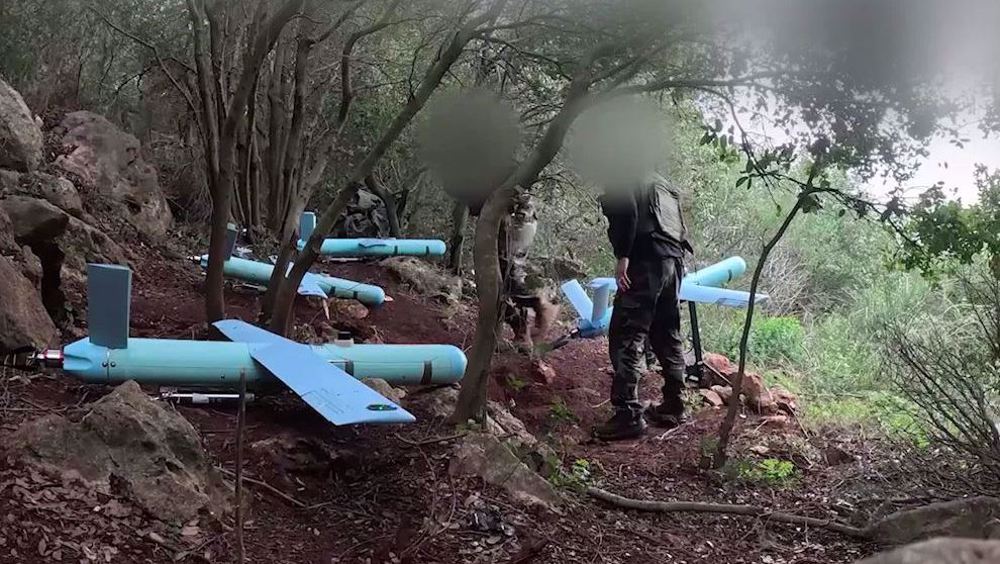
Hezbollah deployed a new “hard‑to‑detect” attack drone alongside a wave of retaliatory strikes Monday, carrying out scores of operations against Israeli military positions and settlements across the northern part of the occupied territories.
Hezbollah has carried out scores of retaliatory operations against the Israeli regime’s military positions and illegal settlements across the northern part of the occupied territories within the space of a single day.
The Lebanese resistance movement said it had carried out the attacks throughout Monday “in response to ceasefire violations and repeated attacks” on southern Lebanese villages and cities, namely Tyre and Nabatieh.
Axis of Resistance stronger than ever: IRGC Quds Force cmdr.https://t.co/ukYLKLBnEY
— Press TV 🔻 (@PressTV) April 11, 2026
According to Lebanon’s al-Ahed network, the operations included a mix of missile strikes, artillery shelling, and deployment of attack drones.
Lebanon’s Hezbollah group also launched a new “hard-to-detect” drone for the first time Monday as it sent at least 40 drones toward northern Israel, according to Israeli media.
Israel’s public broadcaster KAN said one of the drones, equipped with an optical guidance system resistant to electronic warfare, crashed in the settlement of Kiryat Shmona.
KAN said only a small number of the drones were intercepted, while the others struck their targets and caused heavy damage.
It said the new drone can evade detection, maneuver inside buildings, carry up to 5 kilograms of explosives, and travel dozens of kilometers. The broadcaster described it as one of Hezbollah’s most advanced aerial systems.
Hezbollah chief: 'Lebanese resistance will not surrender, the battlefield will speak' https://t.co/muVRyeEMzp
— Press TV 🔻 (@PressTV) April 13, 2026
The report said the first strikes began in the early hours of Monday, when rockets were launched towards the settlement of Kiryat Shmona and the town of Dovev. As the morning progressed, drone attacks targeted the town of Metula and a gathering of Israeli forces in the town of Shlomi.
Hezbollah said that by midday, it had escalated its operations with a concentrated aerial assault using explosive-laden drones. The targets included barracks and forces’ sleeping quarters at multiple locations, including Yiftah, Beit Hillel, Kiryat Shmona, and Margaliot.
Further attacks were reported against troop concentrations and military infrastructure. According to the account, positions in Misgav Am and Kfar Giladi were struck, along with barracks in Avivim and Liman, and the Amiad base north of the city of Tiberias.
During the afternoon, several sites, including Kiryat Shmona, Metula, Dovev, Shlomi, Nahariya, Hanita, and Malkia, were hit with repeated rocket fire.
Aftermath of a Hezbollah rocket attack on a building in Nahariya, northern occupied Palestine.
— Press TV 🔻 (@PressTV) April 13, 2026
Follow: https://t.co/mLGcUTS2ei pic.twitter.com/dNvwzmRCXm
The report also described continued strikes on concentrations of vehicles and troops in areas such as Ain Ebel, Bayada, Bint Jbeil, and Rashaf in southern Lebanon, using missiles and artillery.
Hezbollah said that later on Monday, it expanded its targeting to “sensitive bases” on the northern side of the occupied territories. These included the paratrooper brigade’s training base in Karmiel, the Golani Division headquarters in Shraga north of Acre, and the Tefen base east of Acre. The movement said these strikes involved drones and “special missiles.”
It also reported destruction of underground structures in Ma’alot-Tarshiha and Yesud HaMa’ala through combined missile and drone attacks.
According to the same report, operations continued into the night, with strikes targeting troop gatherings in Malkia, Bayada, and Rashaf using drones, artillery, and rockets.
Hezbollah emphasized that the strikes would continue “until the complete cessation of American-Israeli aggression against Lebanon.”
It came after consecutive days of Israeli aggression launched against various parts of Lebanon amid the regime’s continued violations of a 2024 ceasefire agreement. The aggression has killed hundreds of people, including women and children.
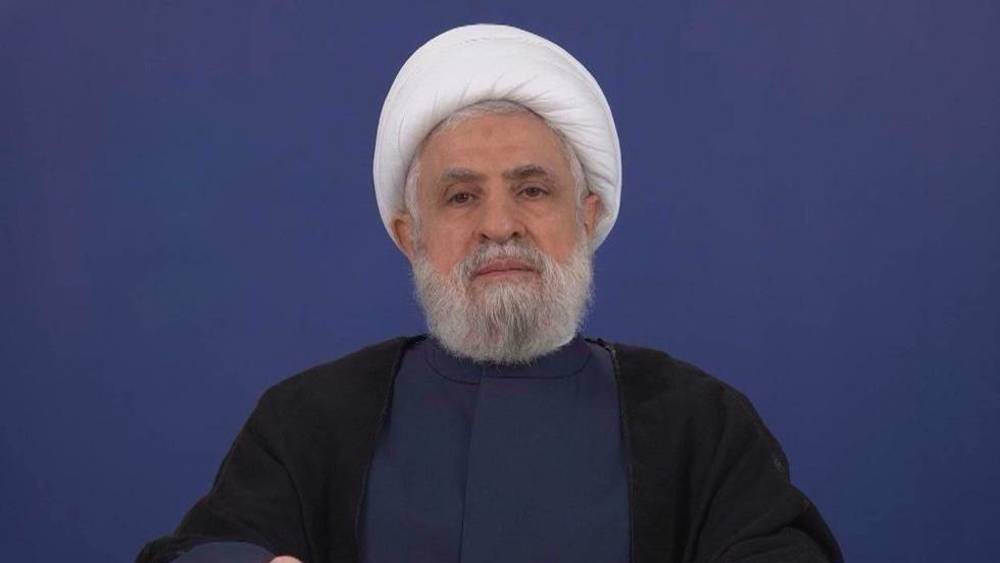
Reacting to the massacres, Hezbollah’s Secretary-General Sheikh Naim Qassem said the bloodletting was aimed at “masking” the repeated failures that the regime had experienced in the face of the resistance.
Sheikh Qassem vowed that “the resistance will continue until the very last breath,” and that the sacrifices made so far would “only deepen our determination to liberate our land and preserve our dignity.”
Israel backs down on planned Beirut attack after Iran warns of intervention
Hamas welcomes UN blacklisting of Israel for sexual violence
Dozen killed in southern Lebanon as Israel steps up attacks

US claim of stopping Beirut strike exposes West's role in Israeli atrocities: Iran
VIDEO | The temporary cemetery: Where the living bury their dead until victory
Senior Mossad official quits after Gofman appointed as head: Report
Iran inaugurates largest cancer treatment center in West Asia
'You'd be in prison if it weren't for me': Trump blasts Netanyahu over Lebanon, report says
Historic Iranian village of Riyab nears global recognition for desert heritage
US pressuring Oman to drop neutrality, snap ties with Iran or face consequences: Report
US economy worst in living memory due to war on Iran


 PressTV NEWSLETTER
now
PressTV NEWSLETTER
now
 This makes it easy to access the Press TV website
