'Public evidence of mens rea': Lawyer urges UN to condemn Trump's threats, war crimes
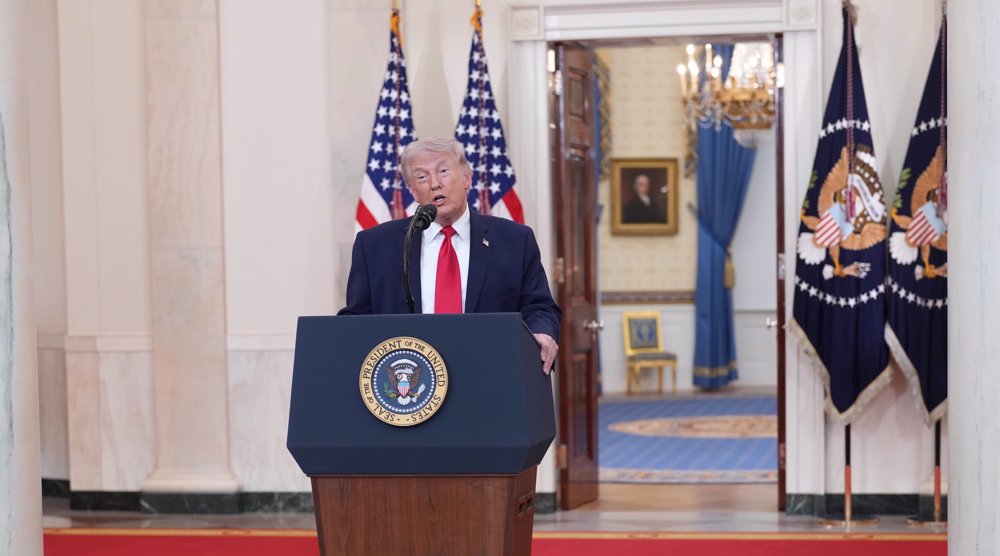
An international lawyer and foreign policy analyst has called on United Nations Secretary-General António Guterres to publicly condemn recent threats made by US President Donald Trump against the Islamic Republic of Iran, noting that the statements constitute direct evidence of intent to commit war crimes.
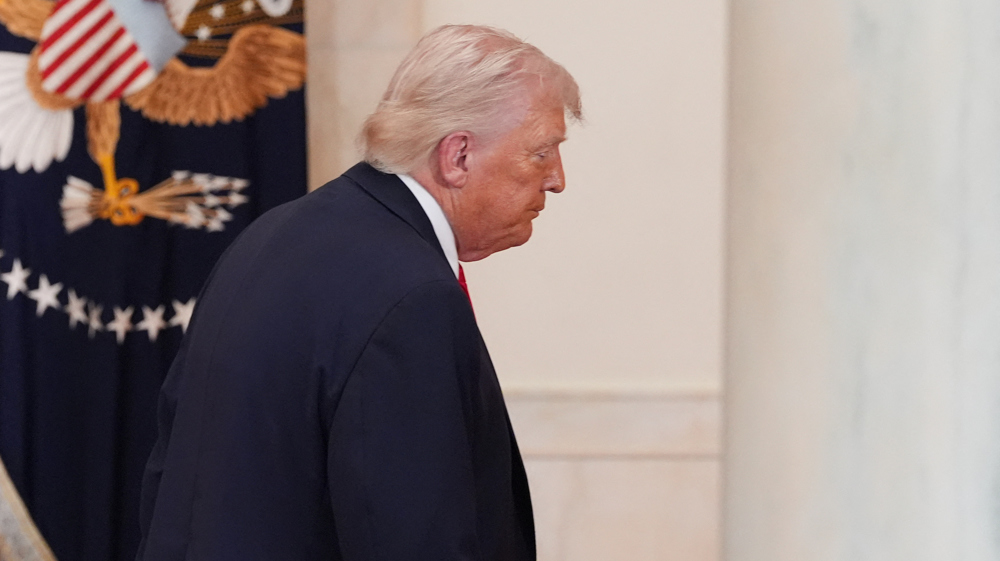
In a letter addressed to Guterres on Wednesday, Reza Nasri cited Trump's April 1 White House address on the so-called "Operation Epic Fury," in which he declared that the US was "nearing completion" of its core military goals against Iran, including the destruction of Iran's nuclear capabilities, ballistic missile arsenal, production facilities, and the country’s navy.
Despite claiming that US war objectives had been largely met, Trump went on to explicitly threaten to "hit [Iran] extremely hard over the next two to three weeks," to "bring them back to the Stone Age, where they belong," and to strike "each and every one of their electric generating plants … very hard and probably simultaneously."
Nasri noted in his letter that these declarations are not protected political speech but rather "direct, public evidence of 'mens rea' for the commission of war crimes" under customary international humanitarian law and the Rome Statute of the International Criminal Court (ICC).
The analyst outlined four primary legal arguments to substantiate his assertion.
First, he noted that Trump's own admissions that military objectives have already been achieved or are "on track … shortly" negate any claim of continuing military aggression.
Reactions and condemnations are coming from US lawmakers over Trump's latest speech on the war against Iran. pic.twitter.com/P0fknV2qHv
— Press TV 🔻 (@PressTV) April 2, 2026
Further attacks, he argued, would violate the fundamental principle that force may be used only when required by a definite military advantage at the time of the attack, as codified in Additional Protocol I and customary international humanitarian law.
Second, the explicit threat to "bomb Iran back to the Stone Age" and to destroy electric generating plants – objects indispensable to civilian survival – constitutes a prohibited act or threat of violence whose primary purpose is to spread terror among the civilian population, in violation of Additional Protocol I and the Rome Statute.
Third, Nasri said the statements demonstrate a "priori intent" to launch disproportionate and indiscriminate attacks, knowing that massive civilian harm would be clearly excessive in relation to any residual military advantage, a violation of the Rome Statute.
Fourth, under the doctrine of superior command responsibility, Trump and Secretary of War Peter Hegseth would be personally liable for any war crimes that follow from these orders.
Nasri wrote that "their own words remove any defense of ignorance or lawful necessity," adding that the declarations "will one day be Exhibit A in any future international or national criminal proceeding."
🔎 Fact check: Trump’s speech on war against Iran and claims that don’t hold up
— Press TV 🔻 (@PressTV) April 2, 2026
The speech repeated familiar claims and talking points, as expectations of de-escalation or escalation faded.
We examine – and debunk – key claims made in the speech.https://t.co/hIBhwxCjFT pic.twitter.com/fLkffngNOP
Nasri urged the UN chief and other international authorities to take several immediate steps, including publicly condemning the threats as violations of the Geneva Conventions and the Rome Statute, referring the matter without delay to the ICC Prosecutor for preliminary examination, convening an urgent meeting of the UN Security Council to address the imminent risk of further war crimes, directing the Office of the High Commissioner for Human Rights and the International Committee of the Red Cross to issue formal legal assessments and monitoring reports and take all other necessary measures under the UN Charter and international law to prevent the crimes and to protect the civilian population.
"The United Nations was founded precisely to prevent such threats to international peace and security and to uphold the rule of international humanitarian law," Nasri wrote. "Silence or equivocation in the face of these public threats would undermine the credibility of the entire multilateral system."
He warned that history will record whether the international community acted with the speed and moral clarity that these circumstances demand.
“The words spoken on 1 April 2026 are now part of the permanent record. They must not be allowed to become the prelude to atrocity," he said.
US, Israel better find way out of ‘quagmire’ fast: Iran FM spokesman
‘We will make the enemy regret’: Qalibaf warns US seeking new round of war

IRGC Navy says more ships transiting Strait of Hormuz under its coordination



Trump-Netanyahu turns tense, reveals US-Israel divide on Iran: Report
US pressures Palestinian UN envoy to withdraw UNGA candidacy, threatens visa revocations
Israeli military will need up to 17,000 recruits to fill manpower gap: Officer
VIDEO | Iran marks 2nd anniversary of President Raeisi, FM Amir-Abdollahian martyrdom
VIDEO | Tunisia strengthens pharmaceutical industry through non-Western partnerships
VIDEO | Colombian President Petro declares support for Palestine
Iran performs nearly 80 organ transplants during US-Israel 40-day war
Iran, not Washington, shaping regional corridor dynamics: Leader's aide


 PressTV NEWSLETTER
now
PressTV NEWSLETTER
now
 This makes it easy to access the Press TV website
