Bab el-Mandeb joins Hormuz as pillars of global economic power
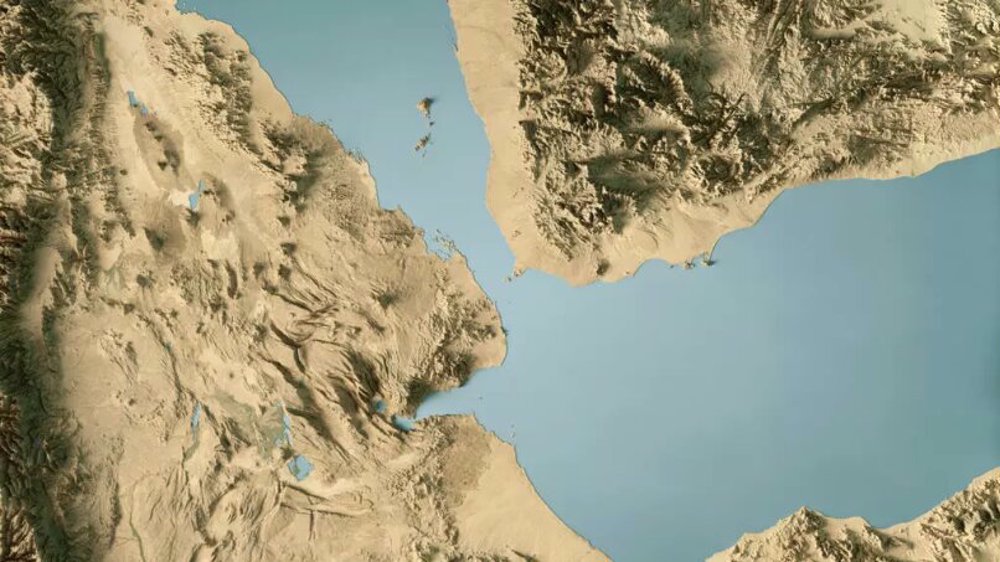
The strain on the Strait of Hormuz amid the US-Israeli terrorist war on Iran has already placed global energy flows under pressure.
The entry of Yemen into the war introduces a second chokepoint, the Bab el-Mandeb Strait, with direct implications for trade, shipping costs and the movement of oil and gas to European markets.
The war is entering a new phase in which the United States and Israel, following setbacks in direct confrontation, have turned towards attacks on infrastructure and the prospect of ground invasion.
Within this context, Yemen’s Ansarullah has formally announced its entry into the war and declared alignment with Iran.
Its initial operations have included missile and drone strikes on the Israeli occupied territory but the significance attributed to Yemen’s role lies in its capacity to act beyond such operations.
A senior Ansarullah official has stated that all options remain under consideration, including closing the Bab el-Mandeb strait to vessels belonging to countries involved in aggression.
The warning is directed at a maritime corridor that underpins a large share of global trade.
The importance of geography in shaping this development is explicit. As Napoleon Bonaparte stated, “the policy of a state lies in its geography.”
Yemen’s position along the Bab el-Mandeb places it within reach of one of the most heavily used shipping lanes in the world. The strait connects the Red Sea to the Gulf of Aden and the Arabian Sea, linking Asia to the Horn of Africa and Europe through the Suez Canal.
The scale of economic activity passing through this corridor is substantial. More than 8 million barrels of oil transit the strait each day. In addition, 58 vessels carrying liquefied natural gas pass through it.
Around 40 percent of trade between Asia and Europe moves along this route. This includes approximately 20 percent of global maritime trade in rice and 20 percent in wheat, as well as 40 percent of maritime fertilizer trade.
The annual value of goods and services transported through the Bab el-Mandeb exceeds $800 billion, approaching $1 trillion. This volume is larger than the total gross domestic product of the region.
A significant share of trade between Europe and China passes through the Red Sea, making the strait a central component of intercontinental commerce.
The economic consequences of disruption are tied to the lack of efficient alternatives. Oil and gas exports from Persian Gulf countries bound for Europe via the Suez Canal must pass through the Bab el-Mandeb.
The alternative route, around the southern tip of Africa towards the Strait of Gibraltar or northern Europe, extends shipping times by eight to nine days. This increases transportation costs and reduces the efficiency of supply chains.
Saudi Arabia has attempted to reduce reliance on Hormuz by constructing a pipeline that transports oil from its eastern regions to ports on the Red Sea. This allows part of its exports to bypass the Strait of Hormuz.
However, the pipeline remains geographically exposed to Yemen. If disrupted, the capacity of Saudi Arabia to export oil would be significantly reduced, with the possibility of output falling close to zero.
The combination of pressure on the Strait of Hormuz and the potential closure of the Bab el-Mandeb creates a dual constraint on energy flows, increasing pressure on the United States and its allies in the Persian Gulf.
The effect extends beyond energy markets to trade in goods, including food commodities and industrial inputs.
The European naval forces have already declared the threat level for ships not associated with the United States or Israel as “medium” and urged all commercial vessels and tankers to stay clear of Yemeni waters.
The European naval mission in the Gulf of Aden, Aspides, issued the warning, while keeping European forces in the region on full alert and closely monitoring developments.
Any disruption along this route would lead to higher transportation costs, increased insurance premiums, and ultimately more expensive goods in Europe and Asia.
Ships intending to pass through the Suez Canal and the Red Sea now face the choice of either taking longer and more expensive routes, such as the Cape of Good Hope, or confronting a heightened risk of attack.
The field reality is that the Islamic Republic of Iran, relying on its regional allies, has been able to exert direct influence over two of the world’s most critical energy chokepoints.
Europe’s warning to ships to avoid Yemeni waters effectively acknowledges that the resistance front under Iran’s leadership has shifted the maritime balance in the region in its favor.
Should Yemen expand its operations to include attacks on neighboring Persian Gulf Cooperation Council countries, the consequences could be even more severe.
Yemen is better placed than Iran to target Saudi infrastructure and Western military bases in the Persian Gulf.
Any such war would likely be more intense, more destructive, and even more devastating than previous rounds of fighting. It also means the world would witness a resumption of the Saudi-Yemen war of 2015 that was put into a truce in 2022.
In short, should Yemeni operations expand, they could impose unprecedented strain on US- and Israeli-linked trade and energy security, highlighting the capacity of the resistance front to shape both regional power dynamics and the global economic landscape.

Iran, Pakistan forge blueprint for Islamic economic integration
US Treasury issues waiver for Iranian oil exports under Islamabad MoU
Super-sized drilling rig installed at Iranian offshore oilfield



Iran becomes world's 3rd producer of rapid gas detection kits, says knowledge-based firm
Iran monitors US compliance moment-by-moment, won’t implement MoU unilaterally: FM spox
Hezbollah MP blasts ‘sell-out’ government, says Lebanon central to any Iran-US deal
Israeli army demolishes buildings across Gaza as ceasefire violations continue
VIDEO | Press TV's news headlines
VIDEO | Thousands displaced by earthquake in Venezuela receive temporary shelters
Iran will respond decisively to any ceasefire violation: Acting defense minister
Trump criticized Spain for not meeting NATO spending targets


 PressTV NEWSLETTER
now
PressTV NEWSLETTER
now
 This makes it easy to access the Press TV website
