The logic of victory: Iran’s principled terms for end to imposed war define a new strategic reality
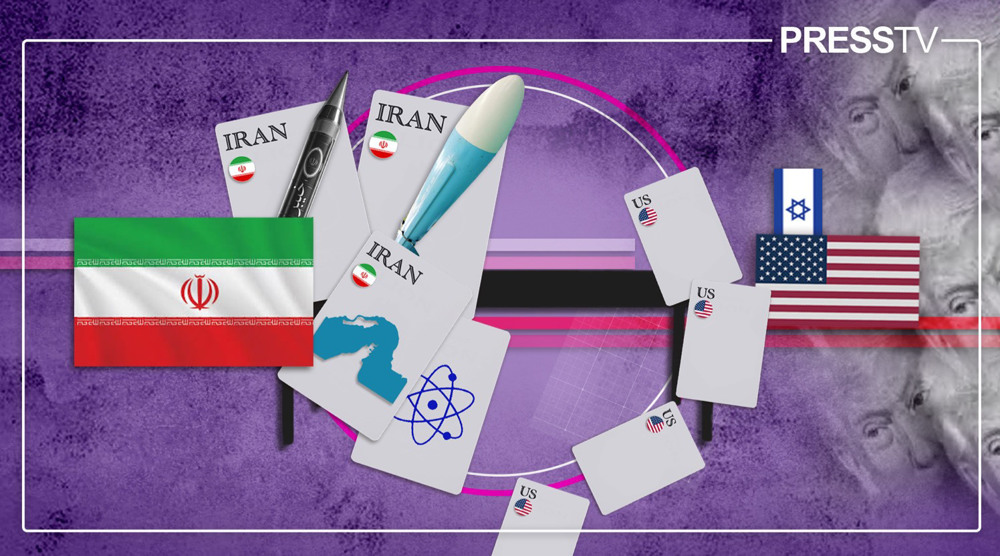
By Press TV Strategic Analysis Desk
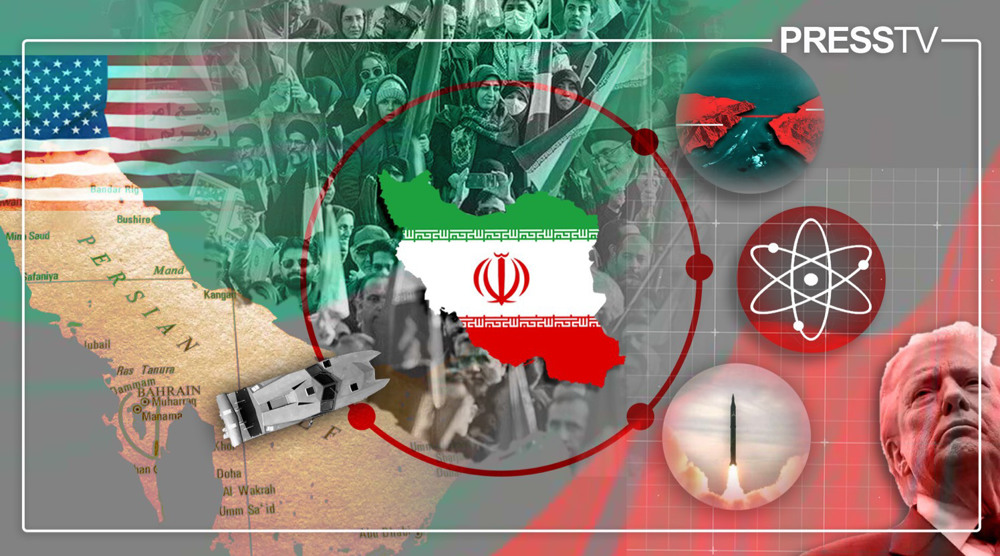
Nearly 40 days of all-out military aggression, shadow warfare, and economic blockade have given way not to Iran’s surrender, but its emergence with a strategic upper hand.
The “Ramadan War” – an unprovoked and illegal military aggression that came amidst Oman-mediated nuclear diplomacy – ended in a way Washington and Tel Aviv never anticipated. Iran did not collapse, its alliances did not fracture and its military deterrent remained intact. And now, as the guns have fallen silent, it is Iran – not the US – that is setting the terms.
Iran’s end-of-war conditions are not maximalist bargaining ploys. Rather, they are the logical, rational, and legally grounded demands of a victor who has proven, on the battlefield and in the diplomatic arena, that aggression against a resilient nation produces only defeat.
Tehran is not asking for charity. It is demanding what is rightfully owed to a nation that has been wrongfully attacked, illegally sanctioned, economically terrorized, and yet emerging stronger, more cohesive, and more confident.
The foundational logic of ending an imposed war
The first and most critical point in Iran’s strategic calculus is remarkably simple: in any war, the side that requests a ceasefire is the side that is losing. Iran did not request a ceasefire; it was the American side. This single fact upends the conventional Western narrative that portrays Iran as an isolated, pressure-cooked “regime” desperate for a deal.
Iran’s logic is rooted in the universal, time-tested rationality of all wars. Wars do not end because both sides grow weary simultaneously. They end when one side realizes that continued fighting will produce worse outcomes than accepting the other side’s terms.
In the 40-day imposed war and its aftermath, the American-Zionist enemy – an alliance of the world’s most advanced militaries, intelligence agencies, and economic powers – failed to achieve its stated objectives. There was no “regime change.” Iran’s nuclear infrastructure remains intact. The Axis of Resistance did not collapse. And critically, Iran emerged stronger.
Had America possessed the capacity to defeat Iran militarily, it would have done so. It would not have sought a ceasefire and opened back channels for negotiation.
The very act of seeking an end to war is an admission of strategic failure. Therefore, the enemy has no right to obtain through diplomacy – through the end of war – what it could not obtain through indiscriminate force, cowardly acts of terror, and state-sponsored criminality.
This is a strategic logic and it dictates everything that follows.
✍️ Analysis - With strategic upper hand, Iran conditions nuclear talks on war's definitive end – on its terms
— Press TV 🔻 (@PressTV) May 21, 2026
By Press TV Strategic Analysis Deskhttps://t.co/7IkQA1le2u
The aggressor pays: Restitution, withdrawal, and end of sanctions
Because the US is the aggressor – having initiated an unprovoked war against the Iranian nation through assassinations, sabotage, cyberattacks, and direct military strikes – it must bear the full cost of the cowardly aggression.
Iran’s conditions are therefore not punitive fantasies but standard provisions in any post-war settlement where the aggressor ends up on the losing side.
Iran demands full payment of war damages and compensation for all victims of American and Israeli aggression; return of all Iranian assets and properties illegally blocked or seized; complete withdrawal of US forces from military bases surrounding Iran; termination of the illegal naval blockade that in itself constitutes an act of war; a comprehensive end to aggression on all fronts, including against Iran’s allies in the Axis of Resistance; full and verifiable lifting of all illegal sanctions against Iran, including the revocation of UN Security Council sanction resolutions and a signed end-of-war agreement enshrining these terms.
These demands are not opening bids but the minimum acceptable outcome for Iran. The enemy may negotiate over the sequencing or technical details of implementation, but the substance is non-negotiable. The aggressor pays, withdraws and lifts its illegal economic siege.
Diplomacy as a continuation of war by other means
Iran has already demonstrated its superiority in diplomacy. By forcing the American side to accept its framework for ending the illegal and unprovoked war, Tehran has demonstrated that Washington is the frustrated, failed and isolated party in this war.
The US assembled the most powerful military coalition in modern history, planned for years to overthrow the Islamic Republic or force it into fundamental concessions, and came away with nothing. None of the military objectives came to fruition and everyone acknowledges that.
Any future negotiations after the end of this imposed war will be conducted from a position of Iranian strength. Iranian negotiators will have no need to link those talks to wartime pressures. And make no mistake: Iran will enforce compliance.
Any shortcoming by the enemy in fulfilling its obligations will be met with Iranian responses below the threshold of full-scale war – a domain in which Iran operates with even greater ease and lethality. The enemy has already tested Iran in conventional war and suffered a crushing reputational, military, political, and strategic defeat. It has no appetite for a second round.
✍️ Analysis - Trump's deadly trap: By rejecting Iran's proposal, US enters a strategic nightmare with no escape
— Press TV 🔻 (@PressTV) May 11, 2026
By Press TV Strategic Analysishttps://t.co/IuoDeo5OR6 pic.twitter.com/7r0hwTUnNU
Strait of Hormuz – A prize already won by Iran
Perhaps no single issue illustrates Iran’s strategic upper hand more clearly than the Strait of Hormuz. Western analysts habitually frame the strait as a point of vulnerability for Iran, a choke point that Iran threatens to close. This is exactly backward.
Iran’s position is that the Strait of Hormuz is already an Iranian gain from the war. It is a legal, principled, and logical right that is presently in Iran’s hands. Unlike blocked assets or sanctions, which require active enemy reversal control over this strategic waterway located between the Persian Gulf and Gulf of Oman – requires no new action from Iran. It is a fait accompli.
Iran’s enhanced control over the Strait of Hormuz serves three concrete objectives.
- Security: Guaranteeing Iran’s security in the Persian Gulf against future American or Persian Gulf Arab aggression.
- Economic justice: Preventing blackmail by regional governments and securing material rights of the Iranian nation through tolls and transit fees.
- Strategic deterrence: Creating a new normal in which any future aggression against Iran must account for Tehran’s tightened grip over global energy chokepoints.
The status of the strait after the war is fundamentally different from before the war. Iran will not return to the previous order. That order – in which the US patrolled freely, imposed sanctions, and threatened Iran with impunity – is effectively dead. Iran’s permanent sovereignty over the waterway is not a demand but a reality that the enemy must accept.
Iran is not acting unilaterally or recklessly in this regard. Agreements with neighboring Oman, based on mutual interests, are necessary to consolidate Iran’s control. Iran’s diplomatic apparatus is actively pursuing these agreements.
This is not an act of belligerence but an act of responsible statecraft, embedding Iran’s strategic gain within a framework of regional cooperation.
Finally, the strait carries profound symbolic weight. Iran’s unchallenged sovereignty over the Strait of Hormuz represents the heavy penalty and fine that the aggressor must pay for having invaded Iranian territory – directly or by proxy. Every tanker that transits under terms acceptable to Tehran is a reminder that the US miscalculated catastrophically.
And if the enemy ever indulges in the fantasy of another war on Iran, it will now have to factor in Tehran’s expanded maritime and land sovereignty as a permanent, inescapable variable.
The nuclear file – Deferred but not diminished
Western media frequently portrays Iran’s nuclear program as the central point of leverage against Tehran. It is not a point of weakness, but an area of demonstrated Iranian resilience.
Throughout its long history of peaceful nuclear activities, including temporary, voluntary transparency measures, Iran has never abandoned its principles or its legal rights.
International law recognizes Iran’s right to possess the full nuclear fuel cycle. America has no authority to override international organizations and treaties and it is not the world’s nuclear policeman. The US defeat in the recent war has stripped it of any pretense to that role.
Both the US and the Zionist regime tried to force Iran’s nuclear surrender through unprovoked war and bombing campaigns, but catastrophically failed. They will also fail in any future negotiations to strip Iran of its inalienable nuclear rights. Iran’s nuclear decisions – regarding enrichment levels, research, development, and even the scope of its program – are Iran’s own business.
They are not tied to the recent war, from which Iran emerged victorious in preserving its nuclear materials, facilities, and, most critically, its scientific and engineering knowledge.
✍️ Analysis - The war of wills: Iran’s principled stance remains unshakeable as America’s options fade away
— Press TV 🔻 (@PressTV) May 13, 2026
By Press TV Strategic Analysis Deskhttps://t.co/R6JJTW4GEf
The bomb question: A clear doctrine, not an ambiguity
Donald Trump and members of his war cabinet, including war secretary Pete Hegseth, repeatedly claim that preventing Iran from obtaining a nuclear bomb is their primary objective. But here again, Iran’s position is clear and has been stated repeatedly: a nuclear bomb has no place in Iran’s defense and security doctrine.
This is not a new or ambiguous position. It is a matter of public record, reinforced by the martyred Leader of the Islamic Revolution, Ayatollah Seyyed Ali Khamenei’s fatwa (religious decree) against the development and use of nuclear weapons.
Trump cannot claim victory on an issue where no threat existed. The embattled American president does not get to factor the nuclear bomb myth as his personal achievement.
If, in the future, with changed regional circumstances and potentially a revised fatwa, Iran’s doctrine evolves, that is a matter for another time. But today, in the present, the doctrine has not changed. Iran possesses all the knowledge required to complete the nuclear cycle for peaceful development, and it will continue to exercise its inalienable rights.
The invalidity of Trump’s deadline threats
Throughout the recent war and its aftermath, Trump repeatedly resorted to a worn-out, theatrically bankrupt tactic: the artificial deadline. “Iran must agree by X date, or else.” This gimmick failed at least five times. Each time, the US president backpedaled.
This deadline threat is a psychological warfare technique designed to induce panic, haste, and unforced errors from the Iranian side. Iran has shown that it will not be rushed and it will take all the time necessary to draft a meticulous, robust end-of-war document that closes every loophole and secures national and strategic interests.
The deadline is fundamentally a threat of war. But war has already been tried. War brought the enemy nothing but humiliation, and re-entering a war cannot produce anything different.
The enemy is bluffing with a hand it has already shown and lost. Iran’s diplomatic apparatus must remain vigilant against this trick, but it need not lose sleep over it.
✍️ Analysis - The geometry of power: Trump’s repeated retreats prove US systemic paralysis, Iran’s strategic ascent
— Press TV 🔻 (@PressTV) May 20, 2026
By Press TV Strategic Analysis Desk
Read More: https://t.co/UnwD4fPA0U pic.twitter.com/s3jnqLZRii
The Bab el-Mandeb incidents – A warning across the sea
Recent explosions and security incidents reported in the Bab el-Mandeb Strait and around Socotra Island, including a temporary shutdown of the strait for several hours, have been met with conspicuous silence from the US, the Israeli regime, and Western media outlets.
That silence is not accidental. It is the silence of an enemy that understands it has been outmaneuvered.
These incidents constitute a clear and explicit warning from the broad Axis of Resistance. If the American-Israeli enemy resumes its military adventurism against Iran, the war this time will not remain contained to the Persian Gulf. It will expand to include the Red Sea and the Gulf of Aden. Bab el-Mandeb, another global energy chokepoint, will become an active front.
Even during active negotiations to end the war, the hand of the resistance front is not tied. Iran and its allies have many available options, any of which can make conditions harder for the enemy. The message is unambiguous: military escalation will be met with geographical expansion of the war, not with Iranian retreat.
These security incidents may well be a prelude to the extra-regional translation of the war against the Islamic Republic of Iran, as previously alluded to in warnings from the Islamic Revolution Guards Corps (IRGC). In other words, the battlefield is no longer limited to Iranian soil, the Persian Gulf, or even West Asia. Iran’s enemies are being served notice that their own vulnerabilities – far from their shores – are well within reach.
American refineries – The cyber dimension
The recent chain of explosions and fire incidents in at least five American refineries and petrochemical complexes across different regions of the United States has also been underreported and underexamined by American authorities. This, too, is no accident.
These incidents demonstrate a strategic evolution that should terrify Iran’s enemies. The world has reached a stage where knowledge based on information technology has grown so advanced that it can replace physical military action in specific geographies.
Cyber capabilities, wielded by unknown actors anywhere in the world, can achieve the same results as armed assault, but without the high costs, missile range limitations, or legal and international liabilities.
Iran’s adversaries have long relied on their ability to project conventional military power globally. The refinery incidents suggest that this advantage is being nullified. An actor with sophisticated cyber capabilities can now impose severe economic costs on the American homeland without the need to fire a single missile or cross any border.
The lesson for the enemy is stark: your critical infrastructure is vulnerable. Your refineries, your grids, your financial systems – all are potential targets in a domain where traditional military superiority offers no protection. If you wage another war on Iran, you will not be safe anywhere.
Araghchi warns of ‘immediate, powerful’ response to threats against Iranian nation, leadership
Defense minister: Iran's missile, drone capabilities will continue to expand
Iran deploys special forces to western borders after wave of terrorist attacks



VIDEO | Beijing applauds Iran sanctions waiver, reaffirms energy security stance
VIDEO | Iran's Embassy in Madrid hosts Shia-Christian interfaith dialogue
Qatar announces conclusion of Doha talks with Iranian, US delegations
Jellyfish in the sky: How Iran's ‘alien-like’ drone swarm rattled US military intelligence
Israel ships 1-ton military consignment to Somalia under UN designation: Report
Beyond the results: Iran's resilient 2026 World Cup campaign in the face of adversity
VIDEO | Iranian scholars reveal reality behind American human rights claims
VIDEO | Ceremony in Gaza honors children for memorizing Holy Qur’an


 PressTV NEWSLETTER
now
PressTV NEWSLETTER
now
 This makes it easy to access the Press TV website
