As Hezbollah retaliates against Israel, Lebanese govt siding with aggressor: Expert
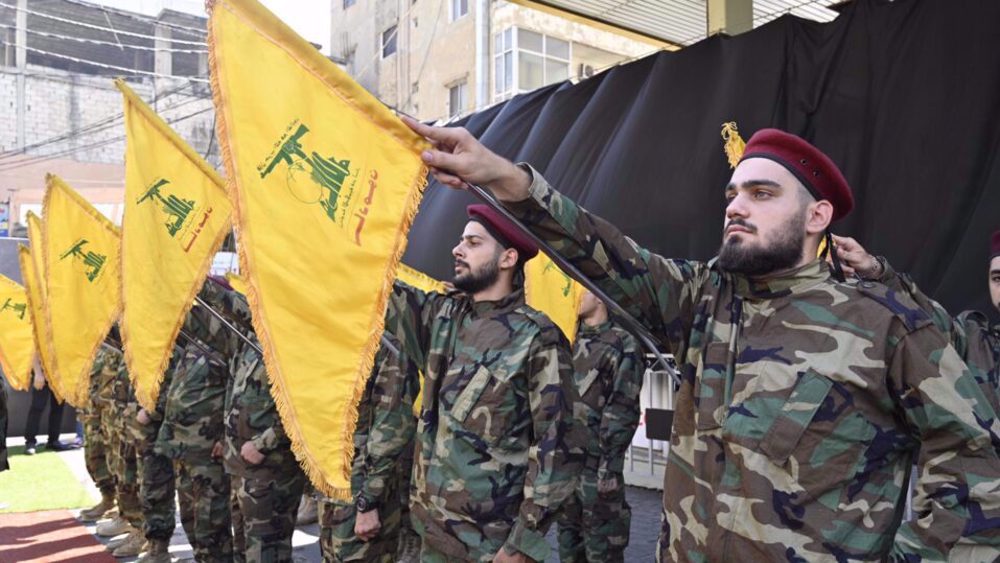
As the Hezbollah resistance movement retaliates against the Israeli regime, the Lebanese government is aligning with the aggressor, signaling the terminal crisis of the country's political order, according to an expert.
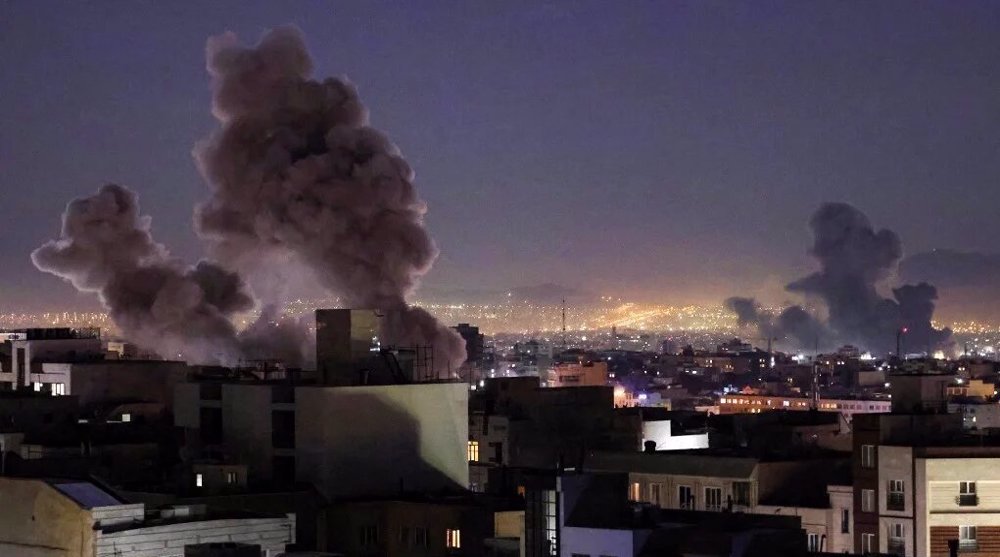
In a post on X on Friday, academic and analyst Amal Saad said the war triggered by the Israeli-American aggression against Iran has ushered in a new phase that threatens to unravel the longstanding political order in Lebanon, with state institutions acting as de facto co-belligerents with the US and Israel against their own territory and people.
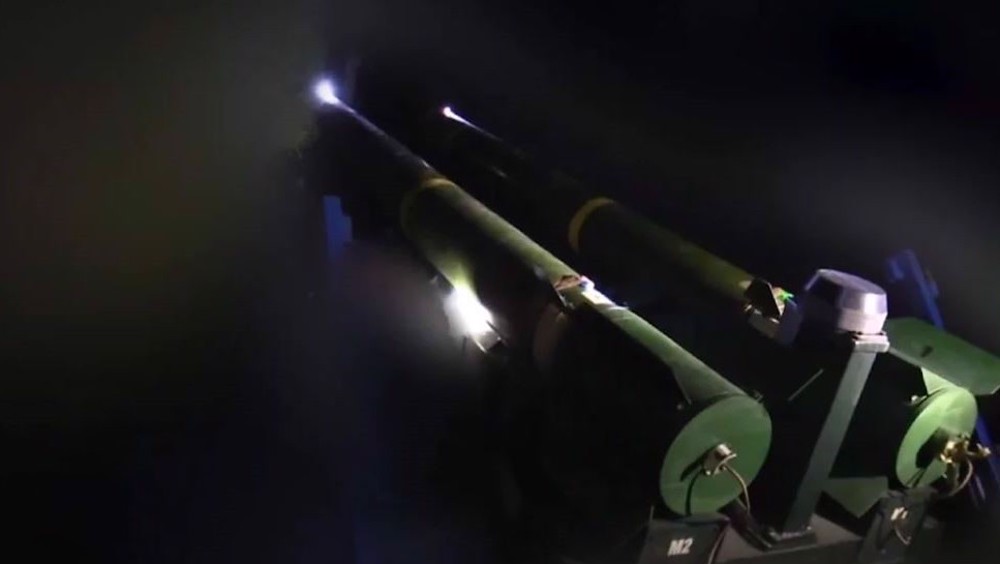
Hezbollah's retaliatory operations came more than one year after a ceasefire agreement between the Lebanese resistance movement and the Israeli regime, which has been breached by the regime more than a thousand times.
After strategic patience for more than a year and adhering to the ceasefire agreement, Hezbollah earlier this week decided to retaliate in the face of the Lebanese government's inaction and indifference.
Even setting aside the moral dimension, Saad noted, legally and analytically speaking, the conduct of the ruling authorities in Lebanon has effectively recast the Lebanese state into one that, while formally identifying Israel as an enemy, is acting in practice as a participant in the war against itself, functioning as a fifth column against its own defensive capacity.
For Hezbollah, she said, this is a do-or-die confrontation, and the fault lines it is generating are between forces actively defending and materially producing sovereignty on the ground and ruling authorities who are working to subvert and ultimately extinguish it.
What has emerged, Saad remarked, is not a state that has failed sovereignty by omission but one that is pursuing its demolition by commission – a counter-sovereignty camp engaged in deliberate de-sovereigntization in direct deference to US strategic diktat.
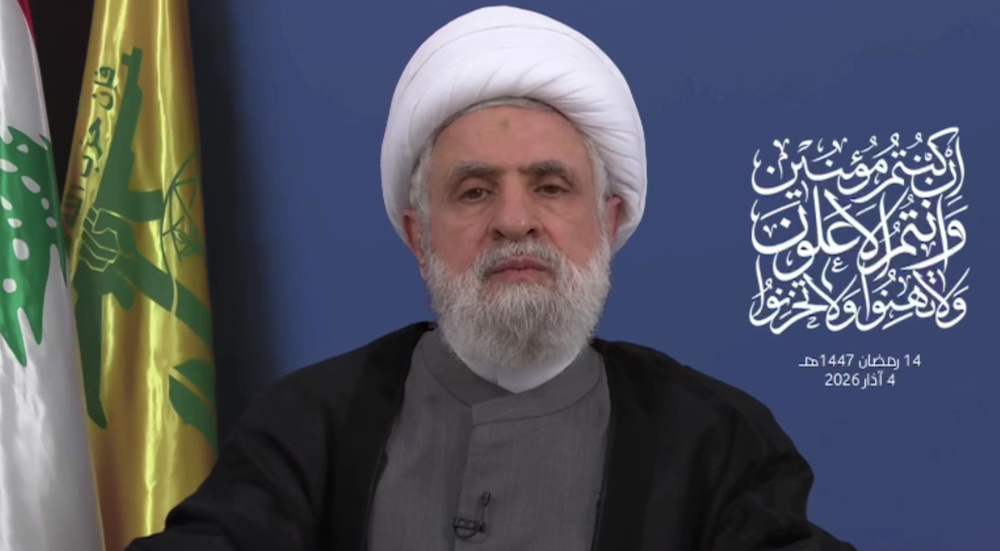
Sheikh Naeem Qassem, Secretary General of Hezbollah:
— Press TV 🔻 (@PressTV) March 4, 2026
We were committed to the agreement with the Lebanese government, but Israel did not adhere to even one clause of it.
We agreed to the diplomatic path, but in fifteen months there was no result or achievement for Lebanon. pic.twitter.com/8ihXAPDSRH
Evidence of this institutional shift is already visible in the conduct of Lebanese state institutions, she said, referring to President Joseph Aoun’s refusal to authorize the army even to request permission to defend Lebanese territory as Israel continues its bombardment and ethnic cleansing and launches repeated ground incursions.
At the same time, the army has intensified arrests for the possession of weapons and ammunition in an intensified crackdown on the resistance, while the country’s foreign ministry has proposed allowing British military aircraft involved in regional operations to transit Lebanese airspace.
Under such conditions, Saad observed, the Lebanese state is no longer merely failing to defend its territory but has become materially complicit in the conduct and consequences of this war, including the ethnic cleansing now unfolding on Lebanese soil.
What makes this situation analytically distinct, she explained, is that it goes beyond conventional collaboration.
“Collaboration typically refers to cooperation with an occupying power after territorial conquest. What we are witnessing instead is a state that has not been conquered and remains functional, yet has chosen strategic alignment with an external aggressor, positioning itself as a co-belligerent in a war being waged against its own territory and people, while internally deploying its institutions to constrain the very resistance targeted by that same aggressor,” she stated.
“In this sense, it operates as a fifth column against its own society's defensive capacity, with the army compelled into the position of a force multiplier for the aggressor from within.”
This exposes a ruling class that has weaponized the shell of formal sovereignty, invoking illusory statehood as a pretext to prevent the recovery of any real sovereign capacity, Saad remarked.
‘Evacuate all settlements within 5 km of the border. Your aggression against Lebanese sovereignty, attacks on civilians, destruction of civilian infrastructure, and forced displacement will not pass without a response.’
— Press TV 🔻 (@PressTV) March 6, 2026
Hezbollah issues a warning to the northern settlements pic.twitter.com/KG1PYAd1LF
“Their conception of sovereignty has never extended beyond stopping the resistance from defending or liberating Lebanon, which reduces it to a slogan rather than a doctrine. The long-standing insistence that the decision of war and peace must remain in state hands functions, within this framework, not as an expression of sovereignty but as a mechanism for guaranteeing Lebanon neither has a defence in the present nor a sovereign future.”
The response of the Hezbollah leadership suggests an awareness that the confrontation has already moved beyond the confines of the existing political order, Amal said.
“As Sheikh Naim Qassem remarked recently, "there is no balance of power between us and Israel, but we will fight for history." The statement signals that the struggle is not framed in terms of immediate military parity but in terms of preserving a sovereign future.”
Equally revealing was his tone, Saad noted, no real attempt to justify Hezbollah's decision to enter a war that was, by Israel's own account, going to happen regardless, only on Israel's terms, and no engagement with the legitimacy of the current authorities, because a government that has so transparently gone beyond the pale has no political future worth addressing once the results of this war are translated on the ground politically.
“His offer to those opposed to the resistance, that there remains "an opportunity to open a new page together" provided they “do not stab the resistance in the back during the confrontation,” is revealing in that the language of “opportunity” implies an expectation that the political equation will shift after the war,” she wrote.
She also referred to an open letter by Hezbollah’s military command to its fighters declaring, “We will not abandon the resistance, we will not lay down the weapons, we will not leave the field.” The message signals that the movement is neither constrained by a state that has sought to criminalise it nor by external initiatives aimed at forcing its surrender, she said.
“What is unfolding, therefore, points to the terminal crisis of a political order governing a state that was never more than the sum of its sectarian and political parts. As those parts are reconfigured in the aftermath of the war, the current arrangement will likely give way to a new social and political contract that will redefine what the Lebanese state actually is.”
Israeli military chief claims commitment to Lebanon deal even as strikes continue
Hezbollah vows continued resistance after ‘shameful’ Lebanon-Israel agreement
Iran seriously pursuing halt to Israeli war on Lebanon: Qalibaf



Shiraz performs over 16,100 organ transplants, records 43.5 donors per million
Iran says ‘no technical talks’ with US scheduled for this week in Doha
North Korea says Japan turning into 'war nation', slams joint war game with US
China imposes export controls on 40 Japanese entities amid tensions with Tokyo
Pezeshkian: Iran to recover $6 billion in frozen funds under Islamabad MoU
Israel rebrands Gaza displacement scheme amid global outrage: Report
Iranian women scholars demand accountability for US-Israeli attacks
Iraq’s new ‘anti-corruption’ crackdown sees arrests rise to 67 ahead of PM’s US visit



 PressTV NEWSLETTER
now
PressTV NEWSLETTER
now
 This makes it easy to access the Press TV website
