Explainer: What is 'plague of the firstborn' that Israeli war minister invoked against Yemen
By Ivan Kesic
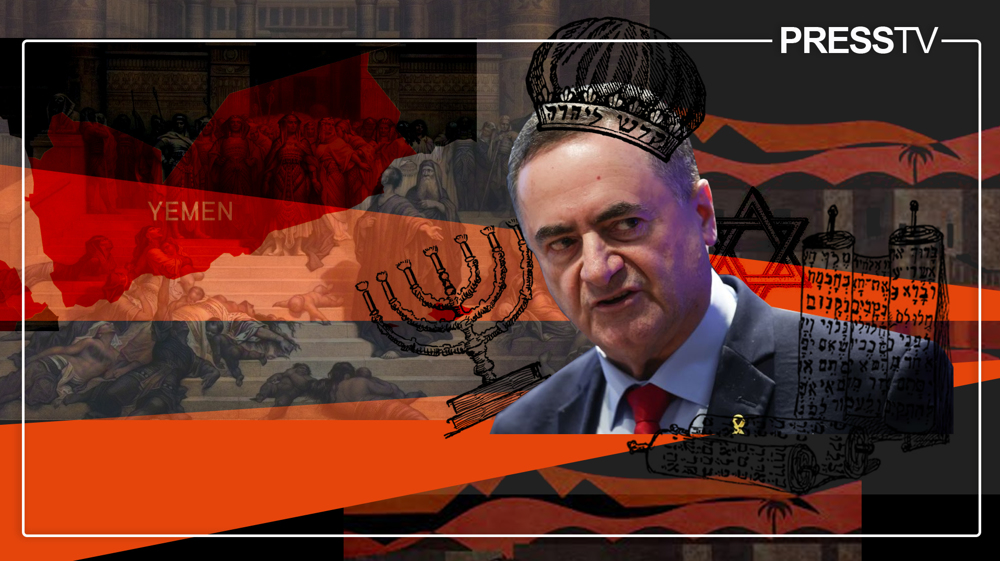
Following a brutal Israeli assault on civilian infrastructure in the Yemeni capital of Sana’a, which resulted in multiple casualties, Israel’s military affairs minister issued a chilling threat of a “plague of the firstborn,” suggesting the indiscriminate targeting of children.
Israeli airstrikes struck key sites in Sana’a on Sunday, including the Hazeiz power station and a civilian fuel depot. The attacks plunged parts of the city into darkness.
Footage shared online showed thick plumes of smoke and flames rising over residential neighborhoods, which showed that the targets were ordinary civilians.
In a stark and deeply unsettling statement, Israel Katz invoked extreme biblical imagery, threatening Yemen with a “plague of the firstborn” – framing future military aggressions as sweeping and punitive.
This rhetoric echoes the genocidal language used by Israeli regime officials during the ongoing genocidal war on Gaza, which has already killed more than 62,000 Palestinians, and now appears to be explicitly extended to Yemen.
Katz’s threat marks a dangerous escalation, indicating the intention to indiscriminately target civilian infrastructure and livelihoods in Yemen. It also reflects a pattern of using overwhelming force to intimidate entire populations, with children now explicitly in the crosshairs.
What is the biblical "Plague of the Firstborn" account?
The Plague of the Firstborn stands as the tenth and final divine intervention in the biblical Exodus (11-12) narrative, representing a catastrophic act of judgment against Egypt for Pharaoh's persistent refusal to liberate the enslaved Israelites.
This decisive plague resulted in the death of every firstborn son across Egyptian society, from the royal palace to the most humble household, and extended to all firstborn livestock as well.
Its execution was both sudden and comprehensive, unleashing unparalleled grief and wailing throughout the land, described as more severe than any previous moment in Egypt’s history.
Yemenis once again took to the streets of Sana'a for another million-man rally held in solidarity with the people of Palestine amid the ongoing US-Israeli genocide in Gaza.
— Press TV 🔻 (@PressTV) August 22, 2025
Follow Press TV on Telegram: https://t.co/LWoNSpkc2J pic.twitter.com/6Ysom1JCAS
This event served as a direct confrontation not only with Pharaoh’s authority but also with the pantheon of Egyptian gods, underscoring a theological claim of supreme divine power.
Prior to the plague, Moses delivered a solemn warning to Pharaoh, explicitly outlining the coming destruction targeting the firstborn of both people and animals.
Meanwhile, the Israelites received specific instructions to mark their doorposts with the blood of a sacrificial lamb, a sign that would prompt the Lord to pass over their homes and spare their firstborns.
The plague’s most immediate effect was the breaking of Pharaoh’s resistance, compelling him to finally command Moses and Aaron to take the Israelites and depart Egypt immediately.
Importantly, the narrative emphasizes a stark division between the two peoples: no Israelite firstborn perished, highlighting a deliberate and divinely enforced separation.
When was the biblical account used in political rhetoric?
The plague narrative itself is deeply rooted in Judeo-Christian tradition, symbolizing harsh but divine judgment, and was used mainly by Zionist, radical Christian and far-right circles.
References to the Biblical "plague of the firstborn" have occasionally appeared in political rhetoric, though such usage is often controversial due to its violent and theological implications.
The plague of the firstborn involves the death of children, making it a highly sensitive metaphor. Most politicians avoid such imagery to prevent backlash or accusations of extremism.
When invoked, it typically serves as a stark, moralizing critique against systems or leaders depicted as oppressive or morally corrupt.
For instance, some activists in the US have employed this imagery to frame legalized abortion as a modern-day plague, drawing parallels between ancient divine retribution and contemporary societal sins.
Similarly, in contexts of war or humanitarian crisis, critics have occasionally evoked the plague metaphor to emphasize the scale of suffering among the innocent, particularly children, though explicit references to the “firstborn” are seldom emphasized due to its extreme connotations.
Press TV correspondent Robert Inlakesh (@falasteen47) states that the Israeli regime's targeting of civilians in Yemen reflects its failures in military and intelligence affairs in the face of Yemeni missile retaliation attacks.
— Press TV 🔻 (@PressTV) August 25, 2025
Follow: https://t.co/GKZwI4ehqL pic.twitter.com/QuEkbBzaJ9
In some far-right or religious nationalist movements, the language of divine plagues sometimes merges with apocalyptic rhetoric, warning of impending judgment against political corruption or cultural decay.
However, mainstream politicians and thinkers generally avoid such charged biblical parallels, recognizing their potential to alienate diverse audiences and provoke accusations of radicalism.
In Israeli politics, the Exodus narrative is sometimes referenced in debates on foreign relations, portraying enemies as "modern Pharaohs."
Zionist genocidal rhetoric with religious references
Senior Israeli regime officials have repeatedly employed inflammatory and dehumanizing language that draws directly from Biblical narratives to frame the military aggression against Gaza, with critics and international legal experts warning that such rhetoric demonstrates genocidal intent.
Prime Minister Benjamin Netanyahu set a stark tone by invoking the Amalekites, a biblical enemy whom the Old Testament commands to be utterly destroyed—including women, children, and livestock—a reference widely interpreted as a call for the annihilation of Palestinians in Gaza.
This sentiment was echoed by Likud MK Amit Halevi, who suggested Gaza should be left as a monument of destruction like Sodom, a city obliterated by divine wrath in the Book of Genesis.
Such language is not merely symbolic; it has been operationalized in military policy, as seen in former military affairs minister Yoav Gallant’s declaration of a complete siege against Gaza while describing its residents as “human animals,” a statement later cited in the International Court of Justice’s examination of war crimes in the besieged Palestinian territory.
The ideological underpinnings of these statements are rooted in religious fanaticism, which views historical Palestine as a divinely ordained Jewish possession and Palestinians as obstacles to a sacred territorial mandate.
Israeli ministers Bezalel Smotrich and Itamar Ben-Gvir have consistently advocated for the mass expulsion of Palestinians, often euphemistically termed “voluntary migration,” while rejecting Palestinian nationhood altogether.
Their vision aligns with the expansionist goals of the so-called “Greater Israel” movement, which seeks to absorb the occupied territories permanently and extend the occupation to regional states.
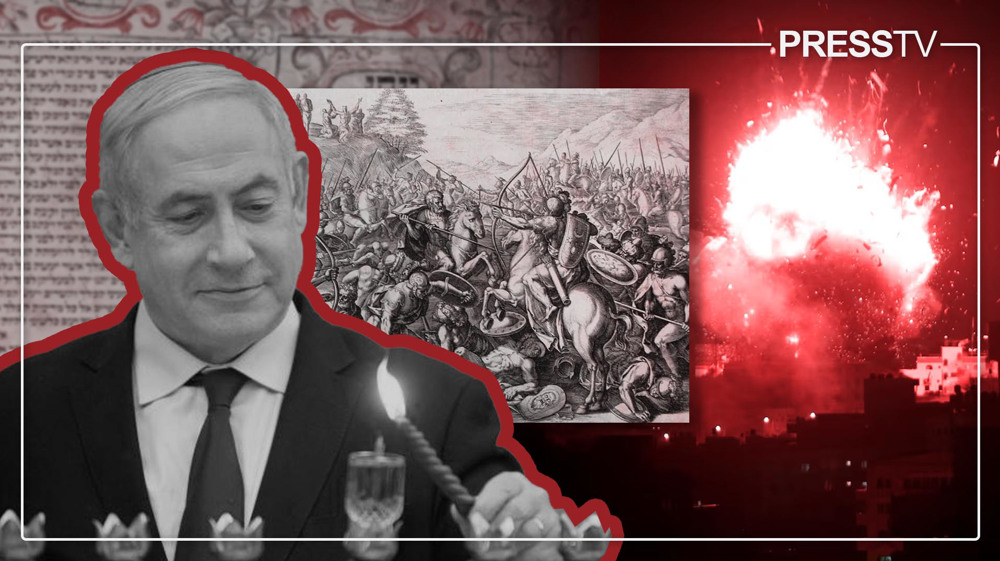
This worldview frames violence not only as a strategic necessity but as a theologically justified cleansing, a theme further amplified by heritage minister Amichai Eliyahu’s nuclear bomb remark and Likud MP Ariel Kallner’s explicit call for a “second Nakba.”
The normalization of such rhetoric marks a dangerous shift from extremist discourse to mainstream political language, accelerated since the start of the Gaza genocide, which shattered longstanding rhetorical taboos.
International human rights organizations have documented hundreds of instances of public incitement to genocide by officials, journalists, and public figures, creating an environment where mass civilian casualties and cultural erasure are framed as divinely sanctioned or historically inevitable.
The international community, including United Nations experts and South Africa’s legal team at the ICJ, has pointed to these statements as evidence of a systematic intent to destroy Palestinian society in Gaza, noting that the scale of bombing, blockade, and displacement aligns closely with the officials’ violent declarations.
Despite mounting legal and ethical condemnation, impunity remains pervasive, with Western nations offering only mild rebukes while continuing military and diplomatic support.
This has emboldened officials to escalate their rhetoric, further eroding the possibility of a political solution and reinforcing a logic of elimination.
The persistence of these narratives reflects a deeper ideological commitment to an exclusionary vision of statehood, one that leverages theological symbolism to legitimize territorial expansion and demographic control.
As the genocidal violence continues, the rhetoric of divine judgment and historical entitlement continues to shape military strategy, international perception, and the daily reality of Palestinians living under siege.
UNHRC demands Israel immediately release abducted Gaza hospital director
Fresh Israeli attacks kill at least 6 in Gaza amid continued ceasefire violations
Berri rejects Netanyahu’s claim of annexing Lebanese Christian villages



Iraq to hold 3-stage funeral for Ayatollah Khamenei in Najaf, Karbala
VIDEO | Press TV's news headlines
VIDEO | Millions flood Tehran streets for martyred Leader's funeral
Blasts rock Damascus as Macron becomes first Western leader to visit post-Assad Syria
Iran's nuclear progress stems from guidance, support of martyred Leader: AEOI chief
Urgent need to reform UN
Qalibaf vows those behind Ayatollah Khamenei’s assassination will be punished
Imam Khamenei's historic nuclear weapons fatwa through lens of civilization-building jurisprudence




 PressTV NEWSLETTER
now
PressTV NEWSLETTER
now
 This makes it easy to access the Press TV website
