Profile: Who is Khalil Al-Hayya, newly elected Hamas political office head and Sinwar’s successor
By Mina Mosallanejad
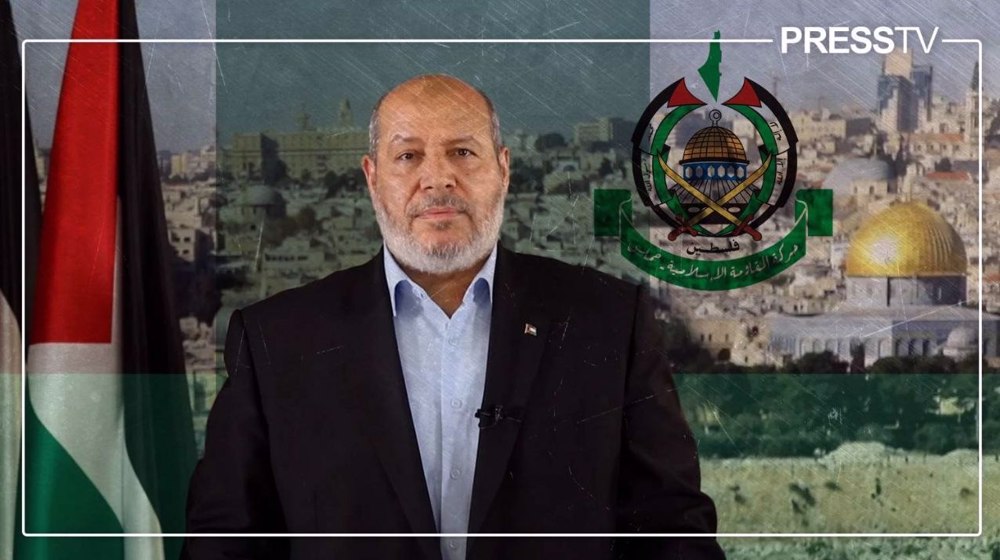
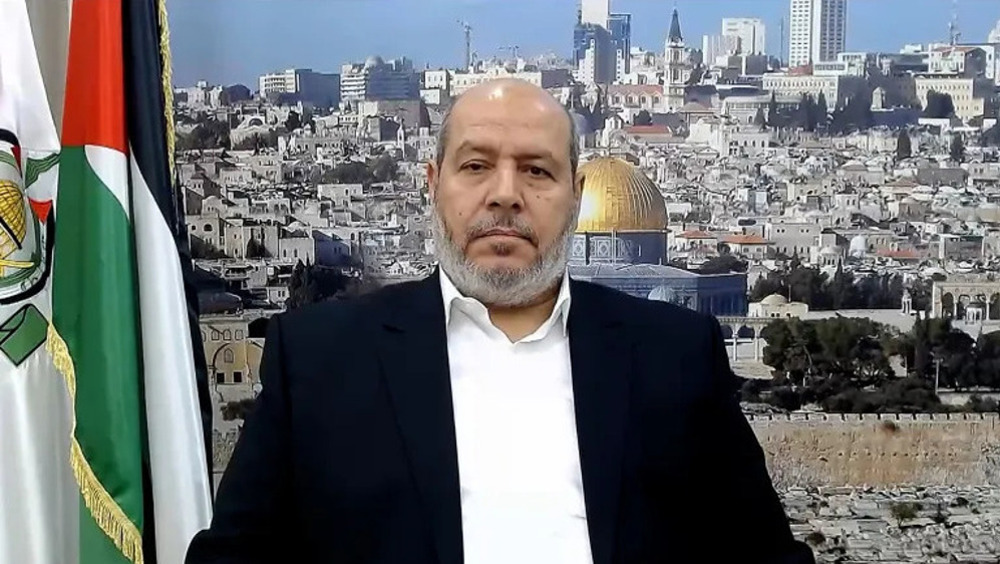
Hamas has announced the election of veteran leader Dr. Khalil Al-Hayya as the movement’s new political office chief, succeeding Yahya Sinwar, who was martyred during direct clashes with Israeli occupation forces in the southern Gaza city of Rafah in October 2024.
In a statement released on Monday, Hamas said Al-Hayya was elected through an internal voting process that included representatives from all branches of the movement, including Gaza, the occupied West Bank, Israeli prisons and Hamas offices abroad.
The movement said the leadership vote was conducted through its institutional Shura (consultative) process, congratulating Al-Hayya after he secured the confidence of the movement’s leadership bodies.
Hamas stressed that holding leadership elections despite ongoing Israeli genocidal war and the systematic targeting of its leaders, members and supporters inside and outside Palestine demonstrates the movement’s institutional resilience.
It said the election was “not merely a procedural matter,” but evidence that Hamas remains governed by its internal institutions, consultation mechanisms and organizational regulations even under wartime conditions.
The statement added that completing the electoral process under such extraordinary security and political circumstances reflects the movement’s determination to preserve its organizational structure while remaining focused on its immediate priorities: ending the ongoing Israeli genocidal assault on Gaza, lifting the illegal siege, ensuring the entry of humanitarian and medical assistance, advancing a just reconstruction process and confronting Israeli plans aimed at displacing Palestinians from their homeland.
Hamas also paid tribute to its martyred leaders, including Ismail Haniyeh, Saleh Al-Arouri, Yahya Sinwar and Mohammed Al-Deif, along with all members martyred during the ongoing war.
The movement reaffirmed its unity behind Al-Hayya’s leadership and pledged to continue pursuing the Palestinian people’s struggle until “liberation and return."

The announcement marks a major leadership transition for the Palestinian resistance movement at a time when Gaza continues to face a genocidal war, humanitarian catastrophe and intense regional diplomacy over a permanent ceasefire.
Israel’s war on Gaza has killed more than 73,000 Palestinians and injured over 173,000 since October 2023, according to Palestinian figures, while around 90% of the territory’s civilian infrastructure has been damaged or destroyed.
In recent years, Al-Hayya has emerged as one of Hamas’ most influential political figures.
A founding-generation leader, academic and veteran negotiator, he has represented the movement in indirect ceasefire and prisoner-exchange talks while maintaining close ties with both the movement’s political and military leadership.
His election places one of Hamas’ longest-serving leaders at the center of the movement’s political decision-making during one of the most consequential periods in its history.
The appointment also ends a transitional phase following Sinwar’s assassination, during which Hamas was administered by a five-member temporary leadership council headed by Mohammed Darwish, who also serves as chairman of the movement’s Shura Council.
Childhood and education
Al-Hayya was born in Gaza City on November 5, 1960, into a Palestinian family deeply involved in the national struggle against the Israeli occupation and apartheid.
Growing up under Israeli occupation after the 1967 war left a lasting impression on him. He has in various interviews and speeches recalled witnessing Israeli occupation soldiers raid his family’s home and arrest several relatives, including his uncle.
He completed his early education in Gaza before enrolling at the Islamic University of Gaza, where he graduated from the Faculty of Fundamentals of Religion in 1983.
Al-Hayya later continued his studies at the University of Jordan, earning a master’s degree in Sunnah and Hadith studies in 1986. He completed his doctoral studies in the same discipline at Sudan’s University of the Holy Quran and Islamic Sciences in 1997.
Photos of Khalil al-Hayya, chairman of Hamas's Political Bureau, with Iran's martyred Leader, Ayatollah Seyyed Ali Khamenei.
— Press TV 🔻 (@PressTV) July 20, 2026
Follow: https://t.co/mLGcUTS2ei pic.twitter.com/7DDmZXgBvy
Entry into activism
Al-Hayya’s association with Hamas resistance movement founder Sheikh Ahmed Yassin began in 1980 and profoundly shaped his political and ideological development.
During his university years, he became active in the Islamic Bloc before joining the Islamic Movement linked to the Muslim Brotherhood. Among the young activists working alongside him at the time were future Hamas leaders Ismail Haniyeh and Yahya Sinwar.
Israeli occupation forces first arrested Al-Hayya in 1980, holding him for about six weeks. He was detained again in 1982, when he says he was subjected to severe torture during a week-long imprisonment.
Throughout the mid-1980s, he combined religious work with grassroots social and organizational activities, serving as a prayer leader and preacher while helping build networks aimed at strengthening Palestinian society and resisting Israeli atrocities in Gaza.
When the First Palestinian Intifada erupted in December 1987, Al-Hayya was among the activists who helped establish Hamas as an organized resistance movement.
He was arrested for a third time in 1991 as his role in student, union and political activism continued to expand.
Academic career
Alongside his political activities, Al-Hayya built an academic career at the Islamic University of Gaza, revealing another facet to his personality.
He began working there as a teaching assistant in 1984 before later becoming assistant dean and eventually dean of student affairs.
His involvement also extended to labor representation. He was elected vice president of the university workers’ union in 1998 and became its president three years later. He additionally joined the Association of Palestinian Scholars.
Hamas commends Iran’s steadfast backing of Palestinian cause, peoplehttps://t.co/cJEleXy5Ur
— PressTV Extra (@PresstvExtra) June 24, 2026
Rise in Palestinian politics
Al-Hayya’s national profile rose sharply during the 2006 Palestinian legislative elections.
Running on Hamas’ Change and Reform list, he won a parliamentary seat representing Gaza and was subsequently chosen to lead the movement’s parliamentary bloc in the Palestinian Legislative Council.
Within Hamas, he continued climbing the leadership ranks, serving on the Political Bureau, becoming deputy leader of the movement in Gaza, and later, in the group’s 2021 internal elections, he became the head of its Arab and Islamic Relations Office and subsequently emerged as one of its most prominent political figures in Gaza.
Leading Hamas’ diplomacy
Al-Hayya assumed a much more visible international role following Israel’s wars on Gaza in 2012 and 2014.
He participated in Hamas delegations engaged in indirect negotiations in Cairo while taking responsibility for media affairs, political outreach and regional relations.
Shortly before the October 2023 Al-Aqsa Flood Operation, Al-Hayya left Gaza as part of a redistribution of leadership responsibilities and began focusing on Hamas’ foreign relations.
In November 2023, he headed a Hamas delegation to Lebanon, where he met Hezbollah Secretary-General Sayyed Hassan Nasrallah after the announcement of a prisoner-exchange agreement with the Israeli regime.
Following the assassinations of Haniyeh and Sinwar, Al-Hayya assumed an even more central diplomatic role, leading Hamas’ negotiating team in talks mediated by Egypt, Qatar and the United States.
Those negotiations focused on achieving a ceasefire, ending the war on Gaza, securing an Israeli military withdrawal, facilitating the return of displaced Palestinians, increasing humanitarian aid and arranging prisoner exchanges.
In October 2025, Al-Hayya said that Hamas would hand over its weapons to a Palestinian state if Israel ended its occupation and allowed the establishment of a Palestinian state.
His long experience in diplomacy, regional affairs and internal Hamas decision-making ultimately made him the leading choice to succeed Sinwar.
Hamas retained much of its military power despite genocide: Israeli military reporthttps://t.co/QfKfReS4t3
— PressTV Extra (@PresstvExtra) July 16, 2026
Repeated assassination attempts and personal losses
Al-Hayya’s political career has been accompanied by repeated Israeli assassination attempts and devastating personal losses.
In 2007, an Israeli airstrike struck his family home in Gaza City’s Sheja’iyya neighborhood. Al-Hayya survived, but seven members of his extended family, including two brothers, four nephews and a cousin, were killed.
His son Hamza, a member of Hamas’ Al-Qassam Brigades, was killed in an Israeli strike in February 2008.
Another devastating attack came in July 2014, when Israeli aircraft bombed the home of his eldest son, Osama. Osama, his wife and three of their children were killed.
Al-Hayya also survived an Israeli airstrike targeting a Hamas negotiating delegation in Doha in September 2025. Although senior Hamas officials survived, his son Hammam, who served on his personal staff, was among those killed.
In May 2026, another son, Azzam, died from wounds sustained in an Israeli strike on Gaza City’s Al-Daraj neighborhood, bringing the number of Al-Hayya’s sons killed during Israeli attacks to four.
Despite these losses, Al-Hayya continued to play a leading role in Hamas’ political leadership and negotiations.
As head of Hamas’ Political Bureau, Al-Hayya will direct the movement’s internal and external political agenda, oversee relations with Palestinian factions and regional allies, and shape Hamas’ negotiating strategy on Gaza and the broader Palestinian issue.
His election signals continuity in the leadership path established by Haniyeh and Sinwar while reaffirming Gaza’s central role in Hamas’ political and organizational structure at a pivotal moment in the movement’s history.
Quds Force commander: Israel's crimes made 'Islamic resistance stronger than ever'
Iran FM congratulates Khalil al-Hayya on appointment as Hamas political chief
Berri says Israel's withdrawal from southern Lebanon is urgent priority



Search finds more remains of 32 Minab school victims; No trace yet of Makan Nasiri
Israeli media: US relocating aircraft from regional bases following Iranian attacks
US war against Iran under strain as nearly 100 troops injured in two weeks
Hezbollah leader congratulates newly elected Hamas chief, vows continued support for resistance
‘We don’t fear martyrdom’, says new Hamas chief in first message
VIDEO | U.S. bases in West Asia can no longer be used as launch pads against Iran
Iran will respond to any aggression, avenge blood of martyred Leader: Commander
VIDEO | Press TV's news headlines


 PressTV NEWSLETTER
now
PressTV NEWSLETTER
now
 This makes it easy to access the Press TV website
