How Bab el-Mandeb closure could send oil to $200 and trigger a global economic shock
By Ivan Kesic
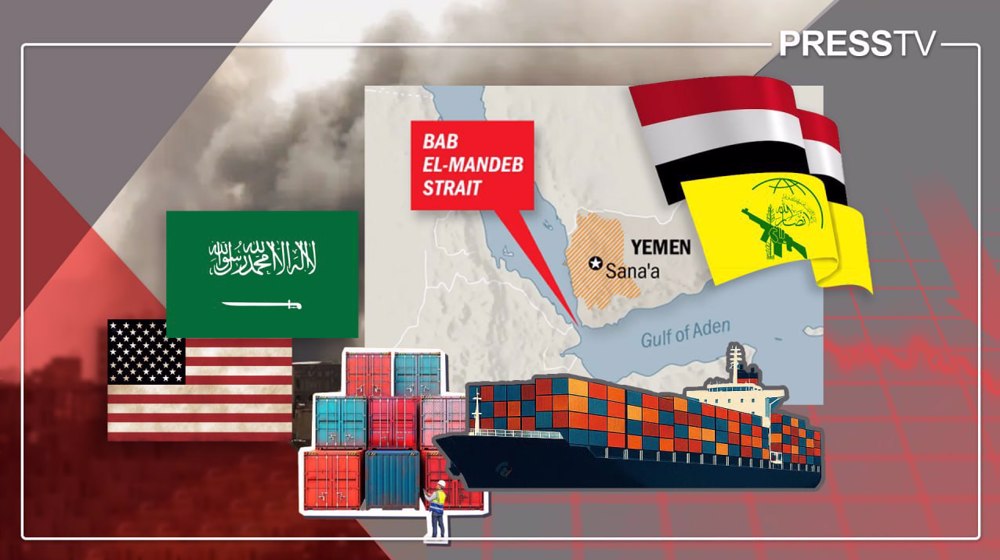
As Saudi Arabia, backed by the United States, intensifies the unprovoked and illegal military aggression against Yemen, the Yemeni military and the Ansarullah resistance movement have warned that they are ready to close the Bab el-Mandeb Strait, a move that could send oil prices soaring to $200 per barrel and trigger severe disruption across the global economy.
The warning follows a Saudi airstrike on Sana'a International Airport, a major escalation that comes amid the ongoing American aggression against Iran and its allies across West Asia, further heightening tensions in an already volatile region.
Yemeni officials have made clear that the closure of Bab el-Mandeb would be coordinated with the existing blockade of the Strait of Hormuz, forging an operational axis capable of severing two of the world's most critical energy arteries simultaneously.
Given that approximately 8 to 10 million barrels of oil transit Bab el-Mandeb daily, and over one trillion dollars in annual trade depends on the waterway, such a move would constitute a seismic rupture in the foundations of the global economy, one with consequences far beyond the region.
Saudi airstrikes and Yemen's warning
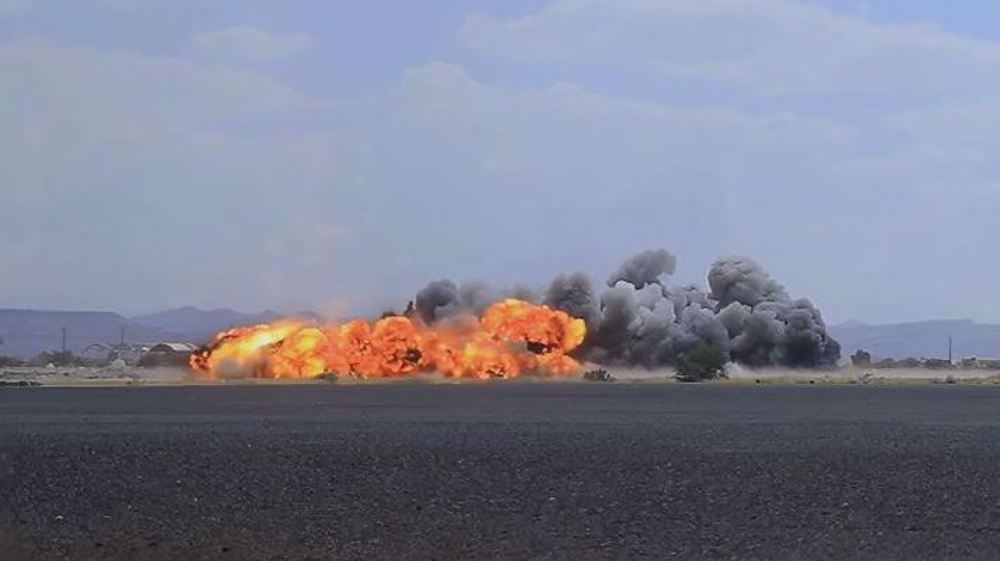
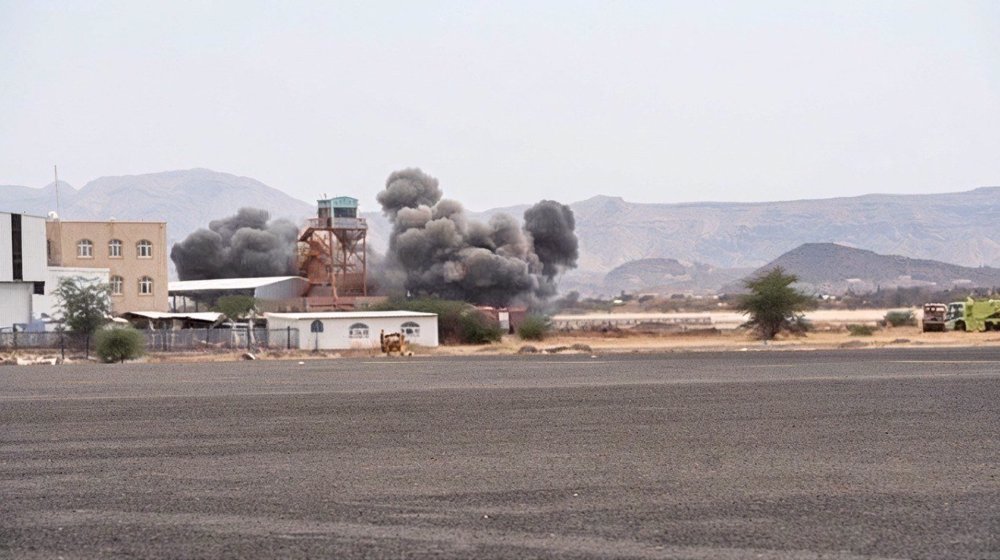
On July 13, Saudi warplanes bombed Sana'a International Airport in a brazen act of aggression that Yemeni officials swiftly condemned as a flagrant violation of international law and humanitarian norms.
The airstrike targeted the runway in an apparent bid to prevent an Iranian aircraft carrying Ansarullah officials from landing, a move later confirmed by sections of American media to have been personally endorsed by US President Donald Trump at the behest of the Saudi crown prince, Mohammad Bin Salman (MBS).
In response, Yemen's foreign ministry issued a strongly worded statement declaring that the unprovoked act of aggression had effectively terminated the 2022 truce and ushered in a new phase of war. The ministry also warned that Saudi Arabia would "find itself in a major strategic deadlock" and would "bear high costs for its aggression."
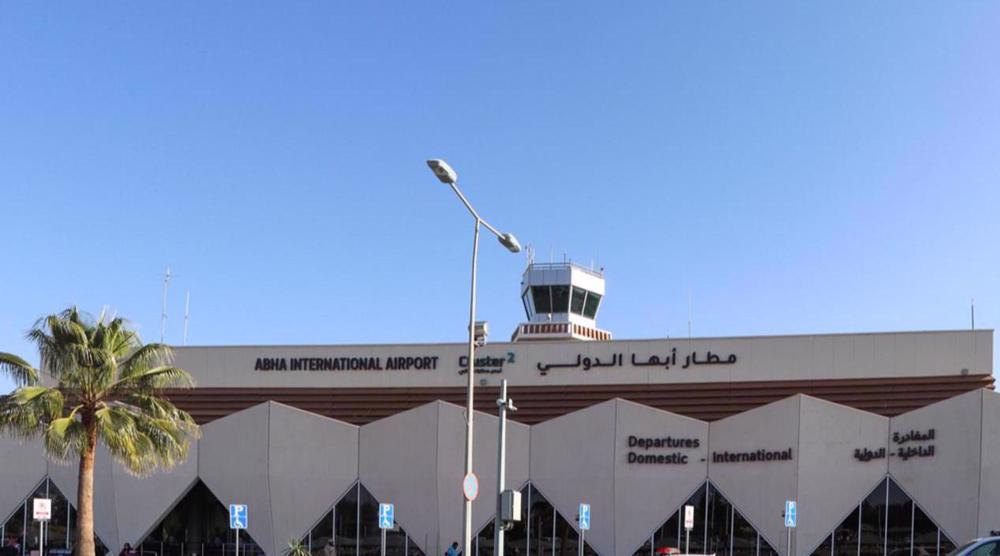
The Yemeni armed forces acted swiftly, launching ballistic missiles and drones at Abha International Airport in southern Saudi Arabia. Shortly after, armed forces spokesman Brigadier General Yahya Saree issued a warning to all airlines, urging them to avoid Saudi airspace until the blockade on Sana'a International Airport is lifted.
Saree also confirmed that Yemeni air defenses had successfully shot down a Saudi Wing Loong 2 reconnaissance drone over Al-Bayda Governorate. Adding to the escalatory tone, Mohammed al-Bukhaiti, a member of Ansarullah's political bureau, warned that Yemeni forces would strike Saudi airports and vital assets should Riyadh violate Yemeni airspace or attempt further attacks.
Yemen says it may shut strategic Bab el-Mandeb Strait in support of Iranhttps://t.co/qkgarC02JK
— Press TV 🔻 (@PressTV) March 14, 2026
Warning to the Strait of Hormuz and Bab el-Mandeb
The most serious escalation came on July 13, when Mohammed al-Farah, a member of Ansarullah's political bureau, declared that Yemen's armed forces stood ready to close the Bab el-Mandeb Strait should Saudi Arabia persist in its illegal aggression.
"If the current situation aggravates, the Bab el-Mandeb Strait and the Strait of Hormuz will be closed in an operational alliance. Oil prices would then skyrocket to $200 a barrel in a dreadful shock," he warned.
The statement marked a dramatic expansion of the new round of war, forging a coordinated strategy linking two of the world's most critical maritime chokepoints, a dual-pronged approach capable of crippling global energy supplies.
The Strait of Hormuz, already effectively sealed due to the ongoing US-Israeli war of aggression against Iran, has demonstrated Tehran's capacity to project power over international shipping.
The additional threat to close Bab el-Mandeb would compound that economic shock, severing the Red Sea-Suez Canal route, a lifeline through which approximately 10 to 12 percent of global seaborne trade and 30 percent of Asia-Europe container traffic normally flows.
"If Hormuz is Tehran's strongest strategic lever," analysts have observed, "Bab el-Mandeb may be its last major reserve."
Yemen warns any Israeli presence in Somalia’s waters a ‘legitimate target’https://t.co/zyV2oVt26h
— Press TV 🔻 (@PressTV) June 23, 2026
Strategic importance of Bab el-Mandeb
The Bab el-Mandeb Strait, whose Arabic name translates to the "Gate of Tears," stands as one of the world's most strategically vital maritime chokepoints.
Situated between Yemen on the Arabian Peninsula and Djibouti and Eritrea on the Horn of Africa, it forms the southern gateway to the Red Sea, linking it to the Gulf of Aden, the Arabian Sea, and ultimately the Indian Ocean.
Together with the Suez Canal, it constitutes the shortest maritime route between Europe and Asia, rendering it indispensable to global trade, energy transportation, and supply chains.
The volume of cargo traversing this narrow waterway is staggering. Approximately 8 million barrels of crude oil and refined petroleum products pass through Bab el-Mandeb daily, accounting for roughly 10 to 12 percent of global seaborne oil trade.
The strait also serves as a principal artery for liquefied natural gas shipments, particularly from Qatar to European markets. In 2023, prior to the disruption caused by the Gaza genocide, the Suez Canal handled 26,434 vessel transits, the vast majority of which had passed through Bab el-Mandeb en route.
Beyond energy, the strait is a lifeline for global manufacturing and agricultural trade. Approximately 40 percent of trade between Asia and Europe moves along this route, including 20 percent of global maritime rice trade, 20 percent of wheat trade, and 40 percent of maritime fertilizer trade.
Containerized cargo traversing the strait encompasses electronics, computers, telecommunications equipment, textiles, automotive parts, semiconductors, machinery, pharmaceuticals, and countless other manufactured goods.
Major shipping lines, including Maersk, MSC, CMA CGM, and Hapag-Lloyd, traditionally route their Asia-Europe services through Bab el-Mandeb, as this passage shortens voyages by approximately 3,500 to 4,000 nautical miles compared with sailing around the Cape of Good Hope.
The annual value of goods and services transported through the strait exceeds $800 billion, approaching $1 trillion, a figure larger than the gross domestic product of many nations.
Under normal conditions, roughly 21,000 commercial vessels transit the strait each year, equivalent to 57 ships per day. Any significant disruption, particularly if coinciding with a halt in traffic through the Strait of Hormuz, would trigger a global transportation crisis of catastrophic proportions.
Yemen says not neutral on any new US 'adventurism' against Iranhttps://t.co/W3YojHZ7eO
— Press TV 🔻 (@PressTV) April 29, 2026
Economic consequences of closure
The economic consequences of closing Bab el-Mandeb would be devastating. Ships would be forced to reroute around the Cape of Good Hope, adding an average of 10 to 14 days to voyage times and significantly increasing fuel consumption, insurance premiums, and operating costs.
For an average container ship, the cost per voyage would surge from over $1 million to approximately $1.7 million, a 70 percent increase that would delay goods from Asia to Europe by 15 to 20 days, imposing severe strain on already fragile global supply chains.
The impact on energy markets would be immediate and severe. Oil prices could soar to $200 a barrel, as warned by Ansarullah officials, triggering inflationary pressures worldwide and potentially tipping vulnerable economies into recession.
The disruption would also deal a heavy blow to the Suez Canal, which lost billions in revenue during the previous crisis, its annual income plummeting from $10.2 billion in 2023 to roughly $4 billion in 2024. Egypt, Saudi Arabia, European nations, China, India, Japan, and South Korea would rank among the biggest losers from such a closure.
Yet even the persistent threat of closure could paralyze global trade. Increased insurance premiums and revised risk assessments by shipping companies would force vessels to opt for longer routes, driving up prices before any actual attack on the strait.
The United Nations Conference on Trade and Development (UNCTAD) has already warned that rerouting ships from Bab el-Mandeb has increased global demand for container ships by 12 percent, a clear indicator of mounting pressure on port capacity and rising shipping costs worldwide.
Trump kneels, Yemen stands tall: Relentless Yemeni strikes force US into ceasefire
— Press TV 🔻 (@PressTV) May 11, 2025
Follow Press TV on Telegram: https://t.co/boCY50qfi9 pic.twitter.com/yLXDz3Qc5q
Yemen's military capabilities and American failure
Yemeni resistance movement has already demonstrated its capacity to disrupt navigation through Bab el-Mandeb. Since late 2023, Yemeni forces have conducted over 100 attacks on vessels in the Red Sea and Gulf of Aden, compelling major shipping companies to suspend operations through the strait.
While a gradual recovery had emerged by early 2026, with approximately 1,079 cargo vessels transiting the strait in January alone, the security situation remains precarious.
The flow of oil through the waterway has already plummeted from roughly 9 million barrels per day in 2023 to just 4 million in 2024, a stark reflection of the persistent threat.
An important but often overlooked dimension of the confrontation is that the United States and Britain, despite waging a sustained campaign of airstrikes against Yemen that left hundreds dead and struck thousands of targets, ultimately failed to suppress Ansarullah's military capabilities.
Following a truce agreement brokered by Oman, Washington was compelled to acknowledge that the Yemeni resistance would not be deterred. Trump's claims that the Houthis had "capitulated" stand in stark contrast to the reality on the ground.
What the United States and its allies failed to achieve through military force has been reaffirmed by the resilience of the Axis of Resistance: Yemen's ability to threaten Bab el-Mandeb remains undiminished, and its strategic leverage over global shipping lanes endures as a formidable reality.
Yemen warns airlines to avoid Saudi airspace until Sana'a blockade is lifted
Western firms draw up contingency plans as Saudi-UAE rift deepens: Report

Trump endorsed Saudi crown prince’s decision to bomb Sana’a airport: Report



Any Israelis found in Malaysia will be immediately deported: PM
Revenge for killing resistance commanders is certain, Abu Muhandis family warns Trump
Israel's reserve military on brink of 'collapse': Army Radio
Iran condemns Israeli war crimes in Gaza and West Bank, says US complicit
Ayatollah Khamenei’s resistance discourse gave Iran supremacy: Ex-IRGC chief
VIDEO | Analyst: Collapse of MoU could push region toward wider conflict
VIDEO | Battle for truth
VIDEO | Farewell to the Imam



 PressTV NEWSLETTER
now
PressTV NEWSLETTER
now
 This makes it easy to access the Press TV website
