Belgium routs US, but FIFA's political capitulation to White House overshadows the game
By Mohammad Ali Haqshenas
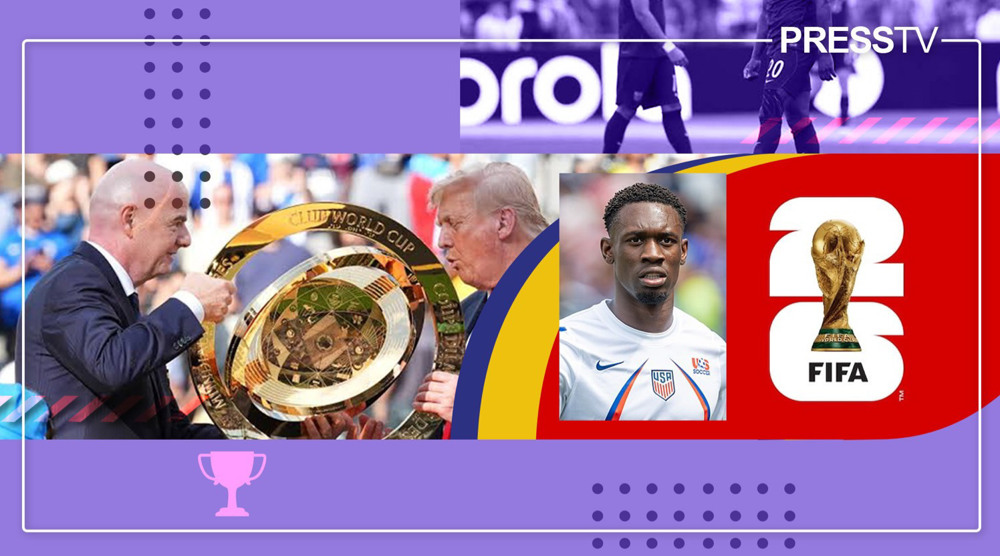
Belgium's commanding display in the knockout-stage clash brought the United States' 2026 World Cup campaign to an end, but not before a controversial intervention from the White House once again laid bare the deep-seated dysfunction in global football governance.
On the pitch, the verdict was clear. Belgium’s clinical 4-1 dismantling of the United States in the Round of 16 comprehensively extinguished the host nation’s ambition to make further inroads, reducing the highly anticipated match to a masterclass in European tactical superiority.
Yet, as the final whistle blew, the overwhelming sentiment across the international sporting community was not one of closure.
The definitive end of the American World Cup campaign has done nothing to quell the geopolitical conflagration surrounding FIFA’s decision-making machinery, leaving the tournament’s governing body facing an unprecedented crisis of legitimacy.
The defining legacy of this match will not be Belgium’s clinical finishing, but rather the administrative architecture that allowed US striker Folarin Balogun to step onto the field.
Following a straight red card in the Round of 32 against Bosnia & Herzegovina, Balogun’s mandatory suspension was abruptly deferred by FIFA’s Disciplinary Committee in a midnight ruling that invoked the rarely utilized Article 27 of the FIFA Disciplinary Code.
By converting a mandatory sporting ban into a suspended one-year probationary period, FIFA preserved the host nation’s star asset for prime-time television, but in doing so, it put its own institutional integrity on trial – for the umpteenth time during this tournament.
🇮🇷⚽ Iran’s football team took a swipe at US Homeland Security Secretary Kristi Noem following the US’ defeat to Belgium, posting a brief but pointed message on its official page:
— Press TV Sports (@presstvsports) July 7, 2026
💬 “Dance with me!”@presstvsports pic.twitter.com/qRBvDGFHxW
The executive order on football
The crisis escalated from a standard sporting appeal into an unprecedented geopolitical standoff following direct intervention from the highest office in the host nation.
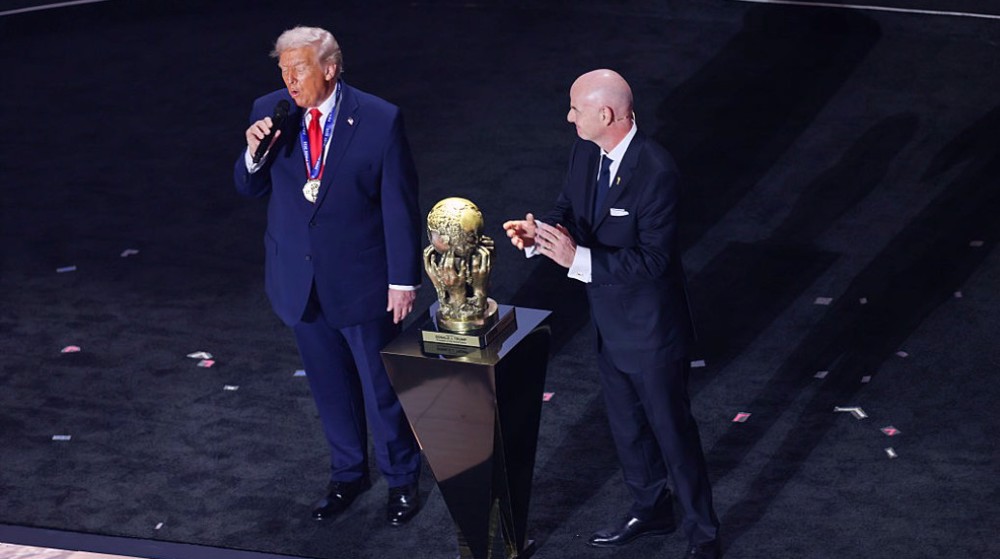
President Donald Trump acknowledged his role in applying pressure on football’s global governing body, much to the chagrin of fans and observers worldwide.
"I saw the play, and I'm a person that loves sports – that wasn't a foul," Trump stated. "I asked for a review. I think they [FIFA] made a really brilliant decision."
For decades, FIFA has ruthlessly suspended national associations – from Nigeria to Kuwait – for minor infractions involving state interference in local football federations. Yet, when confronted with direct intervention from the executive branch of the world's largest economy and World Cup co-host, the governing body's rigid commitment to political neutrality collapsed.
An intervention that changed nothing
The immense irony of the affair lay in its ultimate irrelevance to the sporting outcome. For all the backroom diplomacy and administrative gymnastics required to secure Balogun’s eligibility, the striker cut a peripheral, frustrated figure on the pitch.
Swallowed by a disciplined Belgian backline, he made no discernible impact on the game before being substituted near the end of the match that the US lost decisively.
FIFA accepted catastrophic reputational damage to facilitate a sporting intervention that yielded absolutely nothing.
In this instance, football governance was contorted to serve a perceived commercial and political emergency, only for the cold realities of ninety minutes on the pitch to render the entire bureaucratic maneuver futile.
✍️ Viewpoint - How mistreatment and bias against Iran at US-hosted 2026 World Cup became FIFA's indelible stain
— Press TV Sports (@presstvsports) July 2, 2026
By Nima Tavallaey Roodsari@presstvsports #FIFAWorldCuphttps://t.co/FMcdpBbNnX
A red line crossed
The backlash from the European football establishment was swift and unsparing. Following FIFA's midnight U-turn, the Royal Belgian Football Association (RBFA) launched an immediate legal challenge against Balogun's reinstatement.
FIFA rejected the challenge on narrow procedural grounds, treating the Belgian inquiry as an unauthorized appeal of a Disciplinary Committee decision.
The RBFA expressed absolute astonishment at the ruling, vigorously objecting to the lack of transparency and equal treatment.
The administrative maneuvering drew a scathing rebuke from European football's governing body, with a senior UEFA official warning that FIFA had officially "crossed a red line" by allowing external political considerations to dictate field-level disciplinary actions.
Prominent football figures across Europe echoed these concerns, viewing the decision as an assault on the core tenets of fair play.
Former Liverpool manager Jürgen Klopp slammed the precedent. "It's a red card, even if it's a shame because Balogun can't play, but it's there in the rules," Klopp said.
"This is our game, not theirs... If Trump and Infantino really worked this all out between themselves, that's crazy. It calls everything into question...
"These two individuals, neither of whom has a clue about football, shouldn't have anything to do with it," the 59-year-old added.
Host advantage or host privilege?
The core philosophical question left in the wake of the Balogun affair is whether the boundaries of legitimate home advantage have been permanently blurred into political privilege.
Host nations traditionally enjoy favorable scheduling, enthusiastic home crowds, and familiar environments. They are not, however, supposed to operate under an entirely different tier of the rulebook.
The perception of preferential treatment is exacerbated by the sharply contrasting experiences of other participating nations during this tournament.
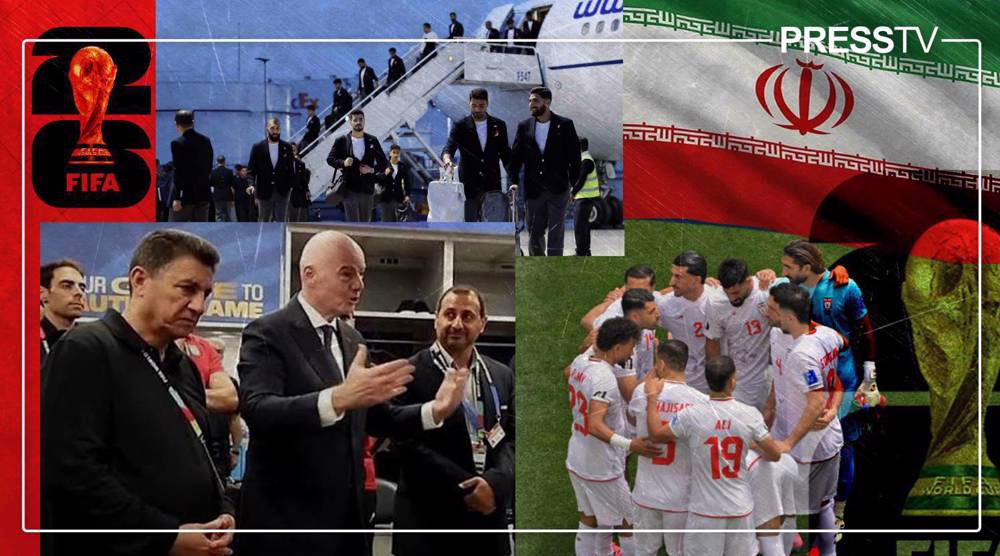
Throughout the group stage, the Iranian national team and its delegation faced intensive restrictions by the host nations as several staff were denied visas, the team had to leave US soil right after the matches, and it was allowed to come into the US just 24 hours before the games in an apparent discrimination compared to other participating teams.
Add to this the ban on entry of fans from Iran and several other participating countries in the 2026 World Cup.
Netizens and international commentators have pointed out the glaring asymmetry that while the host nation’s political apparatus successfully lobbied to overturn an explicit red card, fans and families from parts of the West Asian and African nations affected by rigid immigration policies faced immense barriers simply trying to enter the country to watch their teams play.
This is another proof that the 2026 World Cup has failed to offer a fair playing field, operating instead on a multi-tiered hierarchy of accessibility and administrative leniency.
⚽️ ‘Most oppressed team in World Cup history’: Iran coach slams hurdles imposed by US on Team Melli@presstvsportshttps://t.co/ZvOItqFaLo pic.twitter.com/h9jycvM2FI
— Press TV Sports (@presstvsports) June 16, 2026
The precedent outlasts the tournament
Long after the stadium lights in America are turned off and the final is played, the legal and institutional precedent established by Article 27 will haunt the sport’s regulators.
By capitulating to the host nation's highest political office, FIFA handed a powerful blueprint to future host nations to hijack the biggest football tournament in the world.
During future tournaments, whenever a key player is dismissed, or a critical suspension is handed down, powerful states will now point directly to the Balogun precedent of July 2026.
The institutional leverage required to maintain independent refereeing and autonomous disciplinary procedures has been profoundly eroded.
Belgium’s 4-1 victory proved that political interference cannot buy performance on the pitch. However, by permitting that interference to alter the basic regulations of the competition, FIFA has inflicted a deep, self-inflicted wound on its own credibility – one that will far outlast the United States' exit from the tournament.
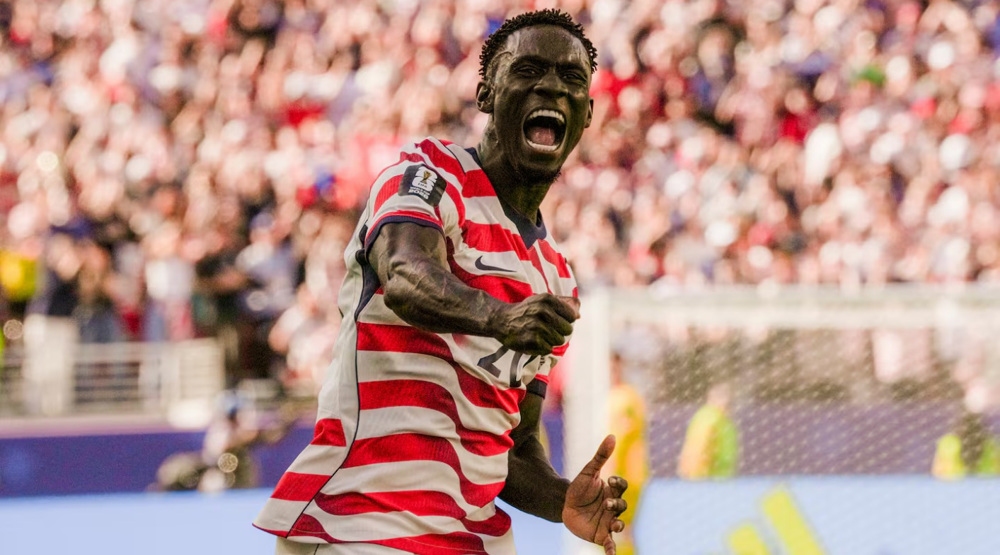
Belgium outraged as FIFA clears US striker to play despite red card
Iran clinches Greco-Roman team title at U20 Asian Wrestling Championships
Pezeshkian praises Iran’s World Cup team after hero’s welcome in Tehran


How Iran’s martyred Leader became an enduring symbol of sovereignty, justice, and resistance
US has no choice but to recognize Iran’s 'new order' in Strait of Hormuz: Senior MP
Any source of support for US army ‘legitimate target’: Iran’s central military command
Belgium routs US, but FIFA's political capitulation to White House overshadows the game
Architect of deterrence: Imam Khamenei's instrumental role in turning Iran into global missile power
Iran’s coasts will become ‘hell’ for any invading force: Commander
Pezeshkian: US bullying at World Cup mirrors Washington's foreign policy
Poetic justice: Iranian poet's thunderous call to avenge martyred Leader's blood resonates widely


 PressTV NEWSLETTER
now
PressTV NEWSLETTER
now
 This makes it easy to access the Press TV website
