Imam Khamenei's historic fatwa against nuclear weapons through lens of civilization-building jurisprudence
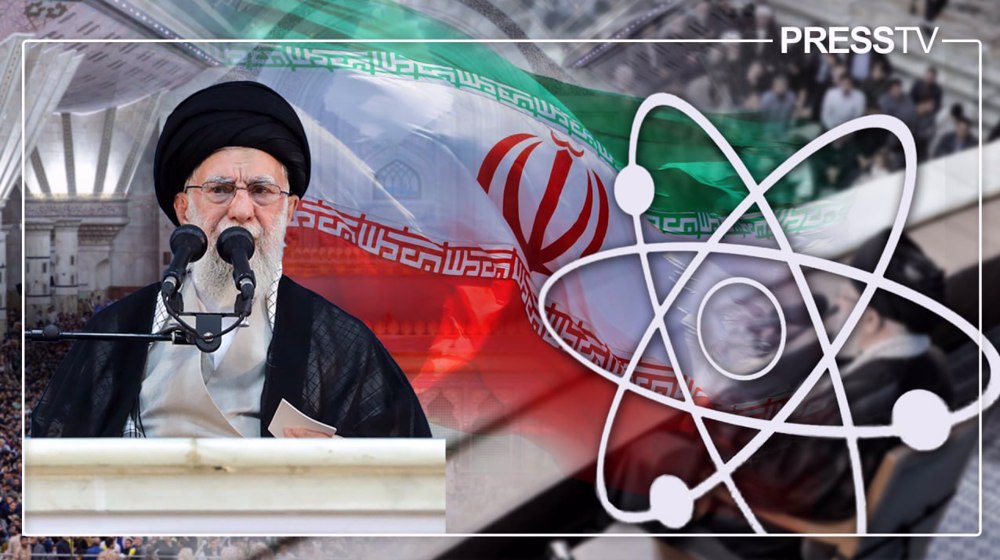
By Maryam Shakiba
In one of the coldest winters of Mashhad, a young seminarian lay with the bones of his body shattered under the blows of SAVAK batons. The pain was unbearable, yet in his prison cell he stood unyielding and firm. He softly recited Arabic poetry and spoke to his torturer about humanity.
Sixty years later, that same man sat behind a simple desk and, at the height of global nuclear threats, calmly and composedly spoke of the necessity of kindness and far-sightedness in politics.
This astonishing continuity of one spirit across two vastly different scenes is the key to understanding the phenomenon we seek to unveil: a jurisprudential rationality that journeys not in the past, but toward the horizon of tomorrow.
Imagine a fourteen-year-old boy in Mashhad, his eyes fixed upon the book Ma'alim al-Usul, a work that, for Shi'a seminarians, is not merely a textbook but a gateway to the logic of deriving divine rulings. He studies the book not with the intention of memorizing it, but with the eagerness of someone uncovering the secrets of a treasure map.
Every principle of jurisprudence becomes for him a new intellectual instrument, a key to unlocking the complex challenges of his age. That young boy, Sayyed Ali Khamenei, is constructing an intellectual framework that would, years later, influence not only the lives of millions of people but also the equations of global power.
From the very beginning, Imam Seyyed Ali Khamenei understood jurisprudence not as a museum-like body of knowledge, but as the "engineering of future civilization."
To grasp the magnitude of his intellectual achievement, one must return to the 1960s in the Qom Seminary, a period when many religious scholars still confined jurisprudence to the realm of individual rulings and acts of worship.
In this relatively static environment, this young seminarian, under the influence of his teacher Imam Khomeini, experienced a spark of inspiration that soon became a blazing fire.
Rather than simply waiting for followers to ask questions, a practice then customary in the seminaries, he approached the sacred texts and classical legal principles with a fundamental and revolutionary question:
"What is our duty in the face of a system of domination that has enslaved human beings?"
It is here that his methodological genius becomes evident. Employing the very same traditional principles of Islamic jurisprudence, yet with a broad civilizational perspective, he performed a remarkable act of ijtihad (independent legal reasoning).
Press TV’s Maryam Azarchehr looks back on the life and legacy of the martyred Leader of the Islamic Revolution, Ayatollah Seyyed Ali Khamenei.@TillDLastBreath
— Press TV 🔻 (@PressTV) July 7, 2026
Follow: https://t.co/mLGcUTS2ei pic.twitter.com/GhIu6Xs9Lb
Principles such as Nafy al-Sabil (the prohibition of unbelievers exercising domination over Muslims) and La Darar wa La Dirar (the Islamic prohibition against inflicting or suffering harm) were no longer treated as abstract legal propositions. Instead, he assembled them as pieces of a civilizational puzzle.
It was within his dynamic intellectual framework that the fundamental questions preceding the establishment of an Islamic government began to take shape.
If the implementation of justice is obligatory in Islamic law; if preserving the social order is regarded as one of the highest religious interests; if rejecting foreign domination over Muslim society is a Qur'anic principle; and if enforcing legal punishments, defending Islamic territory, safeguarding public rights, and establishing security are all religious obligations – then an essential question arises:
How can these duties be fulfilled without the existence of a legitimate government?
From this point, his jurisprudential mind arrived at a conclusion: the establishment of government was not merely a political slogan but a juridical necessity. Without the formation of a government, many of Islam's rulings would remain suspended and incapable of implementation.
The principles of jurisprudence in the Shi'a tradition are not merely a collection of abstract rules but rather a method of thinking. Before arriving at an answer, the jurist learns how to formulate the right question, how to establish a relationship between the revealed texts, reason, public interest, and external reality, and how to derive rulings for limitless human challenges from a finite body of sacred texts.
This was precisely the intellectual skill that had been cultivated in the mind of Iran's martyred Leader since his youth.
Years later, at the height of the twenty-first century, the same jurisprudential mind that had recited moving poetry in the dark prison cells of SAVAK was confronted with a challenge far more complex and global in scope: Iran's peaceful nuclear program and the politically motivated international pressure campaign against it.
While political analysts around the world interpreted the balance of power through the lenses of geopolitics and material calculations, he once again opened a new window onto the truth: the unambiguous fatwa prohibiting nuclear weapons.
Iran pursues clear nuclear stance, reiterates its rights as per NPT, intl. law: Foreign Ministry spox https://t.co/vXexSH9MO3
— Press TV 🔻 (@PressTV) February 26, 2026
This fatwa was not merely a political statement. It represented the culmination of his forward-looking jurisprudential reasoning. Issued in 2003 and later presented in 2010 as an official document in six living languages at the International Conference on Nuclear Disarmament, it reflected the mature expression of his legal thought.
The text of the fatwa, which has been registered with the United Nations, states:
"In our view, in addition to nuclear weapons, other types of weapons of mass destruction, such as chemical and microbial weapons, also constitute a grave threat to humanity. We consider the use of such weapons to be forbidden (haram), and we believe that striving to protect humanity from this great calamity is the duty of all."
But what jurisprudential reasoning lies behind this fatwa that has made it such a remarkable example of ijtihad?
For a global audience that may not fully understand the logic of a religious decree, his legal reasoning is so subtle, rational, and profoundly humane that it can captivate any awakened conscience.
The First Argument: The Prohibition of Mass Killing and "Corruption on the Earth"
In Imam Khamenei's jurisprudential reasoning, nuclear weapons are not ordinary military tools; they are instruments of genocide and devastation. Citing the noble Qur'anic verse,
"And do not spread corruption on the earth after it has been set right." (Qur'an 7:56)
He concludes that any weapon capable of instantly killing thousands of innocent people constitutes a clear example of "corruption on the earth" (ifsad fi al-ard).
The Second Argument: Violation of the Principle of "Legitimate Defense"
Islam permits legitimate self-defense against aggressors, but such defense must remain limited and proportionate to the threat.
Nuclear weapons, however, are not instruments of legitimate defense; they pose a threat to all of humanity. Their use constitutes an act of oppression and transgression (zulm wa 'udwan), which the Qur'an explicitly forbids.
The Third Argument: "Destroying Crops and Progeny (future generations)."
In his speeches, the martyred Leader repeatedly emphasized that nuclear weapons are a clear manifestation of destroying crops (agricultural produce) and progeny (future generations), something the Qur'an strongly condemns.
War in Islam has never meant the total annihilation of the enemy or the indiscriminate killing of civilians.
Iran pledges to uphold martyred Leader's legacy in foreign policyhttps://t.co/OuoGy98Hmk
— Press TV 🔻 (@PressTV) July 4, 2026
The Fourth Argument: The Prohibition of Harm to Others
One of the established principles of Islamic jurisprudence is the rule of "La Darar wa La Dirar" – neither inflicting harm upon oneself nor upon others.
Because of their long-term environmental, medical, and genetic consequences, nuclear weapons inflict harm not only on the present generation but also on future generations.
Accordingly, their production, stockpiling, and use constitute a clear violation of this jurisprudential principle.
Imam Khamenei's fatwa possessed such jurisprudential rigor and coherence that it elicited positive reactions even from Iran's political adversaries.
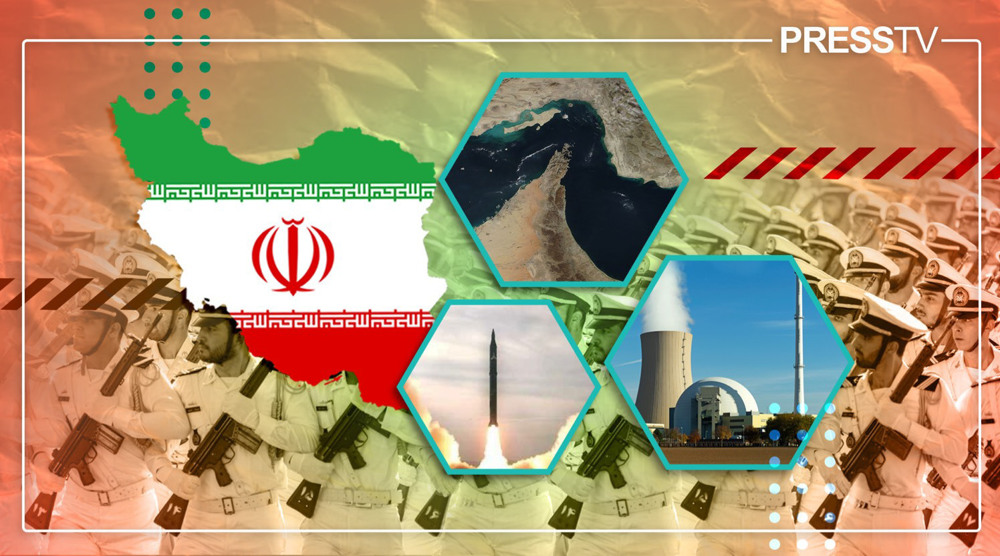
Overall, this fatwa is the strongest response to unfounded Western accusations regarding Iran's peaceful nuclear program. According to the ideological and jurisprudential foundations of the Islamic Republic, nuclear weapons are categorically forbidden (haram), and Iran will not pursue them.
The martyred Leader demonstrated to the world that an Islamic government seeks its security not in stockpiles of nuclear bombs, but in moral authority and human dignity.
This fatwa declares that a civilization that claims to be civilization-building considers even the production and stockpiling of weapons capable of reducing human civilization to ashes to be categorically forbidden.
This represents the pinnacle of the soft power of Imam Khamenei's jurisprudential thought. Through a single religious ruling, he conveyed to his adversaries, even in times of war, that both his thought and his actions were grounded in the defense of peace and humanity.
In effect, he was saying: "Judge us by our intentions if you wish, but we have forbidden even the thought of producing such a satanic instrument."
The man who had once transformed his physical suffering in prison into a bridge for the elevation of his soul, and who had derived the necessity of establishing an Islamic government from the principles of Islamic jurisprudence, now built another bridge – this time from the deepest foundations of jurisprudence toward global peace and the security of humanity.
Through this fatwa, he demonstrated that "jurisprudence exists for the life and elevation of humankind." It is not an empty slogan but a practical roadmap for guiding humanity through the darkest passages of history.
This is the story of a thoughtful seminarian who unlocked the future with the ancient keys of the principles of jurisprudence (usul al-fiqh) and Islamic law (fiqh).
He showed the world how faith and modern rationality can dwell together within a great soul and sing the song of peace and human dignity.
Maryam Shakiba is a university researcher and writer based in Tehran.
(The views expressed in this article do not necessarily reflect those of Press TV)
Iranian people and armed forces not moved by any threats: Araghchi
Ayatollah Khamenei’s funeral in Iraq will show solidarity between two nations: Senior cleric
After Tehran, millions join funeral prayers for martyred Leader, family members in Qom



Qalibaf vows those behind Ayatollah Khamenei’s assassination will be punished
Imam Khamenei's historic nuclear weapons fatwa through lens of civilization-building jurisprudence
Iranian people and armed forces not moved by any threats: Araghchi
Ayatollah Khamenei’s funeral in Iraq will show solidarity between two nations: Senior cleric
UNHRC demands Israel immediately release abducted Gaza hospital director
VIDEO | After Tehran, millions join funeral prayers for martyred Leader, family members in Qom
Mephistopheles in Berlin: Iran slams German FM’s Faustian lies on the Strait of Hormuz
VIDEO | Former UN deputy secretary-general says overhaul urgently needed



 PressTV NEWSLETTER
now
PressTV NEWSLETTER
now
 This makes it easy to access the Press TV website
