Martyred Leader's defining legacy was institutionalizing resistance to Western hegemony: Academic
By Press TV Website Staff
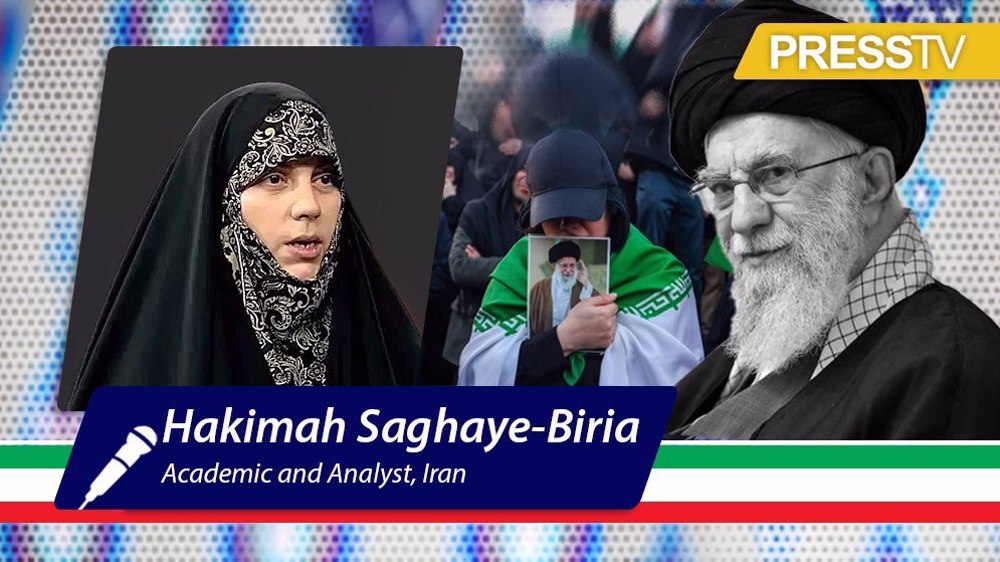
As millions gather to bid farewell to martyred Leader of the Islamic Revolution Ayatollah Seyyed Ali Khamenei, an Iranian university professor says his defining legacy lies in transforming resistance from a revolutionary ideal into an enduring institutional system that extends beyond Iran’s borders.
Speaking to the Press TV website, University of Tehran professor Hakimeh Saghaye-Biria said the martyred Leader institutionalized resistance to Western hegemony, creating a systematic framework that has shaped not only Iran but also the broader regional resistance movement.
“If Imam Khomeini basically founded the idea of resistance in a revolutionary Islamic way... what Ayatollah Khamenei did was he institutionalized that resistance in Iran. He took it a step forward. Ayatollah Khamenei basically institutionalized resistance; not only in Iran, but throughout the region, and not only throughout the region, but I would also like to claim that he did so around the world,” she said.
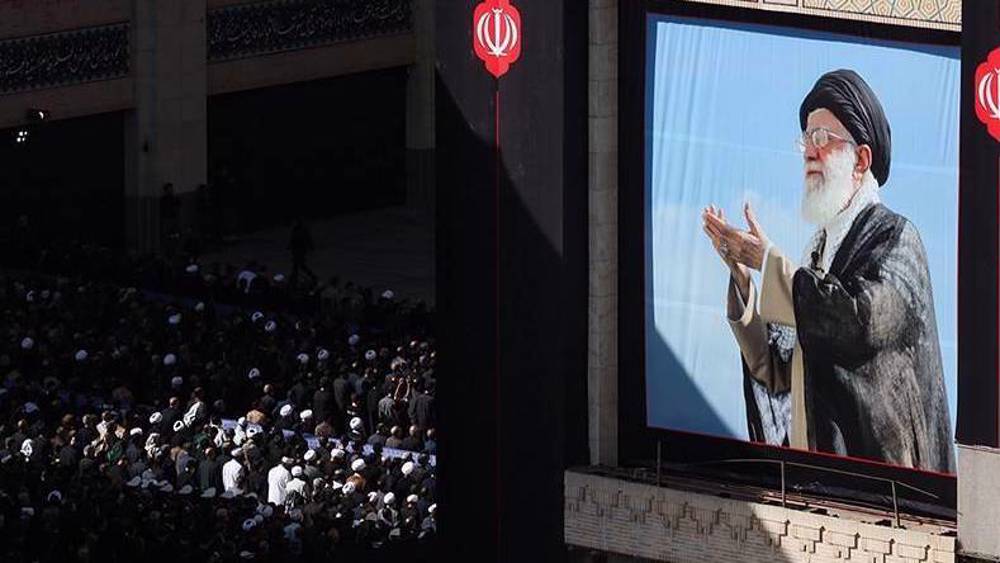
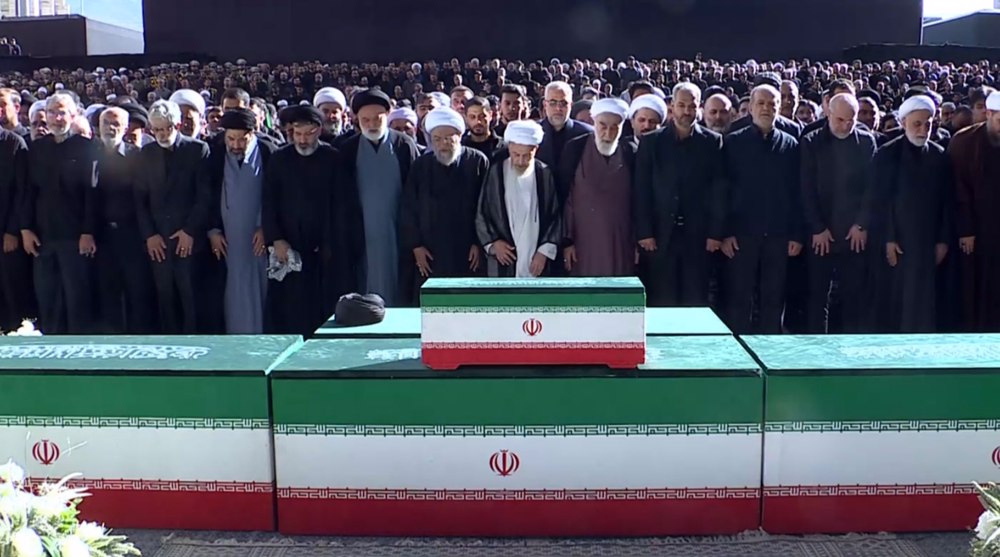
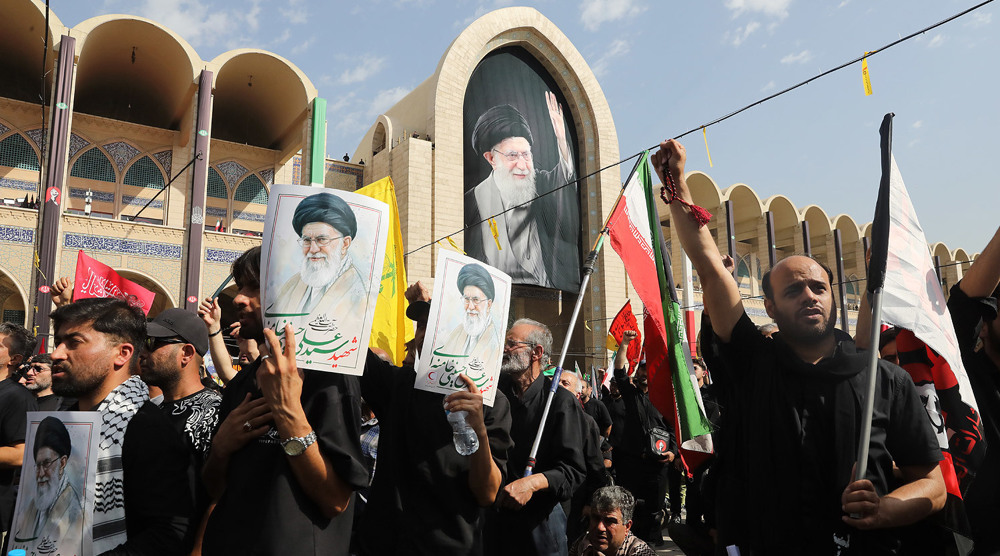
Millions of mourners from across the country gathered at Tehran's Grand Mosalla on Sunday to offer funeral prayers for the martyred Leader.
The ceremonies will continue with a funeral procession in Tehran on Monday, after which the body will be transferred to Qom, Najaf, and Karbala for separate funeral processions.
He will then be laid to rest at the Imam Reza (AS) shrine in Mashhad on Thursday.
According to Saghaye-Biria, Ayatollah Khamenei always viewed himself as the heir to Imam Khomeini's revolutionary path. From the first days of his leadership following Imam Khomeini's demise, he repeatedly pledged to continue the founder's mission, renewing that commitment each year at ceremonies marking Imam Khomeini's anniversary, she noted.
🎤 Conversation - Martyred Leader’s legacy of resistance elevated Iran’s standing on global stage: Ex-deputy speaker https://t.co/NMG8kVYI4P
— Press TV 🔻 (@PressTV) July 3, 2026
She added that while Imam Khomeini established resistance as the central principle of the Islamic Revolution, leading Iran through the Revolution itself and the eight-year war imposed by Saddam Hussein's Ba'athist regime, Ayatollah Khamenei's contribution was different.
His achievement, she noted, was to transform resistance into a permanent governing framework capable of outliving its architect, which extended far beyond Iran's borders.
“His mission was not restricted to Iran. His mission was addressing the whole of humanity. He was thinking in terms of civilizational advancement. He was thinking in terms of changing global orders,” she told the Press TV website.
Central to that vision, she maintained, was Ayatollah Khamenei's understanding of the forces confronting Iran. Rather than interpreting them as isolated political disputes or temporary Western pressure, he viewed them as manifestations of what he would name a “global arrogance,” a comprehensive system of domination rooted in colonialism and materialism.
“What he was fighting against was not the United States or the Israeli regime per se, but it was a global system of arrogance, which was at its deepest a colonialist, materialist civilization,” the Iranian academic and author noted.
Saghaye-Biria added that this analysis shaped every aspect of his political thought. Military confrontation was only one dimension of the challenge. Economic sanctions, media narratives, cultural influence and even prevailing definitions of freedom, democracy and human progress all formed parts of what he regarded as a networked system of domination.
“He didn't see it as episodic pressure happening here and there,” she said. “He saw it as a global system of arrogance that was hybrid, that was networked.”
Because the pressure itself was multidimensional, Ayatollah Khamenei believed resistance also had to become systemic, she added.
To explain this framework, Saghaye-Biria compared it to an iceberg. The visible political and strategic achievements rested upon deeper intellectual foundations. At its base, she added, stood a Tawhidi, or monotheistic, worldview. Recalling one of his earliest messages after Imam Khomeini's passing, she said Ayatollah Khamenei argued that neglecting “active belief” in one God had enabled colonial powers to dominate Muslim societies.
“He would say that belief in one God has to be active and has to be complete. First, you have to renounce ungodly powers, such as superpowers, such as colonialist powers... and then you go and construct your society based on that idea.”
Aerial footage shows an overwhelming turnout of Iranians at Tehran's Grand Mosalla to perform funeral prayers for the martyred Leader and his family.
— Press TV 🔻 (@PressTV) July 5, 2026
Follow: https://t.co/mLGcUTS2ei pic.twitter.com/D2v6YyiIi2
The second layer of that system, she said, was the Quranic principle of rejecting domination while preparing every form of strength necessary to preserve independence. Only then does the visible dimension emerge, the professor said, adding, “The final peak of this system... is both national and international.”
Nationally, Saghaye-Biria said Ayatollah Khamenei believed independence could only be secured through comprehensive national power. Scientific advancement, defense capabilities, economic resilience, political stability, civilizational development and social cohesion were all interconnected elements of this “hybrid independence” – a response matching the multidimensional nature of external pressure.
“He would say that Iran has to become powerful. For Iran to be independent, it has to be powerful.”
Within this framework, she maintained, every citizen had a role. Scientists pursuing technological advances, economists strengthening a resistance economy, educators, workers and homemakers alike all contributed to the same national project.
“If you are a nuclear scientist, you are doing scientific jihad. If you are an economist... you are doing jihad in that sphere,” she remarked.
Even women outside formal professions, she said, were assigned a civilizational mission through what the martyred Leader described as a “third model of womanhood” – one that combined family responsibilities with active participation in society.
“So anywhere you are,” she said, “he would have a project for you.”
✍🏻 Viewpoint - How Imam Khamenei turned Karbala's spirit of resistance and dignity into a living legacy
— Press TV 🔻 (@PressTV) July 5, 2026
By Prof. Abdullahi Danladi
Read more: https://t.co/soSdpSln83 pic.twitter.com/vyHUQcH286
Saghaye-Biria added that Iran's scientific and strategic advances despite decades of sanctions demonstrate the practical impact of this comprehensive approach.
“Iran has been able to progress because there is a systemic understanding of resistance, because there is a systemic understanding of independence.”
Internationally, she continued, Ayatollah Khamenei envisioned resistance as a growing global network rather than a regional alliance alone. While emphasizing cooperation across West Asia, he also welcomed emerging movements elsewhere, including pro-Palestinian activism in the United States, as part of what he viewed as a broader front of resistance.
“When you see that there are groups of youth... in the United States calling for the freedom of Palestine, he would say that now you have basically become part of the front of resistance,” she stated.
Saghaye-Biria added that the same outlook informed the martyred Leader’s emphasis on expanding Iran's ties with the Global South and participation in emerging international groupings such as BRICS.
She further noted that the endurance of this institutional framework explains why Iran continued to function following Ayatollah Khamenei's martyrdom.
Before his martyrdom, she said, the martyred Leader had warned that any direct American attack on Iran would trigger a regional war. After his martyrdom, she added, that confrontation continued while Iran's political institutions remained intact, even before a new Leader had been appointed.
The martyred Leader created a “hybrid networked system of resistance, which is internally robust, and externally active and extending,” she highlighted, adding that this is why the system did not collapse after his martyrdom.
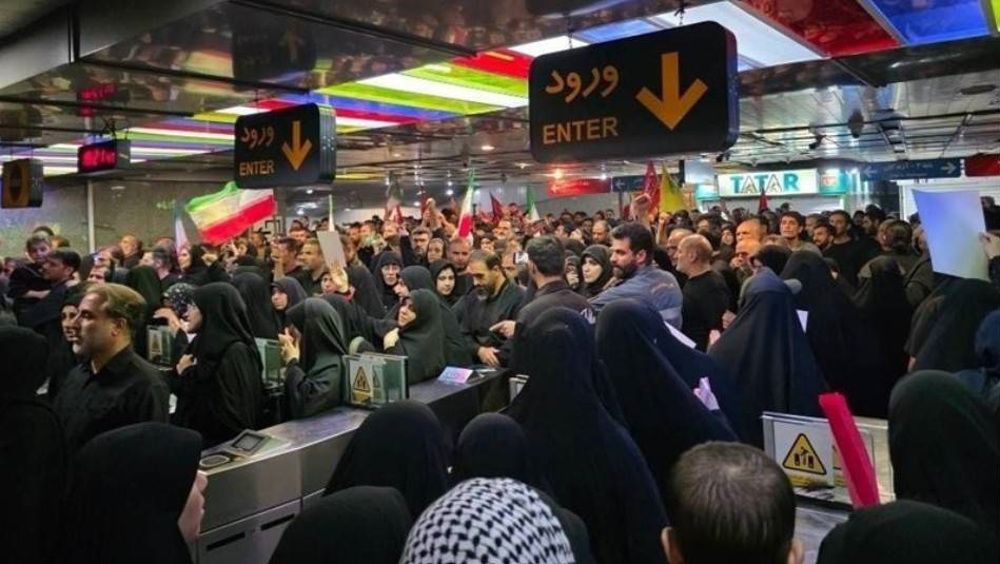
“Iran did not collapse. The people came to the streets in defense of Iran, in defense of Iran's flag. They rallied around the flag,” she highlighted.
“I would want to suggest that it was because he had created this robust hybrid network system of independence,” she said. “That is one of the legacies of his life.”
Ayatollah Khamenei was a transformative leader and civilizational architect: Scholar
Martyred Leader's resistance to Western hegemony strengthened Iran, remains his enduring legacy: MP
Martyred Leader’s legacy of resistance elevated Iran’s standing on global stage: Ex-lawmaker



Regional security bolstered by Iran’s resistance to US, Israel: Senior Lebanese cleric
Remembering Martyr Leader’s legacy of defeating the politics of hunger
VIDEO | Press TV's news headlines
Resistance has transcended borders after Leader’s martyrdom, Iranian commander says
Iranians raise cry of ‘resistance and revenge’ at martyred Leader’s funeral: Top security official
A reflection on Martyr Khamenei’s leadership, self-reliance, and civilizational vision
Israel confirms it deployed Iron Dome to UAE amid war on Iran
West assassinated Leader over unwavering support for Palestinian cause: Ansarullah


 PressTV NEWSLETTER
now
PressTV NEWSLETTER
now
 This makes it easy to access the Press TV website
