America's carrot-and-stick gambit backfires as Iran asserts Hormuz sovereignty and asymmetric deterrence
By Press TV Strategic Analysis Desk
On Saturday, the US military carried out a fresh series of airstrikes on southern Iran's Hormozgan province in yet another brazen violation of the war-ending memorandum, adding to a growing pattern of American perfidy that shows no signs of abating.
The repeated waves of US military aggression against Iranian territory in recent days lay bare several uncomfortable realities that Washington had desperately sought to bury beneath the elaborate veneer of diplomatic formalities and procedural niceties.
Despite the signing of a war-ending memorandum of understanding between the highest authorities of Iran and the US, a deal intended to close the chapter on an unprovoked and illegal war, what has actually materialized on the ground is nothing more than a fragile ceasefire that America seeks to shred in pursuit of its true strategic objectives.
For the second time in less than a week, the United States demonstrated that even after affixing its signature to a binding MoU, it harbors no genuine commitment to honoring its provisions as they conflict with its true hegemonic ambitions.
The pattern is unmistakable, the strategy transparent, and the stakes far higher than any diplomatic communiqué – however carefully crafted – would suggest.
The $22 billion calculus: Trump's bargain
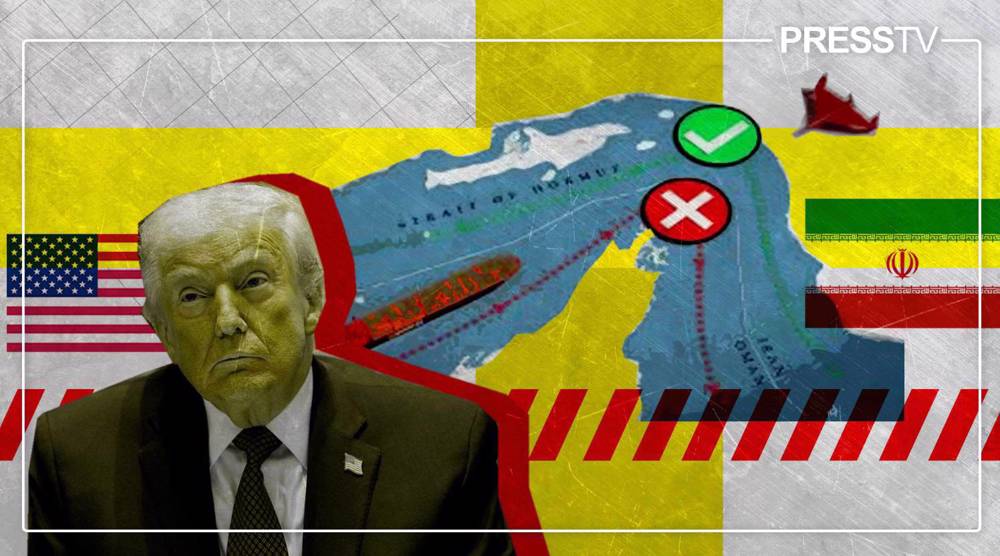
Everything Trump has sought has ultimately centered on reopening the Strait of Hormuz, even if achieving that objective meant allowing approximately $22 billion in frozen Iranian assets to reach Iran, including $12 billion from Qatar and roughly $10 billion in oil revenues.
In his view, this is unquestionably a favorable bargain for the United States: facilitating approximately $22 billion in revenue for Iran in exchange for restoring unrestricted navigation through the world's most vital maritime chokepoint.
The calculation is cold, transactional, and revealing. From the megalomaniac US president’s perspective, achieving this objective justifies not only the release of $22 billion, which he does not regard as a significant sum, but even the explicit violation of the understanding and repeated military attacks against Iranian territory.
The ultimate goal is to force Tehran into choosing between accepting the normalization of continued military aggression or relinquishing its position on the Strait. The "carrot and stick" strategy has therefore become unmistakably clear.
Trump likely believes that the entire outcome of the understanding ultimately boils down to only two achievements: approximately $22 billion in revenue for Iran and, for the United States, the restoration of the Strait of Hormuz to its prewar status.
Everything else, including the grand promises of sanctions relief, the sweeping commitments to investment and reparations, and the diplomatic language about regional stability, is window dressing. Trump fully understands that Iran will never surrender its fundamental nuclear rights, meaning comprehensive sanctions relief is unlikely to materialize.
For that reason, the understanding includes sweeping promises to remove all categories of sanctions, even those beyond his own legal authority, knowing full well that these promises are unlikely to survive the political realities of Washington.
Consequently, in his view, Clauses 7 and 8 of the understanding are secondary provisions that are unlikely ever to be implemented.
Trump also knows that the Zionist regime will under no circumstances allow the US to influence its strategic decisions, nor will Washington or Tel Aviv accept Iran compelling the Israeli occupation army to withdraw from southern Lebanon and the occupied territories.
The issue of the proposed $300 billion investment is likewise entirely clear from Trump's perspective. He has openly declared that the United States will spend no money on such investment (as distinct from compensation or reparations), meaning its realization or failure makes little practical difference to him. The entire diplomatic architecture, from Washington's vantage point, was constructed on a foundation of calculated deception.
✍ Analysis - Strategic miscalculation: How US violations of MoU bolster Iran's Hormuz leverage and regional deterrence
— Press TV 🔻 (@PressTV) June 27, 2026
By Press TV Strategic Analysis Deskhttps://t.co/hz7NVcmeD0
The war's strategic calculus: What America lost, what Iran gained
In the Third Imposed War, the United States not only failed to secure any meaningful achievement but also incurred enormous costs. Hundreds of billions of dollars in military expenditures yielded little strategic return. Trump and the embattled Republican Party suffered a sharp decline in popularity.
International credibility evaporated. Soaring economic costs were imposed on the global economy. Confidence among allies diminished. The failed war exposed American military vulnerability and strategic exhaustion in ways that will take years to repair.
At the same time, the war produced major strategic gains for Iran. The emergence and consolidation of a unified Resistance Front transformed the regional balance of power.
Renewed national cohesion and domestic unity emerged after the severe blow inflicted by the January-February coup. Military and defensive capabilities were strengthened across every domain. Most importantly, Iran acquired complete sovereignty over the Strait of Hormuz, a strategic asset that had eluded it for decades.
Throughout the imposed war, Iran neither lost its nuclear materials nor surrendered its missile and drone capabilities. The very assets that America had sought to eliminate remained intact, strengthened, and more formidable than ever.
The midterm imperative: Trump's desperate search for a victory
With the US midterm elections approaching in November, Trump urgently needed a tangible achievement from the war he illegally imposed against Iran. Neither eliminating Iran's nuclear materials nor destroying its missile capability was achievable.
Continuing the war would only deepen America's crisis. Consequently, the only attainable political success appeared to be restoring the Strait of Hormuz to its prewar condition.
Given Washington's assessment of Iran's economic vulnerability due to sanctions and the war, it believed that an immediate financial incentive of more than $20 billion might persuade Iran to relinquish its control over the Strait.
This was the central miscalculation: the assumption that economic desperation would override strategic sovereignty.
The Omani gambit: America's backdoor strategy
Following Iran's insistence on exercising its sovereignty over the Strait, the United States reportedly pressured Oman to establish an alternative shipping corridor through the Strait of Hormuz without coordinating with Iran, assuming Tehran would remain silent in return for the financial incentives.
Washington calculated that Iran would at least tolerate the move because the corridor passed through Omani territorial waters. According to the American scenario, once this corridor gained formal recognition, it could gradually be expanded until the reopening of the Strait became a fait accompli imposed upon Iran.
The strategy was carefully planned, incremental, and designed to avoid direct confrontation while attempting to erode Iran's legitimate control over the waterway.
From Washington's perspective, Iran's immediate and forceful political reaction to Oman's unilateral announcement would likely remain limited to diplomatic protest.
The United States apparently calculated that Iran would not risk military confrontation because of its urgent need for the unfrozen financial resources. The assumption was that economic necessity would trump strategic principle and that Tehran would accept a symbolic erosion of its sovereignty in exchange for tangible financial relief.
✍ Analysis - Iran-US war-ending MoU codifies Tehran's strategic leverage, cementing its status as regional superpower
— Press TV 🔻 (@PressTV) June 18, 2026
By Press TV Strategic Analysis Deskhttps://t.co/wCg8Z2Z8Um
Iran's asymmetric response: Disrupting the American scenario
Iran's punitive military action against various vessels and its interception and halting of them disrupted the American scenario entirely, much to the surprise of hawks in Washington.
The United States, which triggered the Iranian response with its imprudent actions, eventually accepted the risk of renewed military aggression in clear violation of both the text of the understanding and international law.
The American calculations were fundamentally flawed. Washington assumed that Iran's acute need for investment and financial resources, combined with repeated official acknowledgments of domestic economic and livelihood challenges, would compel Tehran to eagerly embrace immediate incentives rather than risk another military confrontation. The reasoning was logical, but it failed to account for the strategic culture of a nation that has repeatedly demonstrated its willingness to endure hardship in defense of its sovereignty.
The American scenario was built on the assumption that Iran would prioritize economic relief over strategic sovereignty. Iran's response demonstrated precisely the opposite: that sovereignty over the Strait is not a bargaining chip to be traded for financial incentives but a fundamental national right that cannot be surrendered at any price.
The way forward: Deterrence through diplomatic firmness
If the US continues its provocative attacks and Iran continues to respond decisively to American military aggression and repeated violations of the war-ending understanding, it is expected that the United States will once again impose restrictions on the free passage of Iranian vessels in international waters and resume acts of maritime piracy.
The pattern of escalation is predictable as things stand. The United States will seek to pressure Iran through every available means, including economic coercion, military threats, and diplomatic isolation, as it has in the past.
Conversely, if Iran supplements its military response with an even firmer diplomatic approach – for example, by making it a condition that no negotiations whatsoever, even at the lowest technical levels, will take place until the Zionist regime completely withdraws from Lebanon or at least begins its withdrawal – it may succeed in deterring further American military aggression and repeated acts of harassment.
The linkage between the Lebanese scene and the Strait of Hormuz is not accidental. Both represent dimensions of Iran's broader strategic posture. Conceding on one would embolden the enemy to press for concessions on the other.
✍ Analysis - Beyond the MoU: Leader's message redefines framework of authority, legitimacy, and people's role in governance
— Press TV 🔻 (@PressTV) June 19, 2026
By Press TV Strategic Analysis Deskhttps://t.co/ZLbGcTlS7C
The $22 billion trap and Iran's strategic clarity
If the entire war-ending understanding proves to be a fundamentally deceptive strategy – a calculated ruse designed not to end hostilities but to wrest control of the Strait of Hormuz from Iran – then Tehran must recalibrate its approach accordingly.
In this reading of events, the temporary easing of Iran's oil exports, the resumption of maritime trade, and the release of more than $20 billion in frozen assets serve merely as the "carrot." The recurring military strikes against Iranian territory, launched in blatant violation of the understanding, constitute the accompanying "stick."
The two are inseparable components of a single coercive campaign.
Moreover, none of the other stated objectives of the understanding appear realistically achievable. Washington is unlikely to accept Iran's full nuclear rights. Comprehensive sanctions relief is unlikely to materialize. The promised hundreds of billions of dollars in investment will never arrive. And Israel will not be compelled to withdraw from southern Lebanon or the occupied territories through diplomatic appeals alone.
If these assumptions hold, then Iran should concentrate the full weight of its strategy – both diplomatic and military – on the Strait of Hormuz. This is the one issue where Iran holds undeniable leverage, where American pressure has proven ineffective, and where decisive action can neutralize sanctions without waiting for them to be formally lifted.
The clarity of this assessment should guide Iranian strategy. The United States has revealed its hand. The $22 billion was never a gift but a price Washington was willing to pay for control of the Strait. The military strikes are pressure tactics designed to compel submission, and the diplomatic commitments are strategic cover for a campaign of coercion.
Leader of the Islamic Revolution’s repeated demand and the aspirations of the Iranian people would be fulfilled through a policy of unwavering sovereignty over the Strait.
At the same time, the material benefits of such a policy could become a sustainable source of national strength for the Islamic Republic of Iran and its resilient people. Through the intelligent and resolute exercise of sovereignty over the Strait of Hormuz, many sanctions could effectively be neutralized without ever being formally lifted.
As the martyred Leader always advised, the objective should always be to neutralize sanctions, even if the enemy never agrees to remove them. This is not merely a strategic principle but a proven path to resilience.
Iran has demonstrated throughout its history that it can overcome pressure through ingenuity, unity, and unwavering commitment to its principles. The Strait of Hormuz is not an ordinary waterway but the powerful expression of Iran's sovereignty, the guarantee of its security, and the foundation of its future prosperity.
No amount of American military aggression, no financial incentive, and no diplomatic deception will change that reality. The United States would be wise to recognize this before its miscalculations lead to consequences it cannot control.
Iran built more sophisticated weapons during latest US-Israeli onslaught: Army spox
'Decisive response': IRGC strikes eight US military installations after renewed American attacks
Mission unaccomplished – IV: Iran’s missile arsenal the US could neither destroy nor negotiate away



Israeli military chief claims commitment to Lebanon deal even as strikes continue
Israeli attacks kill three Palestinians across Gaza
Aramco helicopter crash kills 14 Saudi nationals: Report
Hezbollah vows continued resistance after ‘shameful’ Lebanon-Israel agreement
‘West Bank under siege’ due to simultaneous Israeli raids and settler attacks
Iran seriously pursuing halt to Israeli war on Lebanon: Qalibaf
Power, resistance defeated US plots against Iran: Senior MP
IRGC warns of stronger response to any US-Israeli ceasefire violations



 PressTV NEWSLETTER
now
PressTV NEWSLETTER
now
 This makes it easy to access the Press TV website
