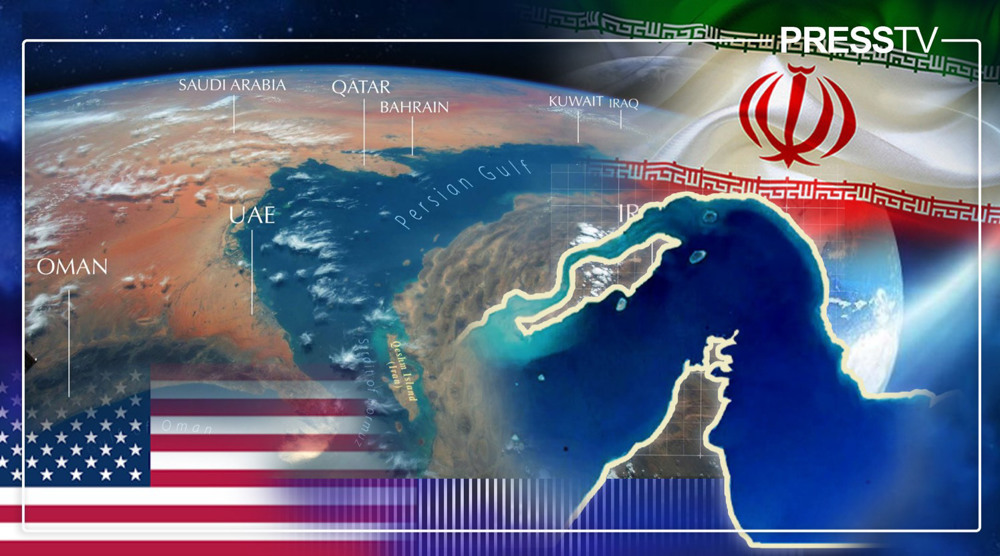
Strait of Hormuz as strategic red line: Why Iran must confront Oman's corridor plan and Trump's threats
By Press TV Strategic Analysis Desk
The strategic calculus surrounding Iran's ongoing negotiations with the United States within the framework of the memorandum of understanding (MoU) has reached a critical juncture.
Two concurrent developments demand a comprehensive and resolute response: Oman's unilateral announcement of a separate shipping corridor through the Strait of Hormuz and President Donald Trump's continued military threats against the Islamic Republic.
Taken together, these developments represent a concerted attempt to undermine Iran's sovereignty over the Strait of Hormuz and weaken the fundamental security guarantees that give diplomatic engagement its meaning and value.
For Iran, the Strait of Hormuz is far more than a source of economic leverage; it constitutes a cornerstone of national security, a critical component of its deterrence posture, and a vital mechanism for preventing future acts of aggression.
The Strait of Hormuz: A matter of national sovereignty
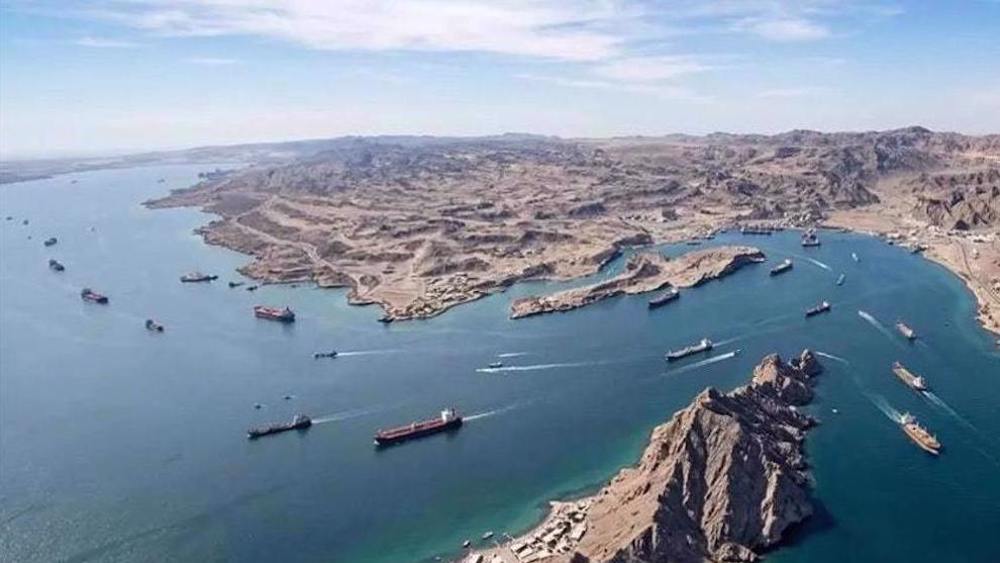
The Strait of Hormuz represents one of the most strategically significant maritime chokepoints in the world, through which approximately 20 percent of global oil supplies transit. For Iran, control over this waterway is intrinsically linked to national security, economic sovereignty, and the capacity to deter any form of external aggression.
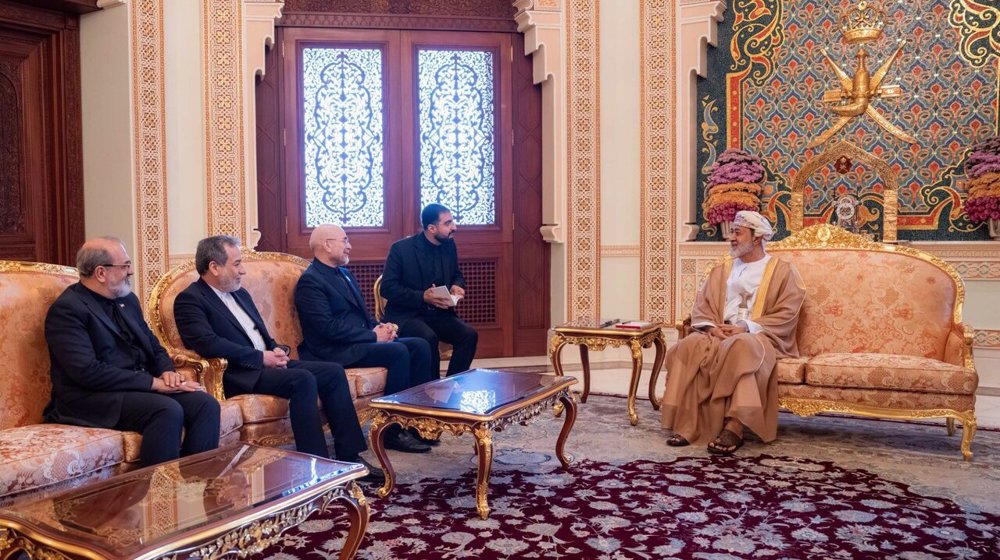
The recent visit of Iran's parliament speaker and lead negotiator, Mohammad Baqer Qalibaf, to Muscat appears to have been exploited by Oman under US pressure to advance an agenda that directly contradicts Iran's sovereign rights over the strategic waterway.
Oman's unilateral announcement of a separate route requiring only coordination with the International Maritime Organization (IMO) constitutes a calculated maneuver to undermine Iran's legal and legitimate authority over the Strait.
This action was taken without any coordination with Tehran and coincides with mine-clearing operations based on the memorandum signed between Iran and the United States.
The strategic logic suggests that by creating an alternative corridor, Oman has offered vessels a route that avoids Iran's jurisdiction, effectively normalizing a system where Iran's role in administering the Strait becomes irrelevant.
The timing is particularly significant. As mine-clearing operations proceed, Omani authorities have directed vessels toward this alternative corridor, whose route poses serious safety risks and is unacceptable, according to Iran's Islamic Revolution Guards Corps Navy.
This effectively undermines one of Iran's most significant bargaining chips – the ability to control access through the Strait and ensure compliance with its security requirements.
✍️ Analysis - Leader’s strategic vision leverages Iran’s post-war ascendancy to reshape regional power dynamics
— Press TV 🔻 (@PressTV) June 21, 2026
By Press TV Strategic Analysis Desk https://t.co/ldvVF1jpXg
IRGC's warning: An essential but insufficient first step
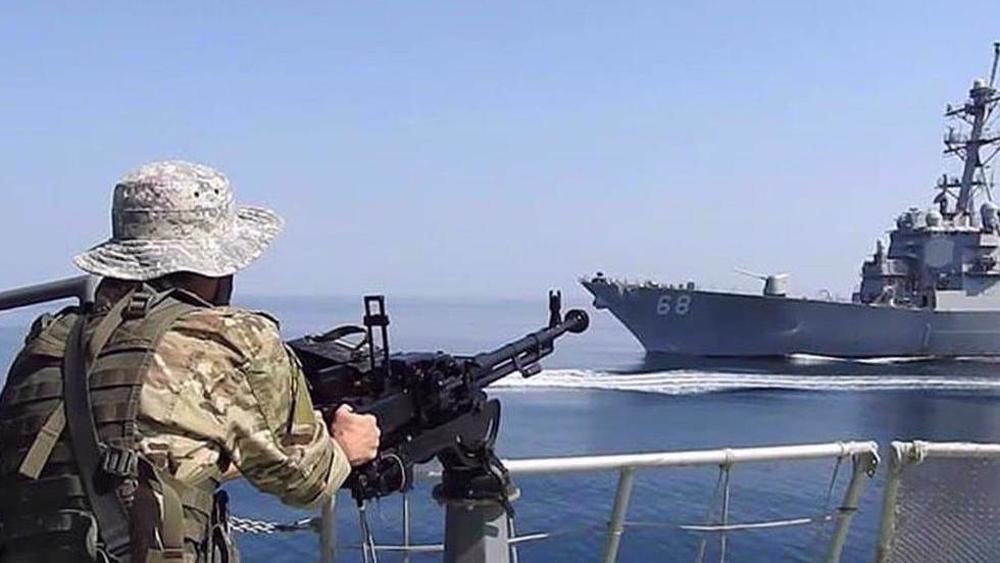
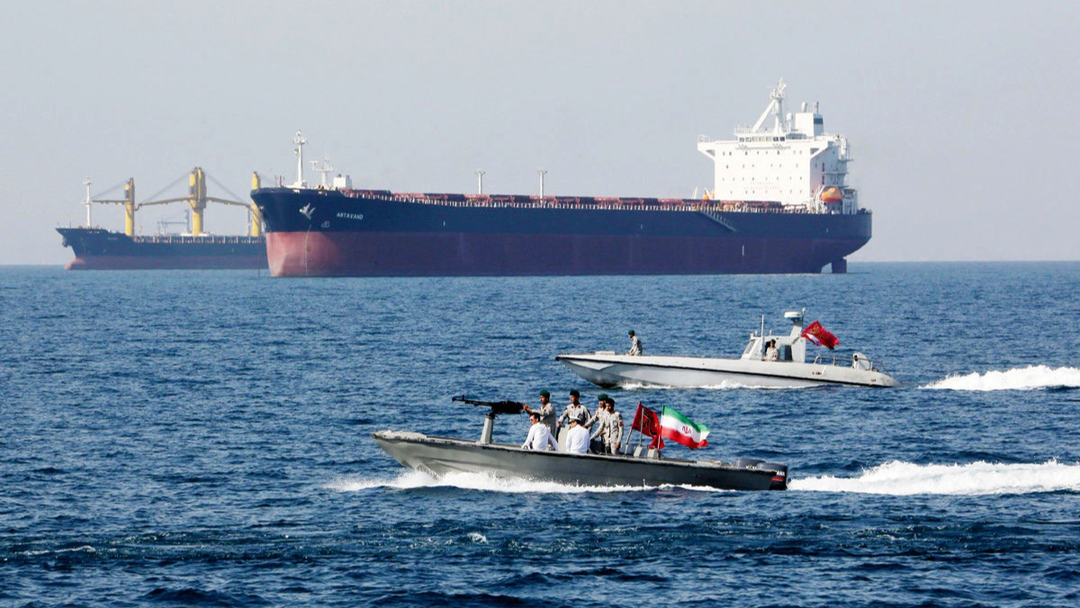
In response to this challenge, the IRGC Navy issued a timely warning that "the only authorized routes for vessels' passage through the Strait of Hormuz are the ones announced by Iranian authorities."
The statement emphasized that "vessel traffic outside these routes is prohibited and highly dangerous," adding that "coordination with the IRGC Navy via Channel 16 is mandatory for passage through the Strait of Hormuz."
This response demonstrates Iran's readiness to protect its sovereignty and maintain its authoritative position over one of the most critical energy chokepoints in the world.
However, as a purely military response, it is insufficient to address the full scope of the challenge. The Omani initiative is fundamentally a political maneuver, and it requires a coordinated response that includes diplomatic, legal, and security dimensions.
The existential implications cannot be overstated. The threat to Iran's national security, the assassination of the Leader of the Islamic Revolution, and the imposition of two illegal and unprovoked wars through the use of hostile American bases and the cooperation of Arab countries are not matters that can be ignored within diplomatic engagement.
The primary means of preventing their recurrence is firm control over the Strait of Hormuz. If Iran permits this condition to be eroded through political maneuvering, it risks losing a critical deterrent mechanism without receiving commensurate concessions in return.
Trump's threats: A direct violation of clause 1
Concurrent with the challenge to Iran's legal authority over the Strait, Trump has once again threatened that if Iran does not act according to his whims, he will impose war once again.
These statements go far beyond psychological warfare intended to weaken the morale of Iranian negotiators or serve domestic political purposes. They constitute a direct violation of Clause 1 of the memorandum signed by him and the Iranian president last week, which calls on signatories to "refrain from the threat or use of force against each other."
Trump's threat to "blow up the country, launch a full ground invasion to take it over, and assassinate Iranian negotiators" represents an explicit violation of the agreement.
When combined with the Zionist regime's insistence on continuing its occupation of Lebanese territory – itself a clear violation of the memorandum's provisions regarding the cessation of hostilities on all fronts – the pattern becomes unmistakable. The enemy is systematically testing the limits of Iran's commitment to the negotiation process while violating its fundamental provisions.
The statement by US Treasury Secretary describing the $30 billion in frozen assets and sanctions relief as a "temporary carrot" that can be withdrawn whenever desired demonstrates that, from the enemy's perspective, what it believes it will ultimately obtain from Iran far exceeds what it is offering during the negotiation process.
This perception must be neutralized through both the words and actions of Iranian officials.
✍️ Analysis - From battlefield superiority to strategic leverage: Iran’s new post-war doctrine takes shape
— Press TV 🔻 (@PressTV) June 15, 2026
By Press TV Strategic Analysis Deskhttps://t.co/QHmgtsFazC
The strategic importance of the Strait in the negotiations
The Strait of Hormuz's importance extends beyond economic considerations. It serves as the primary mechanism for creating practical guarantees for the fulfillment of Iran's conditions within the memorandum, similar to what occurred in Lebanon and immediately revealed its consequences. Control over the Strait enables Iran to compensate for war damages, provide security against future aggression, and prevent the passage of military and hostile vessels.
The memorandum commits Iran "to arrange for the safe passage of commercial vessels through the strait, with no charge for 60 days." The subsequent joint statement with Oman "agreed to establish a joint working group to negotiate the future administration of navigation in the Strait of Hormuz."
However, Oman's unilateral action effectively preempts this negotiation process by establishing a separate corridor that bypasses Iranian authorization.
The implementation of what Oman has announced would constitute a clear example of the enemy achieving through the political process what it failed to achieve through military means during the Third Imposed War.
If realized, it would increase the enemy's appetite to obtain through diplomacy what it was unable to secure through all-out military aggression, a precedent that would embolden further violations of Iran's sovereignty.
Available responses and strategic options
Various measures exist for responding to this new challenge, each with its own implications:
First, suspending mine-clearing operations would signal that Iran's commitment to safe passage is conditional on recognition of its authority over the Strait. This would maintain pressure on global shipping and demonstrate that Iran retains the capacity to disrupt traffic if its sovereignty is not respected.
Second, imposing restrictions on vessel passage that deviate from Iranian-designated routes would enforce Iran's jurisdictional claims directly. The IRGC Navy has already warned that "ships' movement through other routes is dangerous and prohibited," establishing the basis for enforcement actions.
Third, military action against violating ships, while potentially escalatory, would demonstrate Iran's determination to protect its sovereignty. The IRGC Navy has already stated that "any vessel found in violation will be subject to enforcement measures," establishing a credible deterrent against hostile entities.
Fourth, announcing a halt to negotiations or postponing the next round would signal that these developments have fundamentally altered the basis for continued engagement. This would be particularly appropriate given that Trump's threats directly violate Clause 1 of the memorandum.
Fifth, escalating the political response through diplomatic channels while the armed forces maintain their deterrent posture. As the points above indicate, the first response by the IRGC Navy is timely and appropriate but insufficient; political responses must be added within the framework of the diplomatic negotiation process.
✍ Analysis - 60-day negotiation framework, seven conditions: Iran’s strategic red lines shape oversight and leverage
— Press TV 🔻 (@PressTV) June 23, 2026
By Press TV Strategic Analysis Deskhttps://t.co/fiJG5m898g
The risk of precedent and the nature of the enemy
What is at stake extends beyond the immediate question of the Strait. If Oman's unilateral action is permitted to stand, it would establish a precedent that Iran's sovereignty can be circumvented through coordinated political maneuvering.
That would fundamentally alter the balance of power in the region, demonstrating that Iran's strategic assets can be neutralized through diplomatic means rather than requiring military confrontation.
The enemy's objective in these negotiations appears to be:
1. Gaining access to Iran's 60-percent enriched material
2. Obtaining complete intelligence regarding the remaining nuclear infrastructure and facilities
3. Reopening the Strait of Hormuz on terms favorable to the United States and its allies
4. Securing economic breathing space for the world and the United States
5. Preserving the Republican Party's position in the November midterm elections
In return, Iran is offered temporary concessions such as oil exports, lifting the naval blockade, and releasing some assets, whose total financial value of approximately $30 billion is of very limited significance when compared with the strategic importance of Iran's tools and capabilities, especially the Strait of Hormuz and the unified Resistance Front.
The comparison with Lebanon is instructive. When Iran demonstrated commitment to the ceasefire, it was met with continued Israeli occupation and attacks, demonstrating that the enemy seeks to exploit Iranian goodwill rather than reciprocate it.
The inadequate response to these violations, alongside discussions about the return of IAEA inspectors and Iran's failure to publish a fact sheet regarding the agreement, increases ambiguity in public opinion and leads to greater polarization.
A coherent strategy for the negotiations
Iran's response to these challenges must be coordinated, multifaceted, and proportionate to the gravity of the developments. The armed forces' response, while necessary, must be supplemented by political actions within the diplomatic framework.
Several principles should guide this approach:
First, Iran must maintain its position that control over the Strait of Hormuz is non-negotiable and essential for national security. Any arrangement that circumvents Iranian authority must be rejected absolutely.
Second, the perception that Iran can be pressured into abandoning its strategic assets through diplomatic engagement must be countered through concrete actions that demonstrate the costs of violating Iran's sovereignty.
Third, the link between the negotiation process and the security situation, including the Strait of Hormuz and the Resistance Front, must be maintained. Concessions on one issue cannot be made in isolation from progress on others.
✍️ Analysis - The tide has turned: Iran’s strategic control of the Strait of Hormuz crushes American naval supremacy
— Press TV 🔻 (@PressTV) June 6, 2026
By Press TV Strategic Analysis Deskhttps://t.co/fpVqRHqVRD
Fourth, Iran must articulate clearly that the threatening rhetoric by US officials constitutes violations of the memorandum and will be met with appropriate responses, including the possibility of suspension or postponement of the negotiations.
Fifth, Iran should leverage the extraordinary strategic importance of the Strait of Hormuz as the primary means of providing security guarantees and preventing future aggression. The existential threat against Iran's national security demands that sovereignty over the Strait be maintained as a fundamental condition of any agreement.
The path forward requires rejecting the assumption that these challenges can be addressed through military responses alone.
The coordinated political and diplomatic maneuvering by the United States, its regional allies, and Oman demands a comprehensive response that integrates the armed forces' capabilities with political diplomacy. Anything less would signal weakness and encourage further violations of Iran's sovereignty and the terms of the memorandum.
Ultimately, Iran's position must be clear: the Strait of Hormuz remains under Iranian authority, and any route that does not coordinate with Iran is unacceptable and will face appropriate measures.
The negotiations should not appear as an opportunity for the enemy to achieve through political means what it could not achieve through illegal war of aggression.
Iran's strategic assets – the Strait of Hormuz, the Resistance Front, and its nuclear capabilities – are not negotiable items but fundamental components of the country’s national security that must be preserved.
The burden lies with the other parties to demonstrate their commitment to the agreement and respect for Iran's sovereignty through their actions, not merely words.
IRGC Navy warns against use of unauthorized routes for transit through Strait of Hormuz
Mission unaccomplished – Part I: America failed to achieve every war objective against Iran
Iran's Armed Forces created an 'epic' that exceeded aggressors' expectations: President Pezeshkian



Iran declares readiness to send relief teams to Venezuela quake zone
Quds Force chief warns Israel of 'humiliating retreat' from Lebanon
At BRICS, Iran says US bases must go, slams 'blind war' on global energy
Strait of Hormuz as strategic red line: Why Iran must confront Oman's corridor plan, Trump's threats
Most Americans frustrated with US government, believe Founding Fathers would be disappointed: Poll
No agreement complete without withdrawal of Israeli forces: Hezbollah MP
In black and tears: Millions in Iran, globe observe Ashura to mourn Imam Hussein's martyrdom
Republican rift deepens as Trump pressures Senate over Iran war rebuke


 PressTV NEWSLETTER
now
PressTV NEWSLETTER
now
 This makes it easy to access the Press TV website
