Imam Khomeini: The architect of Islamic awakening and global anti-imperialist resistance
By Press TV Website Staff
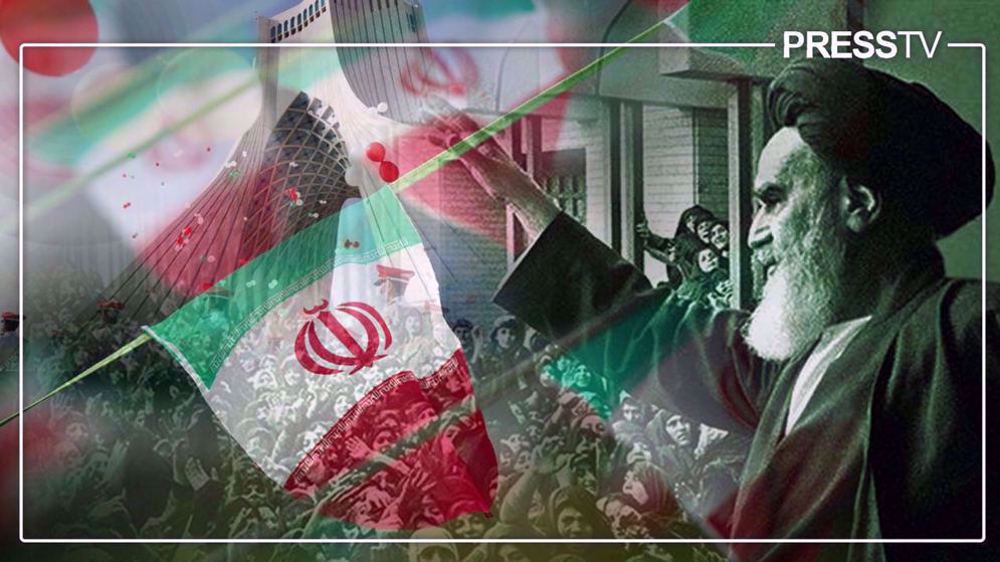
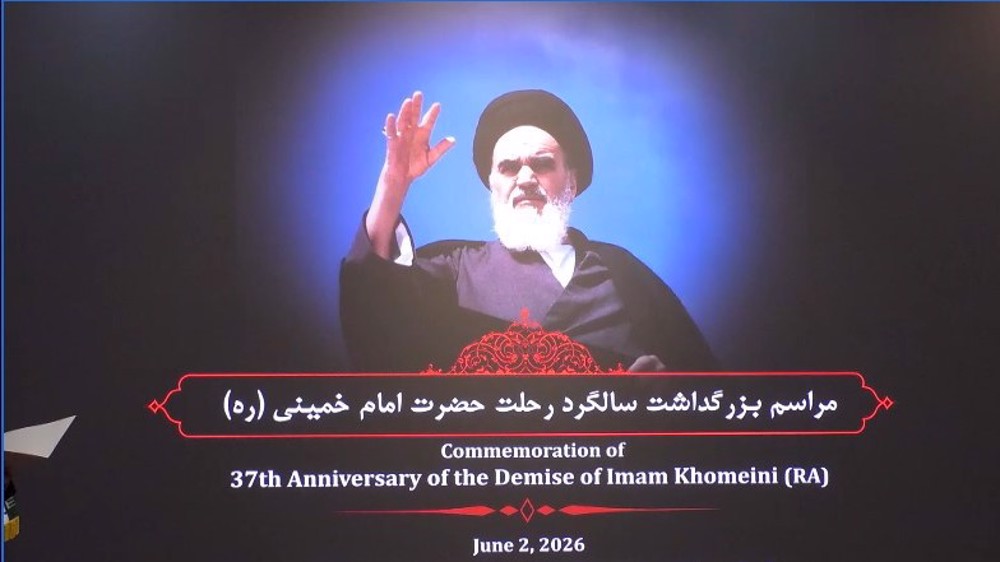
Thirty-seven years after his passing, the name of Imam Ruhollah Mosavi Khomeini continues to resonate far beyond Iran’s borders as the chief architect of an Islamic awakening and a global icon of resistance against arrogant Western powers.
Revered by millions as the founder-leader of the 1979 Islamic Revolution, Imam Khomeini fundamentally reshaped not only Iran’s political destiny but also the intellectual and geopolitical contours of the entire Muslim world.
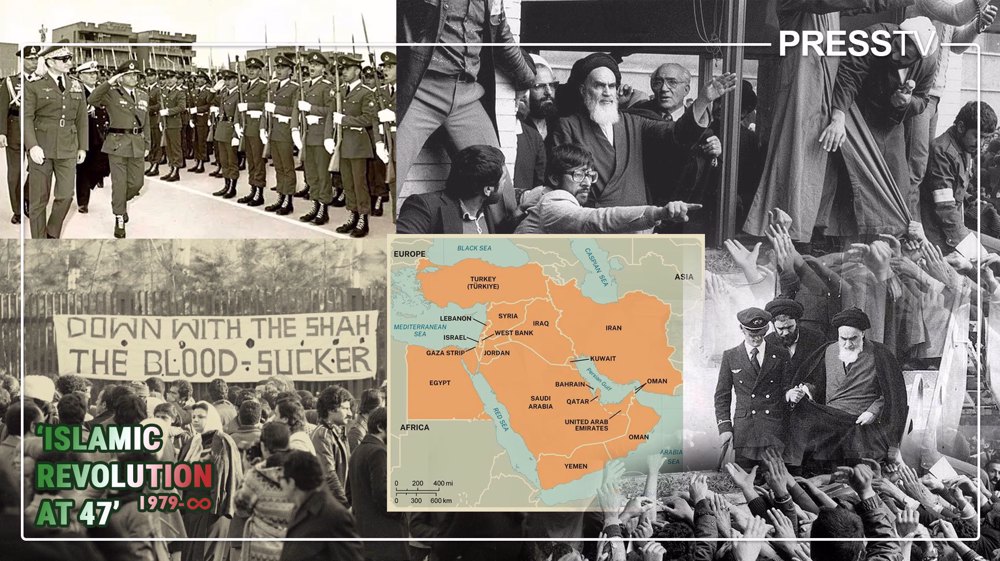
His revolutionary movement toppled one of Washington’s most loyal client monarchies in West Asia, shattered the foundations of Western hegemony in the region, and introduced a new and groundbreaking political discourse rooted in Islamic self-reliance, resistance to imperialism and Zionism, and authentic popular sovereignty.
Imam Khomeini emerged at a time when secular nationalism and imported ideologies were widely seen as the only viable paths for developing nations, when many believed religion and religious beliefs had no place in modern governance.
Defying those unfounded assumptions, he constructed and explained a revolutionary framework that fused spirituality with politics, religious identity with mass mobilization, and anti-imperialist struggle with Islamic governance.
His leadership empowered millions in Iran to rise against the unpopular, West-backed Pahlavi monarchy and later inspired oppressed nations and resistance movements worldwide to challenge foreign domination and occupation.
His legacy, however, extends far beyond the Islamic Republic he founded. From Palestine and Lebanon to Latin America, Africa, and Asia, his ideas helped shape a living axis of resistance against colonialism, Zionism, and global arrogance.
Fearlessly championing Muslim unity, he defended the oppressed regardless of sect or ethnicity, elevated women’s role in political and social life, and constantly emphasized cultural independence and self-reliance.
On the 37th anniversary of his passing, Imam Khomeini remains not merely a historical figure but a living force in global political consciousness – an enduring symbol of brave resistance, dignity, and Islamic awakening.
The emergence of a revolutionary scholar
Born in 1902 in the town of Khomein in central Iran, Imam Khomeini was raised in a deeply religious family known for a legacy of scholarship and resistance. From an early age, he displayed exceptional intellectual ability and spiritual discipline. He pursued advanced studies in Islamic jurisprudence, philosophy, mysticism, ethics, and political thought, eventually rising as one of the leading Shi'a scholars of his generation.
Yet Imam Khomeini never confined himself to the traditional boundaries of clerical life. As Iran descended deeper into authoritarianism under the West-backed Pahlavi monarchy, he increasingly emerged as a political voice against tyranny, corruption, and foreign domination.
The Pahlavi dictator's aggressive Westernization policies, close alliance with the United States and the Israeli regime, systematic suppression of religious institutions, and relentless erosion of national sovereignty deeply alarmed the Imam.
The turning point arrived in the early 1960s when the Shah launched the so-called "White Revolution," a program heavily backed by Washington. Imam Khomeini denounced these "reforms" as a mechanism for consolidating dictatorship and deepening dependence on foreign powers. His fiery speeches against the Shah and his American patrons shook Iranian society and transformed him into the leading face of opposition to the dictatorship.
His arrest in 1963 triggered nationwide protests, many of which were brutally suppressed. But repression only elevated his stature further.
One year later, after he strongly condemned a law granting legal immunity to American military personnel in Iran, he was exiled. What the monarchy believed would silence him instead amplified his voice across the entire Muslim world.
Leader of the Islamic Revolution, Ayatollah Seyyed Mojtaba Khamenei, issued a message on the 37th anniversary of Imam Khomeini’s passing.
— Press TV 🔻 (@PressTV) June 4, 2026
Follow: https://t.co/B3zXG73Jym pic.twitter.com/atXdPuxqwd
Exile and the construction of a revolutionary movement
Imam Khomeini spent years in exile – first in Turkey, then in Iraq, and finally in France. Yet exile became the very incubator of a global revolutionary movement.
Through recorded sermons, written messages, and extensive networks of students and activists across Iran, he maintained direct and sustained influence over Iranian society.
Unlike many opposition figures who focused solely on replacing the Shah, Imam Khomeini articulated a comprehensive political vision for the country. He insisted that Islam was not merely a spiritual faith but a complete system and a way of life – capable of governing society, establishing justice, and resisting all forms of oppression.
His doctrine of Wilayat al-Faqih, or Guardianship of the Islamic Jurist, laid the intellectual foundation for an Islamic government led by a qualified jurist during the occultation of the Twelfth Imam of Shi'as. It offered an indigenous political alternative to both monarchy and Western secularism, rooted firmly in public welfare and Islamic awakening.
More profoundly, Imam Khomeini transformed the struggle against the Shah's monarchy into a moral and spiritual movement. He linked contemporary political resistance with the legacy of Imam Hussain and the immortal tragedy of Karbala, framing the battle against tyranny as a sacred duty of the people.
Ashura thus became the beating heart of revolutionary mobilization. Imam Khomeini repeatedly emphasized that every day is Ashura and every land is Karbala. This infused the revolution with extraordinary emotional power and formed a culture of sacrifice and steadfastness, a culture that continues to define the Islamic Republic and resistance movements to this very day.
The triumphant return and collapse of the monarchy
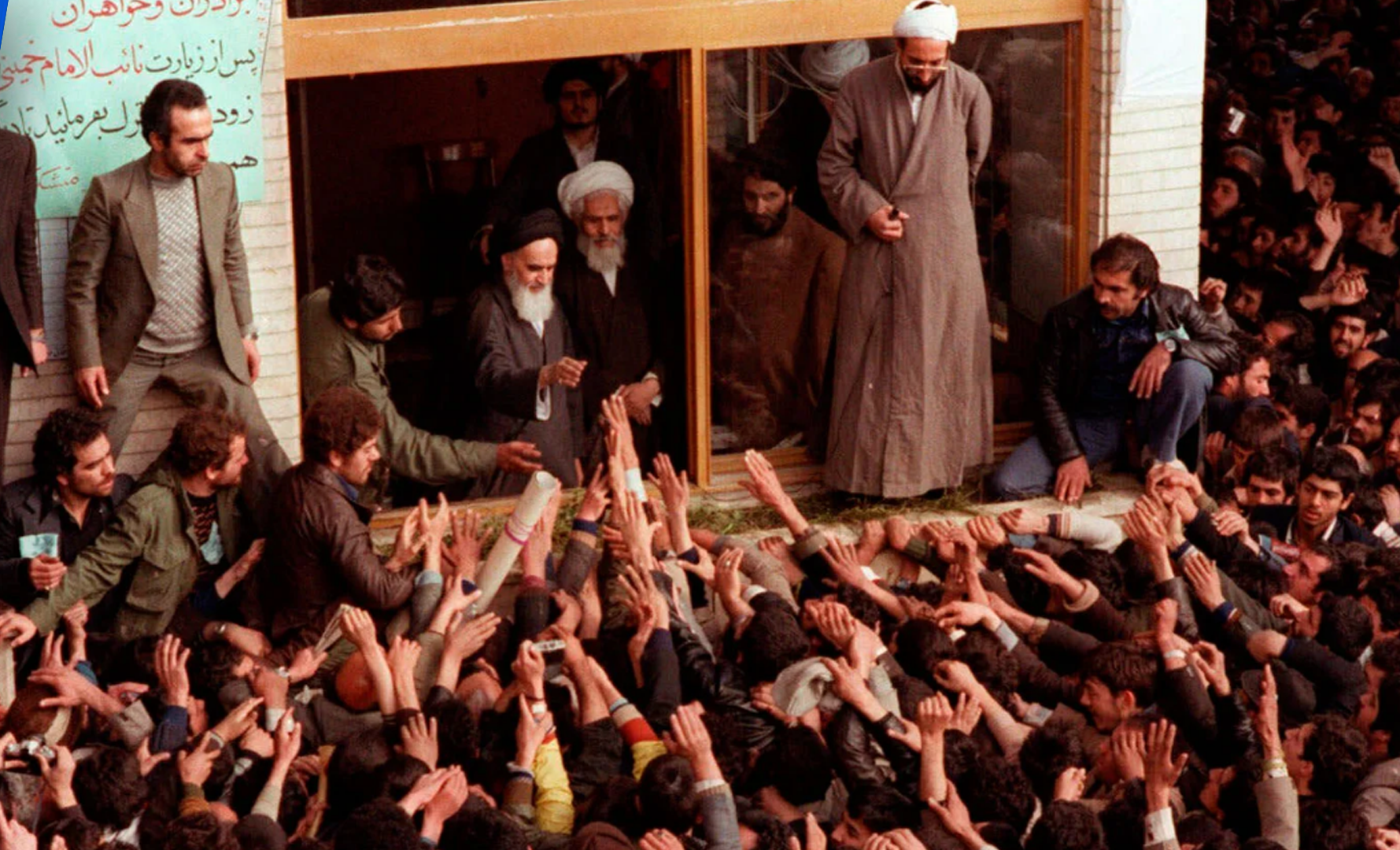
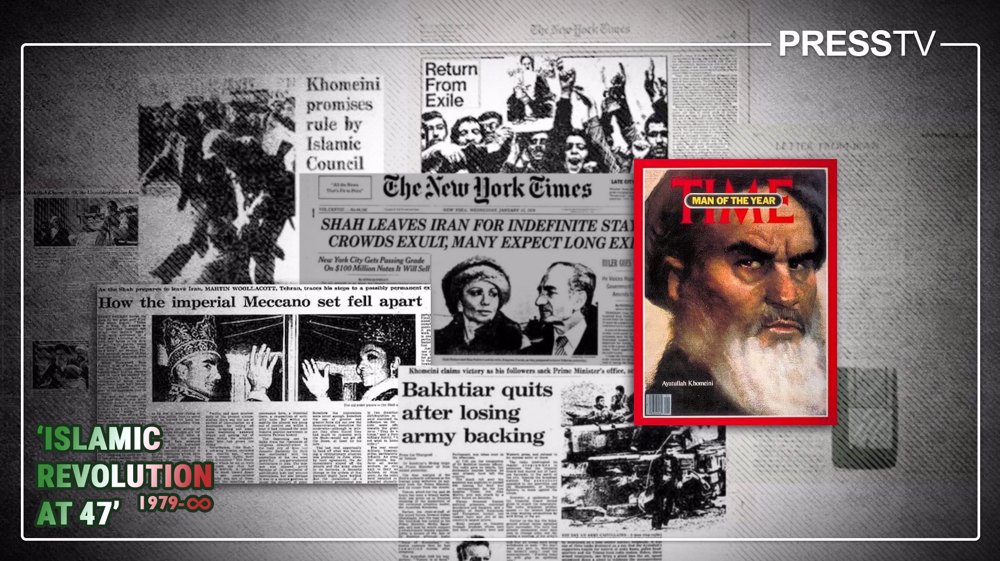
On February 1, 1979, after fifteen years in exile, Imam Khomeini returned to Iran to a reception unprecedented in modern history. Millions flooded the streets of Tehran to welcome him home. The scenes stunned global media outlets, many of which had previously underestimated both his popularity and the revolutionary movement he led.
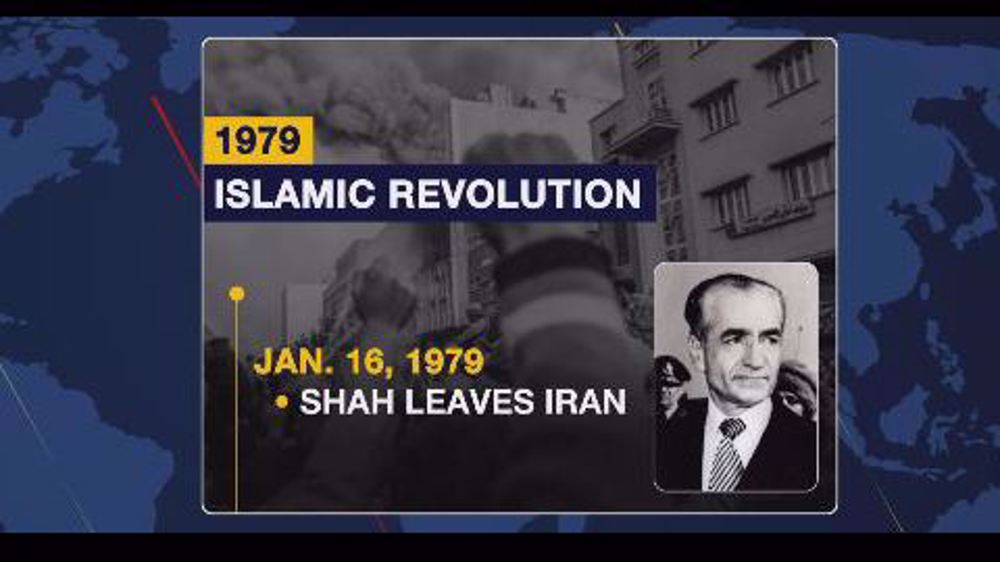
His triumphant return symbolized far more than the homecoming of an exiled leader. It fundamentally reshaped the entire geopolitical order of West Asia. The Pahlavi monarchy, once considered one of the most stable and heavily armed allies of the American hegemony, disintegrated and vanished within days.
Western governments were caught completely off guard. For decades, they had viewed Iran as an unshakable pillar of American influence and intervention in the region. The popular revolution led by Imam Khomeini shattered that assumption entirely and replaced a pro-Western monarchy with an independent Islamic state openly opposed to Western imperialism and Zionism.
Imam Khomeini's rise fundamentally altered the political vocabulary of the Muslim world. Independence, resistance, self-determination, and Islamic governance became central, living themes in regional politics.
Islamic Revolution: How the revolution, led by the late Imam Khomeini, brought an eternal end to monarchical rule in Iran
— Press TV 🔻 (@PressTV) February 4, 2026
Follow: https://t.co/mLGcUTS2ei pic.twitter.com/pSbGKtDVgv
Challenging Western hegemony
One of Imam Khomeini's most enduring legacies was his uncompromising and steadfast opposition to Western domination and hegemony. He consistently and logically insisted that many Muslim nations suffered not merely from domestic corruption but from profound dependency on foreign powers.
The Islamic Revolution directly challenged American influence in West Asia. Iran under the Shah had served as Washington's regional gendarme, safeguarding Western strategic and economic interests at every turn. The 1979 Islamic Revolution overturned that arrangement entirely and forever.
Imam Khomeini described the United States as the principal supporter of dictatorship, exploitation, and Zionist expansion in the region. His famous characterization of America as the "Great Satan" reflected a broader and deeply principled critique of imperialism and global inequality.
What truly distinguished his anti-imperialism was its fusion with religious identity. He argued that political independence without cultural and intellectual sovereignty was incomplete. Muslim societies, he believed, needed liberation not only from foreign occupation but also from intellectual subordination to Western models.
This message resonated deeply across the developing world. Revolutionary movements, anti-colonial activists, and oppressed communities increasingly viewed Iran as a living example of successful resistance against a superpower-backed order.
Palestine at the heart of Imam Khomeini’s vision
Among the defining pillars of Imam Khomeini’s worldview was unwavering support for Palestine. He viewed the Palestinian struggle not as a narrow territorial dispute but as a moral and civilizational issue central to the Muslim world.
He repeatedly denounced the Israeli regime as an illegitimate occupying regime imposed through colonial powers such as Britain and America. One of his earliest and most consequential acts after the 1979 Islamic Revolution was severing ties with Israel and handing over the former Israeli embassy in Tehran to the Palestine Liberation Organization.
Imam Khomeini also institutionalized support for Palestine through initiatives such as International Quds Day, observed annually on the last Friday of Ramadan. Quds Day transformed Palestinian solidarity into a global movement and kept the issue alive in Muslim and global political consciousness.
More significantly, his ideas inspired the emergence of resistance movements across the region, particularly in Lebanon and Palestine. Groups that later formed the backbone of the Axis of Resistance drew heavily from his doctrines of steadfastness, sacrifice, and confrontation with occupation.
Today, the continued resilience of Palestinian resistance movements and the broader anti-Israel resistance axis owes much to the ideological foundations laid by Imam Khomeini.
Late founder of the Islamic Revolution Imam Khomeini viewed economic pressure as an opportunity for awakening self-reliance.#IR47
— Press TV 🔻 (@PressTV) February 8, 2026
Follow: https://t.co/mLGcUTS2ei pic.twitter.com/99NGoOtKN9
Muslim unity beyond sectarian divisions
Imam Khomeini consistently warned against the scourge of sectarianism and division within the Muslim world. He believed colonial powers historically exploited sectarian differences to weaken Muslim societies and maintain their illegitimate dominance.
Rather than emphasizing sectarian identity, he promoted unity around shared Islamic principles and common political interests. He frequently called for solidarity between Sunni and Shi’a Muslims and condemned attempts to inflame sectarian conflict.
One of his major initiatives was the designation of the week between the Sunni and Shi’a commemorations of the Prophet Muhammad’s birthday as Islamic Unity Week. The move symbolized his broader vision of transcending sectarian boundaries.
For Imam Khomeini, unity was not merely theological but strategic. He believed fragmented Muslim societies could not effectively resist foreign domination or defend oppressed peoples, which has proved true in much of the world today.
This emphasis on unity later became central to the resistance axis, which includes diverse movements and actors united primarily by opposition to occupation and imperialism rather than sectarian identity.
Women at the heart of revolutionary transformation
Contrary to Western portrayals, Imam Khomeini strongly emphasized the role of women in society and revolution. He viewed women as essential participants in the political, social, and cultural transformation of the country.
Women played a major role in the Islamic Revolution, participating in demonstrations, political activism, education, and post-revolution nation-building. Imam Khomeini consistently praised their contributions and emphasized that society could not advance while sidelining half its population.
His perspective differed fundamentally from both Western liberal feminism and traditional patriarchal attitudes. He advocated women’s dignity, education, social participation, and political engagement within an Islamic moral framework.
Under the Islamic Republic, women expanded their presence in universities, professional sectors, scientific research, and politics. The Islamic Revolution undeniably transformed women into major actors in Iranian public life, which is evident today as women in Iran continue to excel in different fields, surpassing women in Western societies.
Imam Khomeini’s approach reflected his broader philosophy: modernization did not require imitation of Western cultural models.
Imam Khomeini to the enemies of Iran:
— Press TV 🔻 (@PressTV) April 16, 2026
"Instead of praying for my death, you should pray for God's death, since He is the one who supports the Iranian nation."
Follow Press TV on Telegram: https://t.co/LWoNSpkJSh pic.twitter.com/BkxjHOHYOr
The imposed war and the culture of resistance
Only months after the Islamic Revolution consolidated power, Saddam Hussein’s Ba'athist Iraq invaded Iran with support from many Western and regional powers. The eight-year imposed war became one of the defining experiences of the nascent Islamic Republic.
Imam Khomeini described the war as a defense of Islam, independence, and revolutionary identity. Despite severe international isolation, economic sanctions, and military disadvantages, Iran resisted the brutal military invasion and ultimately prevented the collapse of the newly founded state.
The war entrenched a culture of resistance and self-reliance that remains central to Iran’s strategic doctrine today, something that was seen in the recent wars as well. It also deepened the revolutionary ethos of sacrifice inspired by Karbala and Ashura.
For the supporters of the Islamic Revolution, the war demonstrated the practical power of faith-based mobilization against overwhelming odds.
The letter to Gorbachev: A warning about materialism
In 1989, shortly before his passing, Imam Khomeini sent a historic letter to Soviet leader Mikhail Gorbachev. The message was remarkable not only because it predicted the collapse of communism but because it framed the crisis of the Soviet Union as spiritual and philosophical rather than merely economic.
Imam Khomeini argued that Marxism had failed because it neglected humanity’s spiritual needs. He warned Gorbachev against turning toward Western capitalism as an alternative, arguing that both systems suffered from materialism and moral decay.
The letter reflected Imam Khomeini’s broader intellectual discourse: offering Islam as a comprehensive civilizational alternative capable of addressing both material and spiritual dimensions of human life.
In hindsight, many observers regard the letter as one of the most significant political communications of the late Cold War era.
A political identity rooted in Islam
One of Imam Khomeini’s greatest achievements was reconstructing political identity around Islam at a time when secular nationalism dominated much of the Muslim world.
He rejected the notion that religion should remain confined to personal spirituality. Instead, he argued Islam possessed political, economic, ethical, and social dimensions capable of organizing society comprehensively.
This framework empowered millions who felt alienated by Westernized elites and disconnected from imported ideological systems. It gave religious identity renewed political relevance while simultaneously grounding resistance movements in moral legitimacy.
His ideas inspired not only state structures in Iran but also broader intellectual currents advocating cultural authenticity, sovereignty, and resistance to domination.
✍️Imam Khomeini’s leadership united Iranians, overthrew a Western-backed monarchy, established Islamic governance, and inspired global resistance to imperialism.
— Press TV 🔻 (@PressTV) February 13, 2026
By @mehdizafarhttps://t.co/osdbgNg1Qk pic.twitter.com/6duiQqumwY
The globalization of resistance
Perhaps the most enduring geopolitical consequence of Imam Khomeini’s illustrious legacy is the rise of what later became known as the Axis of Resistance.
From Lebanon to Palestine, Iraq, Yemen, and beyond, movements opposing occupation and foreign intervention increasingly drew ideological inspiration from the Iranian revolutionary experience led by Imam Khomeini and, after him, by Ayatollah Seyyed Ali Khamenei.
Imam Khomeini transformed resistance from a localized reaction into a transnational framework rooted in dignity, sacrifice, and anti-imperial solidarity.
This influence extended beyond the West Asia region. Across Latin America, Africa, and Asia, anti-colonial activists and independent political movements viewed the Islamic Revolution as proof that a determined population could overthrow a regime backed by a superpower.
Even decades after his passing, many of the slogans, symbols, and strategic concepts associated with contemporary resistance movements trace directly back to Imam Khomeini’s teachings and legacy.
The passing of a revolutionary leader
Imam Khomeini passed away on June 3, 1989, plunging Iran into mourning. Millions attended his funeral in one of the largest public gatherings in modern history.
Yet his passing did not diminish his influence. The institutions he established, the ideology he articulated, and the resistance culture he cultivated continued to shape Iran and the wider region under the leadership of his worthy successor.
Under the leadership structure he created, the Islamic Republic survived crippling and illegal sanctions, isolation, imposed wars, covert operations, and sustained external pressure while steadily expanding its regional influence.
More than thirty-five years after his passing, Imam Khomeini remains one of the most consequential political and religious figures of the modern era.
His ideas continue to drive political debates across the Muslim world and beyond.
As Leader of the Islamic Revolution, Ayatollah Seyyed Mojtaba Khamenei, said in his message on Thursday, the martyred Leader of the Islamic Revolution transformed the 14th of Khordad, the anniversary of Imam Khomeini’s passing, into an annual occasion for the Iranian nation to renew its pledge to the founder of the Islamic Revolution.
He said Ayatollah Khamenei’s school of thought follows the same path as Imam Khomeini’s, rooted in the pure Islam of Prophet Muhammad (pbuh), whose foundation rests on rising for the sake of God, with its followers committed to upholding truth and eradicating falsehood.
Ex-US counterterror chief: Washington must accept Iran as major regional power
Iran, Iraq reaffirm commitment to consultations to maintain regional peace and security
President Pezeshkian: Leader’s message of unity key to safeguarding Iran’s national interests



Another US soldier killed in Iraq amid mounting casualties from Iranian strikes
VIDEO | 'They are very totalitarian in nature': Alon Mizrahi
Israeli policies threaten Palestinian Christian existence in Holy Land: Church
Yemen’s Ansarullah warns region heading toward explosion
VIDEO | Palestinian man, who was presumed dead, reunites with family
Iran air defense downs multiple enemy drones, cruise missile
VIDEO | Press TV 's news headlines
VIDEO | Most Americans do not realize the resilience of Iranian people: Analyst


 PressTV NEWSLETTER
now
PressTV NEWSLETTER
now
 This makes it easy to access the Press TV website
