Trump faces only ‘bad’ or ‘worse’ options on Iran: IRGC general
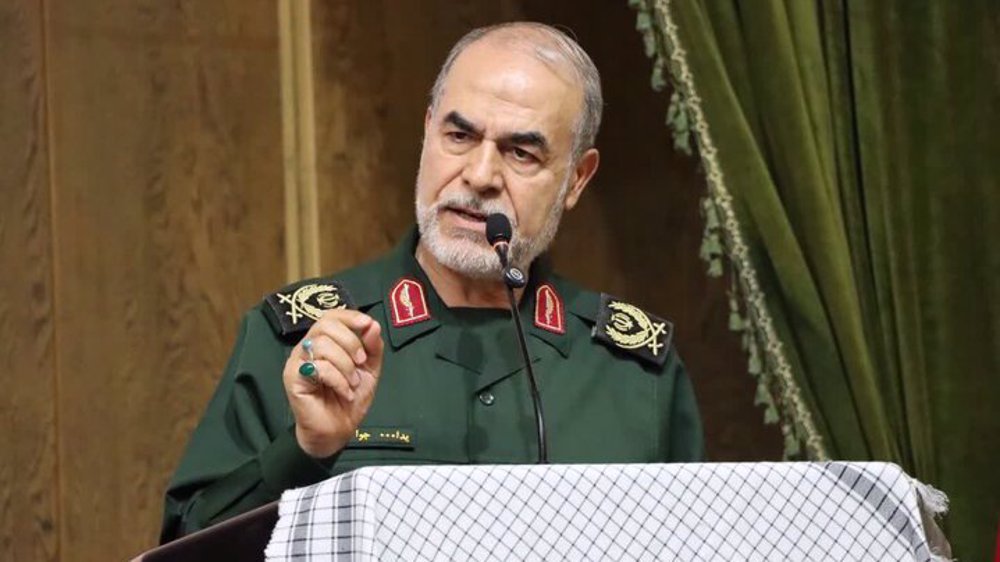
A high-ranking commander of the Islamic Revolution Guards Corps (IRGC) says US President Donald Trump has no good option with regard to Iran and has to choose between a “bad” or “worse” path.
“Trump, whose defeat in the war has become evident to anyone, now faces two paths forward: the bad path or the worse path,” IRGC Deputy for Political Affairs Second Brigadier General Yadollah Javani said on Saturday evening.
Javani hastened to add that the US president must choose between recognizing the conditions and rights of the Iranian nation or continuing the war of aggression against the Islamic Republic.
He emphasized that the enemy has made a strategic mistake in its calculation to launch a war of aggression against the Iranian nation.
“Iran has won this battle, and the United States is going down the spiral of defeat and decline,” Javani stated.
The senior IRGC commander added that Washington and the Tel Aviv regime waged a large-scale and unprovoked onslaught against Iran, mistakenly assuming victory is within reach in a matter of a few days, while their strategic objectives included obliteration of the country’s nuclear capabilities, elimination of its missile capacities, and ultimately overthrow of the Islamic establishment.
He pointed to the shift in regional equations in favor of Iran, stating that the Islamic Republic now holds a dominant position over the strategic Strait of Hormuz, and has attained a status and a legitimate right of the Iranian nation after 500 years.
“Iran is now in a position of victory and superiority. The Islamic Republic has declared its conditions for breaking the current impasse, and it is now the United States’ turn to take a decision on the matter,” Javani said.
He underscored the need for preservation of national unity and cohesion in order to safeguard the country’s achievements.
“There is a consensus among the Armed Forces, diplomats, and people from all walks of society that the rights of the Iranian nation must be ensured, whether through negotiations and an agreement, or other means,” Javani noted.
The senior IRGC commander finally warned against any further miscalculations by the enemy, stressing that Iranian Armed Forces are fully prepared, and their response will be much stronger, more decisive, and more unthinkable in case the enemy commits another mistake.
On February 28, following the assassination of Iran’s late Leader of the Islamic Revolution Ayatollah Seyyed Ali Khamenei and several high-ranking military commanders, the United States and Israel initiated a large-scale and unprovoked war of aggression against Iran.
In response, Iranian Armed Forces executed 100 waves of counterattacks over 40 days, targeting US and Israeli military assets, which resulted in significant damage.
A Pakistani-mediated two-week ceasefire was brokered on April 8, allowing for negotiations in Islamabad, where Iran proposed a ten-point plan seeking US troop withdrawal and the lifting of sanctions.
Despite 21 hours of intense talks on April 11 and 12, the Iranian delegation returned to Tehran without an agreement, citing deep mistrust regarding Washington’s willingness to honor its commitments.
Amid these tensions, US President Donald Trump announced a naval blockade of the Strait of Hormuz aimed at intercepting vessels that had paid tolls to Iran.
Iran has made clear that any return to ceasefire negotiations depends on the lifting of the US naval blockade. Officials have argued that the continued blockade constitutes a violation of the truce.
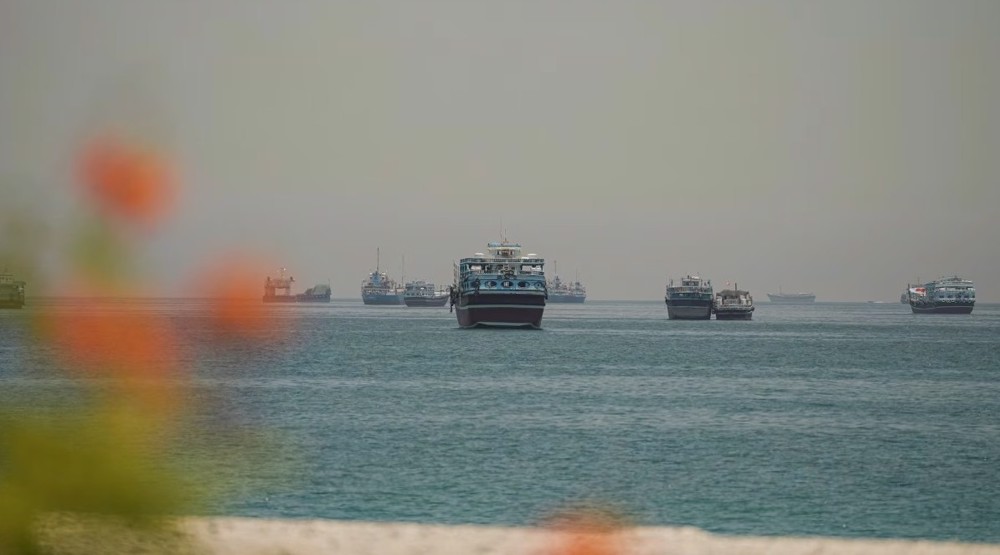
IRGC Navy: 28 vessels permitted to cross Hormuz Strait in past 24 hours
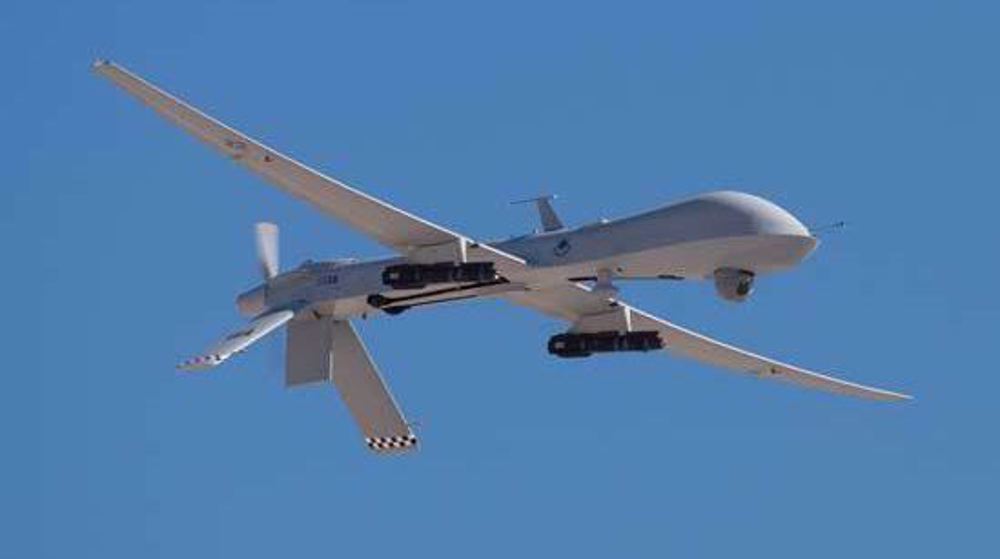
IRGC shoots down intruding US MQ-1 Predator drone over Persian Gulf
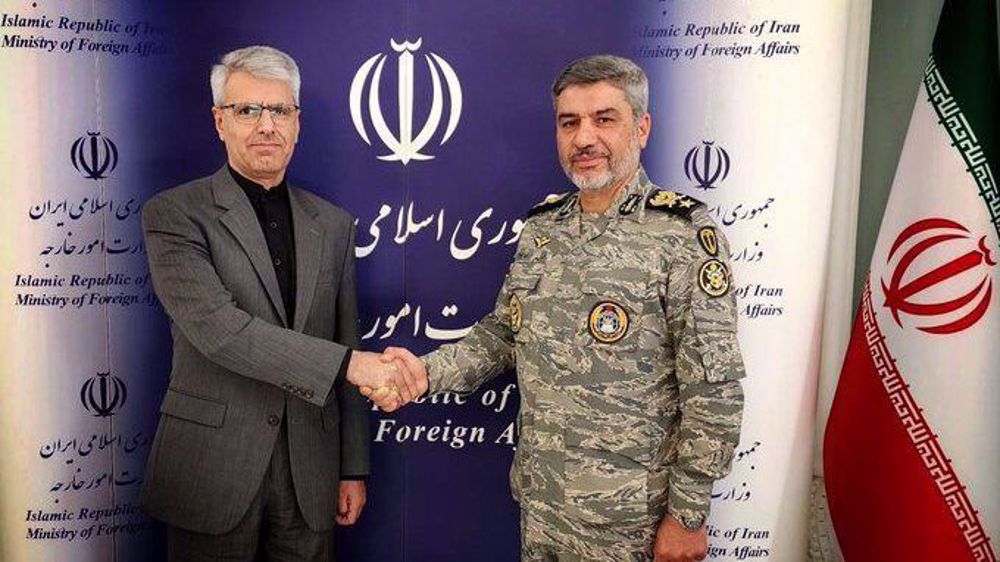
Iran Army, Foreign Ministry stress battlefield-diplomacy synergy in safeguarding national interests



Iran pushing back enemy in ‘history-making’ war: Parliament speaker
Handala hacktivists target Israeli center, extract classified documents
US planning faster troop withdrawal from Europe amid rift: Report
VIDEO | The balance of power has shifted
IRGC Navy: 28 vessels permitted to cross Hormuz Strait in past 24 hours
Poll: Two-thirds of Iranians proud of nation’s global standing; 59% say Iran won the war
Pakistan reaffirms Palestine stance, rejects Israel recognition
Denmark’s ‘baseless’ terror allegations aimed at isolating Iran: Embassy


 PressTV NEWSLETTER
now
PressTV NEWSLETTER
now
 This makes it easy to access the Press TV website
