Finger on trigger: Iran pursues diplomacy to end imposed war, yet military stands locked and loaded
By Press TV Strategic Analysis Desk
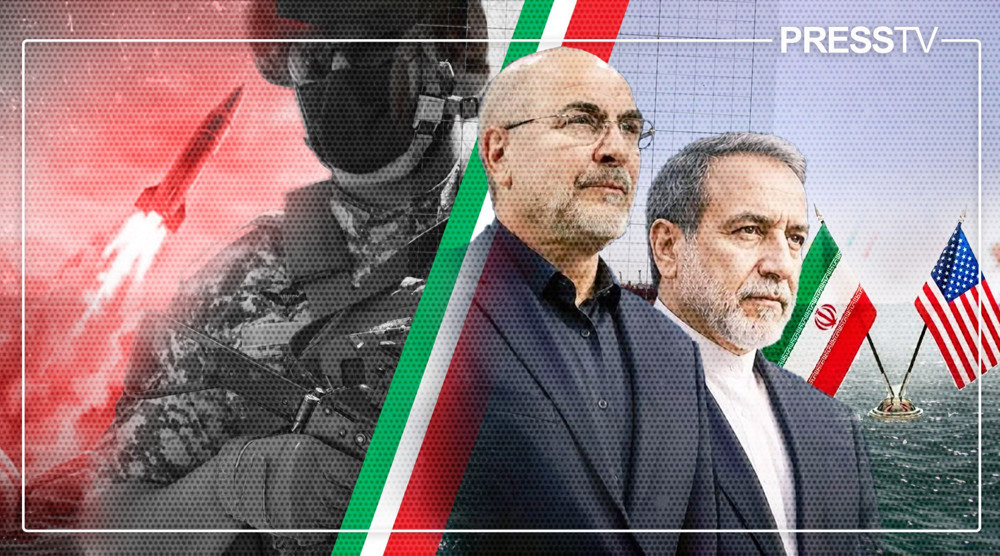
In the high-stakes cauldron of the war imposed on the Iranian nation, an undeniable truth defines the strategic equilibrium: simultaneously with negotiations to end the war, the Iranian armed forces have their fingers firmly on the trigger.
This is not a posture of aggression but credible deterrence, a strategic doctrine Iran has operationalized in the three months since the US-Israeli military aggression.
As diplomatic channels remain open, Iran has demonstrated through decisive and battle-proven military actions that diplomacy and military preparedness are not opposing strategies. They are, in fact, complementary instruments of national power.
The events of the past 24 hours, particularly the clash in the country's south and the swift, decisive response to provocative and dangerous American adventurism, reaffirm a critical reality that Washington would be wise to absorb before it is too late: Iran is not merely defending its borders, but it is actively cementing its emergence as a regional superpower.
Decisive action in the face of new provocation
Last night's confrontation in southern Iran between Iranian and American forces was no ordinary skirmish. It was a calculated, powerful message to the enemy. It demonstrated, in real-time, the preparedness and unwavering decisiveness of Iran's armed forces.
While diplomats are exchanging messages, the military apparatus has proven that diplomatic engagement must not be construed as a sign of weakness. Rather, it is a parallel track backed by an iron fist of Iranian armed forces. The message to Washington and its allies is clear: any attempt to exploit the diplomatic process for military adventurism will be met with immediate, overwhelming, and decisive action.
This pattern of behavior is not new, but its latest manifestation is particularly instructive. During the Islamabad negotiations, the enemy sought to take undue advantage of the ceasefire atmosphere a few times. Believing that Iran would be reluctant to respond during the period of active diplomacy, the enemy attempted a symbolic military act – a theatrical demonstration of power designed to inject pressure into the negotiations.
The goal was simple: to alter the diplomatic calculus by showcasing military superiority.
That gambit failed disastrously. Just as it did then, over the past several nights, the enemy again attempted provocative military maneuvers. The objective remained the same: to undermine and sabotage the diplomatic process, to intimidate Iranian negotiators, and to reshape the negotiating table in its own favor.
But once again, the enemy was met with the swift and decisive reaction of Iran's armed forces. The lesson has been learned, and it has been reinforced.
In what can only be interpreted as a theatrical reaction to Iran's firmness, last night saw the terrorist American army launch an airstrike on areas of Bandar Abbas in southern Iran, as well as targeting small vessels in the Strait of Hormuz.
✍️ Analysis - Zero-sum terminus: Iran’s roadmap to ending war on its terms vs. America’s choice between bad and worse
— Press TV 🔻 (@PressTV) May 25, 2026
By Press TV Strategic Analysis Deskhttps://t.co/ZMtqWUnToD
The enemy's calculus: Testing Iran's resolve
It was not a pre-emptive strike but a desperate act of aggression in response to the decisive action taken by the armed forces of the Islamic Republic of Iran. The sequence is critical: While Iran acted swiftly and decisively, the enemy reacted impulsively. This dynamic, more than any other, reveals the shifting balance of power following the 40-day imposed war.
Through these provocative military actions, the enemy is attempting to measure two critical variables. First, the level of preparedness of Iran's armed forces, and second, the degree of decisiveness, the motivation for engagement, and the likely scale and intensity of any Iranian response. In essence, the enemy is conducting a live-fire stress test of Iran's national will.
The results are now in, and they are conclusive, leaving no doubt or ambiguity.
By measuring Iran's behavior in the face of these foolhardy provocations, the enemy has gained a precise, unmistakable portrait of Iran's seriousness, decisiveness, and self-confidence in ongoing negotiations.
Furthermore, this behavior reveals how Iran perceives both itself and its adversary. The decisive action taken by the Iranian armed forces has done more than repel a tactical threat. It has fundamentally corrected the enemy's strategic calculations.
Prior misconceptions about the level of Iran’s preparedness, the motivation of its forces, and their self-confidence have been completely shattered. The enemy now operates under a corrected, and far more humbling, understanding of Iranian power.
The emerging superpower: Initial results
As remaining issues concerning Iran's preconditions for ending the third imposed war become clearer, the initial results of Iran's superpower status are now emerging.
This is not aspirational rhetoric, as some Western pundits like to believe, but it is an observable geopolitical reality. Simultaneously with the exchange of messages between Iran and the US over the draft memorandum of understanding to end the war, the behavior of regional and extra-regional powers has shifted noticeably.
These powers recognize what the American military is only beginning to grasp: the emerging document is entirely aligned with strengthening Iran's power, not diminishing it.
The clearest evidence of this superpower emergence is the public announcement of readiness by regional countries to strengthen ties with the Islamic Republic. Critically, these countries are offering significant concessions as well. Their objective is no longer to contain Iran, but to align with it for their own benefit. This movement – the active courting of Tehran – represents the unmistakable beginning of Iran's era of superpower status.
Perhaps the most devastating revelation for the enemy has been America's manifest weakness. Throughout this war, the US has demonstrated an inability to defend itself and its own military bases scattered across the region.
Consequently, and more damagingly for its regional credibility, America has proven incapable of protecting its allies from Iranian retaliatory attacks.
✍️ Analysis - Dawn of a new era: Third imposed war winds down with Iran's ascendency as US hegemony collapses
— Press TV 🔻 (@PressTV) May 24, 2026
By Press TV Strategic Analysis Deskhttps://t.co/fKKeWo0SQH pic.twitter.com/V6oKprAY2B
American power – not absolute, not reliable
The strategic position that Iran has emphasized for years – that American power is neither absolute nor reliable – has been proven correct before the eyes of the Persian Gulf states.
This demonstration of American vulnerability has profound implications. It is now predicted that the movement of Persian Gulf countries toward Iran will not be limited to economic or diplomatic ties. Instead, their determination to strengthen relations with Tehran will include explicit defense and security arrangements.
Recognizing this new trajectory, the US has attempted a desperate counter-maneuver. To neutralize this emerging reality and with the explicit goal of distancing regional countries from Iran in the post-war period, Trump has forced these countries to accept normalization with the Zionist regime under the so-called Abraham Accords.
This is not a strategic initiative but a rearguard action born of weakness.
Critically, the hesitation – and in some cases outright opposition – of several key regional countries to this forced normalization is yet another sign of America's growing weakness.
Following its failure in the third imposed war, American power and influence are in demonstrable decline. When allies begin to balk at American demands, like normalizing with the apartheid regime, it’s clear the superpower's sunset has effectively begun.
The humiliated enemy, continuing hostility
However, strategic clarity demands realism. The humiliation and weakness the enemy now suffers following its astonishing failure in the recent war – its defeat in imposing and achieving any of its objectives – does not mean a permanent retreat from pressuring Iran.
The enemy's nature is unchanged, and it will continue its hostile actions through alternative avenues and methods. Should the opportunity arise again, it will repeat its aggressive actions, and it has been proven in the past. Victory in the current phase does not mean the end of hostility, but it means the beginning of a new, more vigilant phase.
Even now, in these conditions of relative Iranian advantage, the possibility of a return to full-scale military confrontation must be taken seriously. The enemy's calculus could shift based on two factors. First, it may calculate that the losses from accepting Iran's preconditions outweigh the risks of renewed war. Second, it may seek to escalate pressure on the diplomatic track through yet another military strike.
Even if an agreement to definitively end the war is finalized in Iran's favor and even if Iran's every demand is met, the enemy will continue its hostile actions.
In fact, its motivation will likely increase. Having suffered a strategic defeat, the enemy will seek to neutralize and compensate for its losses. This will take multiple forms: soft war (propaganda, economic pressure, cyber operations), hard war (military provocations), and hybrid warfare (combining all instruments of coercion). The agreement, if reached, is not the end of American hostilities but the beginning of a new phase of rivalry.
✍️ Analysis - Empire at its nadir: Trump’s hollow threats mask America’s descent as Iran stamps its authority
— Press TV 🔻 (@PressTV) May 23, 2026
By Press TV Strategic Analysis Deskhttps://t.co/czqWG1A8LM
Agreement to end war, not end of US hostilities
For both parties, an end-of-war agreement, even one concluded entirely in Iran's favor, is not the end of the line. For America, the objective will be to rebuild or repair its global standing, which lies tattered, remove the "defeated" label firmly stamped upon its forehead, and restore its lost dominance in the region.
For Iran, the task is equally demanding: completing its victories, consolidating its hard-won achievements, and transforming tactical success into enduring strategic advantage.
Thus far, the final result of the enemy's acceptance of Iran's preconditions for ending the war is overwhelmingly in Iran's favor and to America's detriment.
This is in itself a historic and undeniable achievement. However, Iran's diplomatic capability, the resilience of its government and nation during prolonged negotiations, and its ability to function in a "neither war nor peace" atmosphere could yet produce an even stronger, more robust document in line with national interests.
Yet absolute certainty is the enemy of strategic wisdom. Given the relativity of all these factors, one can never guarantee one hundred percent of national interests. A complete judgment on any potential agreement's outcomes is not possible in the short term. The full effects must be examined over the long term, through patient strategic observation.
Nevertheless, one truth stands firm, undeniable, and decisive: Iran's finger remains on the trigger, its eyes fixed on the horizon, and its path forward is one of continued strength, emerging superpower status, and the definitive end of this imposed war on Iranian terms.
Mission unaccomplished – Part VI: US sought Iran’s surrender but got a new regional superpower
Contrary to enemy propaganda, Iran’s defense sector continues to make progress: Top general
Iran marks 39th anniversary of Sardasht chemical massacre, demands accountability from Western enabl


Iran monitors US compliance moment-by-moment, won’t implement MoU unilaterally: FM spox
Hezbollah MP blasts ‘sell-out’ government, says Lebanon central to any Iran-US deal
Israeli army demolishes buildings across Gaza as ceasefire violations continue
VIDEO | Press TV's news headlines
VIDEO | Thousands displaced by earthquake in Venezuela receive temporary shelters
Iran will respond decisively to any ceasefire violation: Acting defense minister
Trump criticized Spain for not meeting NATO spending targets
Arab League, Arab Parliament condemn repeated Israeli attacks on Syria


 PressTV NEWSLETTER
now
PressTV NEWSLETTER
now
 This makes it easy to access the Press TV website
