Ghalenoei's 2026 World Cup squad blends experience and youth to break Iran's knockout jinx
By Mohammad Ali Haqshenas
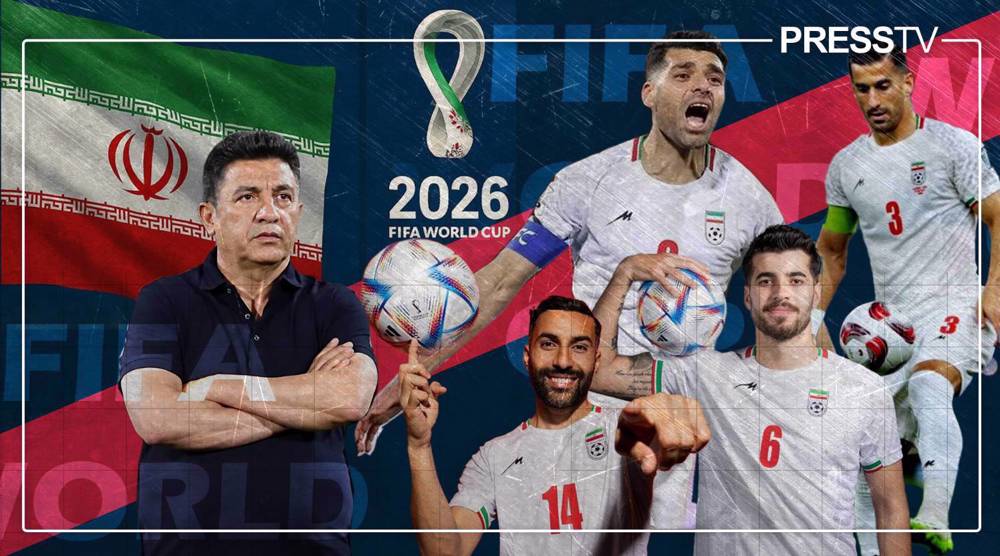
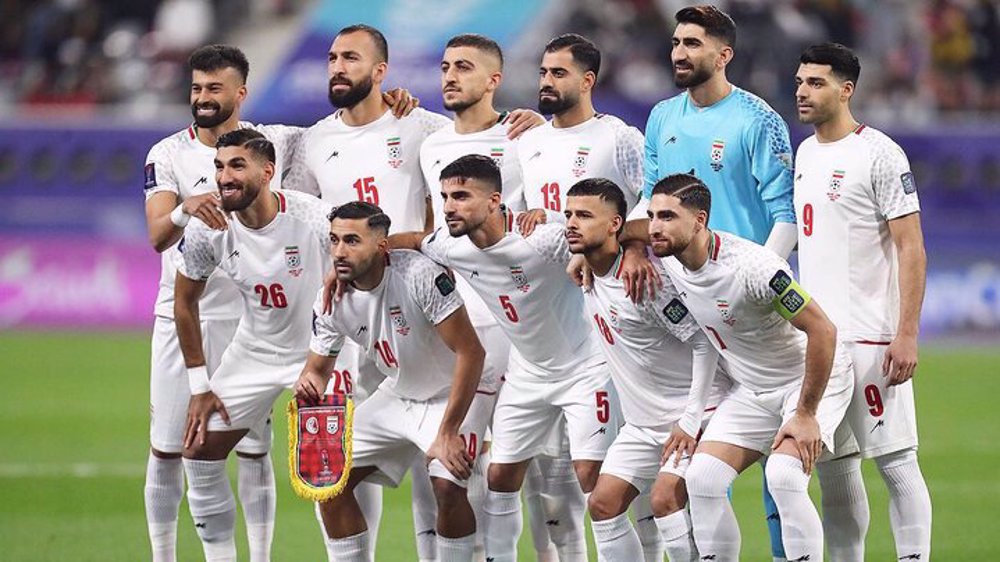
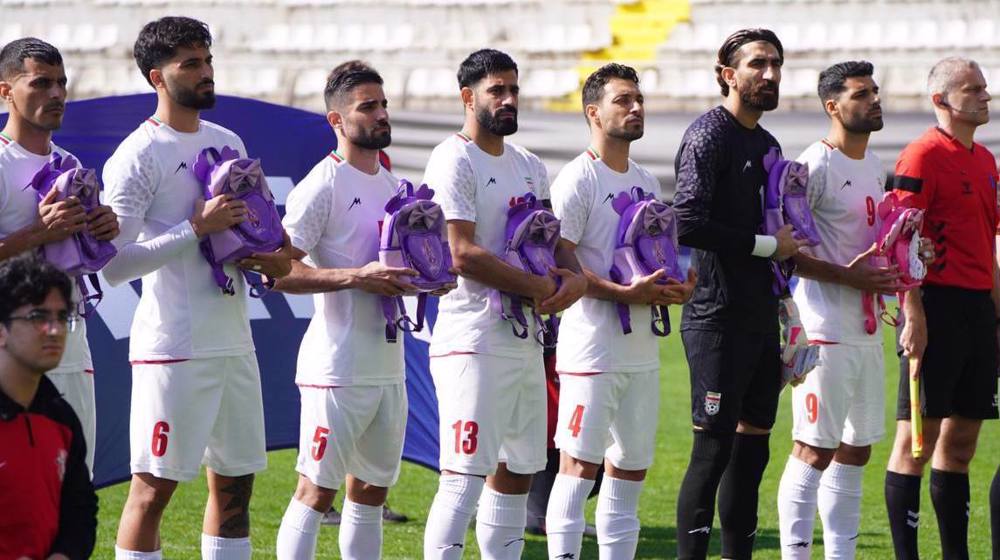
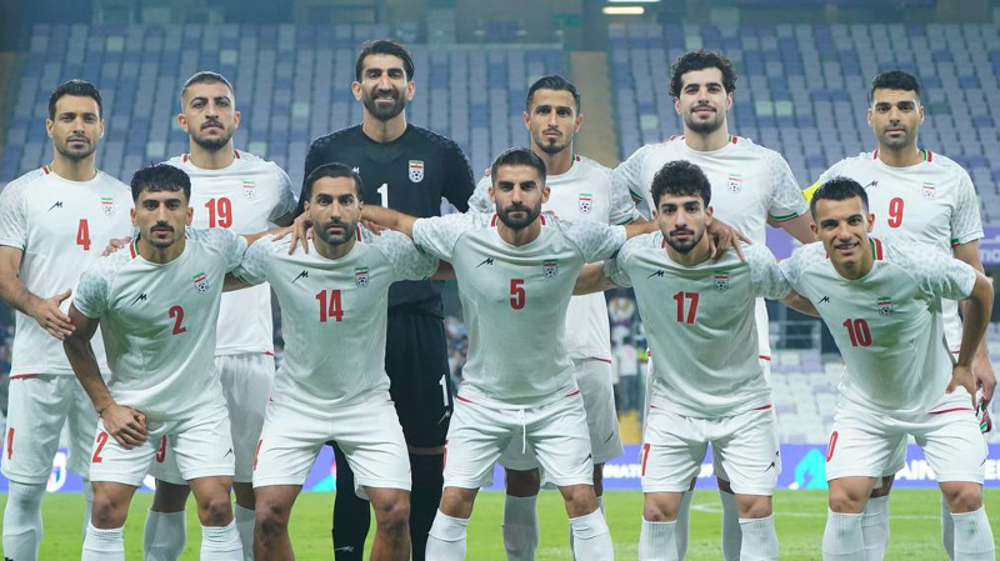
Prioritizing domestic league players and tactical versatility, Iranian football team head coach Amir Ghalenoei has put together a pragmatic, battle-hardened squad determined to finally break Team Melli's FIFA World Cup knockout-stage jinx.
As the world's top football teams prepare to head to North America for the 2026 FIFA World Cup, Team Melli – Iran's national team – finds itself at a fascinating and high-stakes crossroads.
On Saturday, Ghalenoei unveiled his provisional 30-man squad. His strategy for Iran's World Cup hopes rests on two pillars: a reliable core of experienced domestic league players, complemented by versatile role players and a few promising young talents.
The squad breakdown shows that Iran's 2026 campaign will not be about a complete generational overhaul, but rather about smart, practical choices.
Facing the biggest challenge of his coaching career, Ghalenoei has formed a team focused on collective toughness over individual star power.
He is betting that strong defense and tactical adaptability can finally guide Iran past the group stage and into the knockout rounds for the first time in the country’s history.
⚽ Donyamali: National team is sworn to bring honor at 2026 World Cup
— Press TV Sports (@presstvsports) May 13, 2026
Minister of Sports and Youth said members of Iran's national football will once again prove themselves at the 2026 World Cup in the US. @presstvsports pic.twitter.com/xM6DmfKbsA
Squad overview: Domestic backbone and versatility doctrine
A close look at this 30-man roster reveals a clear break from the squads that represented Iran at the 2018 and 2022 World Cups under Ghalenoei’s predecessor, Carlos Queiroz.
Those previous teams relied heavily on established "legionnaires" – the common term in Iran for players competing in European leagues. Ghalenoei's 2026 squad, by contrast, leans overwhelmingly on the domestic Persian Gulf Pro League.
The domestic stars lead the way. League champions Persepolis FC have five players on the roster, followed by Tractor SC and Sepahan SC with four each, and Esteghlal FC with three. Only eight foreign-based players make the list, a clear sign of a shift in coaching philosophy.
The squad's age profile shows a distinct, almost divided character. On one hand, Ghalenoei has kept an aging, golden-generation core that includes defensive stalwarts Shojae Khalilzadeh and national team captain Ehsan Hajsafi.
On the other hand, he has added five under-23 prospects to the mix, including 19-year-old winger Amirhossein Mahmoudi and fellow 19-year-old forward Kasra Taheri.
Ghalenoei's overall approach seems focused on tactical versatility. In a tight, grueling World Cup schedule, players who can fill multiple positions are extremely valuable.
⚽ Kanani Zadegan: In the 2026 World Cup, we will only think of Iran
— Press TV Sports (@presstvsports) May 9, 2026
"Everything we have comes from this homeland and the flag of Iran. Coach said a beautiful line. He said we may not be the superpower of the world, but we are the super nation of the world."@presstvsports pic.twitter.com/ox2s5bl0iB
Likely starting XI: The tactical blueprint
Ghalenoei is expected to field a well-organized, compact 4-2-3-1 formation that can easily shift into a more defensive 4-3-3 when needed.
This setup prioritizes a low-to-mid defensive block, meaning Iran will absorb pressure deep in their own half, then rely on fast, vertical attacks down the wings.
Based on the announced squad, the team's recent friendly matches, and speculation in Iranian media, the expected lineup is as follows:
- Goalkeeper: Alireza Beiranvand remains the number-one choice between the posts. The Tractor goalie possesses invaluable World Cup experience, famous for his penalty-saving heroics against Cristiano Ronaldo in 2018, alongside an extraordinary, world-record throwing distribution range.
- Right-Back: Ramin Rezaeian of Foolad Khuzestan provides immense international experience and a distinct attacking threat down the right flank. He is a potent weapon during transitional phases and set-piece situations.
- Center-Backs: The telepathic central partnership of Mohammad Hossein Kananizadegan and Shojae Khalilzadeh provides a highly physical barrier. The two have played in the post both in Team Melli, Persepolis and Tractor in the past several years.
- Left-Back: Ehsan Hajsafi offers leadership and tactical intelligence. His positional versatility allows him to tuck inside to assist the midfield or hold a disciplined defensive line, prioritizing defensive stability and possession recycling over aggressive overlapping runs.
- Defensive Midfield Pivot: The duo of Saeid Ezatolahi and Rouzbeh Cheshmi forms a formidable double-pivot shield. Ezatolahi acts as the deep-lying orchestrator of transitions, while Cheshmi provides raw physical steel and aerial dominance.
- Attacking Midfield: Saman Ghoddos, currently playing in the UAE with Ittihad Kalba, serves as the creative engine room, tasked with unlocking opposition blocks via precise through-balls and set-piece delivery.
- Wingers: On the right, veteran captain Alireza Jahanbakhsh offers tactical discipline and a powerful long-range shooting threat. On the left, the explosive Mehdi Ghayedi brings unpredictable dribbling flair and directness to unbalance opposing backlines.
- Striker: Operating as the lone focal point of the attack is the team's lynchpin of international fame, Mehdi Taremi, whose spatial intelligence and clinical link-up play carry the heavy weight of Iranian expectations.
⚽️ Ghalenoei to https://t.co/kadRCfVHBZ: Iran's goal is to reach knockout stage of World Cup
— Press TV Sports (@presstvsports) May 7, 2026
The head coach of Iran’s football team, while pointing out difficulties the team has faced on road to World Cup, said the aim is to move past group stage for first time.@presstvsports pic.twitter.com/0uFUECkfcO
Attack analysis: Life without Azmoun
The biggest story surrounding Iran's attack is the exclusion of veteran forward Sardar Azmoun. Historically, Team Melli's most dangerous attacking moments came when Azmoun and Taremi played together. With Azmoun out of the picture, the entire attacking responsibility now falls on Taremi.
Taremi currently plays his club football for Olympiacos in Greece. He is an elite, multi-dimensional forward. His performances in the UEFA Champions League in recent seasons prove he can lead the attack against the world's best defenses.
Taremi does not simply wait for the ball to come to him. Instead, he drops deep into the half-spaces – the pockets between opposing full-backs and center-backs – pulls defenders out of position, and creates passing lanes for onrushing wingers.
On the manager's selection dilemma
"I swear by God that nothing but technical criteria was involved in the selection of players... and I only selected these 30 players based on this standard," Ghalenoei said on Saturday.
To complement Taremi's intelligence, Ghalenoei has assembled a diverse set of wide attackers. Ghayedi, now playing for UAE's Al-Nasr, brings lightning-quick acceleration and sharp lateral movement, making him ideal for a counter-attacking approach.
On the opposite flank, Jahanbakhsh, currently at Belgian side Dender, offers a more mature option who can keep possession and rotate the ball.
Additionally, the inclusion of Mohammad Mohebbi, who plays for Russian club Rostov, adds a strong, physically imposing wide forward capable of winning headers at the far post.
The true wildcard in the attack is international newcomer Dennis Darghahi, who plays his club football for Standard Liège in Belgium.
After successfully completing his international eligibility paperwork, the dual-national striker gives Ghalenoei a physical, European-trained center-forward alternative. This could prove crucial if Taremi needs rest or a tactical adjustment during tight group-stage matches.
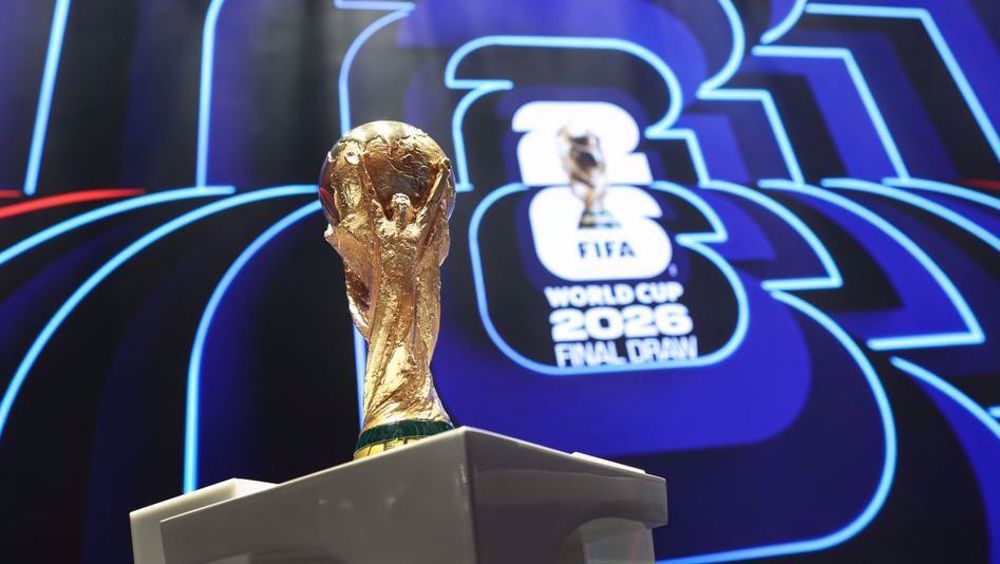
🇮🇷⚽ INFOGRAPHIC - FIFA World Cup 2026 draw has placed 48 teams into 12 groups, with Iran facing Group G challenge against Belgium, Egypt, and New Zealand, as world football’s biggest spectacle is set to unfold across North America in June 2026.@presstvsports pic.twitter.com/xSjNsKxaME
— Press TV Sports (@presstvsports) December 13, 2025
Defense analysis: Experience over youthful exuberance
When analyzing Ghalenoei's defensive setup, it becomes very clear that the head coach values veteran experience over youthful energy when the stakes are highest.
The exclusion of in-form center-backs like Aref Aghasi and Hossein Abargouei highlights a deliberate choice to stick with the older and more experienced guard.
The starting partnership of Hossein Kanaanizadegan and Shojae Khalilzadeh offers comfort through familiarity. However, their combined age, both well into their thirties, represents a real risk against fast-paced, transition-heavy international opponents.
Ghalenoei plans to compensate for this lack of raw speed by using a highly structured mid-block system, squeezing the space between his defensive line and midfield line.
Meanwhile, the inclusion of Foolad Khuzestan's Ali Nemati is a perfect example of Ghalenoei's preference for versatile players. Although a center-back by trade, Nemati has repeatedly been used at left-back by the coaching staff to lock down games defensively.
Similarly, Sepahan's Omid Nourafkan is a utility player. He can either anchor the midfield or slot in at left-back.
In goal, Beiranvand's starting spot is almost secure, but the competition behind him is fierce. Payam Niazmand and Hossein Hosseini provide elite, experienced backup options.
Iran's defensive strategy will closely mirror their successful AFC qualifying campaigns: a rigid, disciplined refusal to give up space in the middle, forcing opponents out wide, where Iran's physically imposing aerial players can dominate.
Completing the 30-man pool
In defense and midfield, Mohammad Ghorbani, who plays for UAE club Al Wahda, offers an athletic backup option as a central defensive midfielder. Sepahan SC's Ariya Yousefi brings versatility, capable of playing both right-back and right-wing.
Additionally, Chadormalu's Hadi Habibinejad joins the midfield group after a consistent domestic season in the Persian Gulf Pro League.
The attacking depth is strengthened by several in-form domestic players who bring different qualities. Tractor SC teammates Amirhossein Hosseinzadeh and Mehdi Torabi provide experienced wide options. Hosseinzadeh, after a productive goal-scoring campaign, can also play anywhere across the front line.
Finally, Persepolis FC striker Ali Alipour completes the forward options as a traditional target man, giving the coaching staff a physically strong domestic alternative to lead the attack.
✍️ Long Read - Inside 2026 World Cup's intense battles promising infinite drama
— Press TV Sports (@presstvsports) December 18, 2025
The 2026 World Cup's expanded 48-team format reshapes competition: 12 groups, razor-thin margins and unpredictable matchups.
By Mohammad Ali Haqshenashttps://t.co/layu51yUu7@presstvsports
Bubble players: Heartbreaking final cuts
On June 1, just 24 hours before FIFA's hard deadline, Ghalenoei must trim this 30-man provisional roster down to a final 26-player squad.
The team will then travel to the United States via a preparatory camp in Turkey. Four dreams will be shattered that day, and the battles for those final spots are up for grabs.
According to speculation by Iranian media outlets, the four projected cuts from the provisional squad are likely to be young prospects: goalkeeper Mohammad Khalifeh (Aluminium Arak), center-back Danial Eiri (Malavan), defensive midfielder Amirmohammad Razaghinia (Esteghlal), and striker Kasra Taheri (Paykan).
While all four represent the future of Iranian football, several factors work against them: roster limits, depth charts, and Ghalenoei's preference for experience in key central areas.
Meanwhile, 19-year-old winger Amirhossein Mahmoudi presents the squad's biggest selection dilemma. If he survives the final cut, he will break Ebrahim Ghasempour's 1978 record to become the youngest Iranian ever to play in a FIFA World Cup.
Historical context: Chasing the elusive knockout milestone
Iran's football history is one of immense passion, continental dominance within Asia, but agonizing heartbreak on the biggest stage of all. Team Melli has played in six FIFA World Cups, yet they have never advanced past the group stage.
Their journey began with a steep learning curve during their debut at Argentina 1978, followed twenty years later by France 1998, a campaign defined by an emotionally charged and historic 2-1 victory over the United States.
Internal squad friction and tactical stagnation derailed their 2006 appearance in Germany. But the team reinvented itself as a defensive powerhouse under Carlos Queiroz, frustrating global elites at Brazil 2014 with an ultra-defensive block that nearly stifled Argentina.
That structural resilience peaked at Russia 2018, where Iran earned a record four points and missed advancing past the group stage by the narrowest of margins.
Then came the rollercoaster 2022 campaign in Qatar, which featured a dramatic, emotional victory over Wales but ultimately ended in the familiar frustration of an early exit.
Under Ghalenoei, the approach has shifted slightly toward a more proactive, possession-based philosophy. However, the structural realities of global football keep expectations grounded.
In an expanded 48-team tournament, the margin for error is razor-thin. For the passionate fans in Tehran, success is no longer defined by simply holding a European powerhouse to a respectable draw.
Success in 2026 has a single, uncompromising definition: escaping the group stage and reaching the knockout rounds. Any outcome short of that will be seen as another chapter in Iran's historic World Cup glass ceiling.
🇮🇷⚽ Explainer: As countdown begins for FIFA World Cup 2026, what is in store for Iran
— Press TV Sports (@presstvsports) December 12, 2025
Iran faces Belgium, Egypt, New Zealand in Group G of 2026 FIFA World Cup, eyeing a historic knockout stage breakthrough amid fierce competition and high expectations
By Mohammad Ali Haqshenas pic.twitter.com/UCpQLjjvMv
The ultimate test of pragmatism
Ghalenoei's 30-player provisional squad is a clear statement of intent, prioritizing pragmatic stability over a high-risk youth revolution.
He has built a squad anchored by the fierce rivalries and deep familiarity of the Persian Gulf Pro League, reinforced by a versatile group of players who can fill multiple positions.
This calculated choice will ultimately define his managerial legacy. If Team Melli's defensive spine holds firm and Taremi thrives as the main attacking threat, Iran has the chemistry and tactical flexibility to shock the world in North America.
As the team boards their flight to Turkey to begin final preparations, the blueprint is clear: this is a squad built to fight, and utterly determined to rewrite Iranian football history.
Group G schedule: The road map in North America
Iran's quest to advance past the group stage will take place entirely on American soil, featuring three distinct Group G fixtures scheduled across twelve days.
Team Melli will open their campaign on Monday, June 15, when they face New Zealand at the Los Angeles Stadium in California. They will remain at the same venue for their second group match on Sunday, June 21, challenging top-seeded Belgium.
Ghalenoei's squad will then travel north to Washington State for their final group game on Friday, June 26, 2026, taking on Egypt at Lumen Field in Seattle.
That match will likely decide whether Iran advances to the knockout stage.
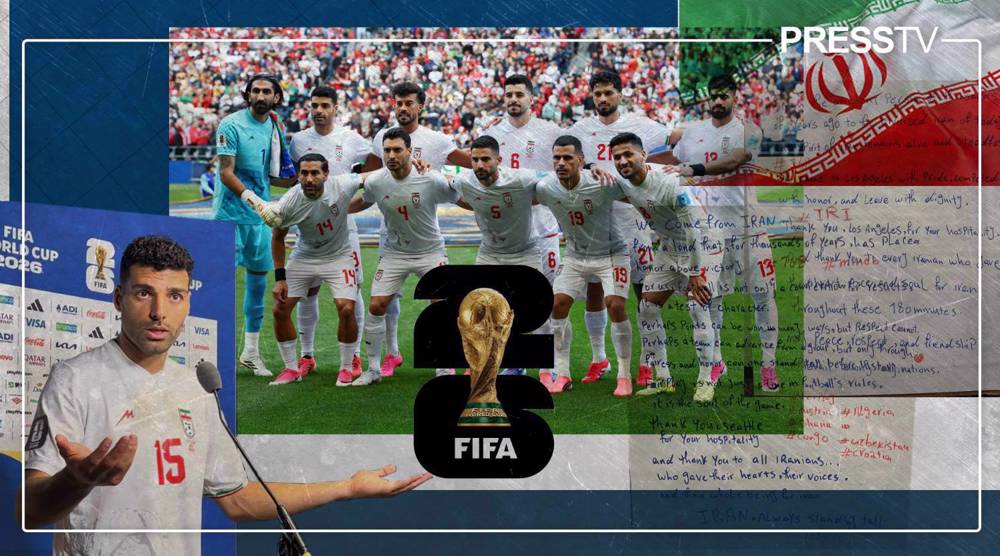
From Strait of Hormuz to World Cup stage, Iranians never back down or relinquish their rights
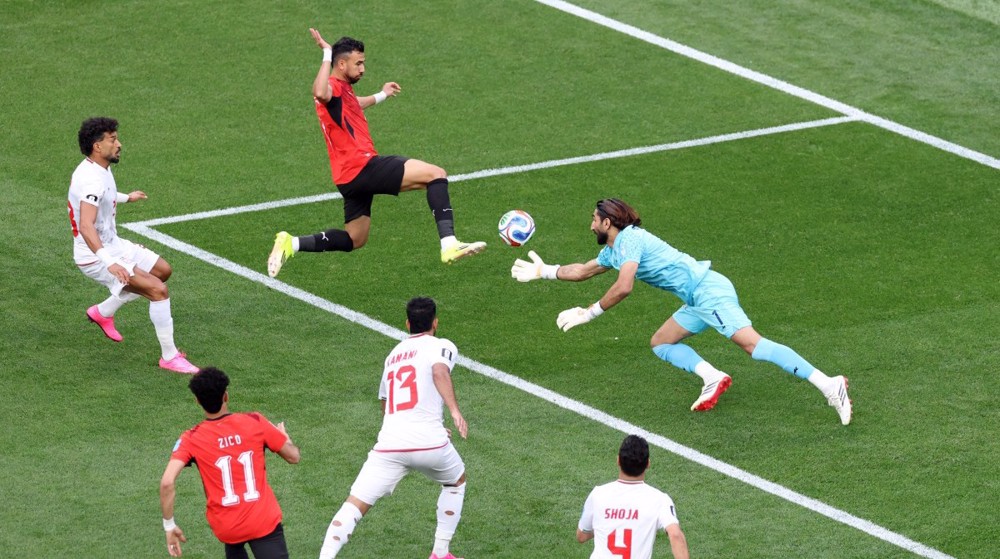
Taremi tops aerial duels, Beiranvand among leading goalkeepers after World Cup group stage
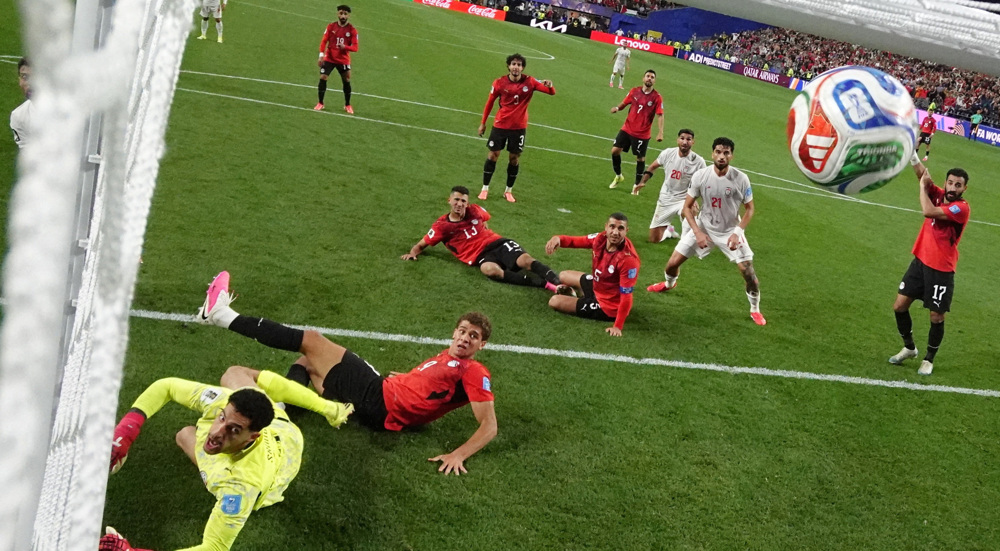
Iran FM spox praises national football team for defying pressures at World Cup

Hezbollah MP blasts ‘sell-out’ government, says Lebanon central to any Iran-US deal
Israeli army demolishes buildings across Gaza as ceasefire violations continue
VIDEO | Press TV's news headlines
VIDEO | Thousands displaced by earthquake in Venezuela receive temporary shelters
Iran will respond decisively to any ceasefire violation: Acting defense minister
Trump criticized Spain for not meeting NATO spending targets
Arab League, Arab Parliament condemn repeated Israeli attacks on Syria
Management of Strait of Hormuz solely Iran’s responsibility: Senior MP


 PressTV NEWSLETTER
now
PressTV NEWSLETTER
now
 This makes it easy to access the Press TV website
